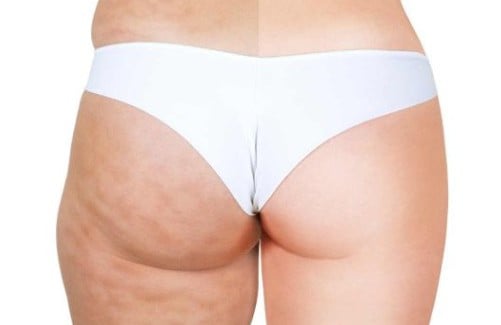
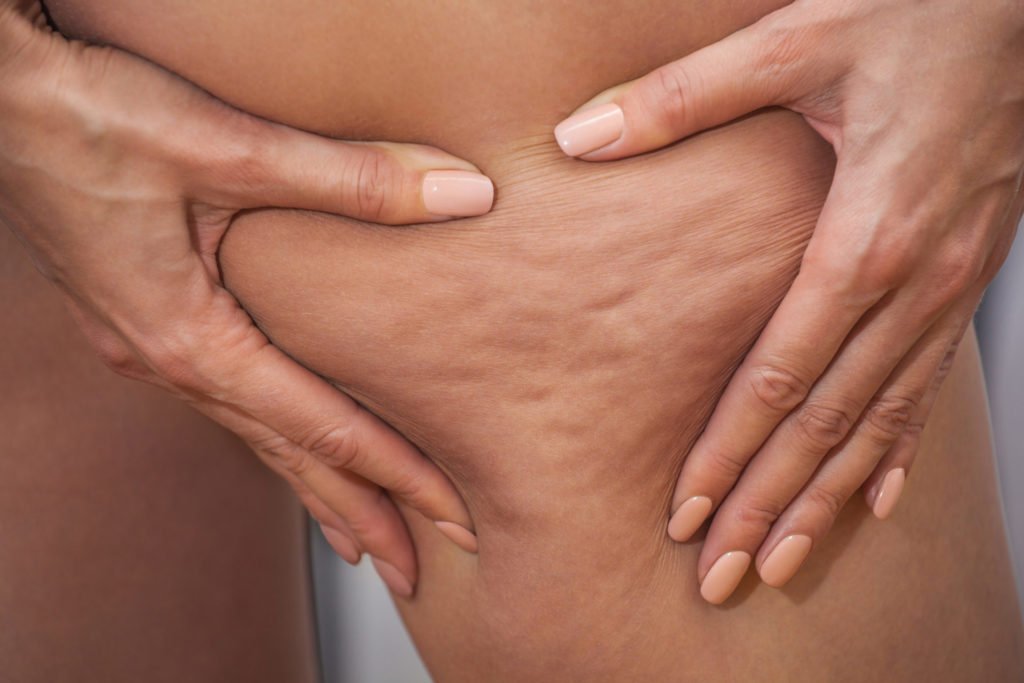
The vast majority of women have cellulite, whatever their age or body shape. It can appear in slim women just as much as in those who tend to store more fat. Often visible on the thighs, buttocks, hips or stomach, it gives the skin a dimpled look, also known as orange peel skin.
Although it is very common and completely normal, cellulite remains an aesthetic concern for many women. The good news is that there are ways to visibly improve how it looks, as long as you understand which type of cellulite you have and what keeps it going. Below you will find its definition, its four types (water retention, fatty, fibrous and mixed), its main causes, the areas most affected and the solutions to combine day to day: lifestyle, diet, exercise, massage and skincare.
What is cellulite? A definition
Cellulite, also known as superficial lipodystrophy, is a change in the skin’s appearance linked to several processes that can combine: fat storage, water retention, sluggish circulation and changes in the connective tissue. The result is an uneven skin surface with a dimpled look, commonly known as orange peel skin.
Cellulite most often appears on:
It is far more common in women than in men, largely because of differences in hormones, fat distribution and the structure of the tissue beneath the skin.
Cellulite is not a disease. It is a common phenomenon and generally harmless, but it can be more or less visible, more or less long-standing and sometimes tender to the touch, depending on its type.
Key takeaway: cellulite does not have a single cause or a single form. That is precisely why it is important to identify your own profile before looking for solutions.
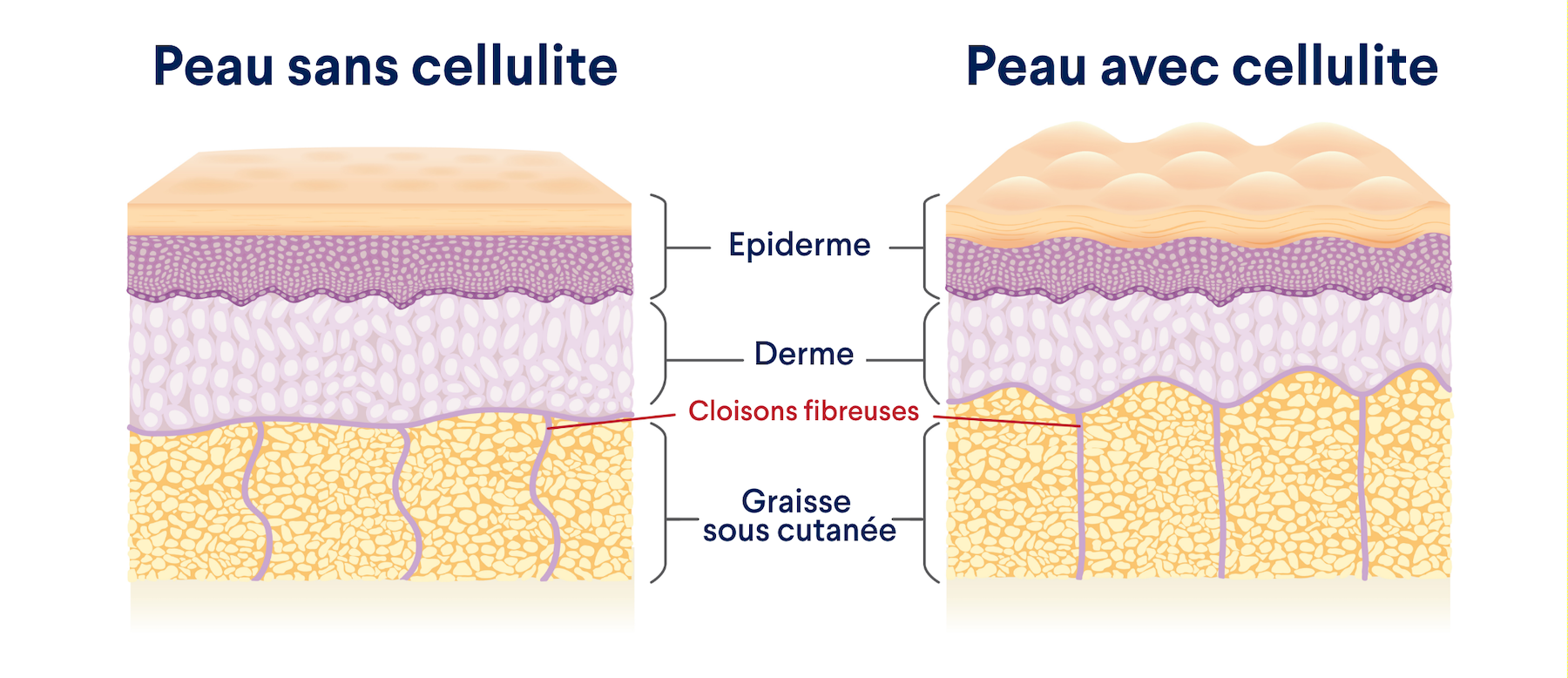
What are the different types of cellulite?
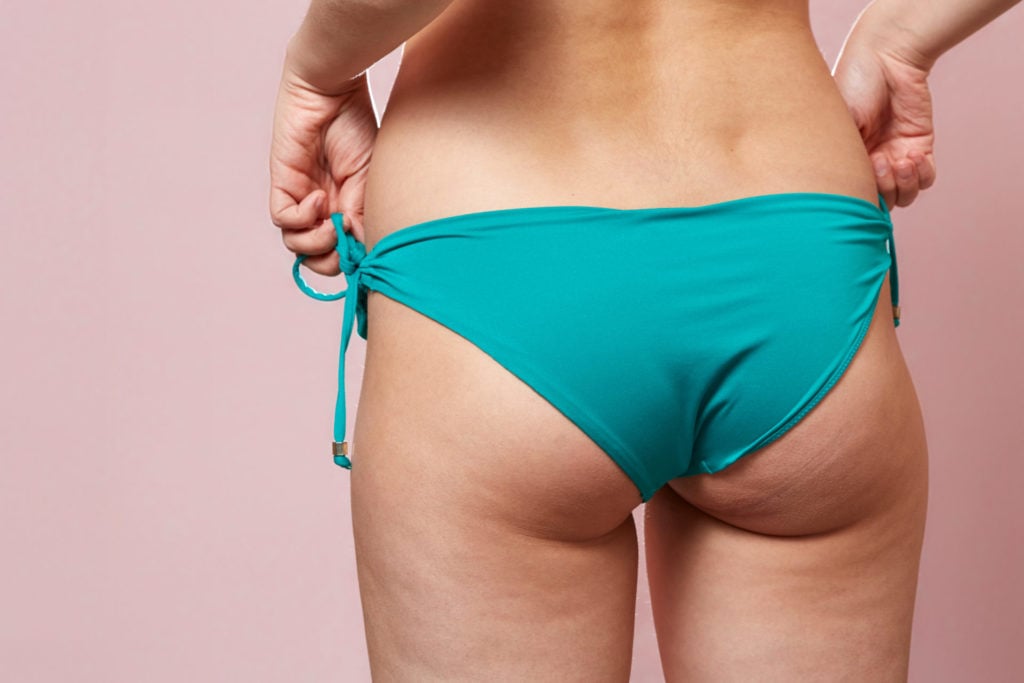
Not all cellulite is the same. There are generally four main forms, each with different mechanisms. Identifying your type of cellulite helps you understand which approaches to prioritise.
1- Water retention cellulite
Water retention cellulite is linked to water retention and to less efficient venous and lymphatic circulation. It often affects women who tend to have heavy legs, swell easily or notice that the appearance of their skin varies at different times.
It can often be spotted by:
- a slightly swollen look to the tissues
- a feeling of heavy legs
- soft skin
- cellulite that is not very painful
- it can also occur in slim women
This form of cellulite is often encouraged by circulation problems, prolonged sitting or standing, lack of movement, heat or a diet too high in salt.
2- Fatty cellulite
Fatty cellulite is the form most often associated with excessive fat storage in the adipocytes (fat cells). It generally appears when energy intake exceeds energy expenditure over time, though that is not the only factor.
It is often characterised by:
- soft skin
- cellulite that is only mildly painful, or not at all
- a look that is visible to the naked eye or when the skin is pinched
- it appears mainly on the thighs, buttocks and hips
It is often linked to a combination of factors such as an overly rich diet, a lack of physical activity, weight gain or reduced muscle tone.
3- Fibrous cellulite
Fibrous cellulite is older, more established and often more stubborn. It corresponds to a gradual hardening of the tissues, with a more compact look that is sometimes painful when pinched.
It can often be spotted by:
- skin that feels harder to the touch
- more deeply embedded dimples
- tenderness or pain when pinched
- a look that is harder to smooth out
It can be encouraged by how long the cellulite has been there, certain individual predispositions and the way the connective tissue changes over time.
4- Mixed cellulite
In reality, many women have mixed cellulite, meaning a combination of several mechanisms: a little water retention, a little fat storage and sometimes an element of fibrosis.
That is why an all-round approach is often more relevant than a single, isolated action.
What causes cellulite?
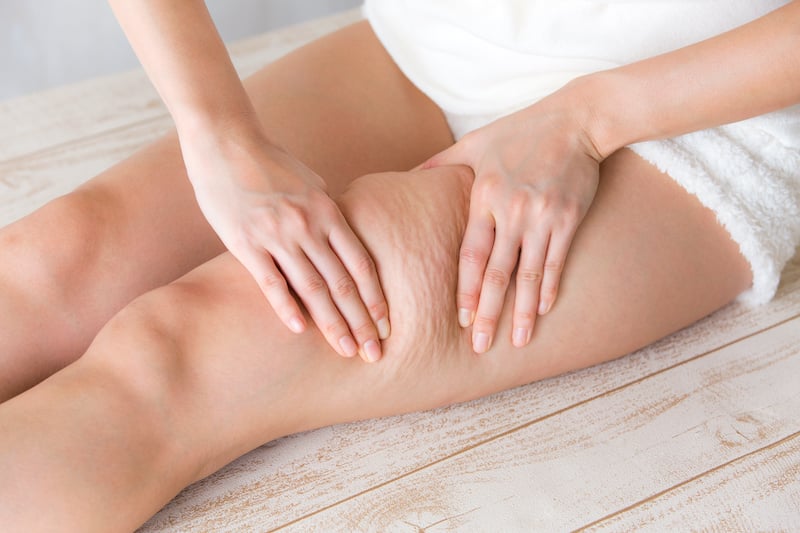
Cellulite has multiple causes. It is almost never down to a single one, but to several factors adding up.
1- Hormones
Hormones play an important role in the appearance of cellulite, particularly in women. The hormonal changes of puberty, the menstrual cycle, pregnancy or the menopause can encourage:
- fat storage
- water retention
- certain changes in circulation
This is one of the reasons why cellulite can change at different stages of life.
2- Heredity
Some women are more predisposed to cellulite than others. Fat distribution, the quality of the connective tissue, a tendency towards water retention and circulation can all partly depend on family history.
Heredity does not explain everything, but it can play a part.
3- Age
With age, several changes can make cellulite more noticeable:
- less efficient circulation
- loss of firmness
- reduced muscle tone
- hormonal changes
- skin slackening
Cellulite can then become more visible or change form.
4- Venous and lymphatic insufficiency
People who suffer from lymphatic insufficiency and poor venous return are particularly prone to cellulite.
When circulation slows down, the tissues can tend to become more congested. This encourages a feeling of heavy legs, fluid build-up and more pronounced cellulite, particularly on the lower body.
This is a central factor in water retention cellulite.
5- Diet
A diet too high in ultra-processed foods, sugars, salt or poor-quality fats can create conditions that favour cellulite. It is best to limit certain foods day to day.
Conversely, a diet richer in fibre, fruit, vegetables and minimally processed foods can help you better manage the factors that keep it going.
This does not mean that any single food will “get rid of” cellulite on its own, but diet does play a real role in your overall balance.
6- A sedentary lifestyle
A lack of movement encourages several mechanisms associated with cellulite:
- lower energy expenditure
- less toned muscles
- less efficient circulation
- greater fluid build-up in the lower body
Moving regularly, even without doing intense sport, can already have a positive effect.
7- Smoking and alcohol
Smoking and drinking alcohol are harmful to health in many ways. As for alcohol, it is best to keep your intake in check as part of a balanced lifestyle.
They are not the only factors at play, but they can make things worse when you are already prone to cellulite.
8- Certain medicines
Certain treatments such as hormonal contraceptives (the pill), antihistamines or corticosteroids can influence hormonal balance or water retention, and so accentuate the appearance of cellulite. Never change a treatment without speaking to your doctor first.
What can help with the appearance of cellulite?
A regular, consistent approach suited to your type of cellulite can help visibly improve how it looks.
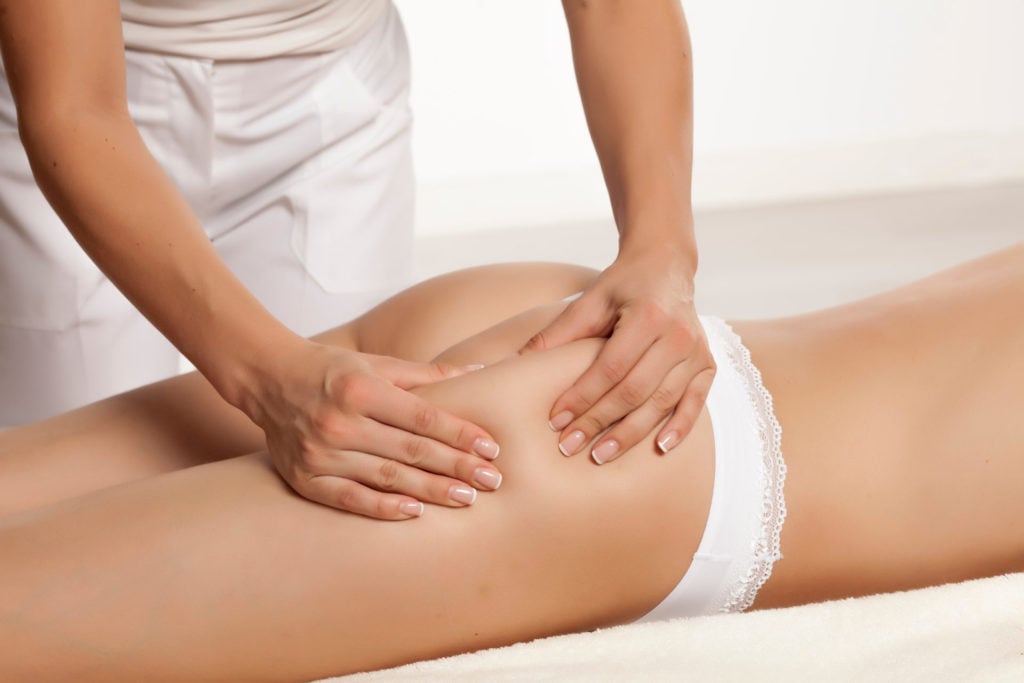
1- Rethink your overall lifestyle
To improve the appearance of cellulite, before even thinking about products or techniques, the foundation is still a consistent lifestyle:
- Adopt a healthy lifestyle: restorative sleep, a varied diet, regular exercise and enough water.
- Avoid excess: alcohol, cigarettes, sugar, salt, junk food.
- Choose comfortable clothing that is fairly loose-fitting, along with flat shoes.
- Avoid sources of heat (prolonged sun exposure, very hot baths).
- Opt for cool showers and finish each one with a burst of cold water.
- Move regularly to avoid static postures.
2- Adapt your diet

Diet is one of the pillars of a balanced lifestyle. It should be varied, balanced and suited to your energy expenditure.
Your ideal diet should include:
- Complex carbohydrates, such as wholegrain products, because the body needs energy.
- Lean proteins (white meat, fish) and plant proteins (pulses, soya).
- Fruit and vegetables, varying them according to the season and your preferences.
- Fibre (fruit, vegetables, pulses, nuts), which has its place in a balanced diet.
- Good-quality fats, such as polyunsaturated fats and omega 3-6-9.
- Dairy products, as part of a varied diet.
- Water, 1.5 to 2 litres a day, to keep the body properly hydrated.
Sugars, snacking, refined foods, saturated fats (processed meats, fast food), salt and alcohol are best kept to a minimum as part of a balanced diet.
3- Focus on physical activity
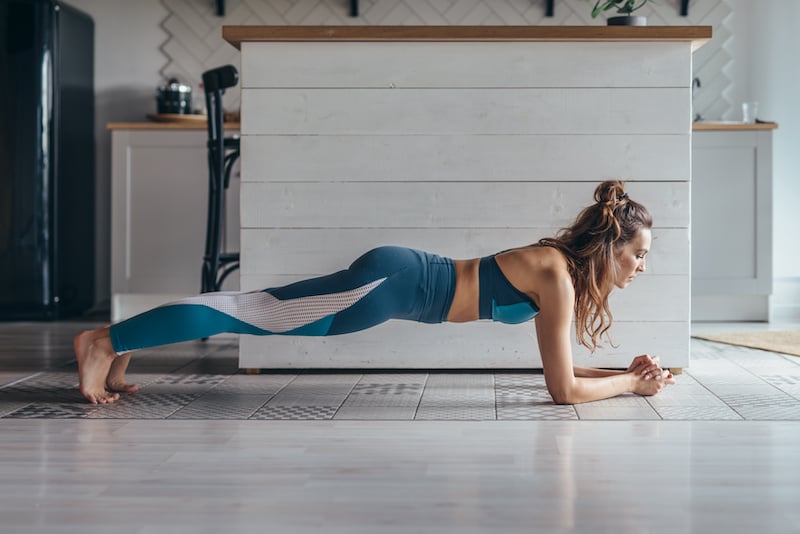
Regular physical activity and sport are part of a balanced lifestyle. In particular, sport helps you to:
- Move and use energy every day.
- Work on your muscle tone.
- Keep your muscles working rather than staying in static postures.
- Take some time for yourself and feel good in your body.
Sport will not “get rid of” cellulite on its own, but it is clearly one of the most useful approaches.
Activities worth considering for cellulite often include:
- brisk walking
- cycling
- swimming
- strength training
- thigh and glute circuits
- practices such as Pilates or yoga as a complement
Consistency matters more than perfection.
More generally, any physical activity, however light, counts. Small daily efforts and a daily walk are a simple way to move more.
4- Turn to plants

Phytotherapy, meaning the use of the active compounds of plants, is often mentioned in connection with cellulite. Certain plants are cited in this context, but their effect on cellulite has not been demonstrated.
Some plants, such as green tea, guarana or cherry stalk, are often cited.
These plants are available as food supplements, such as capsules, or as herbal teas. If you would like to take them, do so as part of a varied diet. If you are on medication, pregnant or have any health concerns, ask a doctor or healthcare professional for advice.
Food supplements containing these plants are a convenient way to take them. Check the precautions for use of each product.
5- Anti-cellulite massage
Massage features in many beauty routines. It should not be presented as a proven way to empty fat cells. Results, and how long they last, can vary.
Lymphatic drainage
Lymphatic drainage is a gentle massage technique often suggested for water retention cellulite. It can be done by hand or with dedicated devices, and can be combined with essential oils for a more comfortable massage, on the advice of a professional.
Pressotherapy
Pressotherapy is a mechanical drainage technique that uses air pressure to massage the legs and lower body. It offers a moment of relaxation. Pressotherapy is often used in beauty salons and is often suggested for people with significant water retention or more established cellulite.
Hydromassage
Hydromassage combines massage and water (fresh water or seawater). This technique offers a moment of relaxation and is particularly popular for its soothing feel; it can be enjoyed in steam baths or hydromassage pools.
Pinch-and-roll massage
Pinch-and-roll massage involves pinching and rolling a fold of skin, by hand or with a suitable accessory. This article does not demonstrate that it removes fat or toxins. Follow the product instructions and take your skin’s tolerance into account.
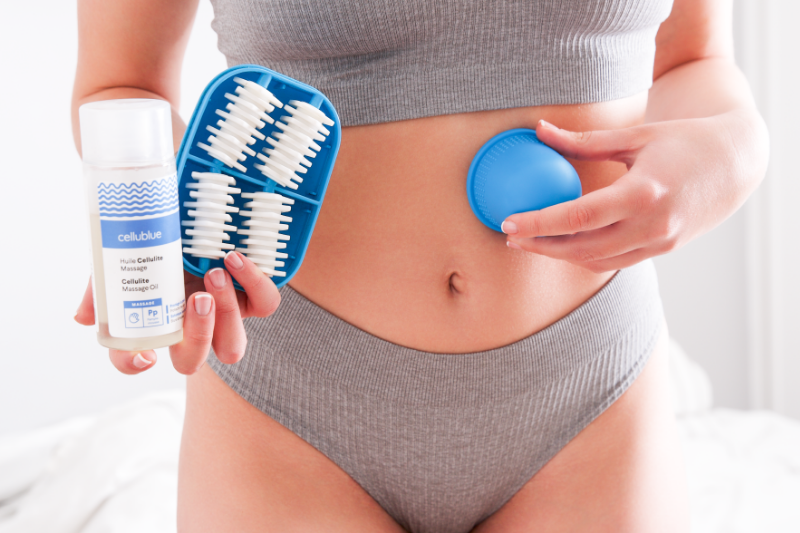
6- Aesthetic and medical treatments
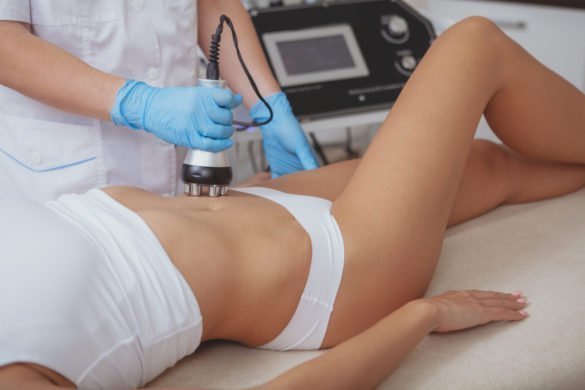
Many techniques have emerged to address the appearance of cellulite, a source of insecurity for many women. A range of aesthetic and medical treatments is now available from professionals, who should be consulted before going ahead with anything.
- Shock waves: this non-invasive treatment aims to reduce fibrosis and encourage collagen production.
- Laser lipolysis: this involves triggering lipolysis through heat.
- Electrostimulation: the electrical stimulation of muscles aims to encourage muscular compression.
- Cryolipolysis: this treatment consists of applying cold to an area of the body in order to trigger adipocyte apoptosis (that is, the “death” of certain fat cells).
- Injections: these are known as mesotherapy, lipotomy or morpholiposculpture, and involve micro-injecting substances into adipocytes.
- Ultrasound: just like laser, ultrasound is a technique designed to heat adipocytes.
- Cosmetic surgery: liposuction and lipomodelling are surgical procedures that involve suctioning excess fat from adipose tissue. They require anaesthesia.
Medical procedures aimed at reducing cellulite give more or less noticeable results depending on the person. In the long term, however, cellulite tends to return, as it is a natural phenomenon inherent to the female body.
Cellulite by area: the most affected zones
Cellulite is not distributed in the same way in every woman. Certain areas are particularly affected.
- Cellulite on the thighs
The thighs are one of the most common areas, often due to a combination of fat storage, water retention and lack of tone. - Cellulite on the buttocks
Cellulite on the buttocks is often associated with muscle tone and the quality of the tissues. - Cellulite on the stomach
Cellulite on the stomach can appear in connection with fat storage, hormones, posture or changes in weight. - Cellulite on the arms
Cellulite on the arms sometimes becomes more visible as the skin loses firmness or with hormonal changes.
Anti-cellulite solutions
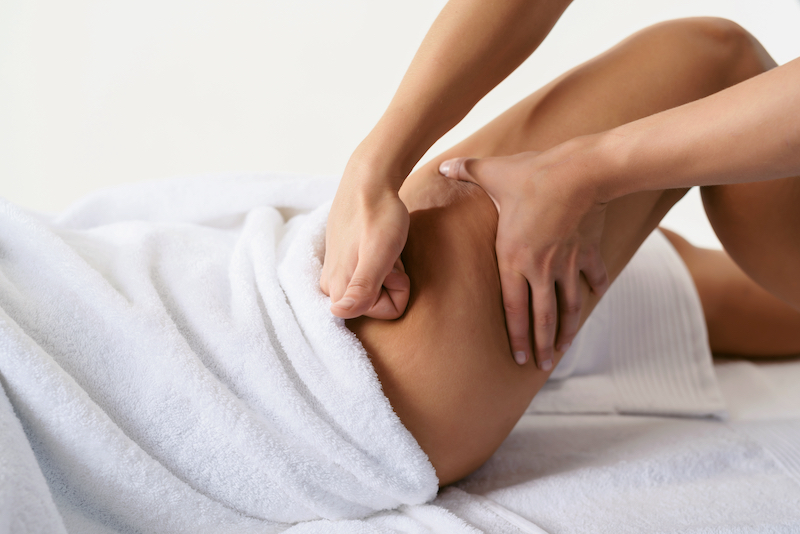
In addition to the recommendations above, skincare can also help you tackle the look of “orange peel skin”.
- Essential oils of cedar, cypress, oregano, rosemary, geranium, juniper or lemon are often mentioned in anti-cellulite routines. They can be used in many ways, but always on the advice of a professional.
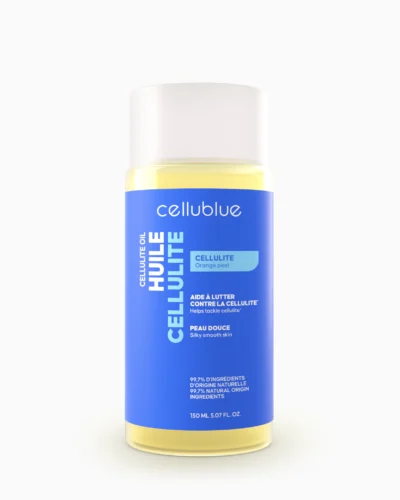
- Natural plant oils make anti-cellulite massage easier. They are also nourishing for the skin. At Cellublue, we have developed an anti-cellulite oil made with plant oils and featuring a rich texture, specially designed for pinch-and-roll massage.
The oil that visibly smooths the look of your skin
- Complete formula: 4 powerful actives for a targeted massage of cellulite-prone areas
- Smoother-looking skin: actives designed to complement the palper-rouler technique
- Sensorial massage : rich texture and Monoï scent for a gentle, feel-good ritual
Discover
- Massage with a cup and a massager complements the application of oils. They offer two different techniques: the suction effect of the cup, which mimics manual pinch-and-roll massage, and the movement of the studs on the orange peel skin massager.
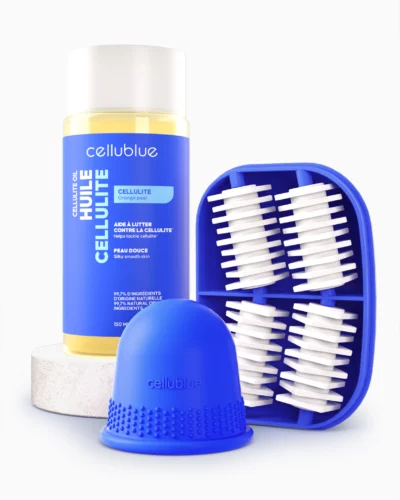
The Cellublue method to smooth the look of your skin
- Exclusive Cellublue design
- Anti-Cellulite Cup: recreates palper-rouler, gently lifting and massaging the skin
- Orange Peel Massager: visibly smooths the look of skin on the surface
- Skincare products can be built into your skincare routine. The presence of an ingredient does not in itself demonstrate that a product triggers lipolysis or eliminates fat. Cold Cellulite Cream
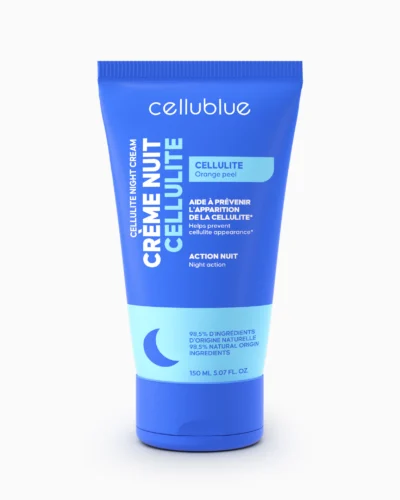
The cream that smooths the appearance of orange peel skin* and tones the skin
*Consumer test on 22 volunteers over 2 weeks, participants' self-assessment.
- Smooths the appearance of orange peel skin on the thighs, buttocks and stomach
- Caffeine & Green Coffee, the two benchmark active ingredients in body care
- Melting texture: absorbs in seconds and leaves the skin feeling comfortable
- Food supplements should not be presented as a proven way to eliminate the toxins responsible for cellulite. Check the directions, precautions and limitations of each product. Cellulite Capsules · Food supplement to be diluted

A little extra help from within, alongside your massage
- Instructions for use
- Friendly advice
Cellulite and stretch marks: two different issues
When your skin has both dimples and stretch marks, avoid treating them as a single problem. Take a look at our complete guide to stretch marks too, so you can adapt prevention, expectations and your choice of skincare to the actual condition of your skin.
Frequently asked questions
Can you get cellulite whatever your body shape?
Yes. Cellulite is not a question of weight: it can appear whatever your body shape. Hormones, family history and age all play a big part. You will find more detail on these factors in the section on the causes of cellulite.
What causes cellulite?
Cellulite has multiple causes. Several factors can combine: hormonal changes, family history, age, a diet too high in salt, sugars or ultra-processed foods, a sedentary lifestyle, smoking, alcohol and certain medicines. If you are on medication, speak to your doctor before making any changes.
What are the different types of cellulite?
There are four main types. Water retention cellulite is linked to fluid retention, with soft skin and a feeling of heavy legs. Fatty cellulite is linked to fat storage. Fibrous cellulite is more long-standing, with harder skin. Mixed cellulite combines several of these mechanisms.
Is cellulite a disease?
No, cellulite is not a disease. It is a common and generally harmless phenomenon that is more or less visible depending on the person. It can sometimes feel tender to the touch, depending on its type. If you experience pain or have any doubts, ask a doctor or healthcare professional for advice.
Related articles
- What is the difference between cellulite and orange peel skin?
- What is cellulite? How does it form?
- Test your knowledge about cellulite!
- Can crystals really help fight cellulite?
- The 7 Best Exercises with a Small Fitness Ball
- Butt mask: what should you think of it?
Useful categories: All About Cellulite.