City or countryside, or even the gym… Whatever your lifestyle, cycling is an accessible sport for everyone. Whether you’re a complete beginner, a fan of family bike rides or a seasoned rider tackling the steepest mountain trails, you can enjoy the benefits of cycling, and that includes when it comes to cellulite. Here’s a closer look at what the humble bicycle has to offer: what pedalling brings to your figure, the right routine to follow outdoors and indoors, and the habits to pair with your rides.
How cycling helps fight cellulite
1- A true endurance sport
Cycling is an endurance sport: done at a steady pace, it keeps your body working over a sustained period. Cellulite (and especially adipose cellulite) is linked to an excess of fat in the adipocytes, which distorts the dermis and creates the dreaded orange-peel skin. That’s why regular cycling deserves a place in an anti-cellulite routine.
Another effect worth noting is the AfterBurn Effect. What’s that? It refers to the energy your body keeps using after exercise. Endurance sports like cycling help build a solid base metabolism and denser deep muscles. Those muscles need energy to function: the more muscle mass you have, the more energy your body uses, even at rest. It’s an entirely natural mechanism.
2- Legs on the move
Cycling also puts your legs to work, which is worth knowing when you’re interested in cellulite, especially water-retention cellulite.
Each pedal stroke engages the plantar arch, and the pedalling motion works the calf muscles and quadriceps. Cycling also means:
- A gentle effort for the joints
- Time spent outdoors, in the fresh air
- A feeling of lighter legs, often appreciated
- An activity that keeps the legs moving, useful when it comes to water retention in the tissues
As you can see, cycling is a sport worth considering for women prone to water retention and, by extension, water-retention cellulite.
3- A complete muscle workout
Some women struggle with fibrous cellulite. Deep-set and often tender to the touch, it develops over time as a result of poor lifestyle habits and an unbalanced diet. The outcome: hardened, densely packed collagen fibres that trap the adipocytes and prevent the natural release of fat. This stubborn type of cellulite is notoriously difficult to shift.
Cycling, as a full-body endurance sport that engages muscles deeply and intensely, works a wide range of muscle groups. And if you’re dealing with particularly stubborn cellulite, don’t give up! Cycling could well find its place in your routine.
Cycling and cellulite on the thighs
The thighs are often where cellulite is most noticeable… and that’s exactly where cycling works hardest. Every pedal stroke engages your quads, glutes and calves, especially on climbs or when you increase the resistance on an indoor bike. Regular cycling therefore gives your lower body a proper workout.
That said, there’s no point expecting a before-and-after overnight: consistency matters more than intensity. To look after your skin between rides, you can round off your sessions with a thigh massage using a massage oil.
What pace should you adopt to fit cycling into your routine?
1- Outdoor cycling
What’s the right pace for your cycling sessions? Plan longer rides of at least 40 minutes at a moderate pace. To engage different muscle groups (glutes, thighs, calves), vary your route with flat stretches, climbs and descents. Two cycling sessions a week make a good base for working your legs.
2- Indoor cycling
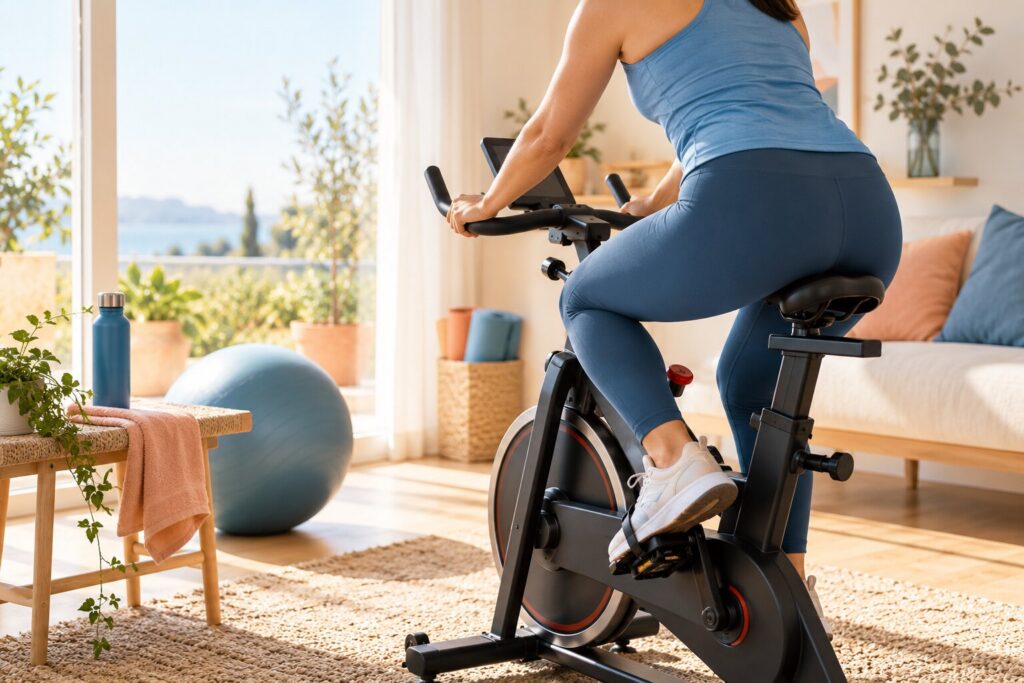
If you prefer working out at the gym or on an exercise bike at home, adjust the resistance regularly to simulate changes in terrain. You can also try RPM (or spinning) classes, which alternate between fast-paced and recovery phases. To get the most out of spinning, aim for 3 sessions of 30 to 40 minutes per week.
3- Cycling… in moderation!
Finally, if you’re not particularly sporty (and there’s absolutely no judgement here!), you can still enjoy cycling just for fun (with your children, your best friend or your dog by your side!) or as a practical way of getting around (cycling to work or popping out to the bakery). These short everyday trips take the pressure off the “performance” side often associated with sport, while still keeping you moving. And that’s what counts!
What should women wear for cycling?
To ride comfortably, put comfort first: close-fitting clothes that don’t restrict your movement or get caught in the chain, breathable fabrics and shoes suited to your pedals. Cycling shorts, the snug shorts that stop mid-thigh, remain a firm favourite, as they reduce rubbing against the saddle.
You may also come across so-called “anti-cellulite” cycling shorts. Whichever pair you choose, it’s above all regular cycling, combined with a suitable skincare routine, that will help you look after your thighs.
How to maximise the effects of cycling on cellulite?
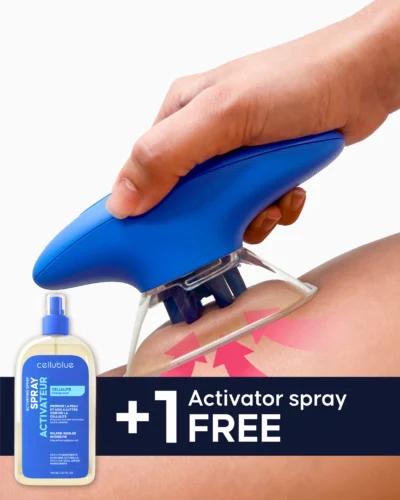
If you’d like to make the most of your rides, a massage is a lovely addition to a daily anti-cellulite routine. You might also consider electrostimulation treatments, which work on both the skin and the muscles. Our EMS cupping device lets you enjoy electrostimulation at home, quickly and hassle-free!
Professional anti-cellulite technology at home
- Designed to smooth the look of dimpling & tone the skin in depth
- Visibly smooths the appearance of orange-peel skin
Frequently asked questions
What are the benefits of cycling?
Cycling is an accessible endurance sport that anyone can take up. It works the thighs, glutes and calves, can be done outdoors or indoors, and fits easily into an anti-cellulite routine alongside a balanced diet and regular massage.
How long should each cycling session last?
Outdoors, aim for rides of at least 40 minutes at a moderate pace, twice a week, mixing flat stretches, climbs and descents. Indoors, plan 3 spinning sessions of 30 to 40 minutes per week. Above all, consistency is key (see “What pace should you adopt to fit cycling into your routine?”).
Does cycling have a place in an anti-cellulite routine?
Cycling can be a useful ally, as it works the leg muscles. However, every skin responds differently. To get the most out of it, combine regular cycling with a balanced lifestyle and a massage routine.
Can I cycle if my legs are painful?
If you have pain in your legs, whether or not it’s linked to deep-set cellulite, ask your GP or another medical professional for advice before taking up cycling again or stepping up your sessions.
Related articles
- Tennis and cellulite: does it really help?
- The 3 types of cellulite: how to identify them?
- Hormones and cellulite: what’s the connection?
Useful categories: Anti-Cellulite Exercises.