
We all know what cellulite is (unfortunately!), but did you know there are actually several types? There are three: adipose cellulite, aqueous cellulite and fibrous cellulite. Depending on which type you have, the recommended approach may differ. In this article, discover the different types of cellulite, how to identify each one, what they look like, and the right habits and tailored solutions for each!
Adipose cellulite
Adipose cellulite is mainly caused by a poor diet, lack of physical activity and excess weight — and therefore excess fat. With adipose cellulite, the skin feels soft to the touch and is not painful when pinched.
Causes and characteristics
It is mainly caused by an unbalanced diet, high in fat and sugar, combined with a lack of physical activity. When you consume more fat than your body needs, fat cells grow and multiply. Fat then builds up in the adipose tissue, and the skin takes on a bumpy appearance.
Body areas
It is mainly found on the stomach, the hips, the buttocks and the saddlebags.
What can you do about adipose cellulite?
- First, rebalance your diet: cut out ready meals and opt for fresh produce wherever possible, particularly foods rich in vitamin C.
- Next, take up an endurance activity several times a week, such as brisk walking, boxing or interval training.
- Finally, for adipose cellulite, anti-cellulite massages can also be part of your skincare routine, helping to smooth the look of the skin.
Learn more about adipose cellulite
Aqueous cellulite
Aqueous cellulite is often the type of cellulite found on slimmer women.
Causes and characteristics
This type of cellulite is mainly caused by a lack of physical activity and water retention. Water retention causes the tissues to swell, so fluids build up even more beneath the skin. This tissue swelling gives the skin that bumpy texture we all know as orange-peel skin. Another distinctive feature of aqueous cellulite is that it is tender to the touch.
Body areas
Aqueous cellulite is often accompanied by a feeling of heavy legs and mainly affects: the arms, the thighs, the calves and the ankles.
How to recognise aqueous cellulite
Visually, aqueous cellulite mainly shows up as a puffy look, together with a feeling of heavy legs. The skin can appear taut, with a diffuse orange-peel texture, particularly on the arms, thighs, calves and ankles. To tell it apart from adipose cellulite, remember that adipose cellulite makes the skin feel softer to the touch, whereas aqueous cellulite is more associated with a feeling of puffiness.
What can you do about aqueous cellulite?
- First and foremost, this type of cellulite is associated with water retention: the habits below mainly aim to limit that feeling of puffiness.
- When it comes to diet, cut down on salt! Drink plenty of water throughout the day, and focus on fresh fruit and vegetables: broccoli, lemon, berries… Also favour foods rich in vitamin B6 and those high in potassium, such as sun-dried tomatoes and dried apricots, for example.
- For exercise, prioritise activities that work the legs. Water-based sports are a good option. Try swimming, aqua aerobics or aqua cycling – the choice is yours!
- Finally, for massages, try anti-cellulite cupping massage, working upwards from the ankles to the thighs: a regular skincare habit that helps smooth the look of the skin.
Learn more about aqueous cellulite
Fibrous cellulite
Fibrous cellulite is the most stubborn type of cellulite, as it is deeply embedded in the tissues and has been there for a long time.
Causes and characteristics
It is caused by collagen fibres that have developed around long-established fat cells. This type of cellulite is also linked to a sedentary lifestyle and genetics. It can also be down to a diet high in sugar and a lack of physical activity. It is the hardest type of cellulite to reduce the appearance of, so consistency is what counts! Fibrous cellulite is linked to the hardening of collagen, a fibrous protein that plays a role in skin elasticity. If your skin feels sensitive and painful when pinched, it is probably this type of cellulite.
Body areas
The areas most affected by fibrous cellulite are the thighs and the knees.
What does fibrous cellulite look like?
Visually, fibrous cellulite can be spotted by a pronounced dimpled look: the skin shows well-defined dips and bumps, often visible even without pinching. The areas concerned, such as the thighs and knees, can feel denser to the touch. If you’re looking for visual cues, compare it with the descriptions above: soft skin for adipose cellulite, a feeling of puffiness for aqueous cellulite, and an embedded look that is sensitive when pinched for fibrous cellulite.
What can you do about fibrous cellulite?
- The first rule concerns diet: it is advisable to limit refined white sugar (such as pastries, shop-bought cakes, etc.). Also focus on vegetables (courgettes, lentils…), proteins, wholegrains and make sure you stay well hydrated!
- Second habit: get moving! Endurance activities (especially walking or cycling) are highly recommended. Work on your cardio and on strength training for a more toned-looking figure.
- Finally, to tackle it, you should also rely on palpate-and-roll massage, done regularly: since the cellulite is deeply embedded, consistency is what counts for smoother-looking skin.
Learn more about fibrous cellulite
Summary table of the different types of cellulite
Here is a quick overview of everything you need to know about the different types of cellulite.
Adipose cellulite
- Causes: Unbalanced diet, lack of physical activity, excess weight
- Characteristics: Skin soft and supple to the touch, not painful
- Body areas: Stomach, hips, buttocks, saddlebags, thighs
- Diet: Low-fat diet, plenty of fruit and vegetables
- Exercise: Endurance sports: interval training, brisk walking, boxing…
- Massage: Anti-cellulite massage
Aqueous cellulite
- Causes: Water retention, lack of physical activity
- Characteristics: Feeling of heavy legs, swelling, tender to the touch
- Body areas: Thighs, arms, calves, ankles
- Diet: Potassium-rich foods (sun-dried tomatoes, dried apricots, pistachios…); vitamin B6; drink plenty of water
- Exercise: Activities that work the legs: swimming, aqua cycling…
- Massage: Gentle anti-cellulite massage
Fibrous cellulite
- Causes: Collagen fibres surrounding the fat cells, sedentary lifestyle – heredity, diet high in sugar
- Characteristics: Deep-set, firm and tender to the touch
- Body areas: Thighs, knees
- Diet: A diet rich in vegetables (courgettes, lentils…), protein and wholegrain starches; drink water
- Exercise: Alternate cardio and strength training
- Massage: Intensive palper-rouler massage
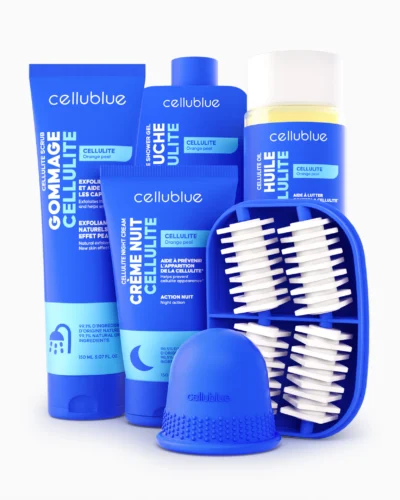
To give yourself a proper anti-cellulite massage, discover the Cellublue method with the cupping cup. It can be used as part of an anti-cellulite massage routine to help reduce the look of cellulite on the thighs, stomach, buttocks, saddlebags, arms and more. You’ll find the cup in our Pack 100% Anti-Cellulite, which includes the complete method for caring for your skin, whatever your type of cellulite.
6 treatments combined in one anti-cellulite routine
- Instructions for use
- Friendly advice
Also read: how to get rid of cellulite?
Frequently asked questions
How do I know which type of cellulite I have?
Feel the area concerned: if the skin is soft and not painful when pinched, it’s more likely to be adipose cellulite. If it’s painful and the skin seems embedded, it’s probably fibrous cellulite. If you mainly notice a feeling of puffiness and heavy legs, it’s more likely to be aqueous cellulite. If in doubt, ask your GP or a pharmacist for advice.
Which type of cellulite is the hardest to reduce the appearance of?
Fibrous cellulite is described in this article as the most stubborn type, as it is embedded in the tissues and has been there for a long time. It calls for consistency and motivation. Adipose and aqueous cellulite respond to tailored habits, explained in their own sections.
Can you have more than one type of cellulite at the same time?
Yes, you can have different types of cellulite on different areas of the body. Each type has its own characteristics and recommendations, set out in the adipose, aqueous and fibrous sections of this article. Adapt your routine to the area and the main type you have.
Related articles
- Cycling and cellulite: indoor and outdoor routines
- Hormones and cellulite: what’s the connection?
- 6 types of leg self-massage
Useful categories: All About Cellulite.