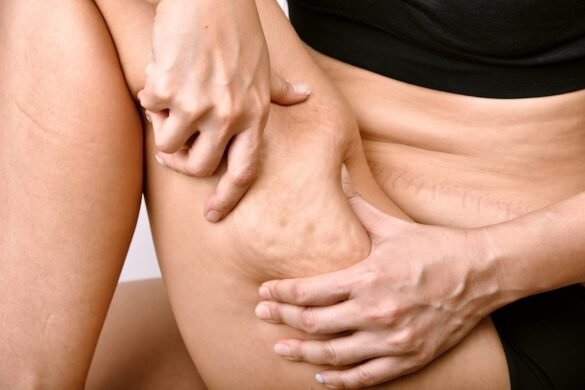
Have you ever heard of mesotherapy? This medical technique involves micro-injections into the skin. It is often mentioned in connection with cellulite, but what can you really expect from it to fight cellulite, and what do the regulations say?
Here is what you need to know before considering it: where the technique comes from, how it works, what sessions involve and cost, and its side effects and contraindications.
What is mesotherapy and what is it used for?
Mesotherapy is a technique that involves microinjecting (with very fine needles) small amounts of substances into the skin. Depending on the practitioner and the indication, these may be medications, minerals, vitamins, enzymes or amino acids.
The name mesotherapy comes from the mesoderm, and the injections are made at a shallow depth, in the skin. It is often presented as a technique for reshaping a specific area of the body, or as an option for people with circulation problems. However, few studies have investigated its potential to reduce the appearance of orange peel skin.
Who invented this method? Where does it come from?
This technique was developed by a French physician, Dr Michel Pistor, in 1952. Since the 1930s, variations had been applied in French “thermal medicine”. Michel Pistor used it both for aesthetic purposes and in the management of acute and chronic pain. It is also practised in sports medicine.
Mesotherapy is often offered against cellulite, but it is also used in other cases. Here are a few examples:
- In aesthetic medicine, for wrinkles (known as mesolifting)
- For certain skin or hair problems
- In sports medicine and in the management of certain types of pain
How does it work?
According to Michel Pistor, injecting small amounts of substances into the skin could act locally, close to the area concerned. In the late 1980s, the French Academy of Medicine recognised this therapy as part of traditional medicine, and the method subsequently spread throughout the world.

Mesotherapy and cellulite: what can you expect?
Mesotherapy is often presented as an anti-cellulite solution, with the practitioner adapting the injected blend to the type of cellulite. However, ingredients and methods vary widely from one practitioner to another. This makes it difficult to determine whether the method truly works, as a number of different processes are involved. Furthermore, few studies have been conducted on the subject.
Good to know: in France, injections performed for aesthetic purposes to destroy fat cells (known as adipocyte lysis), including those using mesotherapy blends, are prohibited by regulations. Be wary of injections presented as a quick fix for cellulite, and ask these questions before any session:
- Are you a doctor, and what is your training?
- What products will you inject, and for what purpose?
- What are the possible side effects?
- How much will the full treatment cost?
How sessions work
Mesotherapy can be performed on various areas of the body:
- the abdomen
- the thighs
- the buttocks
- the hips
- the legs
- the arms
The procedure varies depending on the area of the body treated and the indication. Injections are administered at different depths, ranging from approximately 1 to 4 mm. The small injections are performed by hand or with a small injection gun. To better understand the causes of cellulite, such as fibrosis of fatty tissue or poor circulation, which can lead to the appearance of water retention cellulite, feel free to read our guides.
Is the treatment painful?
The micro-injections are made in the skin, at a shallow depth. They are generally not very painful, and no anaesthesia is required. You may occasionally feel a slight discomfort, and for patients who are particularly sensitive to injections, the specialist will generally apply a topical anaesthetic.
How many sessions are needed?
The number of sessions depends on the area(s) to be treated and the desired outcome, but as a general rule you should expect between 4 and 15 sessions. In most cases, sessions are carried out weekly. They are then spaced further apart. The doses injected are very small, and each session typically lasts around 15 minutes.
In terms of cost, you should budget €70 to €100 per session, which represents a significant investment.
When performed for aesthetic purposes, mesotherapy is not covered by the French national health insurance (Sécurité sociale). Check with your supplementary health insurer.
Preparing for your first consultation
Before committing, take time to speak with the practitioner. Tell them about your medical history, current treatments and any allergies, and ask them to explain how the sessions will work, which products will be used and the total cost. You can ask for a written quote and take time to think it over. Before and after each session, follow the instructions they give you.
When should you review the situation?
Since the procedure involves several sessions, allow at least one month before reviewing the situation with your practitioner for the first time. Effects vary greatly from one person to another.
Side effects
Like any medical procedure, mesotherapy can lead to unwanted effects that you should consider before opting for this method. Here are some possible side effects:
- Bruising, discomfort, redness, scarring, itching, localised allergic reactions or the appearance of eczema caused by sensitivity to one of the injected substances.
- Nausea
- Infections caused by substances or products that are in poor condition, or due to a weakened immune response in the patient.
- Broken small blood vessels or bleeding due to bruising following punctures.
If you take medications such as aspirin or supplements such as ginkgo biloba, ask your doctor for advice before treatment. Bruising that occurs for this reason typically lasts one to three days.
Contraindications
This technique must be performed by qualified professionals. Pregnant or breastfeeding women should avoid it, as should people with heart conditions or cancer. Those with skin infections, psoriasis and other skin conditions that are slow to heal, as well as patients living with HIV, should also refrain.
The best course of action is to speak with a doctor if you are affected by any of these conditions. And if you have any allergies, please inform the specialist before starting treatment so they can assess your individual case.
Cellulite and the passing years can leave their mark on our bodies, and that is perfectly normal. If you are considering mesotherapy, speak to a doctor first, who can advise you.
👉 If you’d like to take care of your skin without a medical procedure, there is an alternative: the anti-cellulite cupping method, easy to do at home! The cupping cup replicates the renowned palpate-roll massage technique. It can be used on the buttocks, thighs, abdomen and arms. There are 2 types of cupping cup depending on what you’re looking for:
- The pure silicone cupping cup: you manually press the cup to replicate the palpate-roll technique
- The electric cupping cup: it suctions the skin and automatically replicates the palpate-roll technique
The cupping tool that replicates pinching and rolling, 3 minutes per zone
- The professionals' technique, at home: you lift, glide, and release, and the tool grips the skin fold like a manual pinching and rolling
- Soft silicone that fits thighs, buttocks, stomach, and arms
- 3 minutes per zone, every day, always with a massage oil so the tool glides

Professional anti-cellulite technology at home
- Designed to smooth the look of dimpling & tone the skin in depth
- Visibly smooths the appearance of orange-peel skin
Useful categories : Anti-Cellulite Solutions.