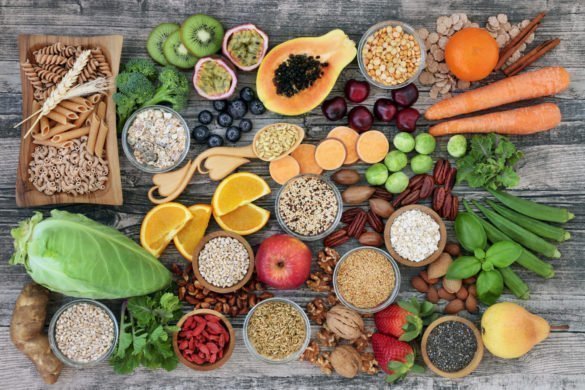

Looking for the best fruits for cellulite? No fruit will make dimples disappear. Fruit does, however, have a place in a varied diet, alongside a routine designed for orange-peel skin. Here’s why it’s worth adding fruit to your plate, followed by 7 fruits to enjoy: pineapple, berries, kiwi, citrus fruits, apple, watermelon and apricot.
Why add fruit to your plate?
Not all fruits have the same make-up, and that’s exactly what makes it worth varying them.
As the seasons change, you can choose fruits that are:
- rich in water, lovely to bite into on hot days;
- a source of potassium, a mineral found in many fruits and vegetables;
- rich in natural antioxidants, such as polyphenols;
- rich in vitamin C;
- rich in fibre, for a balanced diet.
Making these fruits a regular part of your meals or snacks is therefore a great habit to build.
7 fruits to add to your plate
Pineapple
It’s no secret: pineapple is a firm favourite for many of us. Its stem contains bromelain, an enzyme found naturally in the fruit. It is often credited with all sorts of special properties, but no such effect has been shown from eating pineapple. Enjoy it fresh, in a fruit salad or with unsweetened fromage frais: there are so many ways to eat it, you’ll never get bored.
Berries
Strawberries, raspberries, redcurrants, blackcurrants, blueberries: berries are rich in antioxidants.
These include anthocyanins, which give several of these little fruits their red or purple colour.
Berries also contain polyphenols and flavonoids, compounds that are widely studied, although no effect on cellulite has been shown.
As a bonus, these fruits are low in sugar and provide fibre.
Enjoy them fresh or in a smoothie for a little variety throughout the day.
Berries aren’t just for eating — Enjoy them plain or in a smoothie, and discover our ideas for fruit-based drinks to vary the pleasures.!
Kiwi
Kiwi is low in calories and stands out for its vitamin C content, which is higher than an orange’s!
It also provides potassium and antioxidant compounds. Cut in half and eaten with a teaspoon, it makes an easy snack to take with you.
Citrus fruits
Orange, grapefruit, lemon… Citrus fruits are breakfast classics. They provide vitamin C and bioflavonoids, natural antioxidant compounds.
They also contain fibre, such as pectin, and fit easily into a balanced diet.
Enjoy them in the morning, in segments or freshly squeezed at home, to start the day on the right foot!
Apple
The apple is often underestimated, yet it has several interesting qualities.
It is particularly rich in pectin, a soluble fibre.
Easy to take with you, it makes a handy snack or can be cooked into a compote with no added sugar.
Apples also contain a wealth of antioxidants, particularly in their skin.
Watermelon
Watermelon is one of the most water-rich fruits around: it contains more than 90% water.
Fresh and thirst-quenching, it contributes to your daily water intake and is just as good in slices as in a salad.
It also provides a little potassium and suits every mood: on skewers, in a gazpacho or in a salad with feta and mint.
Apricot
Apricot is a delicious summer fruit and a source of potassium. Dried, it is more concentrated in sugars, so stick to a small portion.
It also provides fibre, including pectins. Fresh, it can be enjoyed as it is, roasted in the oven or stewed with no added sugar.
Which fruits are best for cellulite on your thighs?
No fruit targets a specific area of the body: the thighs, like the bottom, are simply places where dimples often show. The best approach is to vary the fruits you eat across your meals, as part of a balanced diet, and to stay physically active. To care for the skin on your thighs, you can round off these good habits with a massage using a massage oil.
Frequently asked questions
Is pineapple a good fruit for cellulite?
No fruit acts directly on cellulite. Pineapple is a delicious fruit that has its place in a varied diet. Its stem contains bromelain, a natural enzyme, but no effect on your figure has been shown from eating the fruit. Enjoy it fresh, in a fruit salad or with unsweetened fromage frais.
Which citrus fruits should I choose?
Orange, grapefruit or lemon: they all work well at breakfast. They provide vitamin C, bioflavonoids and fibre such as pectin. Choose them whole or freshly squeezed at home rather than as shop-bought juice drinks, which are often sweetened.
Is eating these fruits enough to reduce cellulite?
No. No single food acts on cellulite by itself. Fruit is part of a varied, balanced diet, along with staying well hydrated and being physically active on a regular basis. For the look of your skin, you can add a skincare and massage routine.
Related articles
- Cellulite: types, lifestyle, massage and skincare
- Cellulite and diet: evening recipe ideas for the week
- Christmas Cocktails: Light & Festive Recipes
Useful categories: Anti-Cellulite Diet.
To go further, explore the Cellublue shop: our body care products and our anti-cellulite products.

The cupping tool that replicates pinching and rolling, 3 minutes per zone
- The professionals' technique, at home: you lift, glide, and release, and the tool grips the skin fold like a manual pinching and rolling
- Soft silicone that fits thighs, buttocks, stomach, and arms
- 3 minutes per zone, every day, always with a massage oil so the tool glides

The scrub that leaves skin smooth and skin texture refined*
*User test on 21 volunteers over 4 weeks, based on participants' feedback.
- Olive & apricot kernels: these natural grains gently sweep away dead skin cells
- Caffeine & monoi scent, so your shower instantly smells like a holiday
- In the shower, two to three times a week, massaging your thighs, bottom and stomach