Many women have cellulite on their thighs and dream of making it disappear. Unfortunately, it is a natural phenomenon and the factors that trigger it vary. You can still look after this area day to day with diet, hydration, massage, skincare and physical activity, as well as the techniques offered in clinics.
Thigh cellulite: everyday habits
A balanced diet
Balancing your meals with healthy foods is one of the good habits to adopt. Favour foods rich in fibre, antioxidants and potassium.
Hydration
Drinking enough water throughout the day is a good habit, for your body as well as your skin. It is best, however, to cut down on fizzy drinks and other sugary drinks.
Create a wellness routine for your thighs
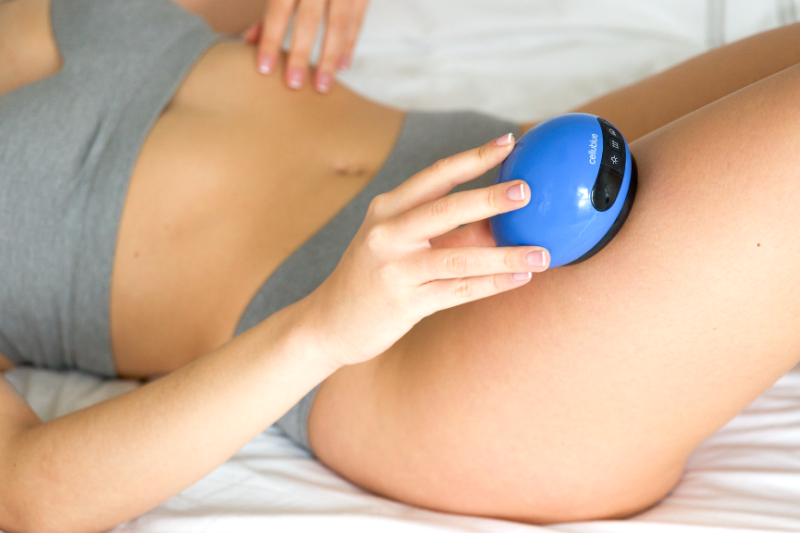
Cellulite on the back of the thighs is a natural phenomenon that affects almost all women. There is no miracle solution. You can, however, look after this area with simple steps, relying on consistency and patience.
Anti-cellulite massages
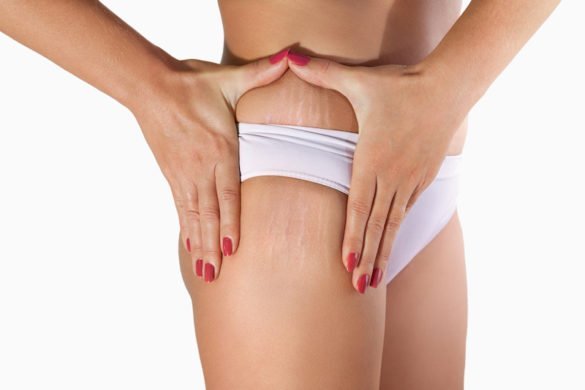
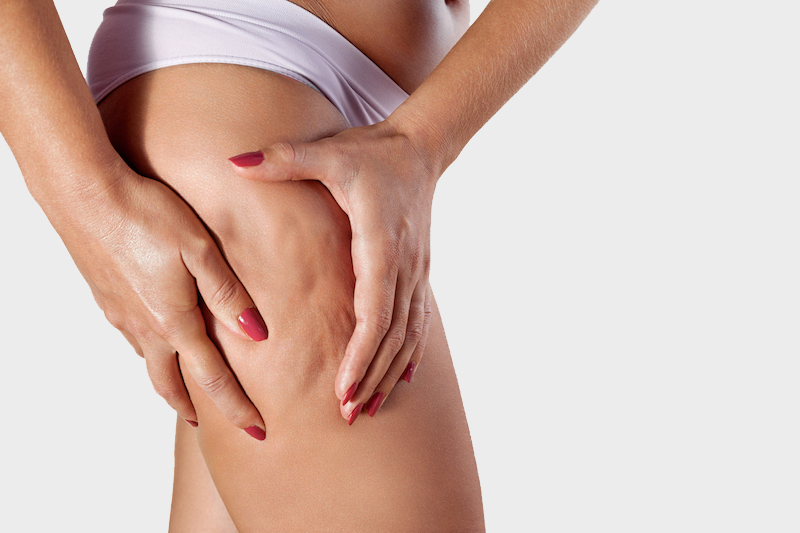
The pinch-and-roll technique consists of vigorously massaging the skin by kneading it in a specific way. This technique is often mentioned in connection with lipolysis. It is a vigorous massage, best done regularly.
At a beauty salon, the beauty therapist reproduces this movement by hand or with a device to reach the deeper layers of the skin.
To perform a pinch-and-roll massage on the thighs easily at home, there are cups available that gently draw up the skin to reproduce this movement.
With these cups, daily massage becomes a simple skincare step. The Anti-Cellulite Cupping Cup is designed for this anti-cellulite massage. Simply use it on the thighs for 3 minutes a day. To find out more, read our article on the anti-cellulite cup.
The cupping tool that replicates pinching and rolling, 3 minutes per zone
- The professionals' technique, at home: you lift, glide, and release, and the tool grips the skin fold like a manual pinching and rolling
- Soft silicone that fits thighs, buttocks, stomach, and arms
- 3 minutes per zone, every day, always with a massage oil so the tool glides
Anti-cellulite treatments
Whether in gels, creams or oils, anti-cellulite products contain active ingredients, either natural in origin (caffeine) or plant-based (green tea, seaweed or guarana).
Regular physical activity
Exercise is part of a balanced lifestyle. Targeted exercises work the leg muscles. Aim to be active at least 3 times a week. Squats are a classic for the thighs, as are walking, aqua biking or fitness, for example.
Techniques carried out in clinics

Cryolipolysis
This technique uses cold to target localised bulges on the body. Fat cells are destroyed by the action of cold. Cryotherapy sessions are generally very expensive.
Mesotherapy
The mesotherapist injects substances into specific areas using a fine needle. These products may include caffeine, collagenase enzymes or artichoke extracts, among others.
Focused ultrasound
Focused ultrasound concentrates energy on a precise point, leading to a rise in temperature that causes the destruction of adipocyte membranes and the release of triglycerides.
Radiofrequency
The principle of radiofrequency is to apply very high-frequency waves to the skin in order to raise the temperature deep down and produce fat destruction. Its action has more impact on skin laxity than on fat destruction.(1)
Cold lasers
This non-invasive technique targets localised fat deposits using light emitted by a diode laser (LED). For 30 minutes, these lights are applied to the areas to be treated. The technique is described as painless.
Shock waves
A wave emitter is applied to the skin, creating a high-amplitude energy pressure impulse that slowly spreads through the tissues. The technique targets cellulite-prone areas.
Sources and references
(1) Blanchemaison P. Cellulite: pathophysiology, diagnosis, evaluation and treatments. EMC (Elsevier Masson SAS, Paris), Cosmetology and Aesthetic Dermatology, 50-480-A-10, 2007. www.samcep.com/site/wp-content/uploads/2014/07/Cellulite-EMC-Blanchemaison.pdf
(2) Blanchemaison P. Three forms of cellulite, three treatment programs: the R-Fat method, J Med Esthet Chir Derm 2005; 33(131) 175-179.
(3) Sivagnanam, G. “Mesotherapy – The french connection” Journal of pharmacology & pharmacotherapeutics vol. 1,1 (2010): 4-8. doi: 10.4103/0976-500X.64529
Frequently asked questions
How can I get rid of cellulite on my thighs at home?
You can combine a balanced diet, good hydration and regular massage. Pinch-and-roll massage is easy to do at home with a cup that gently draws up the skin, for 3 minutes a day on the thighs. Anti-cellulite gels, creams or oils complete the routine.
How do I get rid of thigh cellulite?
Cellulite is a natural phenomenon that affects almost all women, and there is no instant solution. Consistency and patience are the way forward: massage, skincare, exercise and good eating habits together make up a routine to follow over time.
How can exercise help with thigh cellulite?
Squats are often recommended for working the thighs, as are walking, aqua biking and fitness. Ideally, aim to be active at least 3 times a week, alongside the massage and skincare described in this article.
Should I see a doctor before having a cellulite treatment?
Yes. Cryolipolysis, mesotherapy, focused ultrasound, radiofrequency, cold lasers and shock waves are all techniques carried out by professionals. Ask a doctor whether any of them is right for you, especially if you have a medical condition.
Related articles
Useful categories: Thigh Cellulite.