“For your health, avoid eating too much fat, sugar, or salt.” You’ve heard that one before, right ladies? We already know why fat and sugar are bad for our health (and our figure!), but we sometimes forget that salt deserves our attention too. This quick reminder will help you understand its place in your diet and the everyday habits that make it easier to cut down.
Our salt intake
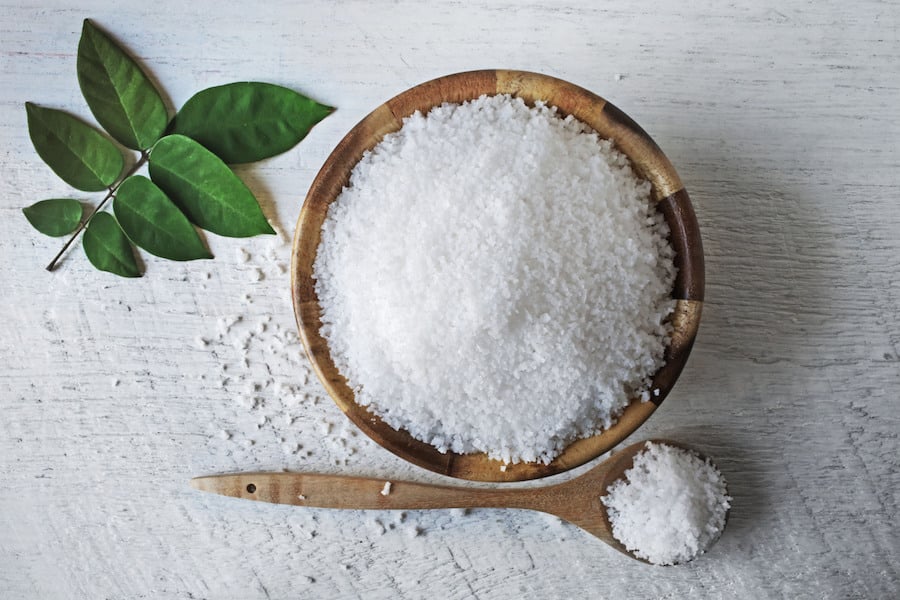
Numerous studies have shown that people tend to consume far too much salt. In fact, the average adult takes in around 9 g of salt per day, instead of the recommended 5 g! Those 9 grams of salt come not only from the food we eat, but also from the salt we add to our meals.
Most of the salt we consume comes from bread, cheese, deli meats, ready-made meals, high-calorie dishes (pizzas, quiches…) and even pre-packaged soups! Watch out for “hidden” salt too! Did you know, for example, that your breakfast cereals or afternoon biscuits contain salt? Salt is a flavour enhancer, so food manufacturers don’t hesitate to add it to make their products taste better.
Our tip: always check the labels on the products you buy to find out their salt content.
The consequences of too much salt
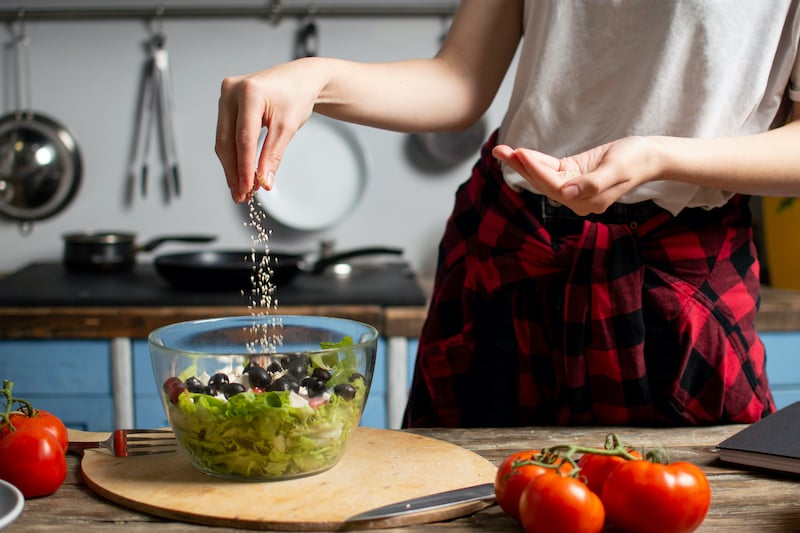
Consuming more than 5 grams of salt per day can have serious effects on your health: high blood pressure, cardiovascular disease, stomach problems, weakened bones…
But in the short term, salt is often associated with water retention, a topic that often comes up when people talk about orange-peel skin. It isn’t your enemy, though. So there’s no need to go without salt: just build a few simple habits, such as cutting back on salt and fats, finding the proper balance in our meals and creating tasty dishes with what’s in your store cupboard!
Salt is also responsible for much of the flavour in our dishes, as it tends to bring out their taste. The good news: cutting back doesn’t mean eating bland food! Reaching for the salt cellar is often a premature reflex, and from roasted vegetables to crispy chicken skin, there are plenty of other ways to add flavour, as you’ll see.
What can you use instead of salt?
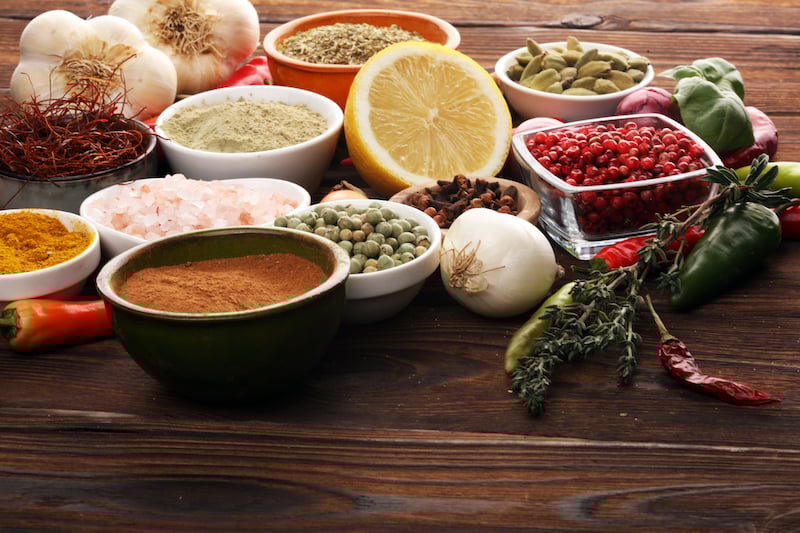
The first step is to stop salting our food before we’ve even tasted it. It’s a habit we slip into without even thinking, ladies! Also make sure you read nutrition labels carefully to avoid any unpleasant surprises.
Fortunately, there are plenty of tasty alternatives to salt when you’re preparing your meals. You’ll soon realise you can get along just fine without it!
Lemon juice
Did you know? You can easily use lemon juice in your recipes instead of salt. Its acidity brings out the flavour of your dishes. Try boiling your pasta in lemony water, adding lemon juice to your salad dressing, or serving your fish with a light lemon sauce!
Spices
This is one of the most popular ways to replace salt! Spices let you add colour and flavour to your dishes without any salt: soups, meat, fish, vegetables, pasta… Try, for example, cinnamon, chilli, turmeric or ginger. Just use as much as suits your taste!
Herbs as a salt substitute
Parsley, coriander, basil, thyme, rosemary… You’re spoilt for choice! You’ll add so much more flavour to your dishes, all without a pinch of salt. You can even grow them at home in small pots so you always have some to hand. Use fresh herbs in your soups, salads, quiches, omelettes, white meats and more.
Apple cider vinegar
Apple cider vinegar can stand in for salt in some of your dressings. Its tangy flavour partly makes up for the missing salt! Used in the right quantities, it can season your salads, raw vegetables, pasta or fish.
Nori seaweed
Seaweed instead of salt? It can work! This type of seaweed is sold in sheets or flakes. It can be eaten raw with your salads or fish, or cooked in soups, gratins or pasta. It’s a nice way to bring a different flavour to your dishes.
Sea salt
Sea salt is still a salt: it contains sodium chloride too. If you like its taste, use it just as sparingly!
As you can see, ladies, cutting back on salt is not about avoiding it altogether. Keeping a light hand on salt is one of those good everyday habits.
To look after your skin day to day, we recommend a trio:
- a healthy diet
- regular physical activity
- cupping massage with your Anti-Cellulite Cupping Cup
But to go further with your everyday habits, you can also discover our dietary supplement, to be diluted in water.
Frequently asked questions
Does salt contain calories?
No, salt itself doesn’t contain any calories. However, be careful with very salty foods, which are often high in calories too: deli meats, ready meals, pizzas or quiches. If you have a personal health question, ask your GP or a healthcare professional for advice.
Related articles
- Watermelon: Summer Recipes from Granita to Gazpacho
- Bloated Belly: Eating Habits, Exercise and Massage
- Why and how to drink more water every day?
Useful categories: Slimming Nutrition.