Cellulite affects the vast majority of women. Slim or curvy, almost no woman is spared. What if technology could help soften its appearance? Shock wave treatment, originally used in urology, has gradually expanded into a range of other uses, including aesthetic medicine, where it is now offered to soften the look of cellulite. Here’s a closer look at this technique: how it works, what a session involves, possible side effects, contraindications, cost and at-home alternatives.
How does shock wave treatment work against cellulite?
Behind this rather intimidating name lies a non-invasive, painless procedure. To understand how shock waves work, it helps to look more closely at the different stages of cellulite development:
- Stage 1: early signs of impaired skin microcirculation, with no visible symptoms.
- Stage 2: development of the orange peel appearance, with vasodilation and water release into the intercellular space (i.e. between adipocytes).
- Stage 3: onset of fibrosis, with an increase in the number of adipocytes, their size and membrane thickness; cellulite becomes thicker and more hardened.
- Stage 4: sclerosis phase, with progressive thickening and stiffening of the fibrous tissue.
According to the practitioners who offer it, this technique aims to:
- Boost microcirculation, slowed down by hypertrophied adipocytes (overloaded with fat)
- Reduce fibrosis and soften hardened collagen fibres (connective tissue)
- Stimulate lipolysis, i.e. the draining of adipocytes
- Stimulate the production of “new” collagen
Shock waves — which are in fact acoustic waves — emit vibrations that travel through the different layers of the skin to reach the cellulite.
What happens during a shock wave session?
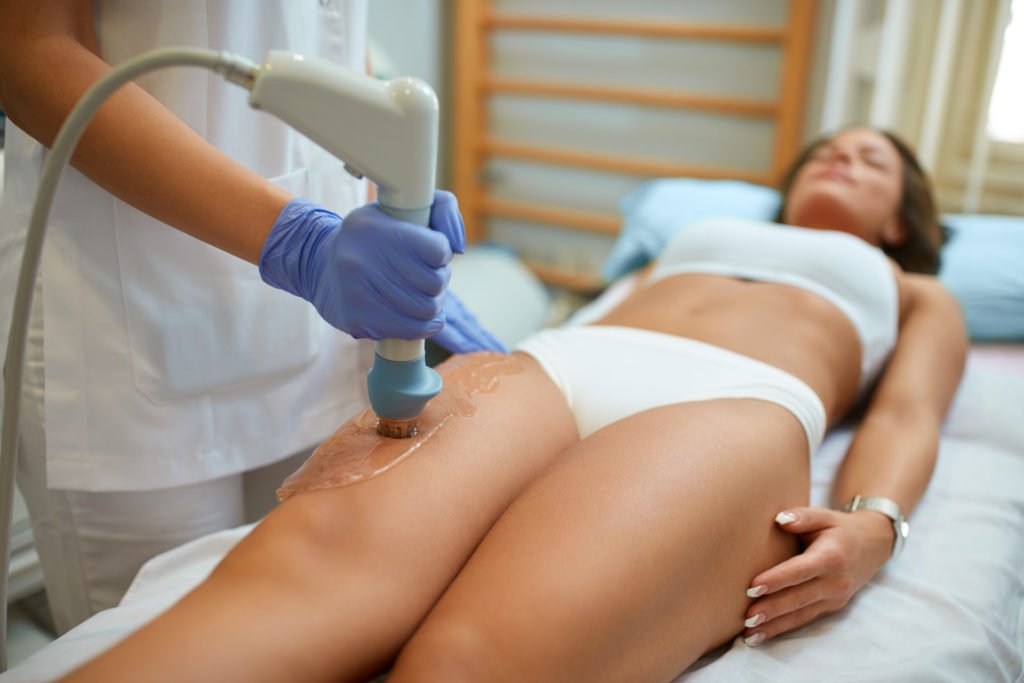
- The doctor or practitioner begins by identifying the area to be treated, following careful palpation and examination of the skin.
- The skin is then cleansed and coated with a conductive gel.
- The transmitter device is passed over the treatment area several times. The sensation is not painful and feels similar to a vigorous massage.
Each session lasts between 15 and 30 minutes, depending on the size of the area being treated. Shock wave treatment can be used on larger areas (thighs, stomach, buttocks), as well as on smaller zones where cellulite can be harder to tackle (knees, arms, love handles).
What are the effects of shock wave treatment on cellulite?
1- Results
Around ten sessions of shock wave therapy are generally recommended for hardened cellulite. That said, results vary considerably from one person to the next, and the available studies remain limited: ask your doctor what you can reasonably expect in your case. What you notice also depends on your lifestyle after the treatment. Maintenance sessions are recommended (every 1 to 2 months).
2- Side effects
Shock wave treatment may cause some unwanted side effects, such as:
- Redness
- Muscle soreness or discomfort
- Minor bruising or haematomas that resolve quickly
- Petechiae
- Temporary swelling and numbness in the treated area
Are there any contraindications to shock wave treatment?
Like all aesthetic treatments, shock wave therapy is not recommended for:
- Pregnant or breastfeeding women, and minors
- People with an active infection or inflammatory condition
- Patients with clotting disorders or on anticoagulant therapy
- Patients with a pacemaker
- Patients with skin conditions or tumours
- People on corticosteroid treatment
- Haemophiliacs
Who performs shock wave treatment and what does it cost?
Shock wave treatment for aesthetic purposes — reducing the appearance of cellulite — must be performed by a qualified aesthetic doctor. Sessions are not covered by health insurance, as they aim to improve the appearance of cellulite rather than treat a medical condition. It is not advisable to undergo shock wave treatment for cellulite outside of a medical setting.
As for the price, it will depend on the size of the area being treated. As a general guide, for shock wave treatment alone (i.e. not combined with lipolysis reduction,mesotherapy or cryotherapy), expect to pay between €50 and €100 per session.
What are the alternatives to shock wave treatment?
If you’d like to do something about your cellulite but feel hesitant about visiting an aesthetic doctor, or if the cost of shock wave treatment puts you off, you can simply set up an anti-cellulite routine… at home!
At home, you can also look after the areas concerned, including fibrous cellulite, with skincare products and regular massage. Our Anti-Cellulite Method Pack gives you everything you need to care for your skin. It includes:
- A scrub made with natural ingredients, to care for areas of orange peel skin
- Massage oils to prepare the skin
- Massage accessories, including our iconic Cellublue Cup and our Orange Peel Massager, to massage even the most stubborn cellulite!
- Two PDF guides, offering coaching and support, so you’re never left feeling alone with your dimples
With our routine, you can care for areas marked by the bumpy, dimpled look of orange peel skin. Massage lets you work on areas of stubborn cellulite (thanks to the suction of the cup), massage the skin with the nodule-covered massager and look after your skin (hydration from natural plant oils). And let’s not forget the feel-good factor: this routine is also a chance to reconnect with your body, pamper yourself and carve out a little time that’s just for you!
Related articles
- Stretch Marks: Homemade Body Care Recipe
- Want a home treatment after working out? Here are 2!
- Does a sisal mitt really work against cellulite?
Useful categories: Anti-Cellulite Care.