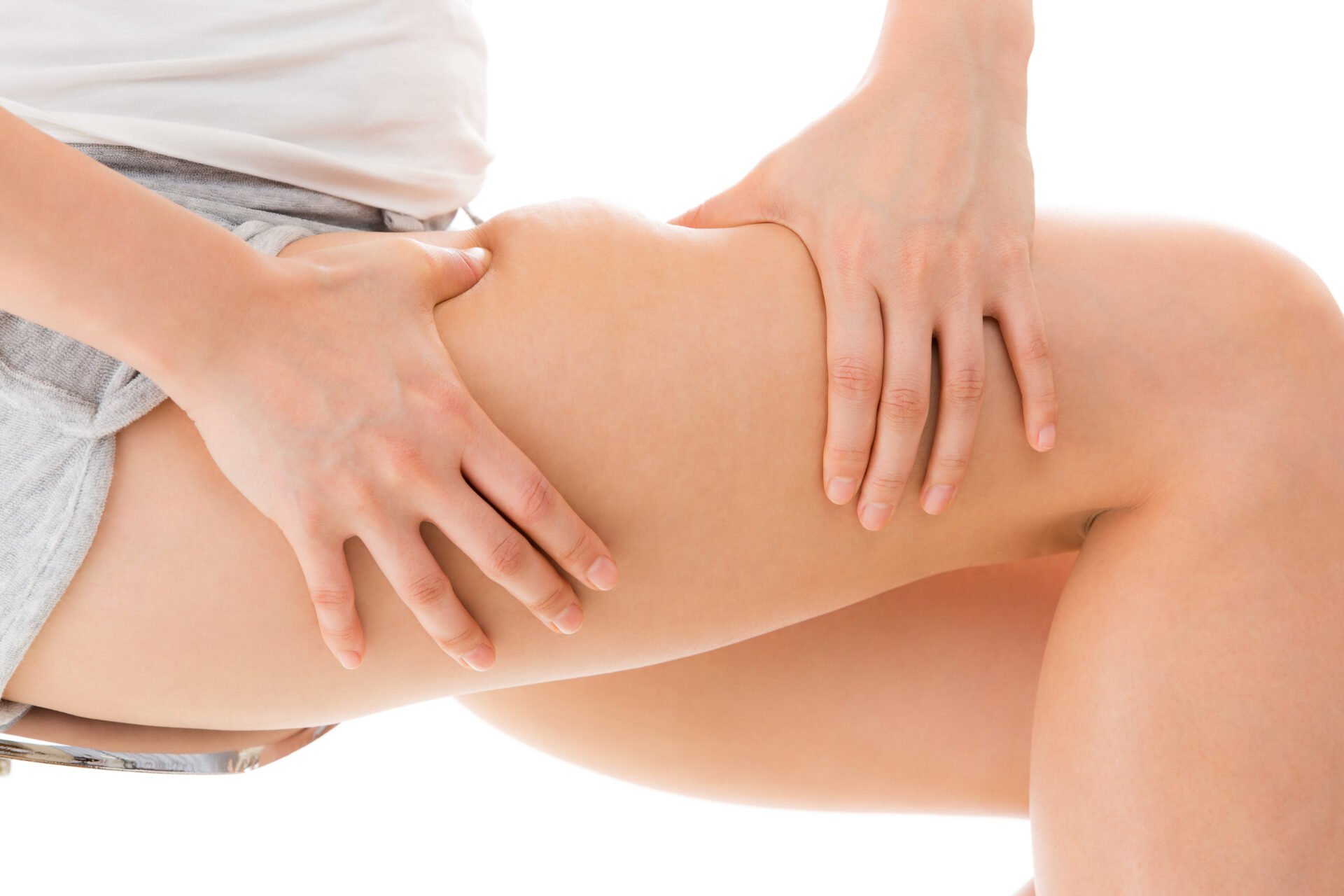
Your thighs feel swollen, their volume fluctuates with your cycle and your legs feel heavy? It could be water retention. To better understand this phenomenon and find solutions to combat this uncomfortable and unsightly fluid build-up, read on.
Sommaire
What is water retention?
1- A quick look at the physiological phenomenon
Water retention results from increased permeability of the blood vessels. The body is made up of approximately 65% water, which circulates throughout via the venous system. However, under certain circumstances, veno-lymphatic circulation can become impaired. Blood and lymph struggle to travel back up towards the upper body. Fluids then stagnate in the ankles, legs and thighs. Under the effect of this stagnation, the vessels dilate and become porous. The water inside can then escape and becomes trapped in the tissues. This is water retention.
2- What are the causes and aggravating factors of water retention?
There are many causes of water retention. Some are congenital, others occur at specific moments in life, and some are simply factors that encourage water retention. The most common causes include:
- Veno-lymphatic insufficiency: this is often hereditary and affects both men and women. Poor venous return can cause water retention and, consequently, oedema in the lower body (thighs, knees, legs, ankles).
- Hormonal fluctuations: certain female hormones encourage water retention – for example in cases of hyperoestrogenia, which often occurs during pregnancy or perimenopause.
- Certain medications: antihypertensives, anti-inflammatories, corticosteroids or a poorly suited contraceptive pill can encourage water retention.
- Certain medical conditions: renal, cardiac, venous or thyroid conditions can lead to water retention.
- A poor diet: it is well known that excessive consumption of salt and salty foods can worsen water retention. The culprit is sodium, which naturally “attracts” water.
- Heat: it causes vasodilation and therefore increases the porosity of blood and lymphatic vessels.
- Tight clothing: wearing clothes or shoes that are too tight (thigh-high boots, regular boots, narrow trousers) can hinder the proper circulation of vital fluids and, as a result, worsen water retention in the thighs and legs.
- Static positions: whether sitting or standing for long periods (including prolonged standing on the spot). Immobility slows venous return and can therefore cause oedema typical of water retention in the lower body.
- Smoking: smoking is extremely damaging to veno-arterial tone.
- Dehydration: it does not systematically cause water retention, but it is a contributing factor. When the body lacks its required water intake, it will naturally tend to store more of it!
3- What are the consequences of water retention?
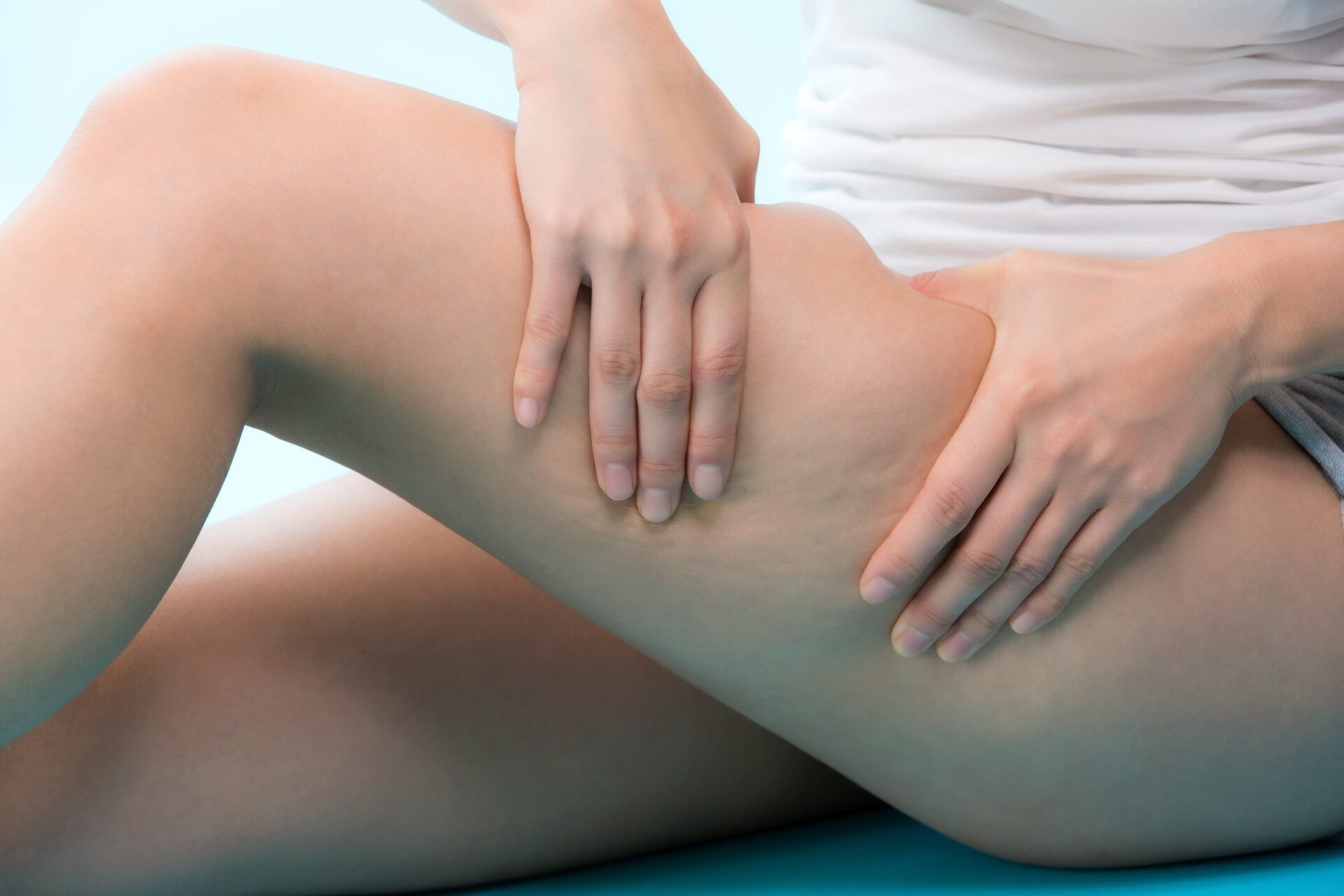
- Oedema: these are painless but uncomfortable and unsightly swellings in certain areas of the body. They can affect the face (puffy appearance, swollen eyelids) as well as the extremities (swollen fingers and feet). Most of the time, however, due to gravity, water “stays low” and it is the lower limbs that are affected: thighs, knees, legs, ankles.
- Aqueous cellulite : it is a direct consequence of water retention. It has a puffy appearance, is not painful to the touch, and is visible when the skin is pinched.
- The sensation of heavy legs : paraesthesia, tingling, a feeling of heaviness, or even a burning sensation. Water retention can be responsible for the heavy legs symptom.
- Weight gain: another consequence associated with water retention, much to our dismay. It is in fact very common for women to gain weight at certain points in their menstrual cycle without any obvious explanation (larger thighs, bloated stomach, heavier chest). This is not fat – it is simply water!
How can you combat water retention in the thighs?
It all depends on the underlying causes of the water retention. That said, there are a few lifestyle and dietary habits you can adopt to help reduce its effects. It may then be possible to achieve slimmer thighs with less fluid build-up.
1- Dietary habits

Drastic problems call for drastic solutions! To combat water retention in the thighs and legs, the first step is to keep your sodium intake in check. Cut back on salt and opt for spices instead. Say no to high-sodium foods – that means all processed and ready-made products, which use sodium as a flavour enhancer. Better to get back in the kitchen and prepare wholesome, home-cooked meals!
You can also choose certain foods with venotonic properties to support your venous health: red berries, grapes, green leafy vegetables, oily nuts and seeds (almonds, walnuts, hazelnuts), wholegrains, cold-pressed vegetable oils, and dark chocolate.
Finally, you can turn to plants with diuretic and draining properties, which will support the healthy drainage of excess water. There are many to choose from: witch hazel, butcher’s broom, sweet clover, cypress, red vine and horse chestnut. They can be taken as capsules or herbal teas, or even as draining drinks. Our Water Retention Drainer is a great example: its formula based on green tea, ash tree, ulva algae and papaya supports the healthy elimination of excess water and helps reduce water retention. Simply dissolve it in your drinking water – it also encourages you to drink throughout the day, helping to keep dehydration at bay!

2- Lifestyle habits

To combat water retention in the thighs, it is also important to adopt the right daily habits.
Avoid a sedentary lifestyle. If you spend the entire day sitting at your computer without moving, it is no surprise that water retention in the thighs follows! Aqueous cellulite is no fan of physical activity. Make a point of getting up regularly to take a few steps, and bring more movement into your daily routine: walk whenever you can, take your dog out for a stroll, play with your children, cycle to the shops… As for regular exercise, do we really need to remind you how essential it is for your wellbeing? On top of helping you fight water retention, it will help you stay in shape and feel good in yourself!
Also avoid all the factors that encourage water retention in the thighs:
- Tight-fitting clothing – say goodbye to skinny jeans and opt for flowing skirts and comfortable trousers instead.
- Sources of heat – prolonged sun exposure, scalding baths, excessive heating – time to cut back!
- Quitting smoking is well worth considering… You know full well that beyond contributing to water retention, it is toxic to the entire body. Dull complexion, lacklustre skin, poor stamina, breathlessness… Need we say more?
- Positions that are bad for circulation – crouching, crossing your legs, curling up…
To combat water retention and the aqueous cellulite that comes with it, here is what we recommend instead:
- Elevate your legs whenever possible, especially in the evening and at night.
- End your shower with a cold water rinse over your legs and thighs to boost veno-lymphatic circulation.
- Adopt a targeted routine. For example, try our Anti-Water Retention Pack to give your body a helping hand, say goodbye to stubborn water retention and rediscover lighter-feeling legs. The pack contains:
- 1 Gua Sha and its draining massage oil to stimulate your circulation
- 1 heavy legs gel with a refreshing effect for instant relief
- 1 heavy legs booster to enhance results
This pack is your best ally for lighter, more comfortable legs!

3- Seeing a doctor

If, despite all your efforts, your thighs remain affected by uncomfortable water retention and the oedema does not subside, it may be wise to consult your doctor. Your water retention could be linked to a more serious underlying condition. Your healthcare professional will carry out a full assessment to determine whether the aqueous cellulite affecting your thighs is caused by veno-lymphatic insufficiency, a hormonal imbalance or another condition. They will then be able to recommend appropriate treatment:
- A blood test to assess possible renal or thyroid insufficiency.
- Potential sessions of lymphatic drainage and/or pressotherapy with a physiotherapist.
- A further assessment with an angiologist (Doppler ultrasound to detect venous insufficiency, lymphoedema, lipoedema…).
- A consultation with your gynaecologist to review your contraception, manage the effects of PMS or perimenopause…