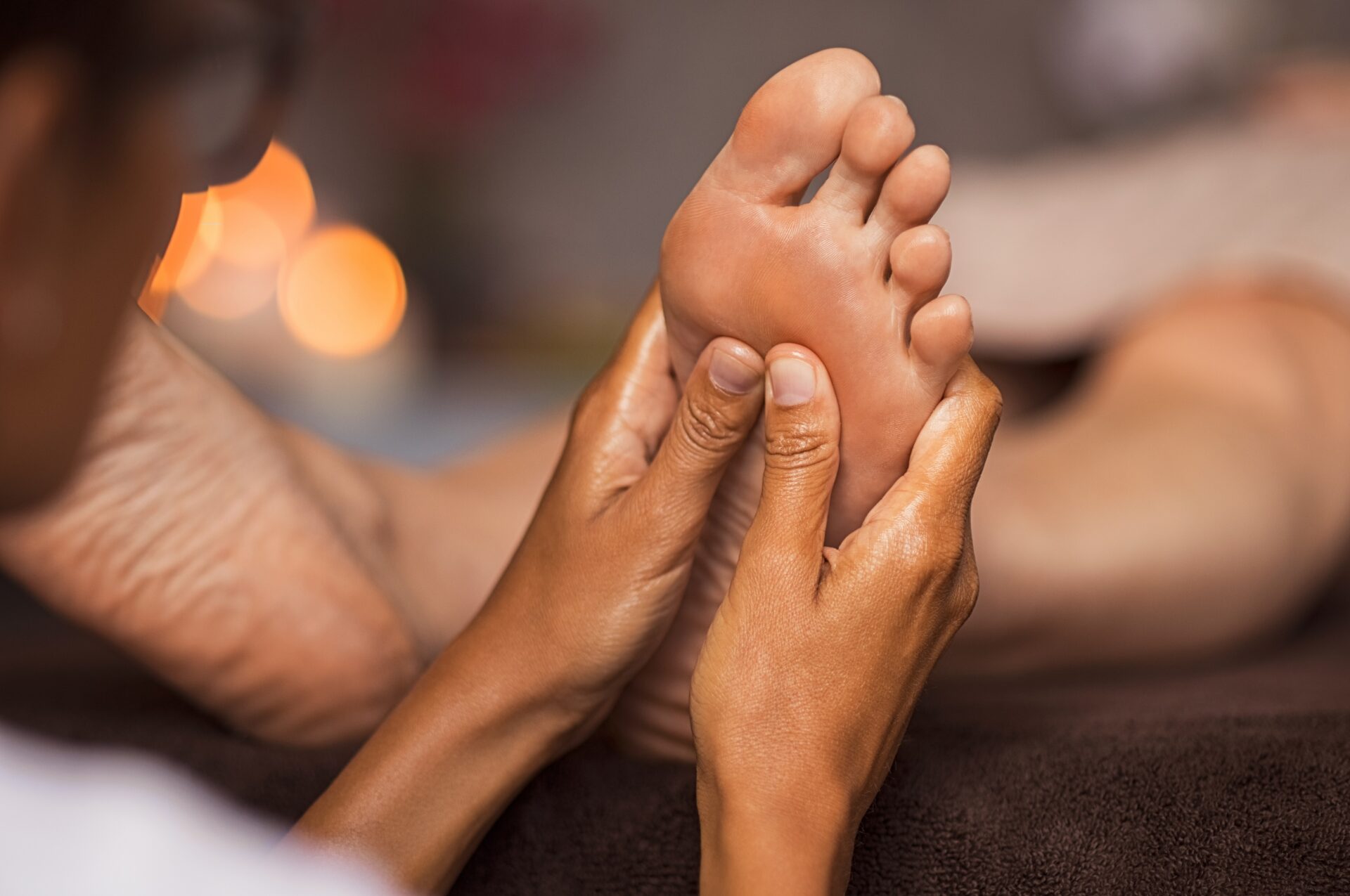
If you have a keen interest in holistic therapies, you’ve likely come across foot reflexology. This somewhat enigmatic practice claims to prevent or relieve minor ailments through targeted foot massage. But what should we make of foot reflexology — and could it actually be effective against cellulite?
What is foot reflexology?
Foot reflexology is an alternative therapy based on stimulating reflex zones located on the feet. Each zone is said to correspond to an organ, a body part, or a physiological function. Stimulating these zones through specific techniques (pinching, friction, massage, acupressure) is believed to help identify potential health imbalances, ease their impact, and more broadly restore the body’s natural equilibrium.
There are several schools of foot reflexology:
- The Chinese school, which draws on the principles of Traditional Chinese Medicine (acupuncture, moxibustion), and aims to restore vital energy.
- The Thai school, where the practitioner uses maderotherapy to apply firm pressure to specific points.
- The American school, which draws more heavily on Western medical physiology.
- The South African school, which focuses on emotional release through gentle manipulation.
Foot reflexology should not be confused with hand reflexology (palmotherapy), facial reflexology (or faciotherapy, which targets acupressure points on the face), Dien Chan (ocular and cranial reflexology), sympathicotherapy (nose) or auriculotherapy (ears) — even though these disciplines share similar principles and goals.
What are the principles behind foot reflexology?
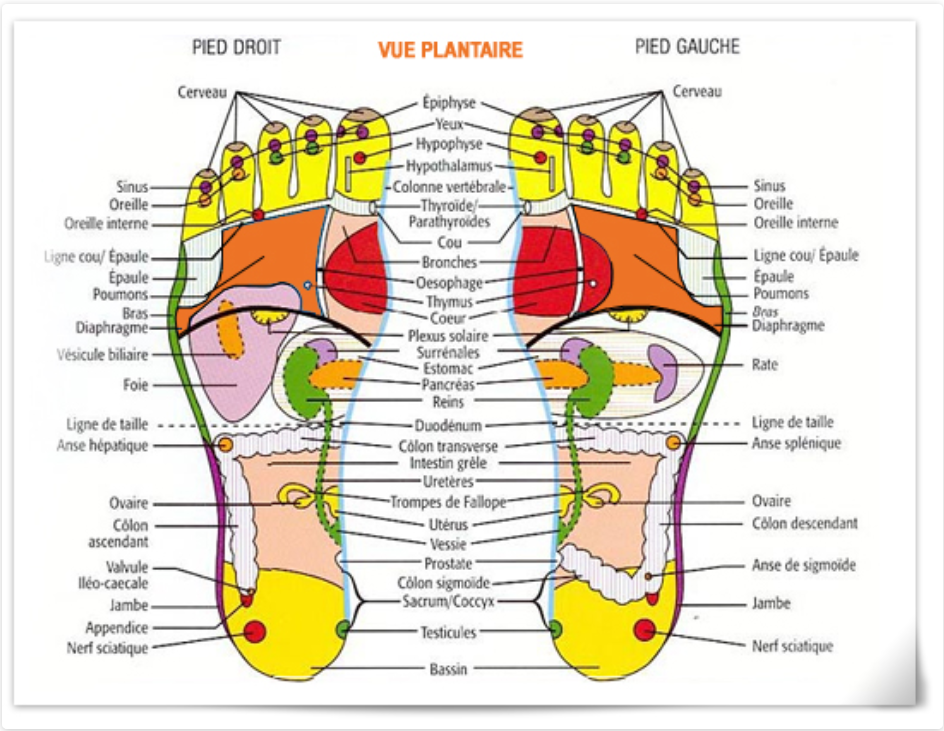
According to foot reflexology, every organ, gland, or body part is linked to a specific zone on the sole of the foot, the toes, or the heels. Each zone on the left side of the body is said to be mirrored by a reflex zone on the left foot, and vice versa for the right side. Stimulating the plantar nerve endings — of which there are reportedly 7,200 — is thought to have a positive impact on how the body functions. In this way, the feet are seen as a kind of miniature map of the human body, laid out as follows(1):
What are the supposed benefits of foot reflexology?
The primary benefit of foot reflexology is said to be activating the body’s self-healing process and rebalancing its energies. It is believed to help drain toxins from the body, relieve certain types of pain (temporary or chronic), and ease the symptoms of long-term conditions. That said, reflexologists are clear: the therapy can help prevent or soothe minor complaints, but it cannot replace conventional medical treatment for serious conditions. It should therefore be seen as a complementary approach that supports, rather than substitutes, traditional medicine.
Beyond physical discomfort, foot reflexology may also support mental wellbeing by inducing a state of deep relaxation. It could help reduce anxiety, improve sleep quality, or ease symptoms linked to hormonal fluctuations (menopause, premenstrual syndrome, pregnancy) such as negative emotions (irritability, mood swings, stress…). Foot reflexology may also support recovery from addictive behaviours (tobacco, alcohol, eating disorders…).
It is also considered a preventive tool. It is said to boost overall vitality and strengthen various bodily functions, including the immune system, digestion, respiratory ease, and nervous system health.
Finally, foot reflexology is widely used to help ease the side effects of certain medications, and is said to improve quality of life for patients living with serious and/or debilitating chronic conditions.
Can foot reflexology be considered a treatment for cellulite?
The cellulite is a benign skin condition that affects the vast majority of women. It results from a combination of several factors:
- Adipocyte hypertrophy (excess fat accumulation in subcutaneous fat cells)
- Veno-lymphatic dysfunction leading to water retention and a build-up of waste products in the connective tissues
- Disruption of the skin’s elastic network.
These three factors also help explain the different types of cellulite: the first is characteristic of adipose cellulite, the second of aqueous cellulite and the third of fibrous cellulite.
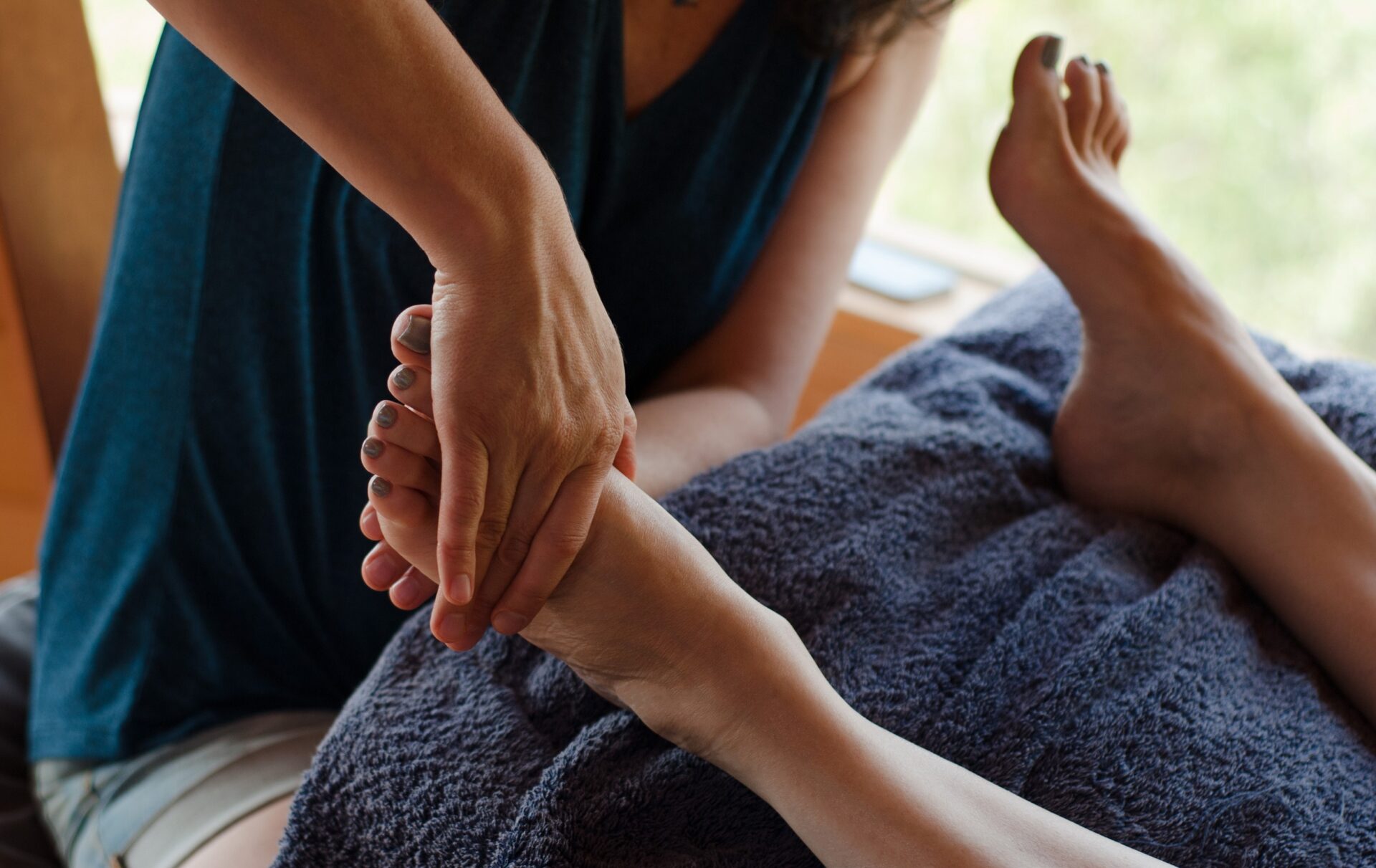
Foot reflexology is primarily suited to women with aqueous cellulite, which is characterised by poor lymphatic drainage. The skin, congested with toxins and fluid, takes on a puffy, dimpled appearance. Foot reflexology aims to act on several levels to reduce water retention and, ultimately, address aqueous cellulite:
- Working on overall relaxation, to help the client unwind and reconnect with her body through the feet.
- Applying a detoxifying protocol to stimulate lymphatic circulation. The reflexologist will work on the left foot, targeting the reflex zone of the spleen, which is part of the lymphoid tissue.
- Finally, working on kidney tonification (via the corresponding reflex zone on each foot) to support elimination.
As few as two foot reflexology sessions are said to produce noticeable results: lighter legs, softer and less congested skin, and a visible reduction in cellulite. Of course, the therapist will also recommend complementary lifestyle measures to enhance results: a balanced diet, regular physical activity, adequate rest, and plenty of water.
Limitations, contraindications, and complementary approaches to foot reflexology
It is worth noting from the outset that no clinical trials or studies have confirmed the effectiveness of foot reflexology, either as a diagnostic or therapeutic tool. Everyone is therefore free to form their own opinion on this practice.
While contraindications are relatively few, foot reflexology should be avoided in the following cases:
- Any condition or injury affecting the feet or ankles, such as a fungal infection, wound, or injury.
- Recent and confirmed vascular issues, such as deep vein thrombosis (also known as phlebitis).
- Cardiac conditions or high cardiovascular risk.
- First trimester of pregnancy.
- Active inflammatory or infectious disease.
- Acute-phase illness — shingles, gout, asthma, herpes…
- Severe psychiatric disorders.
Finally, as mentioned above, foot reflexology alone cannot fully resolve cellulite. To complement the therapy effectively, an anti-cellulite routine is a great addition — such as our Pack Maxi Anti-Cellulite :
- Our Cellulite Scrub not only removes dead skin cells (to maximise the effectiveness of other treatments), but also stimulates microcirculation and helps break down fat deposits through mechanical action.
- Our Cupping Massage Tool and our Orange Peel Massager, for effective daily massage. The cupping tool faithfully replicates the palpate-roll technique (the go-to anti-cellulite massage), while the massager supports lymphatic drainage.
- Our massage oils (shower and anti-cellulite) to ease massage movements while firming the skin. Formulated with lipolytic actives (grapefruit, pineapple) and draining ingredients (ivy, green tea), for smoother, dimple-free skin.
- Our Cryo Anti-Cellulite Cream, a bathroom essential for anyone tackling cellulite. It targets all types of cellulite and can be applied to any area of the body. Enriched with 3% coffee and green coffee at 2%, it promotes fat breakdown for visibly smoother skin, fast.
References
(1) Diagram, www.betterbeingformation.com