If you have a keen interest in holistic therapies, you’ve probably come across foot reflexology. This somewhat enigmatic practice centres on massaging specific areas of the feet. So what should we make of foot reflexology, and could it have any bearing on cellulite? Here we look at its principles, what its practitioners say about it and what they claim when it comes to orange-peel skin. We’ll also explain how it differs from acupressure and acupuncture, and cover its limitations and contraindications.
What is foot reflexology?
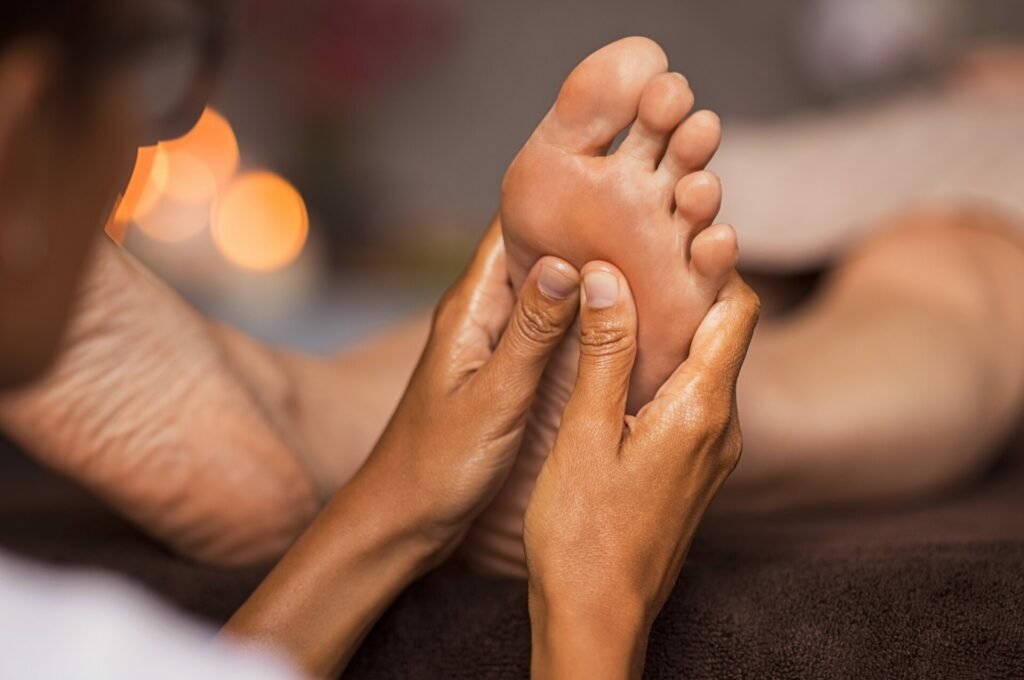
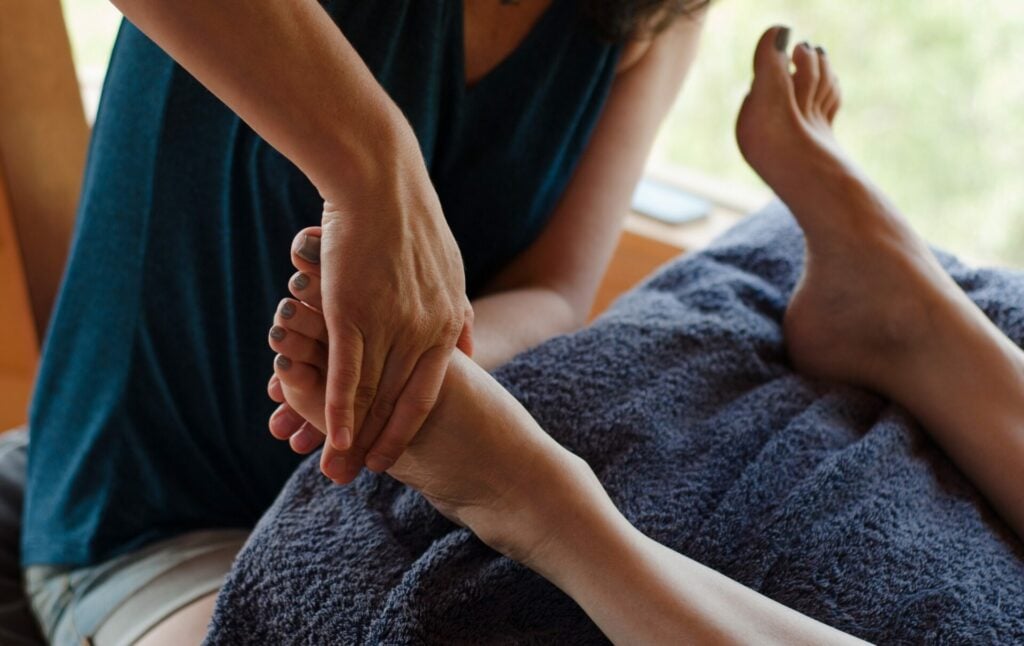
Foot reflexology is an alternative practice based on working on reflex zones on the feet. Its practitioners believe that each zone corresponds to an organ, a part of the body or a physiological function. They work on these zones using specific techniques: pinching, friction, massage and finger pressure. These principles have not been confirmed by conventional medicine.
There are several schools of foot reflexology:
- The Chinese school, which draws on the principles of Traditional Chinese Medicine (acupuncture, moxibustion), and aims to restore vital energy.
- The Thai school, where the practitioner uses maderotherapy to apply firm pressure to specific points.
- The American school, which draws more heavily on Western medical physiology.
- The South African school, which focuses on emotional release through gentle manipulation.
Foot reflexology should not be confused with hand reflexology (palmotherapy), facial reflexology (or faciotherapy, which targets acupressure points on the face), Dien Chan (ocular and cranial reflexology), sympathicotherapy (nose) or auriculotherapy (ears) — even though these disciplines share similar principles and goals.
What are the principles behind foot reflexology?
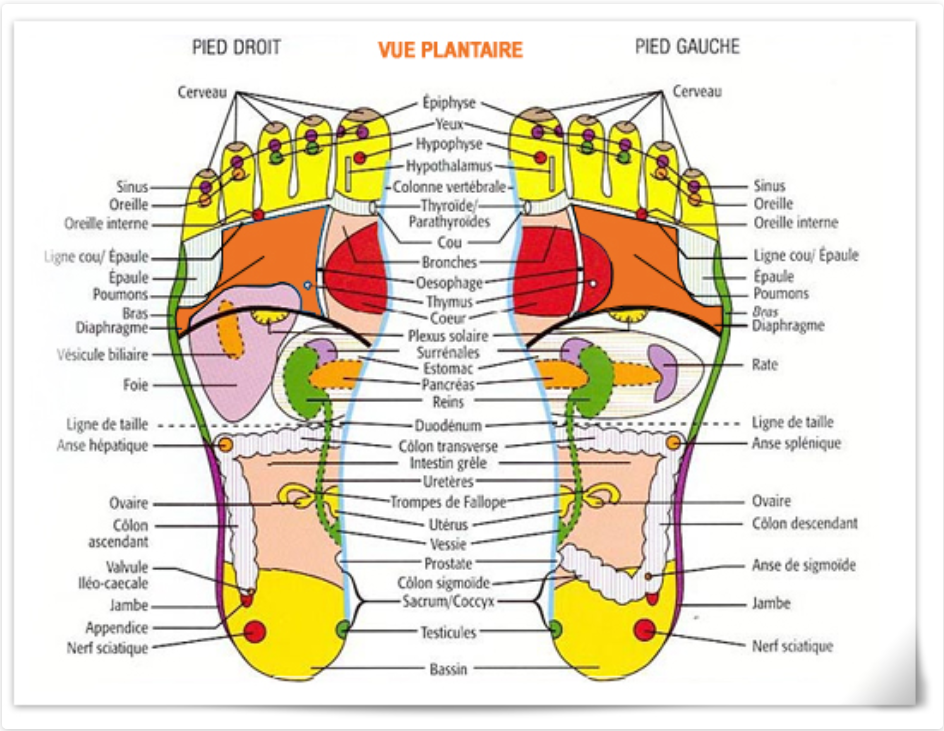
According to foot reflexology, every organ, gland or part of the body is linked to a specific zone on the sole of the foot, the toes or the heels. Each zone on the left side of the body is said to be mirrored by a reflex zone on the left foot, and the same goes for the right side. The soles of the feet reportedly contain 7,200 nerve endings, and reflexologists associate each zone with a different part of the body. In this way, the feet are seen as a kind of miniature map of the human body, laid out as follows (1):
What do reflexologists claim?
For its practitioners, foot reflexology is above all a moment of wellbeing and relaxation. The benefits sometimes attributed to it have not been demonstrated, and if water retention is what concerns you, you’ll find other approaches in our dedicated article. Reflexologists themselves are clear: their practice can never replace medical advice or medical care. It should therefore be seen as a moment of relaxation alongside, and never instead of, any treatment prescribed by a doctor.
Many people value foot reflexology above all for the relaxing moment it offers. Some turn to it during times of hormonal change (menopause, premenstrual syndrome, pregnancy) or emotionally charged periods (irritability, mood swings, stress…). Others discover it while giving up smoking or alcohol, which should always be done with the support of a healthcare professional.

The cupping tool that replicates pinching and rolling, 3 minutes per zone
- The professionals' technique, at home: you lift, glide, and release, and the tool grips the skin fold like a manual pinching and rolling
- Soft silicone that fits thighs, buttocks, stomach, and arms
- 3 minutes per zone, every day, always with a massage oil so the tool glides
Some practitioners also present it as a regular wellbeing ritual. The claims they sometimes make, about digestion or breathing for example, have not been confirmed by any study.
Finally, some people simply enjoy it as a moment of relaxation. Anyone receiving medical care should check with their doctor before booking a session.
Can foot reflexology help with cellulite?
Cellulite is a benign skin condition that affects the vast majority of women. It results from a combination of several factors:
- Adipocyte hypertrophy (excess fat stored in the fat cells beneath the skin)
- Veno-lymphatic dysfunction leading to water retention, with fluid building up in the tissues
- Disruption of the skin’s elastic network.
These three factors also help explain the different types of cellulite: the first is characteristic of adipose cellulite, the second of aqueous cellulite, and the third of fibrous cellulite.
Foot reflexology is mainly aimed at women with aqueous cellulite, which is linked to poor lymphatic circulation. The skin, holding excess fluid, takes on a puffy, dimpled look. Reflexologists suggest working on several fronts, although there is no evidence that this has any effect on water retention or aqueous cellulite:
- Working on overall relaxation, to help the person unwind and reconnect with their body through their feet.
- Massaging the reflex zones that, in their view, are linked to lymphatic circulation. The reflexologist will therefore work on the left foot, on the reflex zone for the spleen, which is part of the lymphoid tissue.
- Finally, working on the kidney reflex zone, found on each foot.
Whatever you are hoping for from foot reflexology sessions, whether that’s lighter legs or softer skin, the therapist will usually also recommend complementary lifestyle measures alongside the sessions: a balanced diet, regular physical activity, adequate rest, and plenty of water.
Reflexology, acupressure and acupuncture: what’s the difference?
These approaches are often mixed up, particularly when people search for “acupressure points for cellulite”. They share the same basic idea: stimulating specific points or areas of the body. Foot reflexology, however, focuses solely on the reflex zones of the feet, which are worked on by hand.
Acupuncture belongs to Traditional Chinese Medicine, which inspired the Chinese school of reflexology, but it remains a separate discipline, practised with needles. To find out what you can expect from it for orange-peel skin, read our article on acupuncture for cellulite. If you have a health condition or are pregnant, check with your GP before booking any session.
Limitations, contraindications, and complementary approaches to foot reflexology
It is worth noting from the outset that no clinical trials or studies have confirmed the effectiveness of foot reflexology, either as a diagnostic or therapeutic tool. Everyone is therefore free to form their own opinion on this practice.
While contraindications are relatively few, foot reflexology should be avoided in the following cases:
- Any condition or injury affecting the feet or ankles, such as a fungal infection, wound, or injury.
- Recent and confirmed vascular issues, such as deep vein thrombosis (also known as phlebitis).
- Cardiac conditions or high cardiovascular risk.
- First trimester of pregnancy.
- Active inflammatory or infectious disease.
- Acute-phase illness — shingles, gout, asthma, herpes…
- Severe psychiatric disorders.
Finally, as mentioned above, foot reflexology alone cannot fully resolve cellulite. To round off your approach, you might consider an anti-cellulite routine such as our Pack Maxi Anti-Cellulite:
- Our Cellulite Scrub removes dead skin cells to prepare the skin for the rest of your routine.
- Our Anti-Cellulite Cupping Cup and our Orange Peel Massager, for a daily massage. The cupping cup replicates the palpate-roll technique (the go-to anti-cellulite massage), while the massager rounds off the massage routine.
- Our shower and anti-cellulite massage oils, from our anti-cellulite range, make massage movements easier. The routine can also include ingredients such as grapefruit, pineapple, ivy and green tea.
- Our Cryo Anti-Cellulite Cream, a bathroom essential for anyone tackling cellulite. It is suitable for all types of cellulite and can be applied to any area of the body. It is enriched with 3% coffee and green coffee at 2%.
References
(1) Diagram, www.betterbeingformation.com
Related articles
Useful categories: Anti-Cellulite Care, Anti-Cellulite Solutions.
 GREAT VALUE
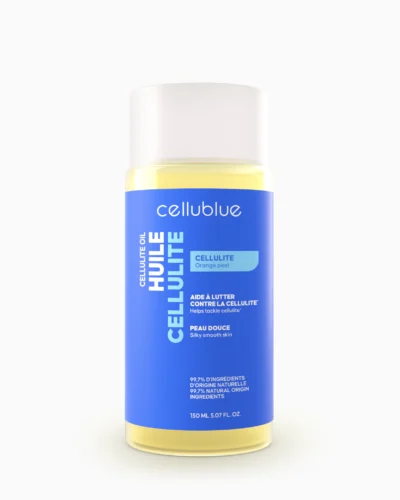
The oil that visibly smooths the look of your skin
- Complete formula: 4 powerful actives for a targeted massage of cellulite-prone areas
- Smoother-looking skin: actives designed to complement the palper-rouler technique
- Sensorial massage : rich texture and Monoï scent for a gentle, feel-good ritual

The scrub that leaves skin smooth and skin texture refined*
*User test on 21 volunteers over 4 weeks, based on participants' feedback.
- Olive & apricot kernels: these natural grains gently sweep away dead skin cells
- Caffeine & monoi scent, so your shower instantly smells like a holiday
- In the shower, two to three times a week, massaging your thighs, bottom and stomach