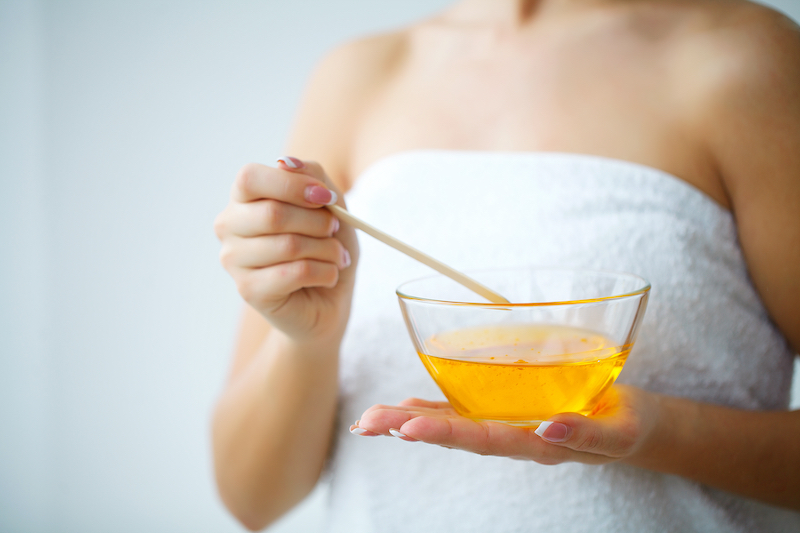
If you swear by natural ingredients and are looking for a miracle solution for your stretch marks, honey might just be the answer. It has long been celebrated for its dermatological benefits. Let’s take a closer look at this golden gift from bees…
What are the benefits of honey?
Honey is a sweet substance produced by bees from flower nectar or honeydew (secretions from sap-sucking insects). We all know it as a kitchen staple — but it’s also a bathroom essential, valued for both its beauty and health benefits. It has been used for therapeutic purposes since Antiquity and is now found in countless skincare products and ointments. The reason lies in its unique and extraordinarily complex chemical composition, which gives it antibacterial, healing and antioxidant properties.
1- What effect does it have on stretch marks?
When it comes to stretch marks, honey can genuinely help improve their appearance. Why? Simply because it has been shown to stimulate tissue growth, promote epithelialisation (epithelia are the cellular tissues of the skin) and minimise scar formation(1). Stretch marks are caused by a rupture of the skin’s elastic fibres, triggered by rapid and intense stretching (typically during growth spurts, pregnancy, sudden muscle gain or weight fluctuations). By boosting the skin’s intrinsic qualities and its capacity for regeneration, honey not only helps speed up the healing of stretch marks, but also encourages skin cells to produce new elastic fibres.
2- Which honey should you choose?
One important caveat: not all honeys are created equal. Honey benefits the skin thanks to its content of amino acids (such as methionine, lysine and arginine), trace elements (including copper and zinc) and vitamins (A, C and B group). However, concentrations vary depending on the botanical source(2). For treating stretch marks, it’s best to opt for:
- acacia honey, soothing, especially for new stretch marks (red or purple);
- fir or chestnut honey, revitalising, for older stretch marks (white);
- Manuka honey, to even out skin tone (therefore best suited to mature stretch marks);
- heather honey, for stretch mark prevention.
Finally, it goes without saying that you should always choose a 100% pure honey product. Too many products diluted with sugar syrup (glucose, fructose, caramel) claim to be honey without really being so…
How do I use honey on my stretch marks?
Now that you know almost everything there is to know about the benefits of honey, you may be wondering how to use it. Here are two DIY anti-stretch mark treatment recipes.
1- Gentle honey and sugar scrub
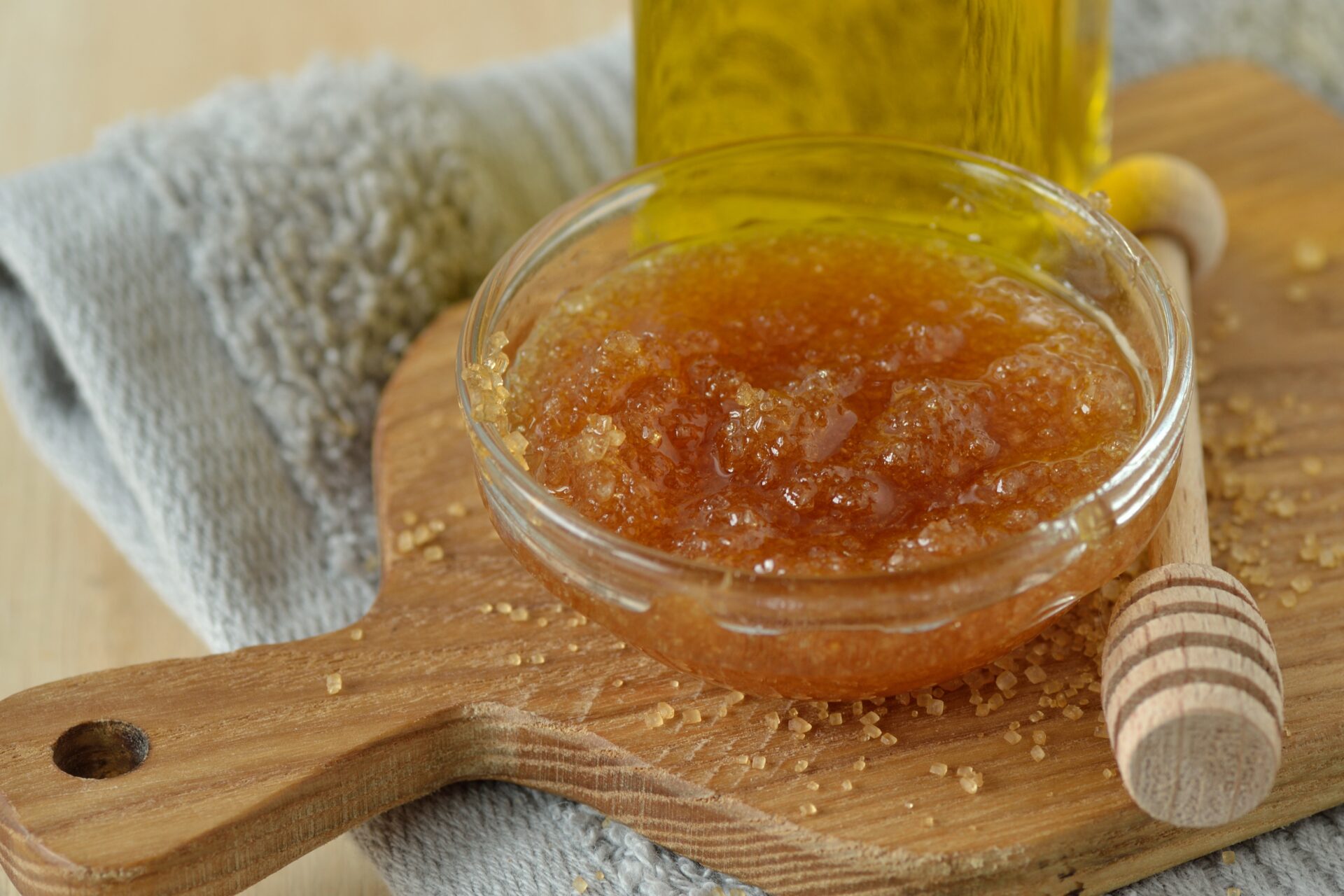
When dealing with stretch marks, exfoliation is key. Through mechanical action, it encourages skin renewal and removes dead cells from the epidermis, making it more receptive to treatments. You can prepare a DIY honey scrub by mixing 1 tsp of sugar, 1 tsp of sweet almond oil, 3 tsp of your chosen honey and 1 tsp of lemon juice. Gently massage the mixture onto your stretch marks, leave on for 15 minutes, then rinse with clean water. Soft, smooth skin guaranteed!
2- Avocado and honey body mask
You can also make a body mask that deeply nourishes the skin and supports its regeneration. To prepare it, simply blend half a avocado mashed to a purée, 1 tsp of lemon juice and 1 tbsp of honey. Once the mixture is smooth, apply it to the areas affected by stretch marks (thighs, hips, stomach or even bust) and leave on for 15–20 minutes. Rinse off with water. The winning combination of healing honey and nourishing, softening avocado works wonders.
What can I use alongside honey for my stretch marks?
You can complement your at-home skincare routine with conventional products. Your honey scrub and mask can be followed by the application of shop-bought treatments. At Cellublue, we offer two natural products made from plant-based oils, designed to perfect your routine. They are also a great alternative to DIY skincare (if mixing up home remedies isn’t really your thing):
- our Stretch Mark Prevention Oil, a synergy of 6 natural plant-based oils (including protective jojoba oil and nourishing soya oil), which softens and nourishes the skin for effective stretch mark prevention;
- our Repairing Stretch Mark Cream, which boosts the skin’s healing and regeneration process, thanks to its high content of macadamia oil and cocoa butter (98% naturally derived ingredients). It visibly reduces the fine lines on the surface of your skin.
References
(1) 2011, Goette, Honey for Wound Healing, Ulcers, and Burns; Data Supporting Its Use in Clinical Practice
(2) 2013, Burlando, Cornara, Honey in dermatology and skin care: a review
