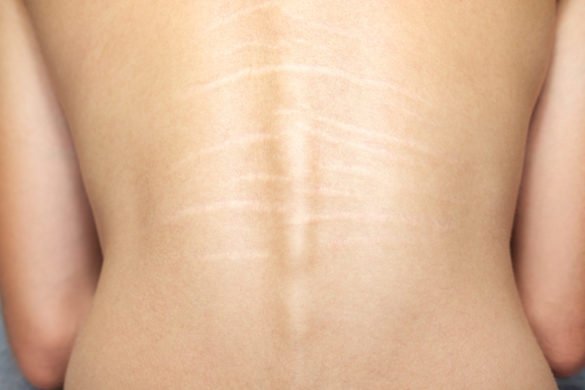
Stretch marks can make many of us feel self-conscious, so it’s no surprise that there are countless home remedies to help reduce their appearance. Applying lemon to the skin is one of them. But is this trick really worth trying? Here’s how lemon works on the skin, the precautions to take, three homemade lemon recipes, and other DIY or cosmetic options for skin with stretch marks.
Can lemon help reduce stretch marks?
Lemon is often mentioned for two reasons when it comes to stretch marks: its effect on skin pigmentation and its vitamin C content, which is linked to skin elasticity.
1- How lemon acts on skin pigmentation
Lemon extract is commonly used in skincare products designed to even out skin tone and reduce the pigmentation of dark spots(1). This is a particularly interesting property, since stretch marks are not pigmented. At the site of micro-tears, melanin (the skin’s natural pigment) no longer binds, which is why stretch marks don’t tan and retain a pearly white hue. By applying lemon, you’re not acting on the colour of the stretch marks themselves, but rather on the colour of the surrounding skin. That said, two precautions are worth keeping in mind:
- applying lemon juice to the skin should be avoided during periods of sun exposure, as it is highly photosensitising(2);
- frequent application of lemon juice may ultimately cause irritation, as the substance is acidic.
2- Lemon’s effect on skin elasticity
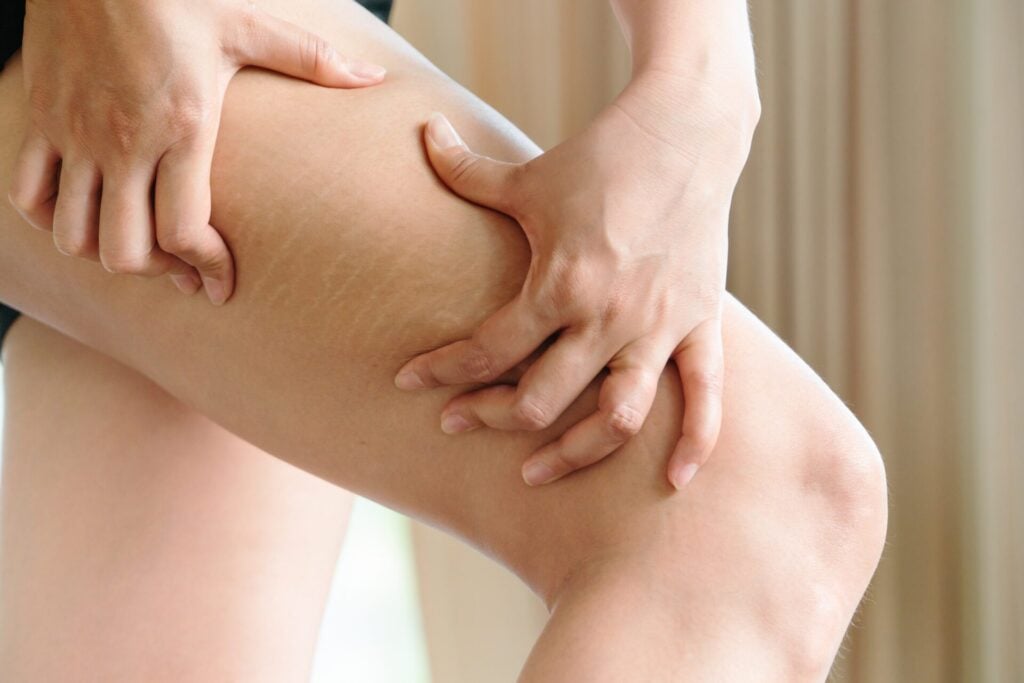
Lemon is well known for its high vitamin C content. Vitamin C plays a role in collagen formation (3). Applying lemon to stretch marks won’t repair them, however: the elastic fibres are permanently broken and don’t re-form. Used with care, lemon can nonetheless have a place in a skincare routine for skin with stretch marks.
Can lemon get rid of stretch marks in a few days?
No. No homemade recipe will make stretch marks disappear in a few days. At most, lemon can have a place in a gentle skincare routine, and what matters is using it regularly without overdoing it.
How to use lemon on stretch marks?
Lemon can be used on its own, applied directly to stretch marks. It’s also worth combining it with other natural ingredients for their complementary properties.
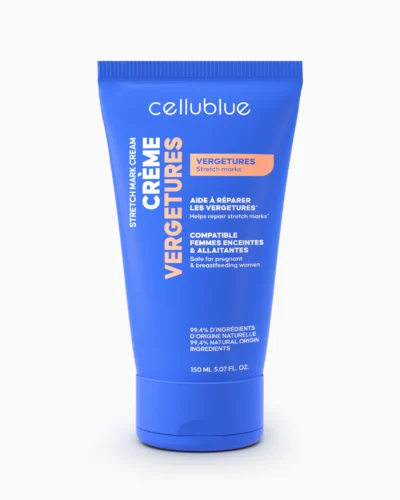
The cream that helps prevent the appearance of stretch marks* and improve how they look
*Consumer test on 22 volunteers over 3 weeks, based on participants' feedback.
- Helps prevent the appearance of stretch marks on the stomach, hips, thighs and bust. Apply morning and night
- Three plant oils: macadamia softens, sunflower soothes and coconut holds in hydration
- Velvety texture: it absorbs easily and calms feelings of tightness
1- Lemon anti-stretch mark mask
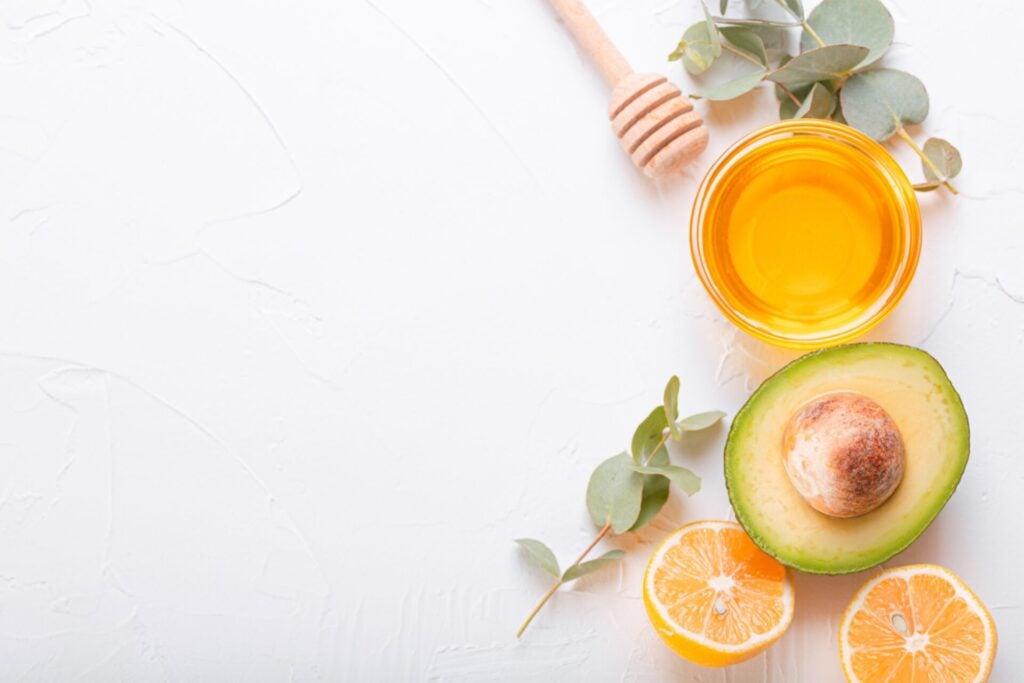
A wonderfully comforting recipe that’s easy to make. Simply mix the juice of one lemon, the flesh of half an avocado mashed to a purée, and one tablespoon of honey. Once the mixture is smooth, apply it to the areas with stretch marks (thighs, stomach, hips…) and leave on for 10–15 minutes. You can give the skin a gentle massage before or after applying it. Then rinse off with clean water and repeat 2–3 times a week, sticking to a regular routine. Honey, avocado and lemon make a lovely combination!
2- Lemon anti-stretch mark gel
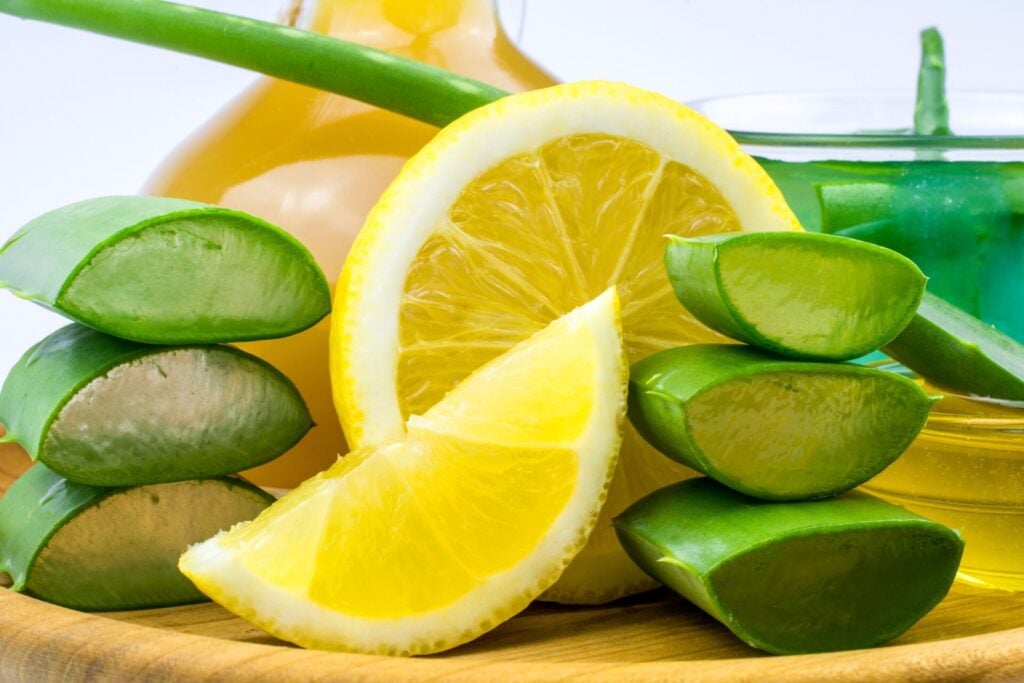
Here’s a second recipe with a lovely hydrating feel. Simply mix 2 tbsp of Aloe Vera gel with the juice of one lemon. Apply by hand using circular massage movements over the affected areas for around ten minutes. Rinse off with clean water.
3- Lemon exfoliating oil for stretch marks
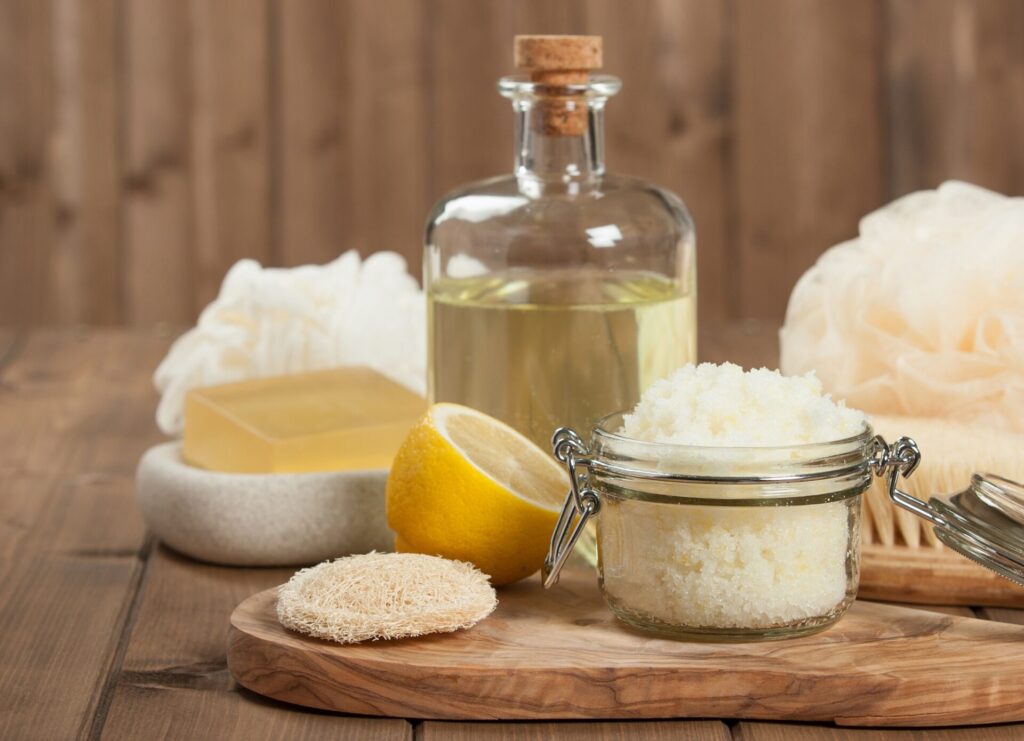
A final recipe, this time a homemade exfoliating oil. To make it, simply mix a little natural plant oil of your choice (sweet almond, jojoba, argan, coconut…) with one tablespoon of brown sugar and a few drops of lemon juice, then gently massage it into the areas with stretch marks. Rinse off with water and use 1–2 times a week.
What other tips can help reduce stretch marks?
There are plenty of home remedies for stretch marks, with varying degrees of effectiveness. Whichever you choose:
- applying natural plant oils or plant butters (cocoa, shea) every day is a simple way to nourish your skin and care for affected areas;
- exfoliating with pharmaceutical-grade baking soda (very fine granules) can be worth trying on older stretch marks;
- honey is also a staple of homemade stretch mark care;
- essential oils can also form part of a skincare routine, provided they are diluted in a carrier oil. Pregnant and breastfeeding women should avoid them;
- natural cosmetics can also play a part in caring for skin with stretch marks. Discover our Stretch Marks range: our oil, our cream and our scrub, formulated with natural actives, are designed for all types of stretch marks and all skin types, including the sensitive skin of mums and mums-to-be!
References
(1) 2009, Smit, Vicanova, Pavel, The Hunt for Natural Skin Whitening Agents
(2) 1985, Naganuma et al., A study of the phototoxicity of lemon oil
(3) 2001, Boyera, Galey, Bernard, Effect of vitamin C and its derivatives on collagen synthesis and cross‐linking by normal human fibroblasts
Frequently asked questions
How do you get rid of stretch marks with lemon?
Lemon won’t get rid of stretch marks, so if you do use it, do so with care and without overdoing it. You can apply it on its own or combine it with avocado and honey, with aloe vera, or with a plant oil and brown sugar. All three recipes and how to use them are explained in the section “How to use lemon on stretch marks?”.
What home remedies can help fade stretch marks?
Besides lemon, plant oils and butters (cocoa, shea) applied every day are a simple place to start. Honey, gentle exfoliation with pharmaceutical-grade baking soda and essential oils diluted in a carrier oil are also popular homemade options.
Can you use lemon on stretch marks on dark skin?
Lemon acts on the pigmentation of the skin around the stretch mark, not on the stretch mark itself. The same precautions apply to all skin types: avoid sun exposure after applying it and don’t use it too often, to limit irritation. If in doubt, ask a dermatologist for advice.
Can you go in the sun after putting lemon on your skin?
No. Lemon juice is highly photosensitising, so it’s best not to apply it during periods of sun exposure. Save these recipes for times when your skin isn’t exposed to the sun.
Related articles
Useful categories: Stretch Mark Plants, Stretch Mark Solutions.
 -33%
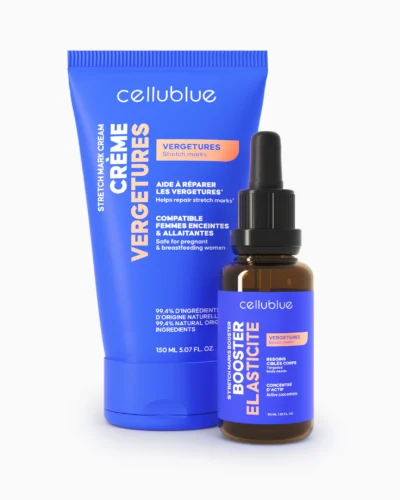
-33%The cream and booster duo for established stretch marks
- Stretch Mark Cream morning and evening: three plant oils and a velvet texture that nourishes and soothes
- Elasticity Booster: a few drops of ultra-concentrated aloe vera, to be mixed with a dollop of cream
- The same routine as usual, with an added concentrate, on the tummy, hips, thighs and bust


The massage oil that helps prevent stretch marks from appearing*, during pregnancy and beyond
*User test on 21 volunteers over 3 weeks, based on participants' feedback.
- Why does it work?