If you’re a fan of homemade body care, chances are you’ve already reached for green clay. This mineral powder, sourced from nature, is a staple in cosmetics, used, among others, by people with oily skin. But does green clay have other uses? And does it have a place in a stretch mark skincare routine?
What is green clay?
It is a soft sedimentary material, highly mineralised, formed through the erosion of various rocks in the Earth’s crust. Its production is straightforward: it is extracted from natural deposits, crushed and ground into a fine powder, then dried at high heat to eliminate any microbiological load. It owes its colour to its mineral content, namely ferric oxides, silica and trace elements (iron, potassium, sodium, calcium, magnesium, among others). It comes in two varieties: illite, suited to combination and oily skin, and montmorillonite, gentler and suitable for all skin types.
Green clay has been used since ancient times, notably by the Egyptians and the Romans, and it has certainly stood the test of time!
What are the cosmetic benefits of green clay?
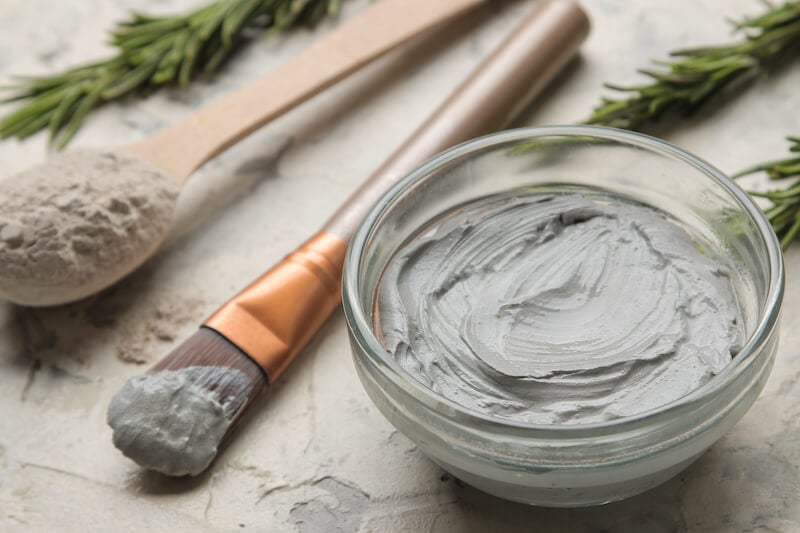
Green clay’s two main properties are that it is absorbent, acting like a sponge, and adsorptive, meaning it captures impurities on the skin’s surface. It is also highly mineralised, which gives it a wide range of uses.
- It is commonly used as a mask on oily skin and scalps;
- it is often suggested for blemish-prone skin;
- it is also found in some facial skincare products;
- on its own, it can serve as an exfoliant, as its very fine particle size is gentle enough not to weaken the skin during scrubbing;
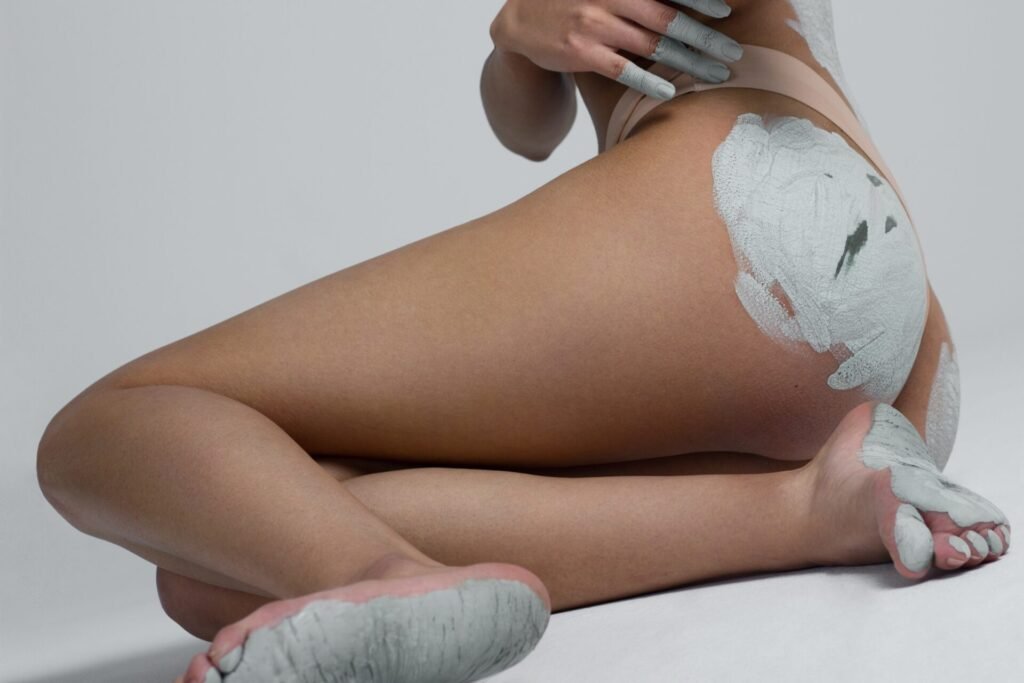
- it is traditionally applied as a poultice or body mask, for example as part of a leg care routine;
- it is appreciated for the feeling of freshness it leaves on the skin;
- if in doubt about how to use it, seek advice from a healthcare professional (and find more everyday tips on our blog).
Is green clay useful for stretch marks?
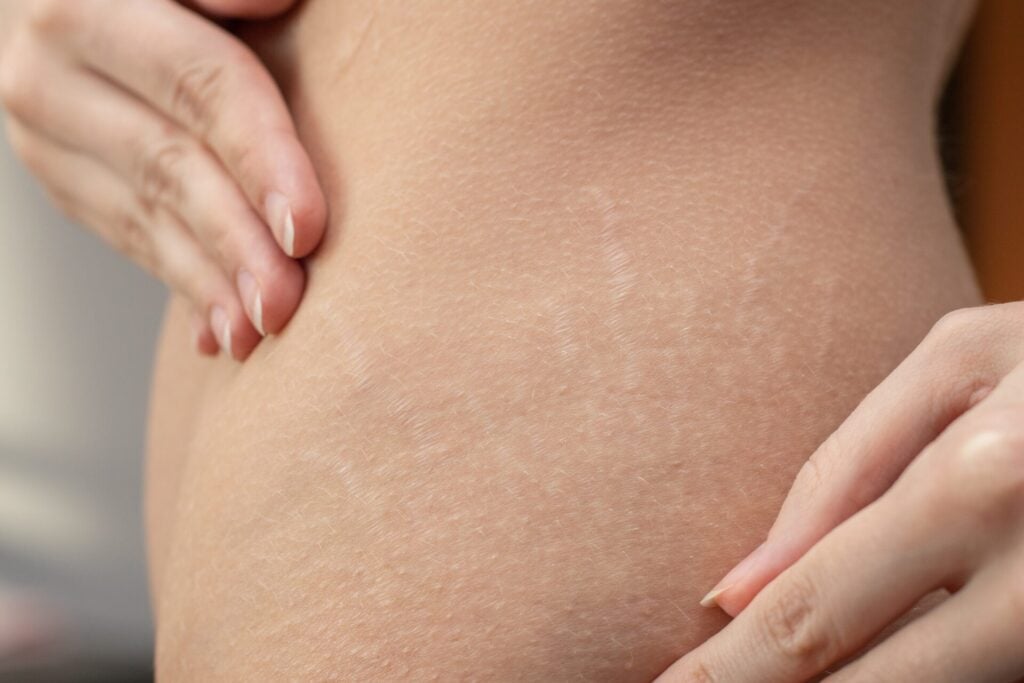
No effect on stretch marks can be attributed to it. It can, however, be used to make poultices and body masks, as part of a body care routine.
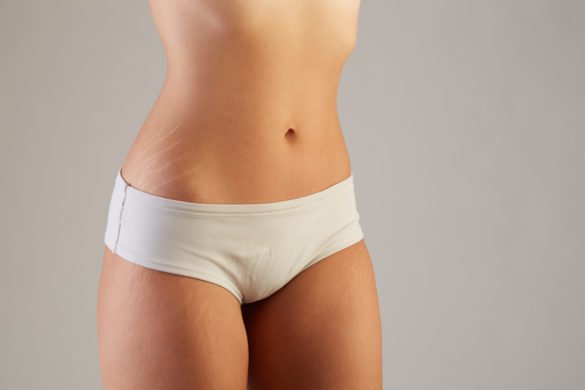
To understand how it can be useful, let’s take a quick look at how stretch marks form. They are micro-tears in the dermis, which occur when the skin is subjected to a significant, rapid and sudden stretch — mainly during growth spurts, pregnancy and the postpartum period, weight fluctuations, or muscle hypertrophy. This is when stretch marks appear:
- in the inflammatory stage, they are often tinged with red or purple due to the skin’s inflammatory response, but are not painful;
- in the scarring stage, new fibres form deeper down to replace those that have broken. Stretch marks fade to white and take on a fissured appearance, giving the skin an uneven texture.
Although no effect on stretch marks can be attributed to it, green clay can nonetheless be part of a body care routine:
- it is prepared with a little water;
- it is applied as a mask to the body, alongside your usual skincare.
How to use green clay on stretch marks?
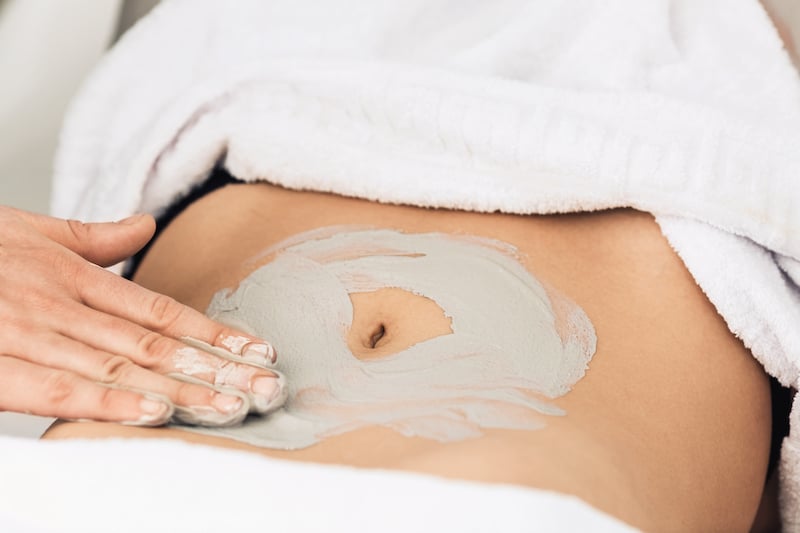
It can be used on its own, mixed with a little water. It then forms a paste, to be applied as a poultice over the stretch marks. If you wish, you can place a compress or clean cloth on top and leave it to work for a while, regularly re-moistening the fabric.
However, combining ingredients can be a useful way to vary your routine. The green clay mask for stretch marks can therefore be enriched with other ingredients. Simply mix 3 tbsp of green clay with a little water until you get a smooth paste. Then add 1 tbsp of your chosen natural vegetable oil (rosehip, argan, sweet almond) and 5 drops of true lavender, cistus ladanifer or rosemary verbenone essential oil — traditionally used in skincare (carry out a patch test on the crook of your elbow first). The resulting paste can be applied to stretch marks on the hips, stomach, bust or thighs, left on for half an hour and then rinsed off with clean water. Please note: this recipe is not suitable for pregnant women because it contains essential oils.
Are there other natural remedies for stretch marks?
Other natural ingredients can be used on stretch marks:
- Vegetable oils and plant butters, which can be included in a body care routine;
- Aloe Vera gel, can be included in a body care routine and is appreciated in stretch mark skincare routines;
- honey, nature’s liquid gold, can be used at home in DIY stretch mark skincare;
- black soap, provided it is artisanal, can be used in a scrub, gently massaging the skin;
- baking soda of pharmaceutical grade, very finely milled, can also be used as a gentle scrub on stretch marks.
And for all those (men included!) who prefer ready-to-use products, discover our Stretch Marks range.
The complete stretch marks routine, from shower to massage, during and after pregnancy
- Instructions for use
- Friendly advice
- Our Stretch Mark Prevention Oil, a blend of five vegetable oils, including nourishing avocado and jojoba, is used as part of a stretch mark prevention routine to help leave the skin feeling supple;
- also discover our stretch mark care products;
- our Anti-Stretch Mark Scrub, enriched with mango butter and wheat germ, gently exfoliates the skin to remove dead cells and refine its texture;
- our Repairing Cream, with its ultra-rich velvet texture, supports skincare for marked skin through the combination of macadamia oil, provitamin B5 and pantolactone.
Related articles
- Can Baking Soda Help Reduce Stretch Marks?
- Can lemon help reduce the appearance of stretch marks?
- Grand Challenge 2015 – Day 30
Useful categories: Stretch Mark Care, Stretch Mark Solutions.