Are you expecting a baby but worried about stretch marks appearing? Are you in the middle of a weight-loss journey and noticing that your skin feels drier and looser? Do you train intensively and fear developing stretch marks? For everything you need to know about early stretch marks — and how to prevent them — read on!
What are stretch marks?
Stretch marks, or striae distensae, are benign skin lesions, which can affect men and women alike. They are essentially micro-tears in the dermis — the middle layer of the skin (between the epidermis and the hypodermis). They result from an atrophy of the skin’s elastic network: when the skin is stretched too intensely, too quickly or too abruptly, the collagen and elastin fibres responsible for the dermis’s strength and suppleness give way. The result is streaks — more or less fine, more or less coloured — that feel soft to the touch and are accompanied by a change in the skin’s surface texture.
Stretch marks most commonly appear in situations involving changes in body shape:
- During adolescence, which brings rapid growth spurts and bodily changes linked to puberty.
- During pregnancy, as the body undergoes weight gain, an increase in the volume of the belly and breasts, and significant hormonal fluctuations.
- During significant weight gain or weight loss, where the skin is subject to intense stretching.
- During intensive physical training, particularly bodybuilding.
- In a medical context, whether due to the use of medications such as corticosteroids, or a Cushing’s Syndrome.
How do you recognise early stretch marks?
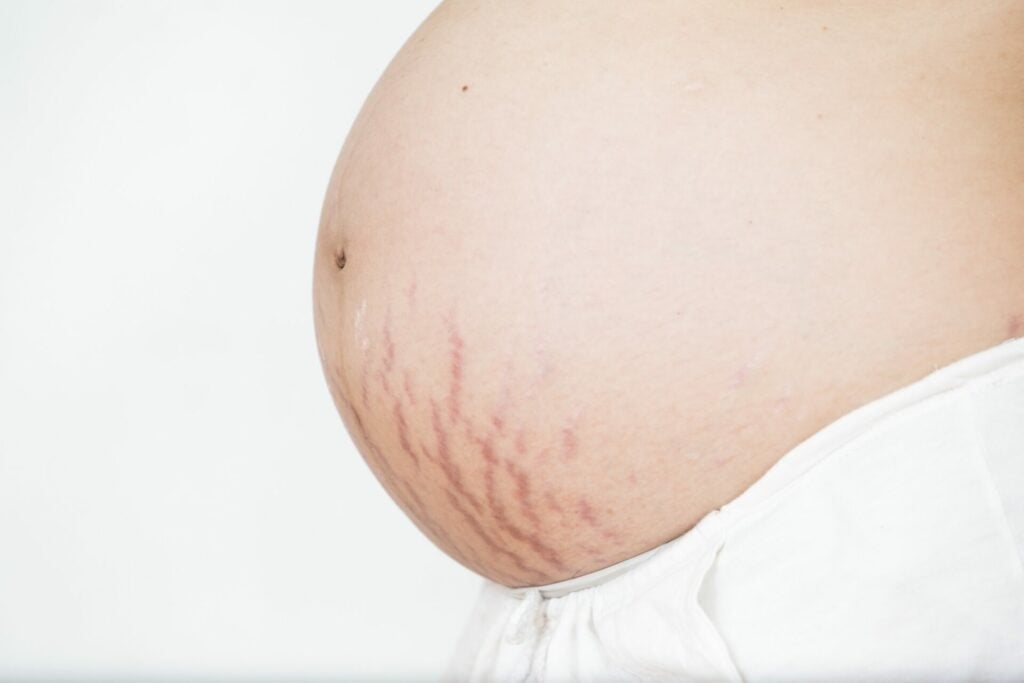
There are several types of stretch marks. The main difference between nascent stretch marks (the “early” stage) and mature stretch marks is undoubtedly their colour.
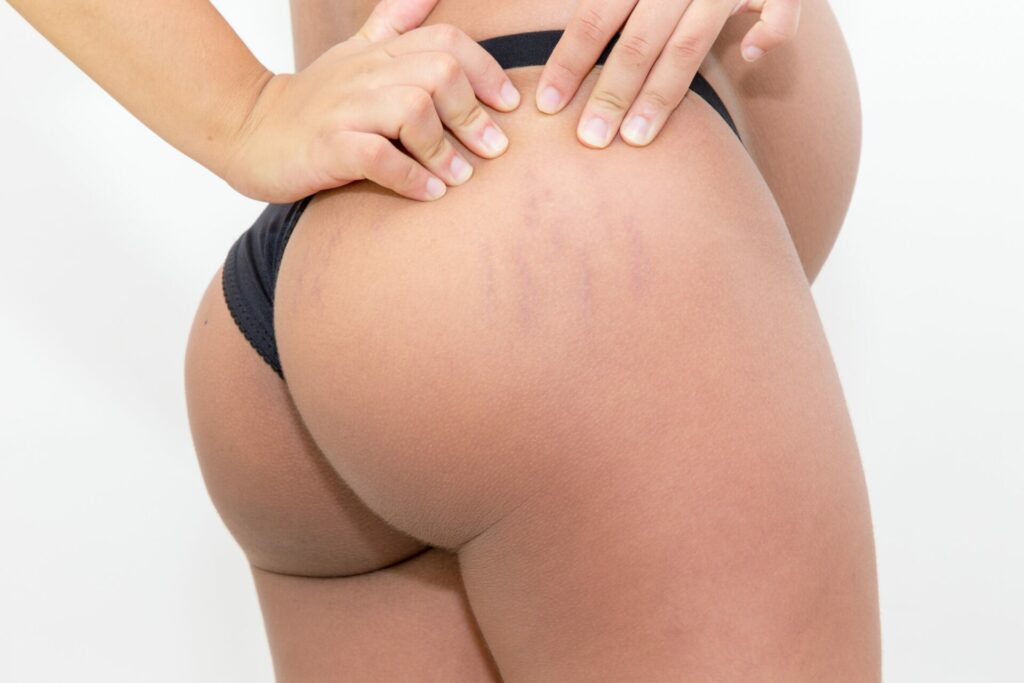
In the early stage, stretch marks are very often (though not always) coloured. Pink, red or purple, they are easy to identify. The colouration of stretch marks is benign: it is simply the visible sign of subcutaneous inflammation. The dermis, subjected to the rupture of its elastic network, undergoes significant irritation. The rush of blood — which carries the elements needed for regeneration — causes the stretch marks to become coloured. Fibroblasts, the subcutaneous cells responsible for producing collagen fibres, work at full capacity in an attempt to rebuild the elastic network. But the existing “broken” network remains so.
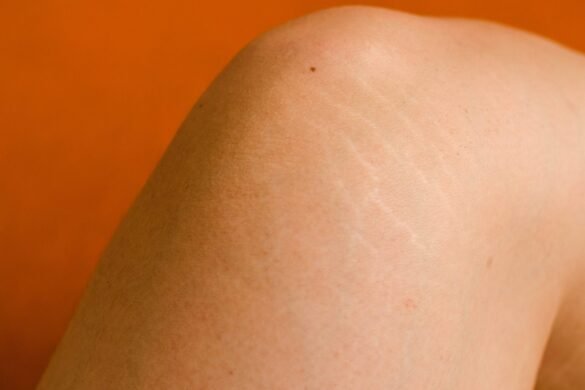
At the maturation stage, stretch marks turn white. The healing process is complete: the number of fibroblasts and blood vessels decreases. The stretch marks become white, supple and painless. Their whiteness is due to the end of the inflammatory and repair process, as well as localised depigmentation. The skin also retains indentations at the exact points where the elastic fibres gave way. The depth of the stretch marks stabilises as the dermis has repaired itself and new fibres have formed. The streaks are less visible — taking on a pearlescent white hue — but they remain. They are also more noticeable when exposed to the sun, as stretch marks do not tan (localised depigmentation).
Early stretch marks on the stomach or thighs: how to spot them
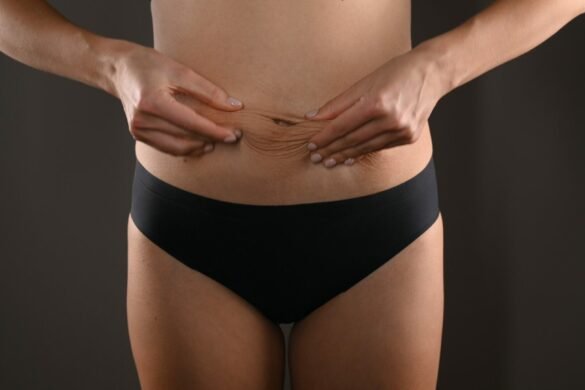
Early stretch marks usually appear where the skin is stretched the most. On the stomach, they often show up during pregnancy or after significant weight gain. On the thighs and hips, they tend to affect girls during their teenage years. Whatever the area, the signs are the same: fine pink, red or purple streaks that feel soft to the touch and slightly change the texture of the skin.
Spotting new stretch marks early means you can adjust your routine straight away: a varied diet, drinking water regularly and applying skincare to the area every day, as explained below. If you have any doubts, or if stretch marks appear suddenly and in large numbers, speak to your GP.
What can you do to prevent stretch marks from appearing?
Prevention is always better than cure. So the first line of defence before early stretch marks appear is prevention itself! There are many ways to care for your skin and, in doing so, reduce the risk of stretch marks appearing.
1- On your plate: a varied diet

No food can prevent stretch marks from appearing. A varied diet does, however, provide vitamins and minerals, found in foods such as these:
- Vitamin A – found in offal and dairy products.
- Vitamin B5 – found in brewer’s yeast, wheat germ, offal and cheese.
- Vitamin C (contributes to normal collagen formation for the normal function of skin) – found in green vegetables (chard, spinach, parsley, broccoli), citrus fruits, berries, peppers and kiwi.
- Vitamin E – found in virgin vegetable oils, nuts and seeds, dried fruits, avocado and seafood.
- Copper – found in cocoa, shellfish and offal.
- Silicon – found in dehydrated foods and wholegrains.
- Zinc – found in meat, shellfish, dried fruits and wholegrains.
In addition, remember to drink regularly: the usual guideline is 1.5 to 2 litres of water per day, on top of what you get from food. It is a basic habit for the whole body, with no established effect on stretch marks.
2- Prevention through skincare
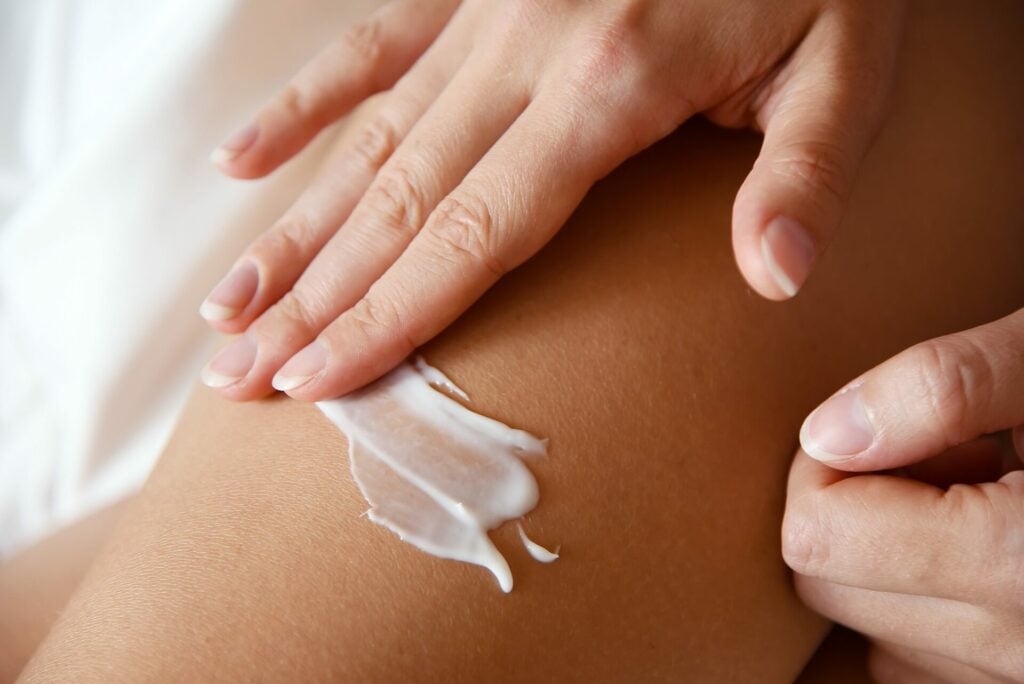
Nourishing the skin from within is one thing. But nourishing it from the outside can be just as worthwhile! There are many skincare options to look after skin that is prone to stretch marks or showing early signs of them. On at-risk areas (belly and bust for pregnant women, shoulders for bodybuilding enthusiasts, hips and thighs in young women, back in teenagers…), you can apply daily:
- A natural plant oil: many oils are valued for their emollient and nourishing qualities. The choice is personal and will depend largely on your preferences. For a dry, fast-absorbing oil, jojoba or macadamia oils are recommended. For a richer texture, avocado or calophyllum oils are excellent options. And for those who prefer simplicity, there is our Stretch Mark Prevention Oil: a synergy of 6 natural plant oils to apply every day to at-risk areas.
- A plant butter: it is used in the same way as an oil. The only difference is the texture, which is richer and creamier. Plant butters (shea, mango, cocoa…) often have a composition similar to that of oils: a combination of different fatty acids.
- Natural moisturising and nourishing ingredients: other “ingredients” can form the base of a homemade skincare treatment. These include Aloe Vera gel (a source of hydration and nourishment for the skin), honey (thyme honey for its copper content, sunflower honey as it contains silicon, or lavender honey) or green clay.
- Essential oils: some essential oils, such as Italian Helichrysum, Ho Wood, Rosemary verbenone or True Lavender, are sometimes used in skincare. They call for caution: always blended with a carrier oil, in the recommended proportions, and not to be used during pregnancy. If in doubt, ask a healthcare professional for advice.
- Serums: certain cosmetic treatments are specially designed for skin showing early stretch marks. This is the case with our Stretch Mark Serum, enriched with natural active ingredients: avocado oil, shea butter, pantolactone extract and sweet almond oil.
The complete stretch marks routine, from shower to massage, during and after pregnancy
- Instructions for use
- Friendly advice
3- Prevention through exercise
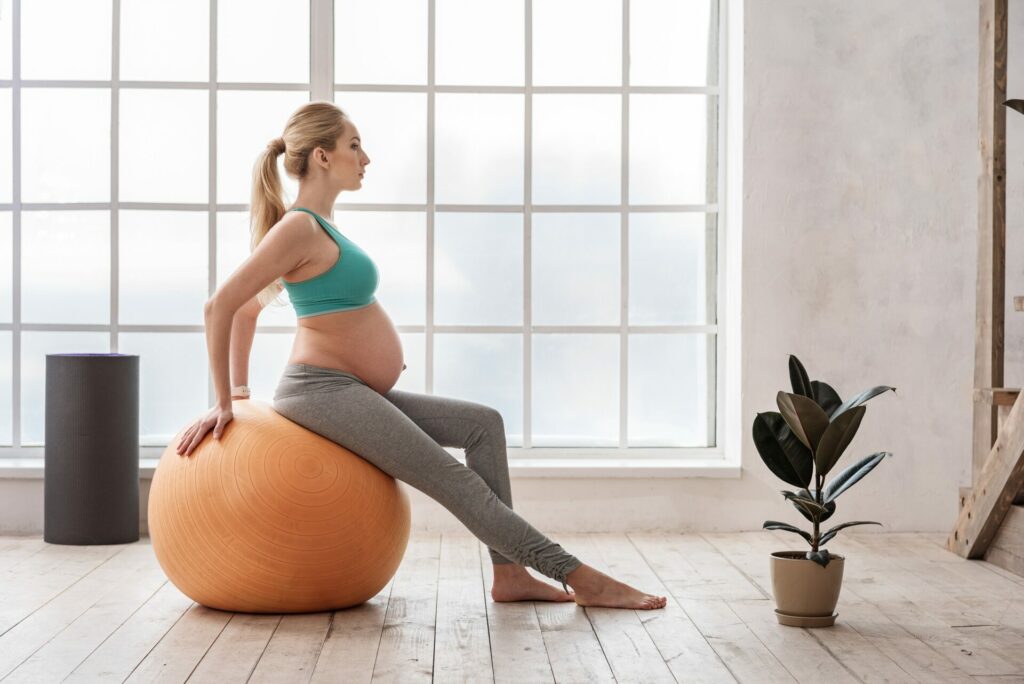
It bears repeating: exercise has many benefits, and gentle, regular physical activity is part of a healthy everyday routine. Exercise can indeed help you:
- Maintain a stable weight, thereby limiting the weight fluctuations that encourage stretch marks to appear.
- Support a healthy lifestyle through regular physical activity, which also benefits the skin – skin dryness being a factor that favours stretch marks.
Of course, to limit the risk of stretch marks, it is best to opt for gentle exercise: Pilates, gym workouts, water sports, brisk walking. Best avoided: bodybuilding, which promotes rapid and significant volume gain, and high-impact sports, which put sudden strain on the skin and tissues.
Frequently asked questions
How can you prevent stretch marks?
The main step remains applying skincare every day to at-risk areas (plant oil or butter, serum), as part of a balanced lifestyle: a varied diet and drinking water regularly. Gentle, regular exercise rounds off these habits, as explained in the section on prevention.
Which body product should you choose to help prevent stretch marks?
A plant oil, a plant butter or a dedicated serum can be applied every day to the stomach, bust, hips or thighs. The choice mostly depends on the texture you prefer: a dry oil, a richer texture or a creamier butter. During pregnancy, avoid essential oils and ask a healthcare professional for advice.
Do stretch marks go away?
Over time, stretch marks fade from pink, red or purple to a pearlescent white, which makes them less noticeable. However, they remain visible as slight indentations in the skin. For any questions about how they change or about treatment options, it is best to see your GP or a dermatologist.
Related articles
- Stretch Marks: Causes, Treatments and Skincare
- Cocoa Butter for Stretch Marks: Does It Work?
- Stretch marks linked to weight loss
- CelluBlue Body Challenge – Day 11
Useful categories: Stretch Marks.