The stomach is a symbol of femininity: a vessel of life, it embodies fertility, motherhood, the future… And yet, it is all too often the number one source of insecurity for women. Even more so when it becomes streaked with stretch marks. Why do stretch marks appear on the stomach, and how can you care for the skin there?
Stretch marks on the stomach: what are the causes?
Stretch marks in the abdominal area can be caused by a number of different factors, including:
1- Pregnancy
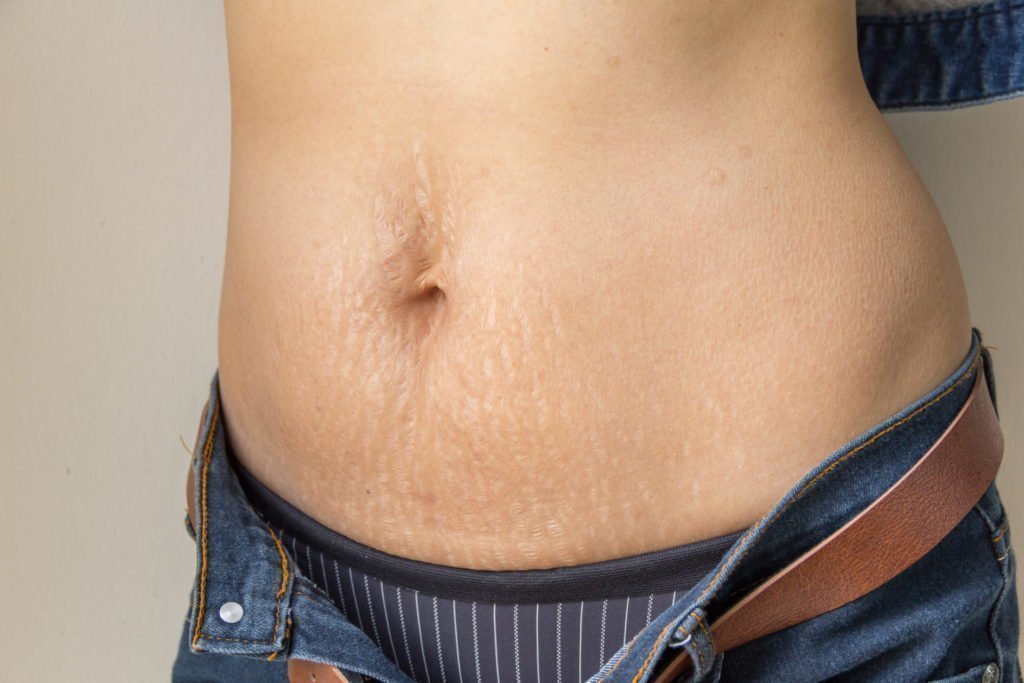
Pregnancy stretch marks are a relatively common phenomenon, affecting 50 to 70% of pregnant women. They appear on the belly, where the skin is particularly sensitive. Under tension, the dermis is also subject to hormonal fluctuations that alter its quality. The skin becomes more sensitive, sometimes drier. It may itch or become pigmented. In any case, it weakens, and its elastic fibres can give way under the strain. The appearance of inflammatory stretch marks on the stomach —red or purple— is something many pregnant women experience.
2- Adolescence
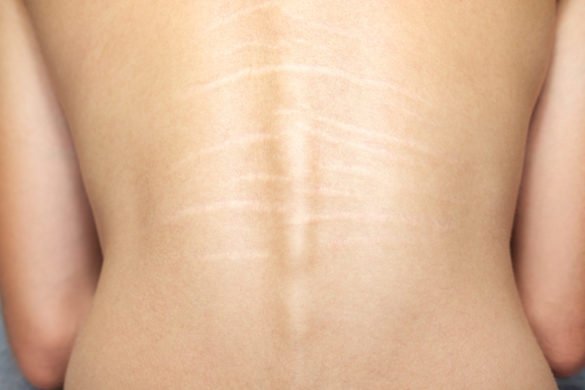
Puberty is a stage of life particularly prone to the development of stretch marks. The culprit: rapid bone growth and skin that struggles to keep pace. The teenage body changes quickly, causing sudden and abrupt stretching of the skin. Growth spurts, the swift development of feminine curves in young girls, hormonal upheaval (sex hormones as well as cortisol) — it doesn’t take much for the skin to mark. Collagen and elastin fibres can break under the pressure of growth spurts, and stretch marks can appear almost anywhere:breasts, hips, thighs, as well as the back, stomach,buttocks and legs.
3- Weight fluctuations
Rapid weight gain or loss, whatever the context, generally takes a toll on skin health and quality. Although the dermis is elastic, it doesn’t always withstand changes in body shape, especially when those changes are intense and sudden. Weight gain will cause the waistline to expand. The skin on the stomach stretches, and its elastic fibres can sometimes give way under the strain, particularly when the change is abrupt. Stretch marks may then appear. The same applies to weight loss: when it is abrupt (strict diet, illness), the skin becomes weakened, drier and less supple. It may tend to sag and develop stretch marks.
4- Cortisol
Cortisol is a hormone naturally produced by the body throughout the day. Often called the “stress hormone”, cortisol is nonetheless essential to our bodies. However, it becomes a problem when levels run too high. Elevated blood cortisol can have an impact on the skin: it weakens the subcutaneous elastic fibres and may lead to stretch marks. The main causes of high cortisol levels are:
- Chronic stress
- Cortisone-based medications: corticosteroids, used for long-term conditions (rheumatism, allergies), mechanically raise blood cortisol levels, with various side effects — muscle loss, osteoporosis, and stretch marks.
- Cushing’s syndrome: a condition characterised by permanently elevated blood cortisol levels. One of its consequences is the appearance of wide, vertical, purplish stretch marks on the abdomen (stomach, belly), buttocks, and chest.
So stretch marks on the stomach aren’t just something pregnant women get. If stretch marks appear suddenly and for no obvious reason, or if you’re taking cortisone-based medication, talk to your GP, who can look into the cause.
Stretch marks on the stomach: what solutions are there to care for your skin?
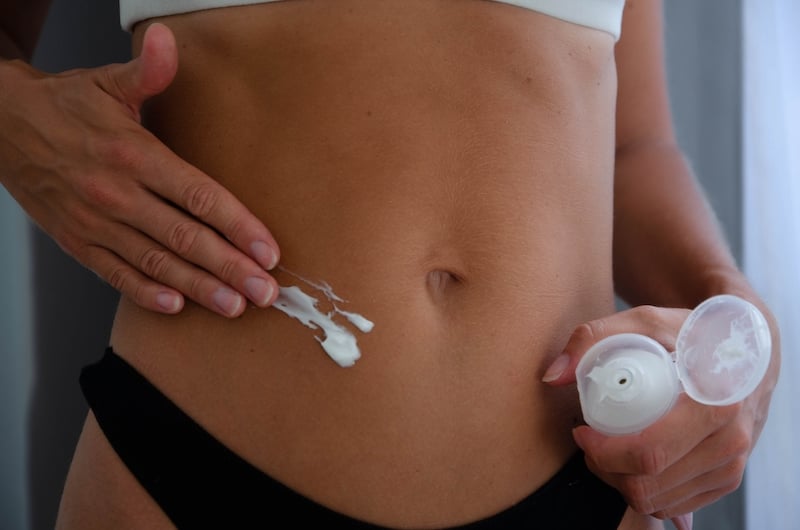
To care for the skin on your stomach, it really comes down to looking after it from the inside out. It may sound simple, but a series of small, consistent habits can make all the difference…
1- Hydration
The human body is made up of 60–70% water. So there’s one golden rule: keep it hydrated. Hydration works on two levels:
- From within: drink 1.5 to 2 litres of water a day, a simple guideline for staying well hydrated. Fresh juices, broths and soups, tea and herbal infusions are also welcome. Be mindful of alcohol: it has a diuretic effect, and it is best kept to a minimum anyway.
- From the outside: build a skincare routine into your daily life. Use hydrating and nourishing products to keep the skin on your stomach soft and supple. You have plenty of options to choose from! Creams, plant-based butters (such as shea), natural vegetable oils (olive, sesame, macadamia), hydrating gels (think Aloe Vera!): the choice is yours!
2- Nutrition
Certain minerals and vitamins found in food have their place in a diet that looks after the skin. So take a closer look at what’s on your plate and add:
- Vitamin A: calf, poultry or cod liver, dairy products
- Vitamin B5: brewer’s yeast, wheat germ, cheese, offal
- Vitamin C: fresh fruits and vegetables such as kiwi, bell pepper, citrus fruits, fresh herbs
- Vitamin E: oils (olive, sunflower), avocado, shellfish and oily fish, nuts (almonds, hazelnuts, walnuts), dried fruits (prunes, apricots)
- Copper: cocoa, offal, seafood
- Silicon: whole grains, dehydrated soups, freeze-dried coffee
- Zinc: oysters, cocoa, rye bread, cheese
Add to this colourful vegetables (squash, spinach, sweet potato, carrot) and water-rich produce, for a varied, tasty and balanced everyday diet.
3- Physical activity
Exercise is good for the body — skin included! Beyond helping to maintain a healthy weight (and as we’ve seen, weight fluctuations can cause stretch marks on the stomach!), physical activity:
- helps you move and feel good in your body
- gently works on your muscle tone
- helps you release the pressure of daily life
Opt for low-impact activities rather than high-intensity sports. Swimming, walking, dancing and yoga will gently tone your abdominal muscles. Before each session, take time to stretch to prepare your muscles.
Cellublue products to care for the skin on your stomach
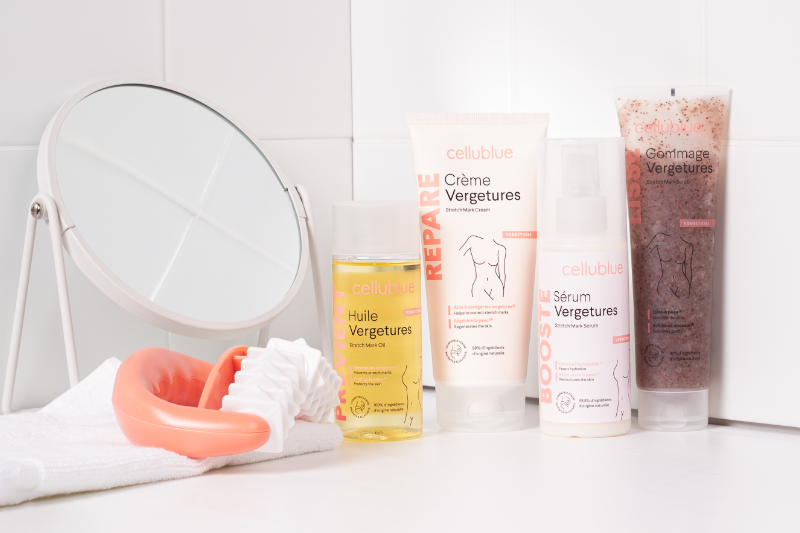
To complement these skin-loving habits, nothing beats a regular skincare routine. That’s where the Cellublue Stretch Mark Pack comes in! It brings together three products for the skin on your stomach, whether your stretch marks are recent or long-standing. How does the routine work? It’s simple:
- Exfoliate your stomach in the shower, 2 to 3 times a week, with the Stretch Mark Scrub. Its fine exfoliating particles (apricot kernel and bamboo) and natural active ingredients (mango butter and wheat germ) exfoliate the skin while nourishing it. Your stomach skin, silky-smooth, is now ready for the next steps.
- Moisturise the skin on your stomach every day to help keep it supple. The Stretch Mark Cream cares for damaged skin, whether your stretch marks are inflammatory or mature.
- Nourish the skin on your stomach with the Stretch Mark Prevention Oil. This elixir, made up of a blend of precious oils (including avocado and jojoba), nourishes and soothes the skin. You can apply it to your stomach whether or not stretch marks have already appeared.
A bonus feature of our routine: it is compatible with pregnancy and breastfeeding. So if you’re expecting and worried about, or already dealing with, stretch marks on your stomach, you can make it part of your daily routine. If in doubt, ask your GP or midwife for advice.
The complete stretch marks routine, from shower to massage, during and after pregnancy
- Instructions for use
- Friendly advice
Your questions answered:
Why do I have stretch marks on my stomach?
Stretch marks on the stomach are often caused by rapid changes in weight, such as pregnancy or significant weight gain. When the body undergoes these changes, the skin can stretch rapidly, which may damage the collagen and elastin fibres beneath the skin’s surface. This can trigger the appearance of stretch marks. If stretch marks appear suddenly and for no obvious reason, ask your GP for advice. At Cellublue, we have developed an expert method to care for stretch-marked skin.
How do you get rid of white stretch marks on the stomach?
To care for skin with white stretch marks, several options are available:
- Scrubs, oils and moisturising creams can help keep the skin soft and supple. For any treatment, ask a dermatologist for advice.
- The Cellublue anti-stretch mark method
Frequently asked questions
How do you get rid of stretch marks on your stomach?
Look after the skin on your stomach from the inside and out: drink enough water, eat a varied diet, stay gently active and moisturise your skin every day. For any questions about treatment, ask a doctor for advice.
What are the best natural remedies for stretch marks?
Plant butters and oils, or aloe vera gel, are natural options for nourishing the skin. Pair them with a varied diet, good hydration and gentle exercise.
How can I fade stretch marks on my stomach?
Consistency is key: well-hydrated, nourished skin stays more supple. A simple routine, with a scrub 2 to 3 times a week followed by a daily moisturiser, is easy to fit into your day. If a stretch mark worries you, ask a healthcare professional for advice.
Why do I have red or purple stretch marks on my stomach?
Red or purple stretch marks often appear when the skin is being stretched, for example during pregnancy, puberty or weight changes. If they appear suddenly and for no obvious reason, or while you’re taking medication, ask your GP for advice.
Related articles
Useful categories: Stretch marks on the stomach, Stretch Marks by Area.