Aloe Vera is having quite a moment right now… It seems to be everywhere, hailed as the star plant of skincare. But does Aloe Vera deserve a place in your stretch mark routine? We did the research so you don’t have to: what this plant is, what its gel contains, how to apply it to your stretch marks and which products to pair it with.
What is Aloe Vera?
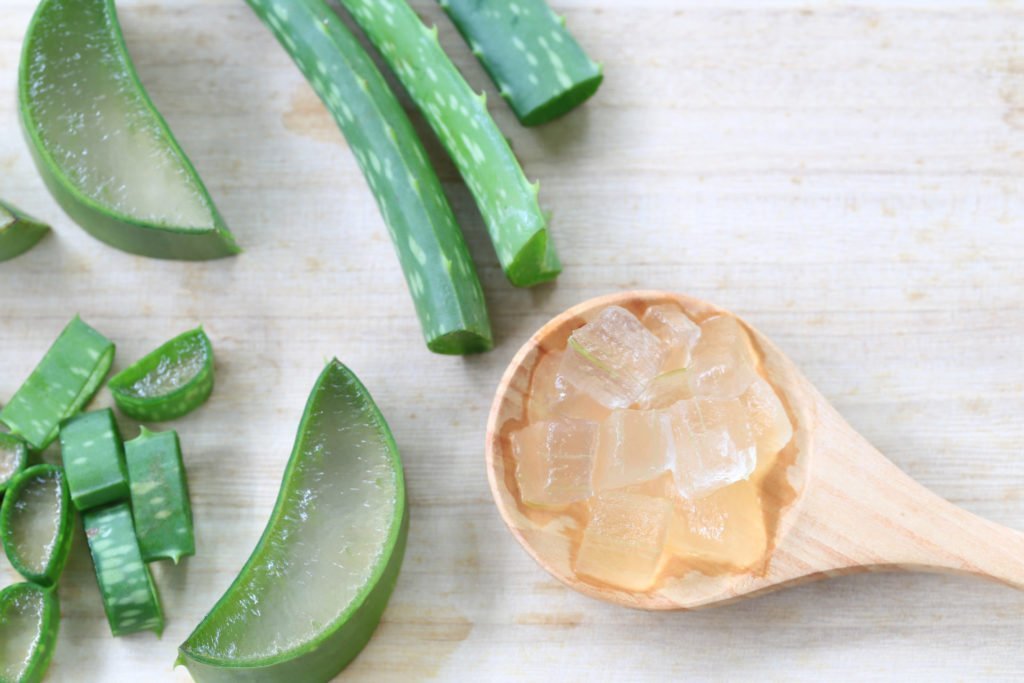
Aloe Vera is a species of aloe, a perennial plant that thrives in warm climates. Its large, evergreen leaves grow in dense clusters and are filled with a viscous, water-rich gel. The yellow latex found in the upper layer of the leaves contains aloin, a powerful laxative whose use is now regulated, so it is not what we are interested in here. When it comes to stretch marks, it is the Aloe Vera gel that is most relevant. It has emollient properties that soften and smooth the skin, making it widely used in both dermatology and cosmetology. You will also find it in drinks and capsules, but for stretch marks, it is applying it to the skin that counts.
Aloe Vera and stretch marks: what does it have to offer?
The Aloe Vera leaf is packed with a wealth of nutrients (over 80!), including:
- Vitamins: A, B1, B2, B3, B6, B9, B12, C, E, choline. Several of these vitamins are often highlighted in the care of stretch marks.
- Minerals: calcium, phosphorus, potassium, iron, sodium, manganese, magnesium, copper, chromium and zinc… Aloe contains over 20 minerals in total. Some are often mentioned in the care of stretch marks (zinc, copper).
- Other compounds: enzymes such as bradykinase, as well as lignin.
- Amino acids: Aloe contains 18 of the 22 amino acids found in the body.
- Sugars (polysaccharides): they are able to retain large amounts of water (Aloe Vera’s hydrating function) and help keep the skin supple.
It comes as no surprise, then, that the plant is used in cosmetology and dermatology. But does it have a place in a stretch mark routine? Absolutely, and for several reasons:
- Aloe Vera gel can support the care of recent stretch marks (red or purple stretch marks).
- The plant’s emollient properties soften and smooth the skin — ideal when you consider that stretch marks are breaks in the elastic fibres of the dermis: supple skin feels more comfortable.
- Aloe Vera gel soothes feelings of discomfort — because yes, stretch marks can itch! If the itching persists, ask a doctor for advice.
- The plant is hydrating: a true ally for the dry skin that often accompanies stretch marks. Not to mention that stretch marks are far more visible on dry, dehydrated skin.
- Rich in water, the gel helps keep the skin soft and supple — making it a valuable ally in a routine for both preventing and caring for stretch marks.
Aloe Vera on stretch marks: before and after, what can you expect?
Take before-and-after photos and promises of stretch marks vanishing within days with a pinch of salt: no product can erase stretch marks. Aloe Vera gel is first and foremost a moisturising, emollient product that softens and smooths the skin.
Think of it as a comforting step to include regularly in your routine, massaged into the area concerned and, if you like, combined with the products featured below. During pregnancy, or if you have any doubts, ask your doctor or a healthcare professional for advice.
How to apply Aloe Vera on your stretch marks?
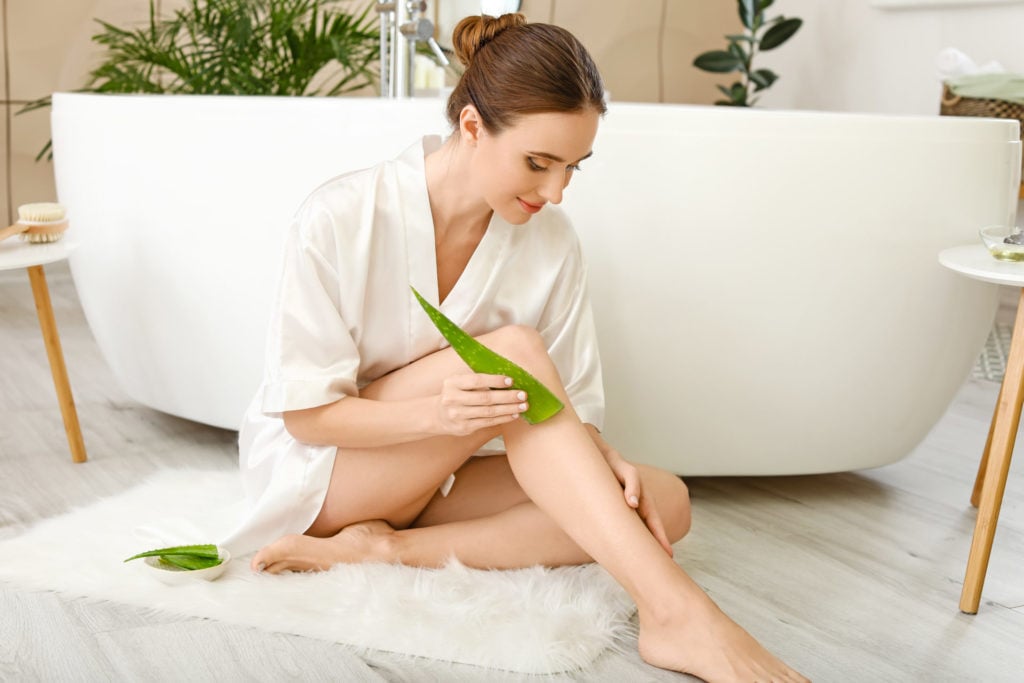
Aloe Vera gel can be applied pure, directly onto the skin with a gentle massage. Its water-rich texture is quickly absorbed. To find pure gel, you have 2 options:
- Source fresh Aloe Vera leaves directly — they keep in the fridge for one to two weeks
- Purchase Aloe gel, checking the origin, product quality (ideally an organic certification) and composition (as close to 100% pure Aloe Vera gel as possible)
Aloe Vera gel can also be combined with a natural plant oil for a more nourishing texture. Choose your oil carefully (100% plant-based, cold-pressed) and opt for oils often used in stretch mark care: avocado, sweet almond or jojoba.
You can also create a stretch mark body mask using Aloe Vera. Mix two tablespoons of gel with a blended piece of cucumber. Apply the mixture to the areas affected by stretch marks (thighs, stomach, chest, hips or buttocks) and leave on for 20 minutes. The body mask will hydrate the skin and leave it more supple. Try it on a small area first, then rinse off with lukewarm water.
Pure gel or Aloe Vera cream for stretch marks?
If you choose a cream or another product containing Aloe Vera rather than pure gel, take the time to read the ingredients list: check how much of the gel it really contains, as well as its origin and quality, just as you would for pure gel.
After that, it all comes down to personal preference. If you like lightweight textures, pure gel massaged into the skin is ideal. If you prefer something richer, you can mix the gel with a plant oil or pair it with a cream, as we suggest below.
What are the complementary solutions?
When it comes to body and skincare, we’re all different. Some prefer gel textures, others love oils. Some swear by rich, indulgent formulas, while others prefer something lighter.
Either way, you can easily complement your Aloe Vera routine with an anti-stretch mark regimen like ours! The Anti-Stretch Mark Pack includes 6 products to go alongside your Aloe Vera gel.
The complete stretch marks routine, from shower to massage, during and after pregnancy
- Instructions for use
- Friendly advice
- The Brosse Peau Neuve clears the skin of impurities and dead skin cells. A gentle exfoliating massage over your stretch marks beforehand prepares your skin for the Aloe Vera gel.
- The Stretch Mark Prevention Oil, a blend of 6 exceptionally pure and nourishing plant oils, can be used in alternation with Aloe Vera gel. One day oil, the next day gel: a varied routine for better-nourished skin!
- The Crème Anti-Vergetures is the perfect complement to your Aloe routine. Its velvety texture and natural extracts of macadamia oil and cocoa butter are a true treat for your skin, leaving it softer and more supple.
- The serum hydrates the skin and complements your other products.
Frequently asked questions
Does Aloe Vera get rid of stretch marks?
No: no product can erase stretch marks. Aloe Vera gel moisturises, softens and smooths the skin, making it feel more comfortable. Recent red or purple stretch marks often fade over time, whereas white stretch marks remain visible. For very pronounced stretch marks, a dermatologist can talk you through the medical options.
How do you use Aloe Vera gel on stretch marks?
Apply it pure to clean skin, massaging it in until absorbed. You can also mix it with a plant oil for a richer texture, or use it as a body mask with blended cucumber, rinsed off afterwards. Using it regularly matters more than how much you apply.
Can you use Aloe Vera during pregnancy?
Applied to the skin, the gel is generally well tolerated: try it on a small area first. However, avoid Aloe Vera drinks or capsules without medical advice. If in doubt, speak to your doctor or midwife.
Related articles
- Monoi oil: a solution for stretch marks?
- Cocoa Butter for Stretch Marks: Does It Work?
- Microdermabrasion for Stretch Marks: Does It Work?
Useful categories: Stretch Mark Plants, Stretch Marks.