When it comes to stretch marks, natural plant oils are often the first thing that comes to mind. Naturally rich in fatty acids, they are among the most frequently mentioned options for caring for stretch mark-prone areas. But what about plant butters? Let’s take a closer look at cocoa butter, with its enchanting scent and comforting texture: where it comes from, what it offers the skin, how it fits into a stretch mark skincare routine, and several ways to use it day to day.
What is cocoa butter?
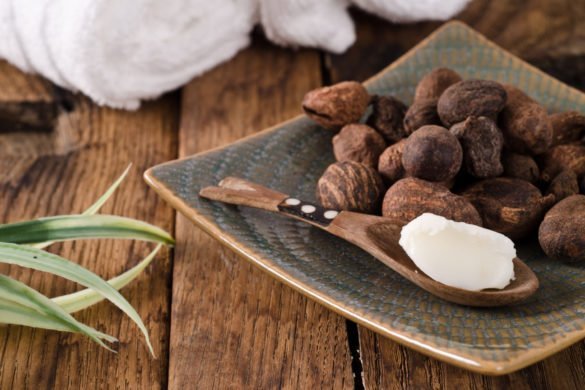
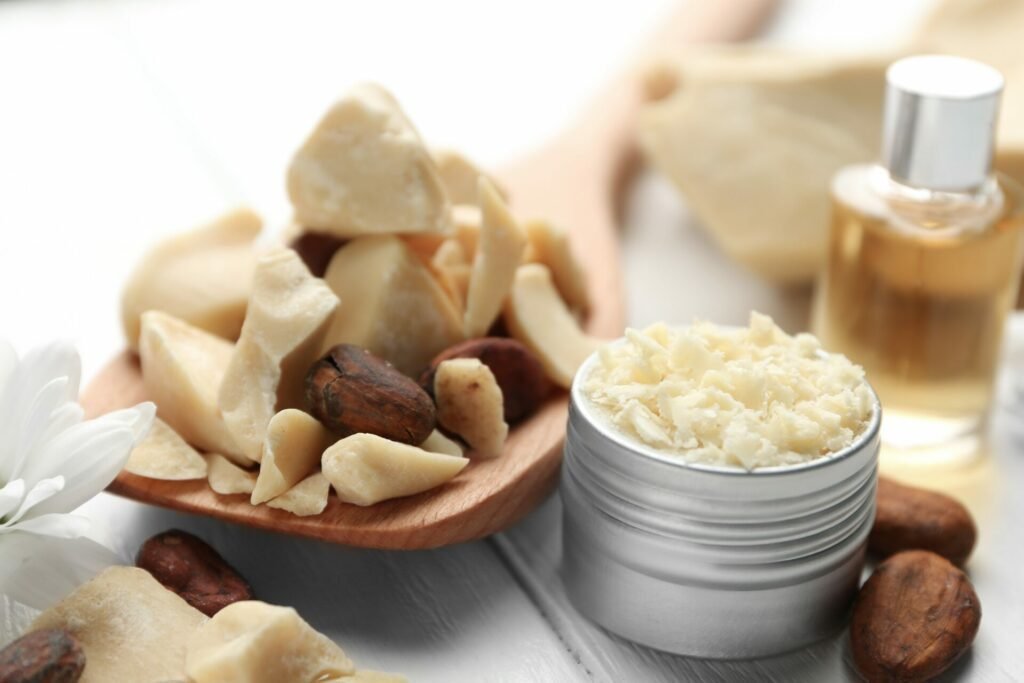
Cocoa butter is a vegetable fat obtained by pressing cocoa beans. These beans, the seeds of the cacao tree, are found inside its pods. They are also the very ingredient used to make chocolate: they are harvested, fermented and dried, then degermed and roasted. Roasting (heating to 140–160°C for 20–30 minutes) followed by pressing produces cocoa powder and cocoa butter. It is worth noting that the beans are made up of 50% fat.
Once extracted and filtered, cocoa butter is then put to use: in chocolate making, but also in the formulation of many parapharmaceutical and cosmetic products. It is commonly found in sun care products, lip balms and certain treatment ointments (skin rashes, dermatitis, burns).
What are the benefits of cocoa butter for the skin?
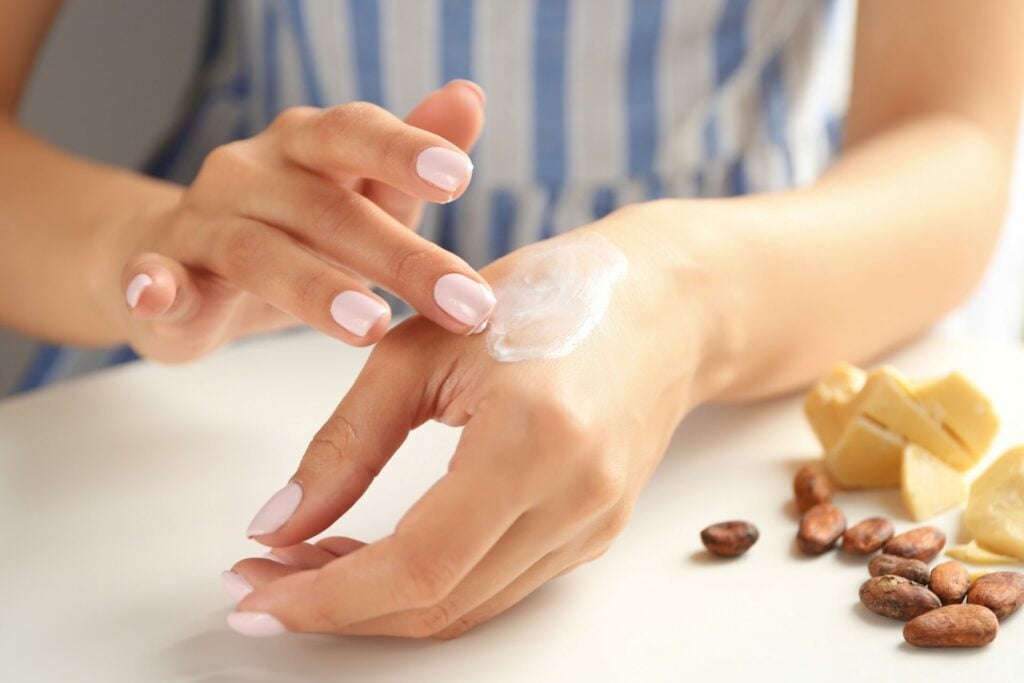
The composition of cocoa butter is quite unique. It is rich in four fatty acids with different melting points, giving it a variable yet supple texture — slightly greasy to the touch but with good absorption. It actually becomes liquid above 30 °C. More interestingly, the various fatty acids in cocoa butter give it a wide range of benefits:
- Stearic acid, present in high concentrations in cocoa butter (around 35%), has protective (film-forming) and emollient properties. It brings softness and nourishment to the skin.
- Oleic acid (around 35%), found in many natural plant oils (avocado, hazelnut, argan, olive), is known for its nourishing properties. Its chemical structure closely resembles that of the skin’s hydrolipidic film.
- Palmitic acid, well represented in cocoa butter (around 25%), is one of the main components of sebum. It helps protect the skin and keep it supple.
- Finally, linoleic acid, an essential fatty acid, is highly beneficial for the skin. It helps maintain the lipid barrier and the cohesion of the skin, and helps protect the epidermis from dryness.
But cocoa butter has more to offer. It also contains a number of unsaponifiables that are particularly beneficial for the skin:
- Vitamin E is a natural antioxidant that helps protect the skin against free radicals.
- The phytosterols in cocoa butter have nourishing and softening properties.
- Squalene, naturally present in the skin, helps strengthen the lipid barrier of the stratum corneum (the outermost layer of the epidermis).
Can cocoa butter be considered a treatment for stretch marks?
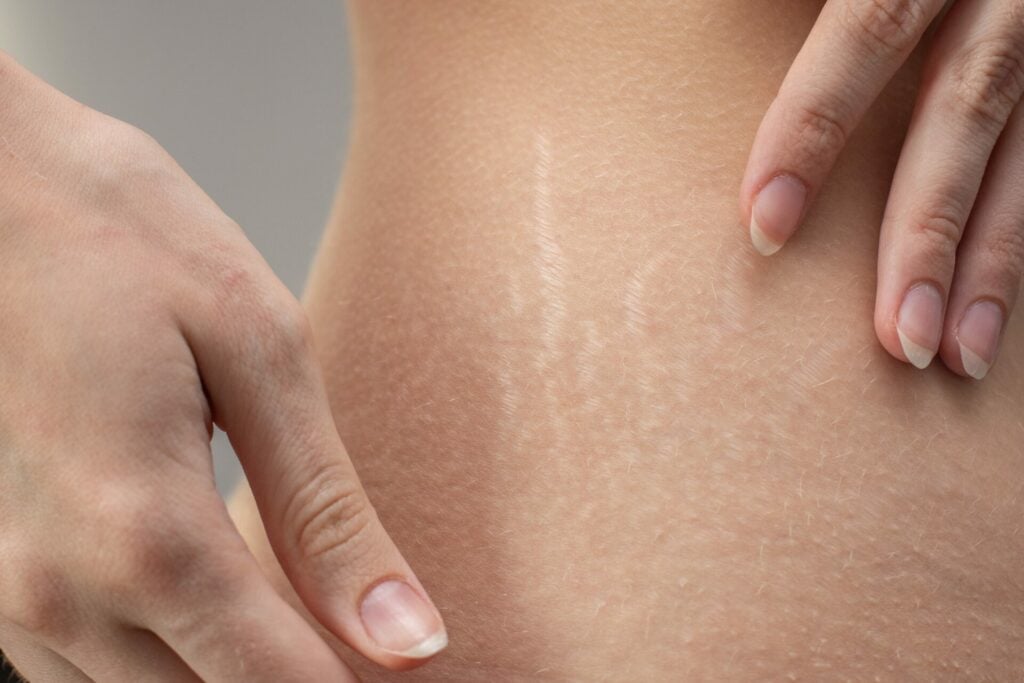
Thanks to its rich composition, cocoa butter has a natural place in caring for skin prone to stretch marks. Daily application to at-risk areas (chest, stomach, thighs, hips, buttocks) nourishes the skin and helps keep it supple, while also supporting the care of existing stretch marks.
- Stearic, palmitic and linoleic acids, through their emollient and protective properties, help maintain the skin’s intrinsic qualities, keeping it supple and comfortable, which is welcome on stretch mark-prone areas.
- Oleic acid, along with the unsaponifiables in cocoa butter, nourishes the surface layers of the skin. By bringing softness and comfort to the skin, these ingredients support the care of areas marked by stretch marks.
It is worth noting that, while it can be used throughout pregnancy, it is best to check with your doctor.
With that in mind, you may be wondering how to use cocoa butter on your stretch marks. Here are a few suggestions.
1- Used on its own
Cocoa butter has a pleasantly creamy texture (especially when warmed between the hands first) and a delightful scent. It can therefore be used on its own, applied directly to the affected area. Simply take a small amount, apply it to the stretch mark-prone zone, and massage it in using small circular movements. It will leave the skin soft and supple without feeling greasy.
2- Combined with other oils
If you want to make the most of nature’s many benefits, it is perfectly possible to combine cocoa butter with other ingredients. Plant oils are another option to consider when caring for skin prone to stretch marks. Choose one or more oils with different fatty acid profiles to add variety to your homemade skincare. For example, you can make a homemade balm for areas with stretch marks by melting a little cocoa butter in a bain-marie, adding a splash of coconut and jojoba oil, then placing the mixture in the fridge to set.
3- With essential oils
To be used properly, essential oils need a carrier, and cocoa butter is one option. Simply melt your cocoa butter in a bain-marie and add a few drops of rosemary verbenone, rosewood, Italian helichrysum or rose geranium essential oil. You can then use the blend as part of your daily skincare routine. That said, if you are pregnant, please note that essential oils are not recommended.
4- With our Stretch Mark Cream
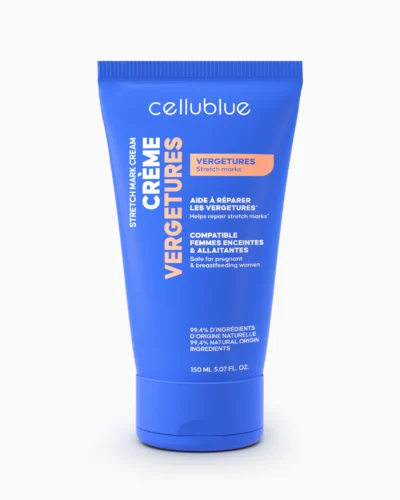
If you prefer to buy your anti-stretch mark products rather than make them, you’ll be pleased to know that our Repairing Stretch Mark Cream is formulated with cocoa butter! It combines macadamia oil with cocoa butter and provitamin B5. Applied twice daily, it nourishes and softens the skin on areas marked by both new stretch marks (red, purple) and mature ones (white). Our cream is also suitable for use during pregnancy and breastfeeding. If in doubt, ask your doctor for advice.
The cream that helps prevent the appearance of stretch marks* and improve how they look
*Consumer test on 22 volunteers over 3 weeks, based on participants' feedback.
- Helps prevent the appearance of stretch marks on the stomach, hips, thighs and bust. Apply morning and night
- Three plant oils: macadamia softens, sunflower soothes and coconut holds in hydration
- Velvety texture: it absorbs easily and calms feelings of tightness
Related articles
Useful categories: Stretch Mark Care, Stretch Mark Solutions.