You’ve probably already heard of shea butter — the plant-based butter used by African women to care for their skin and their babies’ skin. Moisturising and protective, it is a staple of natural beauty. What role can it play in a routine for stretch marks? Discover where it comes from, what it contains and the different ways to use it every day.
What is shea butter?
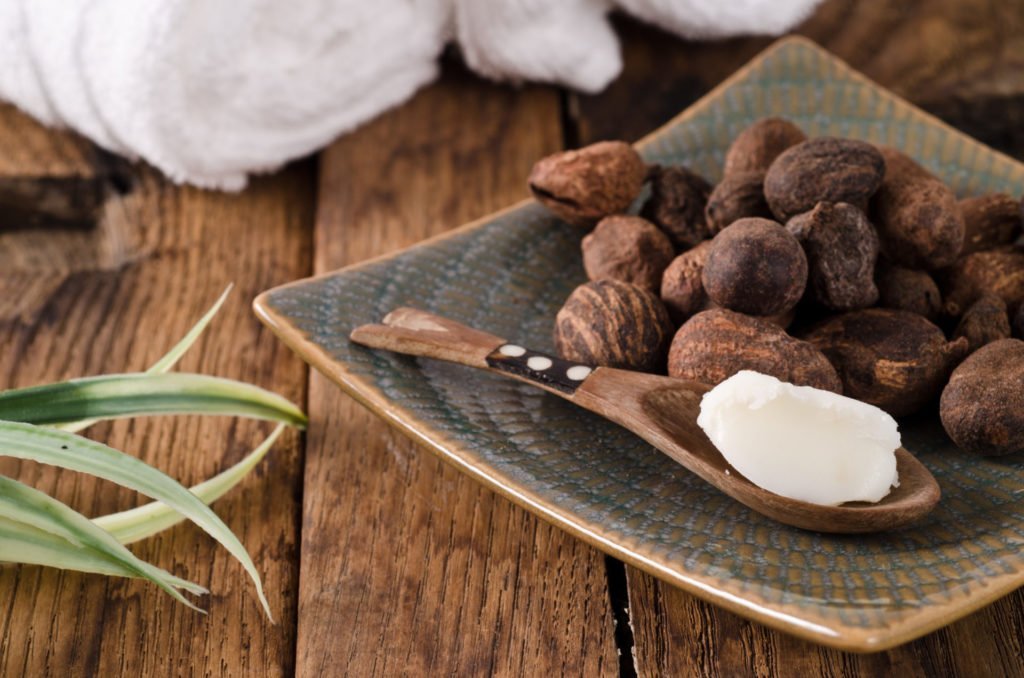
Shea butter is a fatty substance extracted from the fruit of the shea tree, which grows mainly in Africa. Traditionally, shea fruits are harvested and stripped of their pulp, revealing a nut that contains a kernel. It is this kernel that is pressed, after being dried, crushed, ground and churned. Needless to say, the traditional production of shea butter is a long and complex process! Today, the extraction process has been simplified through industrial methods. There are two:
- Cold-press extraction: the kernels are crushed in a press at low temperature. The resulting shea butter is of excellent quality, as this technique preserves the active compounds.
- Solvent extraction: the kernels are crushed, then a solvent is added to recover all of the shea butter contained in the nuts. It is a cost-effective method, but the solvent used will compromise the quality of the butter.
Before choosing your shea butter, read the ingredient list carefully and make sure it is raw, unrefined and extracted by cold pressing, just like your vegetable oils. You may also wish to choose an organic and fairly traded product if these criteria matter to you. You can then enjoy the nourishing and protective qualities of shea butter.
Can shea butter be part of a stretch mark care routine?
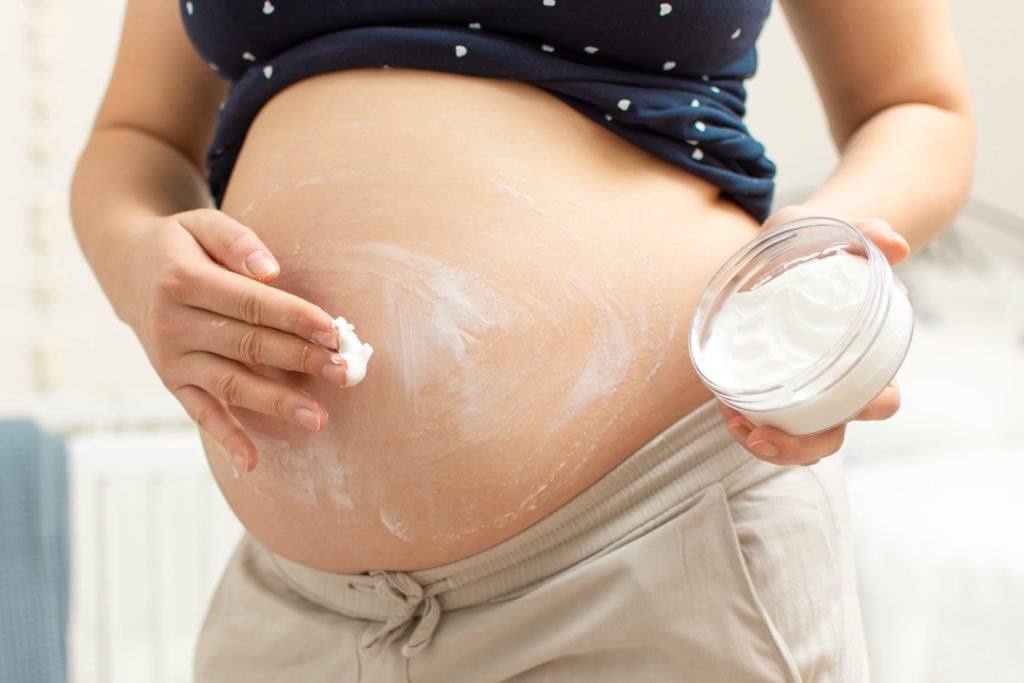
The composition of shea butter means that it is often included in products designed for stretch marks. Why? Because this plant-based butter contains fatty acids that are beneficial to the skin, along with vitamins and phytosterols.
Oleic acid
This is an omega-9, naturally produced by our bodies and particularly present in the skin’s hydrolipidic film. Oleic acid helps maintain the suppleness of the epidermis and nourish dry skin. Shea butter contains a significant amount of it — up to 60%, depending on its origin. It can therefore be included in care routines for red or purple stretch marks.
Stearic acid
A saturated fatty acid that can be useful in skincare. Stearic acid is often used in cosmetics as a texturising agent — it thickens creams and balms. But it also has nourishing, protective and emollient properties. Applied regularly, it helps maintain supple skin. It can therefore be included in products intended for older stretch marks, which are often deep and pronounced.
Linoleic acid
This is an essential omega-6 fatty acid, meaning it is not produced by our bodies. It helps preserve the skin’s protective barrier while nourishing it. Shea butter, which contains linoleic acid, can be included in a care routine for areas prone to stretch marks.
Alpha-linolenic acid
This omega-3 is an essential fatty acid, which is also not produced by our bodies. Shea butter contains it in small amounts, depending on its origin and quality.
Note that the proportions of fatty acids vary depending on the origin of the shea butter and, consequently, affect its texture. It will be more liquid if it is rich in oleic acid (and will resemble an oil), and firmer if its stearic acid content is high.
Finally, shea butter contains vitamin A, vitamin E (an antioxidant), latex (protective) and phytosterols, which contribute to nourishing and protecting the skin. Quality shea butter can therefore be included in a routine for skin prone to stretch marks.
How to use shea butter on stretch marks?
1. Pure application
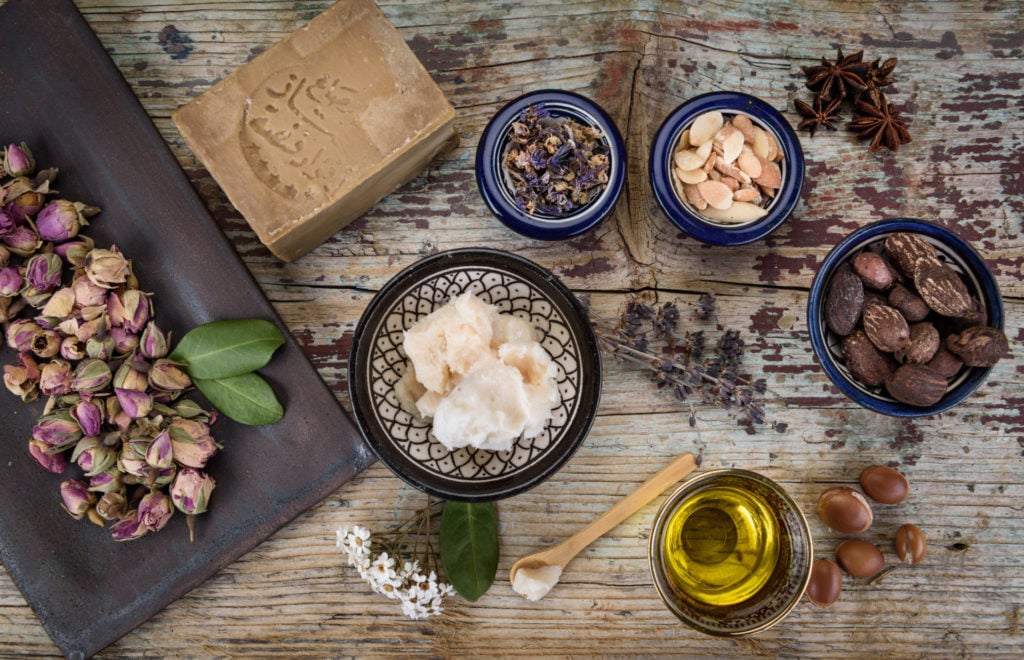
Shea butter can be used pure on the skin — as an ointment, massage, targeted application or even in the bath! Simply melt it in your hands by working it between your palms, then apply it directly to your stretch marks or add it to warm bath water for a moment of pure comfort.
2. Anti-stretch mark scrub
Shea butter also makes an excellent base for a homemade scrub. To make it, you will need:
- 1 tbsp shea butter
- 125 g raw organic cane sugar
- 60 ml ofcoconut oil
- 5 drops of spike lavender essential oil (optional)
- 3 drops oflemon essential oil(optional)
Mix all the ingredients together — if the mixture is not smooth, you can gently melt the shea butter in a bain-marie beforehand. Once the preparation has a smooth consistency, transfer it to a sealed container. Don’t forget to patch test it on the inside of your elbow first to check your skin tolerates it.
This scrub can be used two to three times a week on all your stretch marks.
3. Anti-stretch mark treatment
If you prefer creams, no problem! The rich, creamy texture of shea butter makes an excellent base for a homemade anti-stretch mark cream. You will need:
- 50 g shea butter
- 35 g ofsweet almond oil
- 15 g rosehip vegetable oil (macerate)
Slowly melt the shea butter in a double boiler, then add the vegetable oils. Mix the preparation, pour it into a sealed container and place it in the refrigerator. It will firm up and can be applied like a cream every day to your stretch marks. It may be considered as part of a skincare routine during pregnancy, but ask a doctor or medical professional for advice before using it. This treatment keeps for up to 3 months in the fridge.
What are the complementary anti-stretch mark solutions?
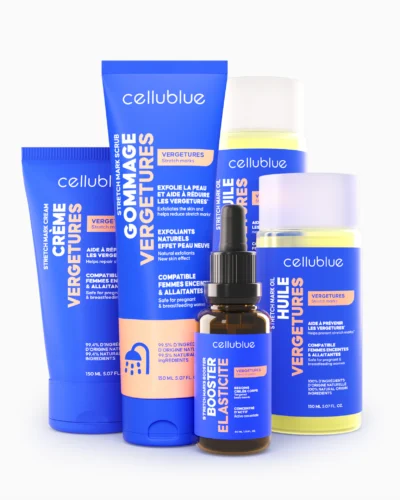
To complement your homemade shea butter treatments, you can adopt a cosmetic routine formulated with natural active ingredients. Our Stretch Mark Pack can be used alongside shea butter to care for the affected areas, whether they are on your stomach, your buttocks or your calves.
- The Stretch Mark Scrub, which is extremely gentle, can be used in the shower. It removes dead skin cells, preparing the skin for stretch mark care products, including shea butter.
- The Stretch Mark Cream, enriched with nourishing macadamia oil, can be incorporated into your shea butter routine. Its texture complements the care you apply to the affected areas.
- The Stretch Mark Treatment Oil is a useful complement to shea butter. Its rich texture can be applied with a simple massage. Its formula, based on natural vegetable oils of sesame, avocado, jojoba and soya, can be included in routines for pregnant women, teenagers and men. If you are pregnant, ask a doctor or medical professional for advice before choosing a product.
The complete stretch marks routine, from shower to massage, during and after pregnancy
- Instructions for use
- Friendly advice
Frequently asked questions
Do you need to follow a recipe to use shea butter on stretch marks?
Not necessarily. Shea butter can simply be used on its own. Homemade recipes are just an option if you prefer the texture of a scrub or a cream.
Is shea butter suitable for older stretch marks?
It can be part of a routine for older stretch marks. Adapt how you use it to your skin’s own needs.
Can you combine shea butter and lemon for stretch marks?
Yes, as an optional ingredient in a homemade preparation. After applying a product containing lemon essential oil, avoid exposing your skin to the sun straight away.
Can shea butter be used during pregnancy?
Some homemade recipes, such as the scrub, contain optional essential oils. If you are pregnant, ask a doctor or medical professional for advice before using a homemade preparation, especially one that contains them.
Related articles
- Cocoa Butter for Stretch Marks: Does It Work?
- Does argan oil really work on stretch marks?
- Black seed oil and stretch marks: what you need to know
Useful categories: Stretch Mark Care, Stretch Mark Solutions.