Stretch marks, the result of rapid weight fluctuations and sudden skin distension, are a source of discomfort for many women. When swimsuit season comes around, some feel self-conscious about revealing their marked hips. Yet solutions do exist to care for stretch marks on the hips. In this article, you’ll find out why this area is particularly prone to them, how to limit their appearance in everyday life, and which options can help soften their look once they’ve settled in.
Why do stretch marks appear on the hips?
Stretch marks appear when the body undergoes a sudden physical change. Growth spurts, weight gain, muscle gain, pregnancy… The dermis, subjected to an abrupt and intense demand for elasticity, stretches. Collagen fibres break and leave visible cracks at the surface of the skin. These are stretch marks. The majority of women experience them, to varying degrees.
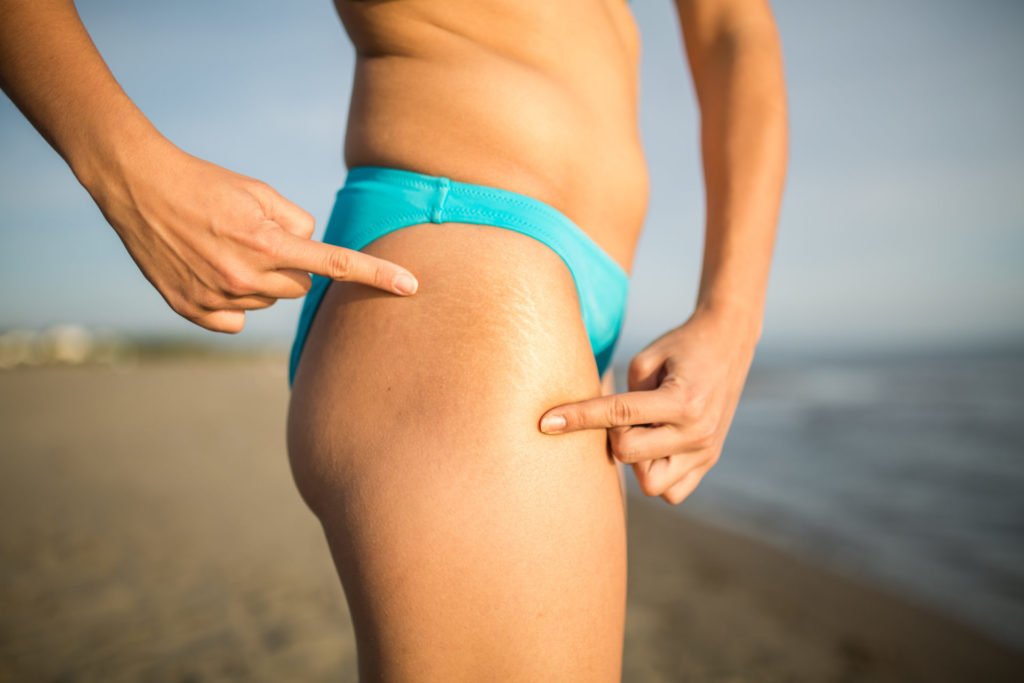
One of the areas most prone to stretch marks in women is undoubtedly the hips. Why? Simply because this part of the body changes enormously throughout life. Who’s to blame? More often than not, hormones are at play. Every hormone produced by our body alters its appearance – often through fat accumulation.
The role of oestrogen
Under the influence of oestrogen, women’s hips become rounder. The oestrogen peaks that occur during puberty, the menstrual cycle and pregnancy will therefore – to varying degrees – accentuate the gynoid body shape in women. The result: the skin on the hips is subjected to significant tension. Stretch marks are likely to appear.
The role of insulin
Another hormone is often mentioned when it comes to fuller hips: insulin. This hormone is involved in regulating blood sugar, and an imbalance can go hand in hand with a change in body shape around the hips. Eating habits are among the factors often mentioned in this regard. When the silhouette changes quickly and the hips become fuller, the skin in this area is put under considerable strain… with the risk of stretch marks appearing there.
Stretch marks on the hips in teenage girls
In teenage girls, stretch marks on the hips often sit within the context of puberty: the silhouette changes, the hips become rounder under the influence of oestrogen, and the skin has to adapt to these changes. The situation is similar to the one described above, only at a different age and pace.
In this situation, the same levers remain relevant: a balanced diet, regular skin hydration and varied physical activity. For support suited to this period, it’s best to talk it through with your doctor.
How to prevent stretch marks on the hips?
Preventing stretch marks is no easy feat. They are, after all, a common and natural bodily phenomenon. But there’s nothing stopping you from adopting a few healthy lifestyle habits and putting the odds in your favour!
- Limit excessive sugar consumption over the long term and favour a varied, balanced diet – a habit that’s part of a consistent lifestyle for taking care of your figure.
- Eat a varied diet! Include a wide variety of foods in your meals, for example with sources of vitamin C, copper, silicon, vitamin B5, zinc and vitamin E.
- Stay active! Regular physical activity is part of a self-care routine. Try exercises such as lunges, side planks or lateral leg raises. Cardio is also a great option: running, spinning or body combat – there’s something for everyone!
- Hydrate, inside and out! Drink water throughout the day and choose it over fizzy drinks in your daily life. Establish a skin hydration routine: your skin will feel more comfortable and supple. Opt for natural products, such as plant-based oils like sweet almond, wheat germ, coconut or argan – deeply nourishing for the skin.
How to reduce the appearance of stretch marks on the hips?
Despite your best efforts, stretch marks have appeared on your hips. Don’t panic: there are solutions to help improve their appearance.
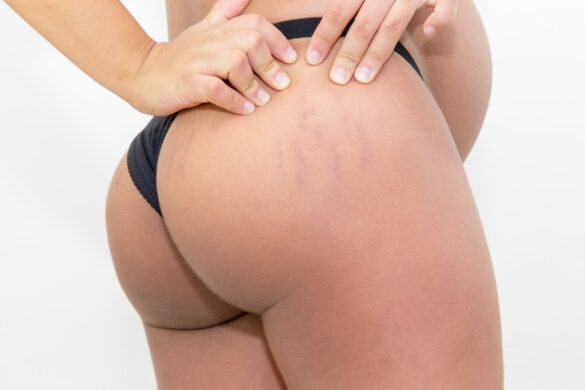
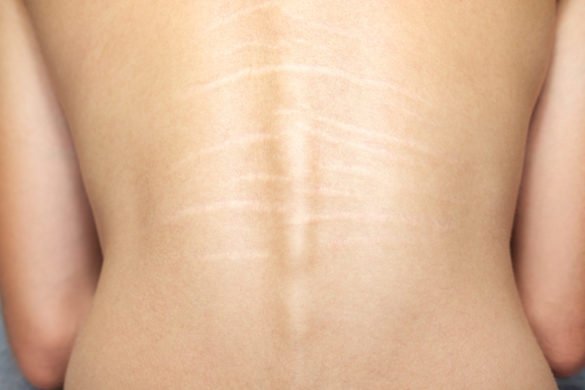
First tip: take care of stretch marks as early as possible after they appear. Recent stretch marks are inflammatory (red or purple), while older ones turn white, so it’s worth adopting a suitable skincare routine without waiting.
Second tip: find the treatment that suits you. This could be a technical solution (peeling, injections, laser, radiofrequency…) or a cosmetic one. Our Mom’s World skincare routine, nourishing and comforting, is the ideal companion for women who feel self-conscious about their stretch marks. It’s incredibly simple to use:
- A scrub for your hips using natural exfoliants
- Optimal hydration with a rich cream for plumper-looking skin
- Massages for your hips with a deeply nourishing oil – a carefully crafted blend of sesame, jojoba, avocado and soya oils – to complete your routine
Final tip: keep things in perspective! Your beauty is not defined by a few stretch marks on your hips!
What about the thighs, calves or bottom?
Stretch marks aren’t limited to the hips. They can also affect the thighs, calves or bottom, for comparable reasons: growth, weight gain, muscle gain or pregnancy. The logic remains the same as the one described in this article: rapid skin distension can leave visible cracks at the surface of the skin.
The prevention and softening principles set out here for the hips therefore apply to these areas too: skin hydration, a balanced diet, physical activity, and suitable cosmetic care as soon as the first stretch marks appear.
The complete stretch marks routine, from shower to massage, during and after pregnancy
- Instructions for use
- Friendly advice
Frequently asked questions
What can I do about stretch marks on my hips?
There’s no single solution. The most consistent approach combines two strands: caring for your skin every day by adopting a balanced diet, regular skin hydration and physical activity, then softening the look of stretch marks that are already there with suitable cosmetic care or technical solutions. The most useful thing is to act while the stretch marks are still recent.
Why do stretch marks appear mainly on the hips?
The hips are among the areas that change most over the course of a lifetime. Under the influence of oestrogen (puberty, the menstrual cycle, pregnancy) and insulin, this area can become rounder quickly. The skin, subjected to significant tension, stretches and the collagen fibres can break, leaving stretch marks visible.
Can you prevent stretch marks on the hips?
Preventing them entirely is tricky, as they’re a common and natural phenomenon. You can still adopt a few everyday habits: avoid excessive sugar over the long term, keep your diet balanced, hydrate your skin and stay physically active. These habits don’t remove the need for a certain amount of caution around expectations, but they’re part of a consistent routine.
What’s the difference between a red stretch mark and a white one?
Red or purple stretch marks are recent and inflammatory: they’re generally easier to soften. White stretch marks are older and more established, which makes them trickier to manage. That’s why it’s advisable to start your routine as soon as the first stretch marks appear.
Should I see a doctor about stretch marks on my hips?
If you have a medical question, if the stretch marks appear in an unusual context, or if you’re considering a technical solution (peeling, injections, laser, radiofrequency), it’s best to talk it through with a doctor.
Related articles
- Purple stretch marks: causes and solutions
- Stretch marks on the knees: how to reduce them?
- White stretch marks: all the solutions to reduce them
Useful categories: Stretch Marks on Hips, Stretch Marks.