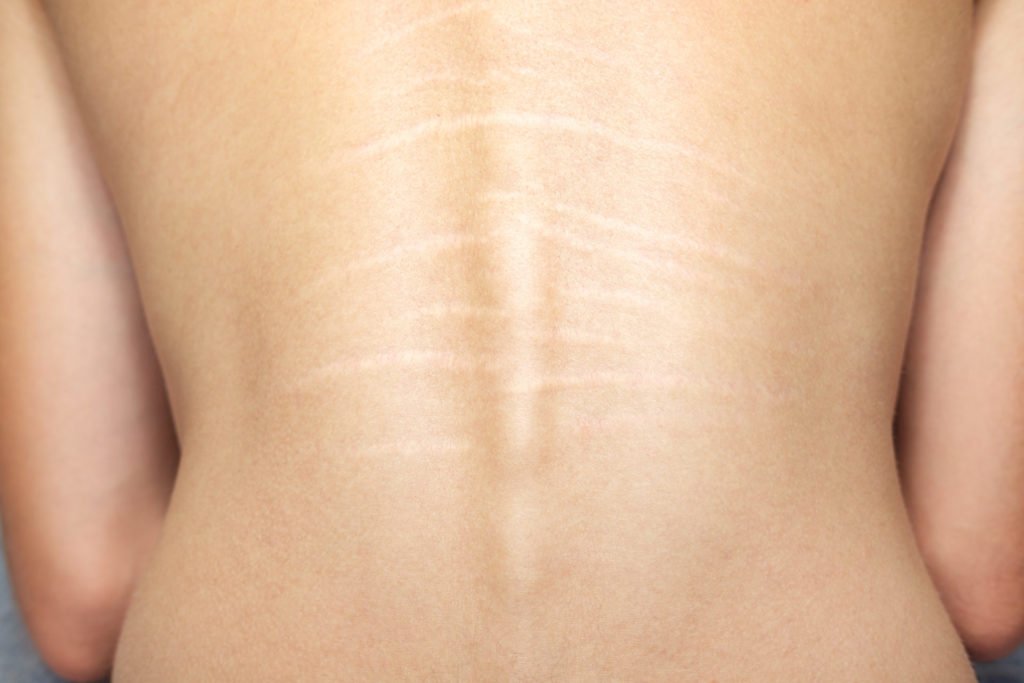
You can’t see them, and that’s precisely the point. They streak across your back, out of sight, yet you know they’re there, and they make you self-conscious. Back stretch marks, particularly around the lower back, are something many people have in common. But why do they appear on this specific area of the body, and more importantly, what can you do about them? In this article, we look at the causes of stretch marks on the back (adolescence, weight fluctuations, cortisol, pregnancy, sport), ways to help prevent them, the aesthetic treatments available, and the dedicated Cellublue routine.
Why do I have stretch marks on my back?
There are several reasons why stretch marks can appear on the back. Here are some of the most common.
1. Adolescence
This is the period most likely to trigger stretch marks on the back, especially in the lumbar area. They are caused by rapid, sudden growth spurts. The skin, which has a degree of elasticity thanks to its collagen and elastin fibres, is put under significant strain duringpuberty. Bone growth spurts, changes in body shape… all it takes is an overly intense stretch for the elastic fibres to break. Inflammatory stretch marks,redorpurple, then appear. The back is particularly affected during adolescence, as the body “lengthens” dramatically in this area.
Growth spurt stretch marks on the back: what teenagers should know
Stretch marks from growth spurts on the back mainly affect teenagers during puberty. The body grows quickly, the skin is stretched further than it can cope with, and the elastic fibres give way. They often appear across the lower back as red or purple lines, before fading over time. If you’re a teenager wondering what you can do, there’s no product that will make them disappear: the focus is on keeping your skin moisturised, eating a balanced diet and doing gentle exercise. For personalised advice, have a chat with your GP.
2. Significant weight fluctuations
Sudden weight loss or gain takes a toll on the skin which, despite its elasticity, can be weakened by abrupt stretching. For some people, weight fluctuations will have no visible effect on the skin. But for the majority, they will trigger stretch marks, which can appear on the back — particularly in the thoracic area (around the latissimus dorsi, teres major and teres minor muscles). Stretch marks linked to weight changes are generally finer than those caused by hormonal factors.
3. Elevated cortisol
Cortisol, often called the “stress hormone”, is naturally produced by the body. It helps regulate energy release when the body needs it: upon waking, during brief periods of stress, or in emergency situations. In certain circumstances (both external and internal), blood cortisol levels can spike and remain persistently high — a condition known as hypercortisolism. This can occur in the following situations:
- The development ofchronic stress
- Long-termcorticosteroid use— to manage the effects of rheumatism, allergies or certain conditions (such as inflammatory bowel disease)
- Cushing’s syndrome, which involves persistent hypercortisolism
Sustained high cortisol levels weaken the dermis’s elastic network. The skin becomes dry and rough, making it particularly prone to stretch marks. It is not uncommon to see striae appear across various parts of the body. In cases of Cushing’s syndrome, the back is especially affected. The stretch marks are often vertical, very wide and deeply coloured.
4. Pregnancy
It is relatively uncommon forpregnancy stretch marksto appear on the back. They typically develop on thestomach of the expectant mother, as well as on thebust,thighsandhips.That said, pregnancy brings such profound changes to the body that, under the combined effect of several factors (hormones, morphological transformation, changes in skin quality), stretch marks can sometimes form on the lower back of pregnant women.
5. Physical activity
Certain sports can cause stretch marks. This is particularly true of activities that involve rapid, significant muscle mass gain in the back: weight training, weightlifting, bodybuilding. That said, stretch marks more commonly appear on areas such as the arms,shouldersor chest (in the case ofstretch marks in men). Muscle hypertrophy creates tension in the dermis. If this tension becomes too intense, the elastic fibres may give way under the strain and tear, leading to the appearance of stretch marks.
Back stretch marks in men
In men, stretch marks on the back often come with weight training or bulking up, but they can also appear during adolescence, with growth spurts. They can affect the back, but more often show up on the arms, shoulders or chest. The same rules apply: staying hydrated, eating a balanced diet, building up exercise gradually and following a regular skincare routine. As with women, stretch marks that have been there for a long time are harder to fade than recent ones.
What are the solutions for back stretch marks?

1. Prevention
Preventing stretch marks is no easy task — you never quite know where, when or whether they will appear. That said, a few simple habits can help reduce the risk of developing stretch marks on your back.
- Stay well hydrated: the body is made up of around 70% water, so drinking enough is essential. Water, herbal teas, fresh juices and broths are all great options. Try to limit alcohol, as it contributes to dehydration.
- Eat well: certain minerals and vitamins are particularly beneficial for the skin. Vitamins A, B5, C and E, along with zinc, copper and silicon, help preserve the dermis’s resilience and elasticity. Don’t hesitate to include offal, nuts and seeds, seafood, dried fruits, fresh fruit and vegetables, and wholegrains in your diet. These will help nourish your skin and keep it in good condition.
- Practise gentle sports and stretching: high-intensity, high-impact sports can affect your skin and contribute to back stretch marks. However, physical activity is largely beneficial overall. Regular exercise not only helps keep the factors that encourage back stretch marks in check (weight gain, elevated cortisol), but also contributes to your general wellbeing. Opt for a variety of gentle activities and complement them with regular stretching.
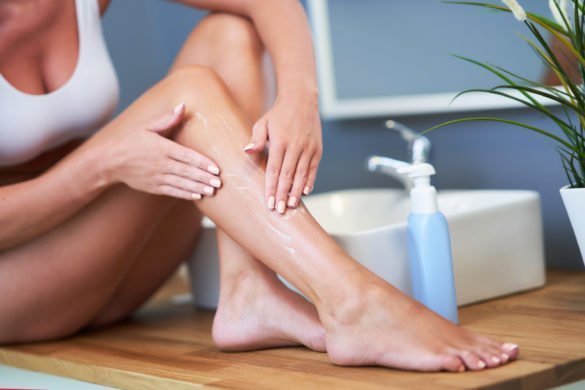
- Care for your skin: build a moisturising routine, because your skin needs nourishment both from within and from the outside. Choose nourishing, protective products such as natural plant oils (olive, sweet almond, coconut), plant butters (shea), Aloe Vera gel or suitable creams.
2. Technical solutions
Certain aesthetic techniques aim to reduce the visibility of back stretch marks. They focus on two main objectives:
- Smoothing the indented appearance of stretch marks:peeling, cosmetic surgery, dermabrasion.
- Stimulating collagen production in the dermis: plasma injections, microneedling, LED therapy,laser, radiofrequency.
These techniques, which vary in cost, give results that differ from one person to the next. On some stretch marks, particularly newer ones, they can noticeably improve their appearance. However, white stretch marks, the more mature ones, are always harder to treat and never fully disappear.
Which Cellublue products help with back stretch marks?
To care for the stretch marks on your back, there is another option: our dedicated Stretch Marks routine! The Stretch Marks Pack, made up of three products, will help you:
- Prevent stretch marks from forming, for example if you’re going through adolescence, are pregnant, or are experiencing weight changes.
- Treat your back stretch marks to help soften their visible appearance.
What about the products themselves? They are gentle, suitable for everyone and very easy to use.
- The Stretch Marks Scrub is used 2 to 3 times a week on damp skin, even in the shower! It gently exfoliates to remove dead skin cells and leaves the skin feeling softer, thanks to the mango butter and wheat germ extracts it contains.
- The Stretch Marks Treatment Oil is a carefully crafted blend of 6 nourishing and soothing oils (including avocado and jojoba). It can be used every day, including on the back.
- The Stretch Marks Cream, enriched with macadamia oil and cocoa butter, is our go-to repair cream. Applied daily, it nourishes the skin and helps soften the look of stretch marks, on the back and beyond!
The complete stretch marks routine, from shower to massage, during and after pregnancy
- Instructions for use
- Friendly advice
Frequently asked questions
Why do I have stretch marks on my back?
Stretch marks on the back can have several causes: growth spurts during adolescence, significant weight fluctuations, persistently high cortisol levels, pregnancy, or certain sports that involve rapid muscle gain. The back, and the lower back in particular, is a commonly affected area. For personalised advice, have a chat with your GP.
How do you get rid of stretch marks on your back?
No method makes them disappear completely, especially once they’re older. You can, however, help soften their visible appearance with regular skincare (oils, creams), good hydration and a balanced diet, and possibly aesthetic treatments such as peels, laser or radiofrequency. Newer stretch marks tend to respond better than white ones.
What can teenagers do about stretch marks on their back?
During puberty, rapid growth stretches the skin and can lead to stretch marks, particularly on the lower back. The focus is on keeping the skin well hydrated, from within and from the outside, eating a balanced diet and staying active with gentle exercise. For tailored advice, have a chat with your GP.
Can men get stretch marks on their back?
Yes. In men, back stretch marks often appear during adolescence or with weight training and bulking up. With weight training, though, they more commonly affect the arms, shoulders or chest. The same prevention tips and skincare habits apply as for women.
Related articles
- Stretch marks on the knees: how to reduce them?
- Stretch marks on the buttocks: how to reduce their appearance?
- Purple stretch marks: causes and solutions
Useful categories: Stretch Marks by Area, Stretch Marks.