If you’re expecting, you already know that pregnancy, while a source of immense joy, also comes with its share of everyday niggles. Skin concerns are among them: dryness or, on the contrary, acne flare-ups, melasma, itching… and the possibility of stretch marks. Not those, you promised yourself! Here’s what stretch marks are, why they appear during and after pregnancy, how to limit their appearance day to day and how to care for your skin if they show up anyway.
What are stretch marks?
Stretch marks are skin lesions caused by sudden, intense stretching of the skin’s elastic fibres. The connective tissue of the deep dermis is made up of countless fibres that provide the skin with both resistance (collagen) and elasticity (elastin). But when subjected to significant tension, these fibres can break. The visible result of these ruptures is stretch marks.
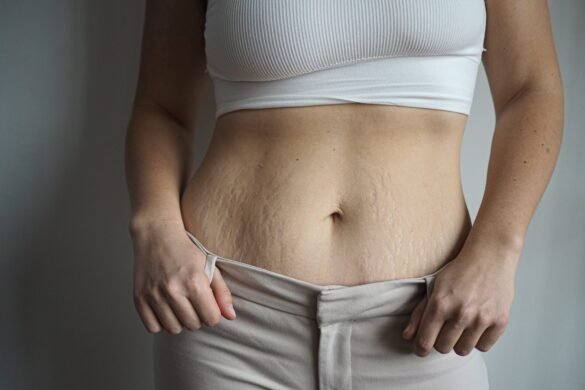
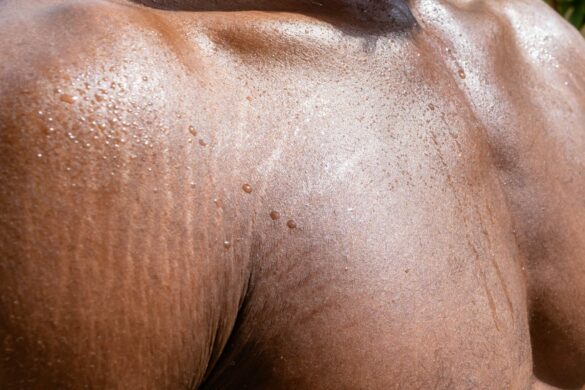
Stretch marks appear as striae of varying widths, sometimes quite deep, and their colour changes depending on how recent they are (pink, red or purple during the inflammatory stage, then white once healed). Painless and soft to the touch, they are difficult to fade. Why? Once broken, collagen and elastin fibres don’t truly “repair” themselves. The skin simply produces new elastic fibres, often finer than the previous ones…
Why do stretch marks appear during pregnancy?
During a first pregnancy, 50 to 70% of women notice the appearance of stretch marks. Several factors explain why they develop.
1. The most obvious reason: weight gain
Naturally, a pregnant woman gains weight as the months go by. The rapid growth of the baby in the womb subjects the skin to constant and intense stretching. Sometimes the dermis holds up. Sometimes it doesn’t. When it doesn’t, stretch marks appear on the belly skin of the expectant mother. There’s no hard rule, but it does seem that younger, fairer skin types are more at risk.
Pregnancy can also sometimes lead to weight gain around the hips and thighs. Stretch marks may therefore appear in these areas too.
Finally, the chest of a pregnant and/or breastfeeding woman is also subject to an increase in volume. The reasons include:
- The mammary glands, which enlarge in preparation for milk production.
- The milk ducts, which carry milk from the mammary glands to the nipples, multiply.
- The blood supply to the breasts increases to accompany these changes.
The skin of the breasts, which is very thin and delicate, can be particularly strained by this sudden increase in volume… and give way in places. The appearance of stretch marks on the chest in pregnant and/or breastfeeding women is therefore a widespread phenomenon.
2. The specific case of pregnancy stretch marks on the belly
As mentioned, when it comes to pregnancy stretch marks, life isn’t always fair. It’s very hard to predict whether a woman will develop them or not. Belly stretch marks during pregnancy often appear from the 5th month onwards. The early stages of pregnancy aren’t risk-free either, but the tension on the belly skin increases steadily month by month, reaching its peak in the 9th month. This is why many mums-to-be start caring for the skin on their tummy early on.
What’s more, belly stretch marks can appear after delivery, or even at the end of the breastfeeding period. As for their location, they mainly extend from the pubic area to the navel and can sometimes spread to the love handle area.
Technically, what happens during pregnancy? Weight gain in the belly area is primarily due to the development of the foetus in the uterus. But other factors come into play: the weight of the placenta, the umbilical cord, the membranes and the amniotic fluid. Add to this the significant increase in uterine volume, possible localised water retention and fat storage. Under such weight, combined with intense pressure and the baby’s movements, the belly skin is put under considerable strain. And although female hormones promote skin hydration and smooth muscle relaxation at this time, the physical changes are so significant that the skin can give way.
What about the post-partum period? Because yes, belly stretch marks can appear after pregnancy! Their development is multifactorial:
- the sudden skin laxity is hard on the dermis. The tension on the elastic fibres stops abruptly, causing the dermis to weaken significantly;
- the post-partum period, breastfeeding and the return of menstruation are particularly prone to vitamin and mineral deficiencies, notably zinc, a trace element. If you have any questions about your intake, ask your doctor. These changes may go hand in hand with stretch marks appearing unexpectedly on the belly;
- the hormonal crash is also a plausible explanation for post-pregnancy belly stretch marks. During gestation, oestrogen and progesterone rise progressively, peaking just before delivery. They trigger a whole range of physical changes: tissue relaxation, vasodilation, increased blood flow, water retention, hyperpigmentation… After delivery, this remarkable hormonal surge stops abruptly. The dermatological consequences of this sudden drop are often visible and striking: skin that is thin, dry, dull and fragile — the perfect breeding ground for stretch marks to appear on the belly.
3. Pregnancy: a hormonal upheaval
The hormonal environment is a key factor in the development of stretch marks. And pregnancy is a period particularly prone to endocrine fluctuations. Among the hormones involved is cortisol. Between the 3rd and 9th month of pregnancy, a woman’s cortisol levels are 50% higher than normal. They then return to normal levels within 8 to 10 days after delivery.
Cortisol, a steroid hormone produced by the adrenal glands, is naturally made by the body. Often called the “stress hormone”, it actually helps the body respond effectively to life’s challenges by regulating blood sugar and the release of lipids and proteins needed for the body to function properly. To support healthy embryo development, the pregnant woman’s body naturally produces more cortisol than usual. However, elevated cortisol inhibits the proliferation of fibroblasts — the cells responsible for producing skin collagen. The effect is mechanical: as blood cortisol levels rise, the skin’s resistance and elasticity are weakened. Collagen fibres become fragile, and stretch marks may appear.
4. Dry skin during pregnancy
Another possible reason for stretch marks during pregnancy is dry skin. Indeed, some pregnant women notice changes in their skin’s nature and quality:
- Excess sebum and acne
- Changes in pigmentation and the appearance of patches on the face (the well-known pregnancy mask, or chloasma)
- Unexpected redness and telangiectasia
- Dry skin with itching and roughness
If the lack of hydration becomes too significant and dry skin persists, stretch marks may ultimately develop.
How to prevent stretch marks during pregnancy?

Preventing pregnancy stretch marks is no easy task. Some of their causes are simply beyond our control — hormonal fluctuations being a prime example. That said, rest assured: there are a few everyday habits you can adopt.
1. Stay well hydrated
To avoid the discomforts of dry skin and the appearance of stretch marks, proper hydration is essential:
- From within: the best hydrator is water! Don’t skimp on it: aim to drink 1.5 to 2 litres of water a day. You can also top up with fresh juices, broths, herbal teas or lightly brewed tea. Water-rich foods, such as fruit and vegetables, are also great allies. During pregnancy, it’s also wise to go easy on coffee: your GP or midwife can tell you how much is right for you.
- From the outside: you also care for your skin from the outside, by applying a skincare product (plant oil, plant butter or cream). Application should go hand in hand with a massage of the at-risk areas and, why not, some firm little pinches, such as Jacquet pinching, a classic massage technique. Our Stretch Mark Oil is perfectly suited to this: it is designed for the daily care of skin prone to stretch marks during pregnancy. It is also compatible with pregnancy and breastfeeding, and formulated without essential oils.
The massage oil that helps prevent stretch marks from appearing*, during pregnancy and beyond
*User test on 21 volunteers over 3 weeks, based on participants' feedback.
- Why does it work?
2. Focus on the right nutrients
Aim for a varied diet during pregnancy. Among the nutrients found in everyday foods:
- Vitamin C, found in citrus fruits, kiwi, berries, bell peppers and parsley.
- Vitamin A, or retinol, found in dairy products (pasteurised, if you’re pregnant!). Liver is very rich in it, but it is not recommended during pregnancy: ask your GP or midwife for advice.
- Vitamin E, found in oily fish (salmon, sardines — make sure they’re well cooked!), nuts (almonds, hazelnuts) and avocado.
- Vitamin B5, found in wheat germ, brewer’s yeast and offal.
- Copper, found in certain cooked shellfish (whelks, periwinkles) and cocoa.
- Zinc, found in whole grains, cashews and pecans.
- Silicon, found mainly in dehydrated preparations (additives in powdered sauces and soups, freeze-dried coffee).
3. Keep up physical activity, even gentle exercise
Pregnancy doesn’t usually stop you from carrying on with sport. Physical activity offers many benefits for expectant mothers. Not only does it help maintain a healthy weight (and, as mentioned, pregnancy weight gain contributes to stretch marks), but it can also be a useful complement to your skincare routine:
- by helping you feel good in your body
- by offering a moment to unwind
- as a complement to your daily skincare
Opt for gentle activities such as walking, stretching, swimming and/or yoga.
4. When should you start using a stretch mark oil?
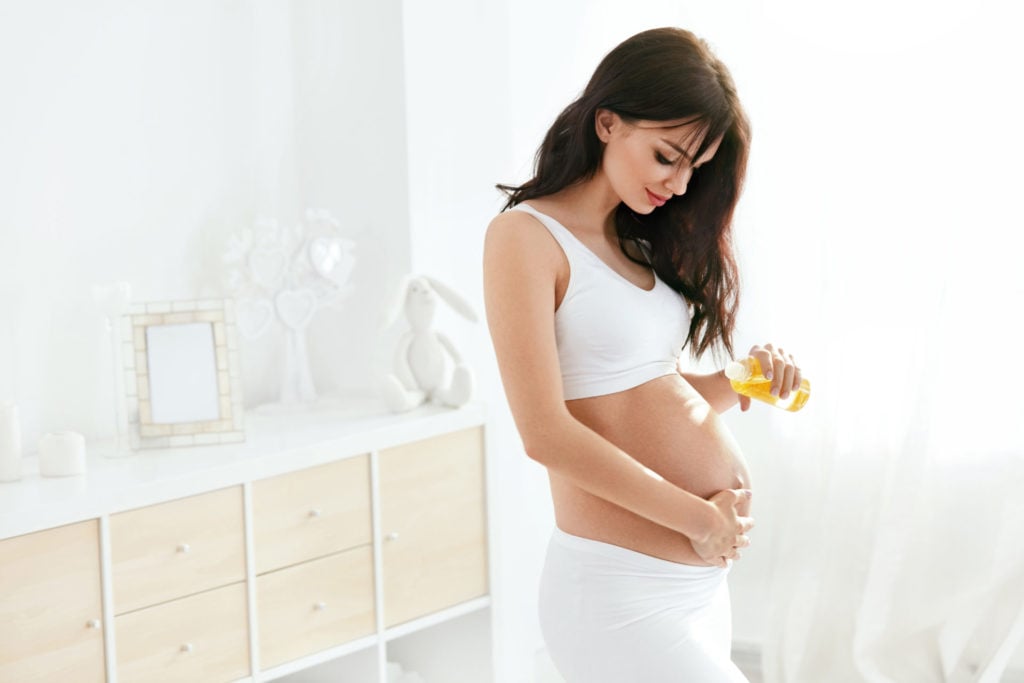
Many mums-to-be make a stretch mark oil part of their daily routine from the early months of pregnancy, without waiting for the first marks to show. Apply it with a gentle massage of the tummy, hips, thighs and chest.
Our Stretch Mark Oil is compatible with pregnancy and breastfeeding. If you’re unsure when to start, ask your GP or midwife for advice.
How to reduce pregnancy stretch marks?
Despite adequate preventive measures, stretch marks may still appear during or after pregnancy. These inflammatory stretch marks — red or purple — call for targeted care.
1. How to prevent them from worsening?
Continue with the measures already in place: hydration, movement, a healthy diet. Also avoid any aggravating factors:sun exposure, excessive weight gain through overeating (no, being pregnant doesn’t mean eating for two!), and sugar consumption. Finally, pregnancy should go hand in hand with calm and serenity. Avoid unnecessary sources of stress, which could contribute to a rise in blood cortisol levels.
2. Choosing the right stretch mark treatments
Extra care and attention should be given to your skin. The appearance of stretch marks may indicate that the dermis hasn’t been sufficiently nourished. So:
- You can turn to plant oils for stretch mark care. Jojoba, avocado, sweet almond or olive oil can be used daily on the skin.
- Be cautious with essential oils! Although some are popular in skincare, they are not without side effects, which could affect the baby’s development in the womb.
- Plant butters, such as shea or cocoa butter, can also be applied to skin marked by stretch marks.
- Daily application of a cream is also recommended as soon as the first pregnancy stretch marks appear.
- Gentle scrubs (and definitely not abrasive exfoliants, which weaken the dermis!) can also have a place in your routine. What’s more, the massage that goes with a scrub is a pleasant moment to enjoy.
3. Adopting a complete routine throughout pregnancy
We offer a complete stretch mark routine, fully compatible with pregnancy and breastfeeding. The Stretch Mark Pack brings together all the products you need for a stretch mark care routine during pregnancy.
- The Stretch Mark Scrub, with apricot kernel and bamboo grains and wheat germ oil, gently exfoliates and smooths the skin. It helps prevent the appearance of stretch marks.
- The Stretch Mark Cream, with macadamia, sunflower and coconut oils, helps prevent the appearance of stretch marks. Its velvety texture nourishes the skin and keeps it hydrated.
- The Stretch Mark Care Oil, combining five plant oils (avocado, sunflower, jojoba, sesame, olive) that nourish the skin, helps prevent the appearance of stretch marks. Free from essential oils, it is compatible with pregnancy and breastfeeding. Applied daily, it goes hand in hand with massage.
The Stretch Mark Pack brings together the products of the stretch mark routine.

The complete stretch marks routine, from shower to massage, during and after pregnancy
- Instructions for use
- Friendly advice
Frequently asked questions
When do pregnancy stretch marks appear?
They often show up on the tummy as pregnancy progresses, but they can also appear after the birth. The hips, thighs and chest can be affected too. The section “Why do stretch marks appear during pregnancy?” explains when and why they develop.
How can I avoid stretch marks during pregnancy?
There’s no single method, as some causes, such as hormonal fluctuations, are beyond your control. The everyday habits to adopt are covered in the section “How to prevent stretch marks during pregnancy?”.
How should I care for stretch marks after giving birth?
After the birth, the skin goes through sudden laxity and a hormonal drop that leave it more fragile. The key is to keep up the skincare routine you followed during pregnancy. For any questions about the postpartum period or breastfeeding, ask your GP or midwife for advice.
Related articles
- Purple stretch marks: causes and solutions
- Which vegetable oils are safe during pregnancy?
- Essential oils: are they safe during pregnancy?
- CelluBlue Body Challenge – Day 8
- The Cellublue Cup: avoiding unwanted side effects
- Grand Challenge 2015 – Day 23
Useful categories: Pregnancy Stretch Marks, Everything About Stretch Marks.