Though very common, stretch marks on the breasts can be a source of self-consciousness. Whether there are a few or many, and whether they are faint or more visible, they are not inevitable. Puberty, pregnancy, weight fluctuations, implants or genetics: here is what causes them, what you can do at home, the treatments offered by professionals and some prevention tips.
What are stretch marks?
Stretch marks are streaks that can appear on the skin at different stages of life, in both men and women. They are essentially scars of the dermis (the second layer of the skin).
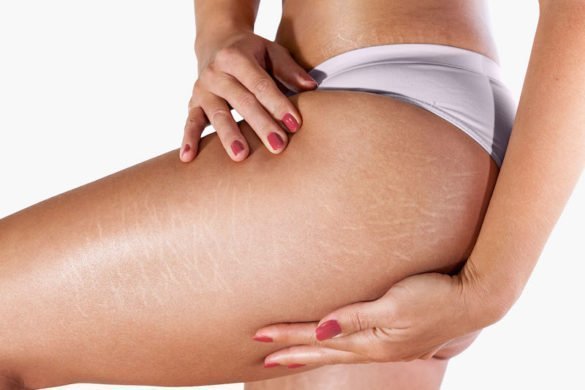
Although completely harmless, they are sometimes considered unsightly by many. Initially reddish-purple in colour, they gradually fade and take on a slightly pearlescent appearance. Their formation is triggered by a lack of collagen, the production of which is influenced by various hormones. If the skin undergoes rapid change and collagen production is insufficient to maintain adequate elasticity, stretch marks can form. Once healed, they do not disappear completely.
Causes of stretch marks on the breasts
Here, we focus solely on the causes of stretch marks on the breasts. For more information on the causes of stretch marks in general, take a look at our dedicated guide.
Stretch marks on the breasts are not the most common, yet they can appear for many reasons.
Puberty
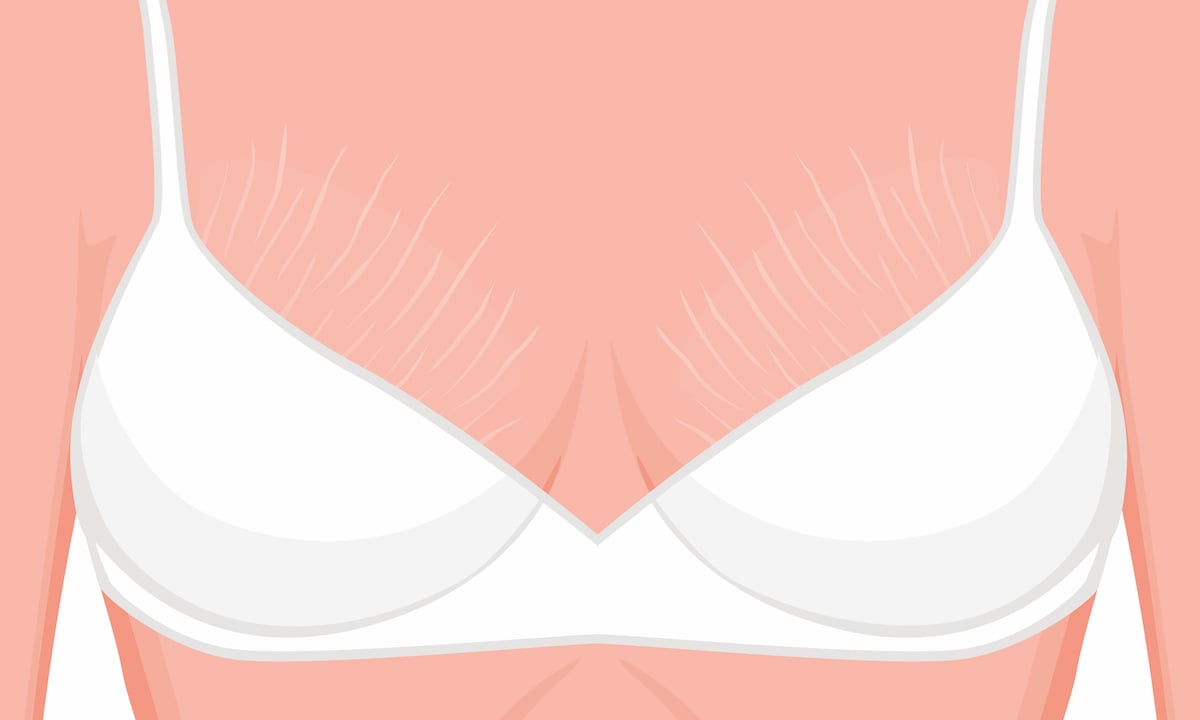
During puberty, especially when development is rapid, stretch marks can appear: 25% of girls and 10% of boys experience this side effect of growth. As the chest expands, stretch marks on the breasts may appear vertically on the top and underside, as well as diagonally from the armpit towards the nipple. Often a source of self-consciousness, it is worth noting that this is a perfectly natural phenomenon.
Stretch marks on the chest as a teenager: what can you do?
Stretch marks on the chest are common in teenage girls and boys alike, often during a growth spurt. This is perfectly natural. They start off reddish-purple, then fade over time. Day to day, the simple steps described further down are a good place to start: moisturise your skin regularly and apply an oil with a gentle massage, avoiding the nipples and areolas.
Laser therapy, chemical peels and microdermabrasion are more involved and costly options. Before considering them, ask a GP or a dermatologist for advice.
Pregnancy
During pregnancy, it is very common to notice the appearance of stretch marks on the stomach and hips, as well as on the breasts: the mammary glands are stimulated by hormones in preparation for breastfeeding, which causes them to swell and stretch marks to form. These changes occur between the start of pregnancy and the end of the second trimester. Many other fluctuations in breast volume and density often take place during breastfeeding as well.
Weight fluctuations
Any change in weight can lead to stretch marks. Weight gain caused by a poor diet, medical treatment (especially if it contains corticosteroids), stress, or any other reason can trigger their appearance — in greater or lesser numbers depending on the amount of weight gained, the speed of the change, skin type, and skincare habits.
However, weight loss can have the same effect: even when gradual, the skin may struggle to “keep up”, and once again it is the lack of collagen — and therefore elasticity — that prevents the skin from adapting to the change and remaining intact.
Breast implants
Naturally, breast augmentation can have the same effects as pregnancy or weight gain, since it involves an increase in breast volume. This is therefore something to consider carefully before taking the plunge, especially if the implants will take you from an A to a D cup… As mentioned above, the removal of those same implants can also lead to stretch marks on the breasts, even if none appeared following the initial procedure.
Genetics
Genetics also plays a role in the appearance of stretch marks on the breasts and their severity. Thinner skin is more prone to “breaking” and developing more pronounced scarring, which can mean marks that are both wider and deeper.
In addition, certain conditions such as Cushing’s syndrome, or treatments involving corticosteroids, can cause or at least encourage the development of stretch marks on the breasts.
Stretch marks on the breasts are not, however, inevitable. While it is nearly impossible to make them disappear entirely, there are various solutions available, both at home and with a professional.
Stretch marks on the breasts: what are the solutions?
There are several ways to care for skin marked by stretch marks. Some can easily be done at home, while others need to be carried out by a healthcare professional.
At-home solutions
Anti-stretch mark treatments
Certain creams and oils are specially formulated to care for skin marked by stretch marks. Applied with a regular massage, they fit easily into your routine. Do take care when applying these products, however: some ingredients can irritate the nipples and areolas, so choose an oil that is suitable for use on the breasts.
The plant oils mentioned are as follows:
They are most often applied with a massage.
Read the packaging carefully. For your routine, you can opt for the Cellublue Stretch Mark Oil, which helps to prevent the appearance of stretch marks.
👉 Why choose the Cellublue Anti-Stretch Mark Oil?
- Helps to prevent the appearance of stretch marks
- Suitable during pregnancy and breastfeeding
- Five plant oils that nourish the skin: avocado, sunflower, jojoba, sesame and olive
- Free from parabens, colourants, preservatives, mineral oils, allergens and essential oils
The massage oil that helps prevent stretch marks from appearing*, during pregnancy and beyond
*User test on 21 volunteers over 3 weeks, based on participants' feedback.
- Why does it work?
Hydration
Moisturising is one of the basic steps in caring for your skin, so don’t overlook it! Choose moisturising treatments suited to your skin type and apply them regularly. This will help you look after your skin every day.
In-clinic treatments
If these solutions are not enough, in-clinic treatments are available; discuss them with a dermatologist. There are three main options.
Laser therapy
Laser therapy is a technique offered for stretch marks on the breasts. Tailored to the type of stretch mark (deep, depigmented…), it is a more involved procedure, not always painless, and one to discuss with a dermatologist.
Chemical peeling
Chemical peeling is another option offered for stretch marks on the breasts. Peeling kits are available, but it is always best to consult a professional so that it is carried out safely. It is a more involved procedure, and one to discuss with a dermatologist.
Microdermabrasion
The term microdermabrasion is often mistakenly used to describe chemical peel kits. It is in fact a mechanical exfoliation: aluminium microcrystals are sprayed onto the area being treated. It is carried out under local anaesthetic and should be discussed with a dermatologist. Follow-up massages with a suitable cream will then be needed.
How can you prevent stretch marks on the breasts?
Of course, the best approach would be to prevent stretch marks on the breasts in the first place. You would then have no need for complex, costly, sometimes painful methods that don’t always live up to expectations. Here are a few tips. First and foremost, keep your skin hydrated. Drinking enough water throughout the day is also part of good everyday habits. Make time for regular exfoliation and massage as well. Finally, you can add our Cellublue Stretch Mark Oil to your routine, which helps to prevent the appearance of stretch marks.
All the products you need for your routine for stretch marks on the breasts can be found in our Anti-Stretch Mark Pack.
Frequently asked questions
How do you get rid of stretch marks on your breasts?
Once they have healed, stretch marks never disappear completely. You can care for your skin at home, and professional treatments are also available: speak to a healthcare professional before considering them.
Why do you get stretch marks on your breasts?
They appear when the skin changes quickly and collagen production isn’t enough to keep it supple. This can happen during puberty, pregnancy, weight changes, or after breast implants are fitted or removed. Genetics also play a part: thinner skin is more prone to them.
Are red and white stretch marks treated in the same way?
Stretch marks start off reddish-purple, then fade and take on a pearly look. Read the packaging carefully and choose a product suited to your skin.
Related articles
- Red stretch marks: causes, affected areas and care options
- White stretch marks: all the solutions to reduce them
- Purple stretch marks: causes and solutions
Useful categories: Stretch Marks on Breasts, Stretch Marks.