Certain plants and natural ingredients are now attracting interest when it comes to cellulite. But what about grape pomace? This by-product of grapes, produced in large quantities by the wine industry, is no longer simply discarded. It is now recovered by various sectors and valued for its many uses, notably by the pharmaceutical and cosmetics industries. Here is what grape pomace is, what research says about it, how it is used and the precautions worth knowing. A closer look at this treasure from the vines…
What is grape pomace?
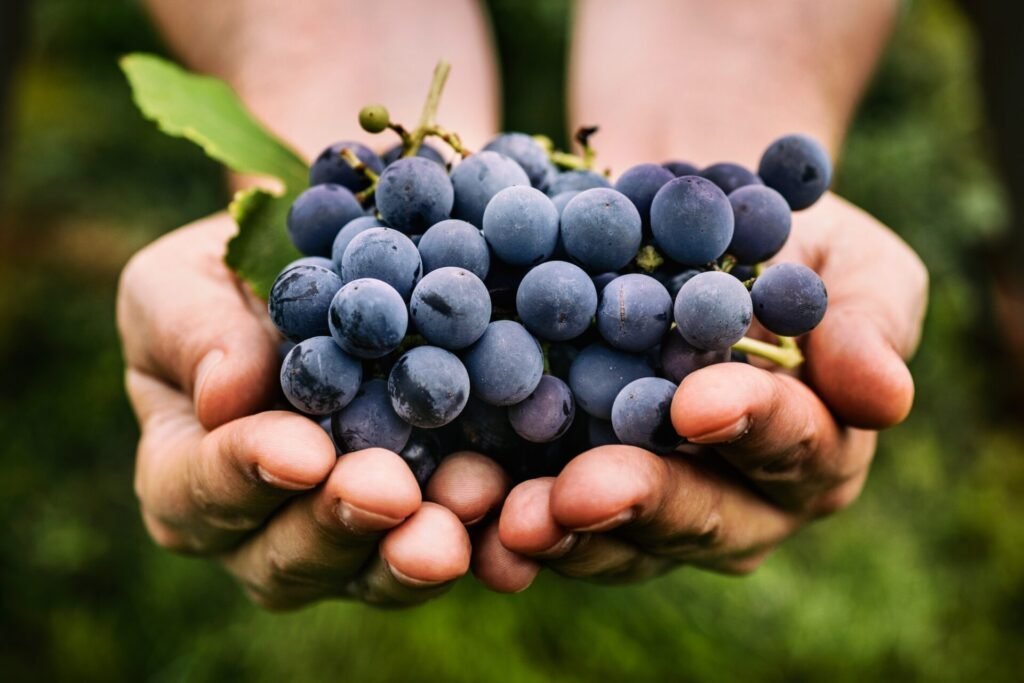
It refers to the dry residue left after pressing, crushing (press pomace) and, where applicable, maceration (vat pomace) of grapes during winemaking. Grape pomace is therefore essentially composed of the skins, seeds and stems of the berries. It accounts for 20% of wine production. Far from being waste, however, it is either recycled or used by various industries. It is used as a flavouring in the food industry, as animal feed, or as an ingredient in natural fertilisers. But new applications for grape pomace are now being explored, as it contains numerous compounds — the same ones found in grapes. As a result, it is increasingly used in phytotherapy (dietary supplements) and in cosmetics.
What does research say about grape pomace?
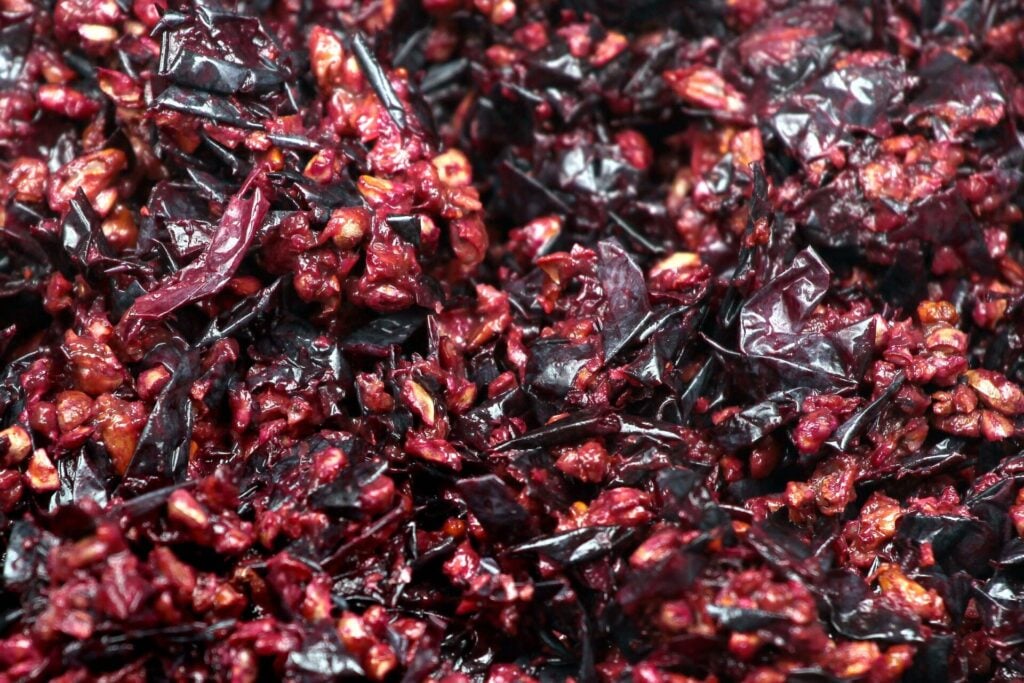
Grape pomace is rich in plant compounds, including: anthocyanins (the pigments that give red grapes their colour), flavonoids, fibre, phenolic acids, resveratrol…
1- Grape pomace: antioxidant compounds under study
To put this research in context, it helps to first recall what oxidative stress is. Oxidation reactions are essential to the life of every living organism. The issue is not oxidation itself, but its excess, which places the body under stress. This stress can affect cells, particularly those of the skin, as well as other organs. Oxidative stress is now being studied in connection with premature skin ageing and other areas of research (1)…
Grape pomace contains antioxidant compounds. Some studies are exploring their possible role in oxidative stress, notably in connection with skin ageing or with veins and arteries (2). They do not allow any conclusion to be drawn: no health effect is established for grape pomace.
2- A line of research on cellulite
Grape pomace is also being studied in relation to cellulite. Studies are exploring several avenues, with no conclusions at this stage:
- studies look at glucose tolerance, oxidation and inflammation in adipocytes (the subcutaneous fat cells) in connection with grape pomace (3);
- others focus on its polyphenols and dietary fibre and on the absorption of dietary fats (4);
- rich in resveratrol, an antioxidant compound that has been generating considerable interest in recent years, grape pomace is also being studied in connection with the walls of arteries and veins (5). This research does not, however, allow it to be credited with any effect on the sensation of heavy legs, the phenomenon of water retention or poor circulation: if you experience any discomfort, speak to your GP.
These avenues explain the interest in grape pomace, but none of them allows any effect on cellulite to be attributed to it.
Grape pomace and your figure: what’s the verdict?
The avenues mentioned above are still being researched. They point to potential, not a promise. As a result, grape pomace, grape seeds included, cannot be presented as a solution for your figure or for cellulite.
Grape pomace can, however, have a place in your skincare routine, alongside good lifestyle habits. For everyday habits worth adopting, see the section ‘Alongside grape pomace’.
How to use grape pomace?
There are mainly two ways to use grape pomace.
1- As a dietary supplement
There are now phytotherapy products — tablets, capsules, ampoules — based on grape pomace. These dietary supplements are either 100% grape pomace or formulated with a blend of different plants. One advantage of grape pomace is that it is often combined, in formulations, with other ingredients, including:
- green tea;
- pineapple;
- pilosella, orthosiphon, dandelion or meadowsweet;
- red vine, blackcurrant, butcher’s broom, horse chestnut or cherry stem.
2- As cosmetic treatments
In recent years, cosmetics manufacturers have incorporated grape pomace into their anti-ageing and anti-cellulite product ranges. It is now common to find creams, gels and other skincare products designed for orange-peel skin.
3- Alongside grape pomace…
Bear in mind, however, that no dietary supplement has an established effect on cellulite, however long the courses, and that a cream alone is not enough to deal with your orange-peel skin. To care for your skin when it comes to dimpling, it is best to take action on all fronts:
- Adopt a healthy, balanced diet based on whole, home-cooked ingredients, and limit excess salt, sugar and saturated fats;
- Stay physically active every day (walking, leisure activities, housework, gardening) and engage in more intense exercise 2–3 times a week (swimming, running, cycling);
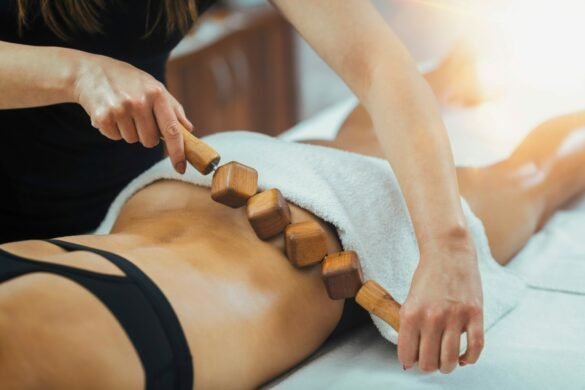
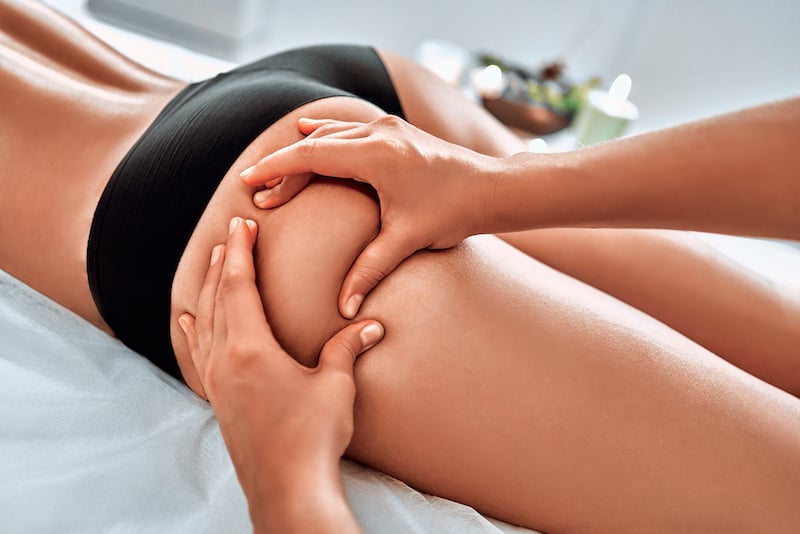
- Regularly practise (ideally every day) anti-cellulite massages, such as the pinch-and-roll massage.
Did you know? 💡
Anti-cellulite massages are among the most widely used techniques. But the right technique matters! To support you day to day, you can follow our 3-Step Anti-Cellulite Method.
Does grape pomace have any risks or side effects?
Grape pomace comes from grapes and contains the same active compounds. When taken as a dietary supplement, however, it is still a herbal product to be used sensibly: follow the manufacturer’s instructions and do not combine several products without advice.
Before starting a course, ask your GP or pharmacist for advice. This is especially important if you are taking medication, are pregnant or breastfeeding, or have a medical condition. Only a healthcare professional can tell you whether this type of supplement is right for you.

(1) 2003, Favier, Le stress oxydant
(2) 2016, Charalampia, Koutelidakis, Grapepomace: A Challenging Renewable Resource of Bioactive Phenolic Compounds with Diversified Health Benefits
(3) 2012, Chuang et al., Differential Effects of Grape Powder and Its Extract on Glucose Tolerance and Chronic Inflammation in High-Fat-Fed Obese Mice
(4) 1997, Martin-Carron et al., Nutritional and Physiological Properties of Grape Pomace as a Potential Food Ingredient
(5) 2008, Yang et al., Resveratrol attenuates thromboxane A2 receptor agonist-induced platelet activation by reducing phospholipase C activity
Frequently asked questions
What is grape pomace?
Grape pomace is the dry residue left after grapes are pressed, crushed and sometimes macerated during winemaking. It is mainly made up of the skins, seeds and stems. Once regarded as waste, it is now used in the food industry, in herbal medicine and in cosmetics.
What does grape pomace contain?
Grape pomace contains many active compounds: anthocyanins, flavonoids, fibre, phenolic acids and resveratrol, several of which are antioxidants. Their possible effects are being researched but have yet to be confirmed. If you have any medical questions, ask your GP for advice.
How can you use grape pomace?
There are two main ways to use it. The first is as a dietary supplement (tablets, capsules or ampoules), either on its own or combined with other plants. The second is in skincare, such as anti-ageing or anti-cellulite creams and gels. Before starting a course of supplements, ask your GP or pharmacist for advice.
Related articles
Useful categories: Anti-Cellulite Plants, Anti-Cellulite Solutions.

The scrub that leaves skin smooth and skin texture refined*
*User test on 21 volunteers over 4 weeks, based on participants' feedback.
- Olive & apricot kernels: these natural grains gently sweep away dead skin cells
- Caffeine & monoi scent, so your shower instantly smells like a holiday
- In the shower, two to three times a week, massaging your thighs, bottom and stomach


The cupping tool that replicates pinching and rolling, 3 minutes per zone
- The professionals' technique, at home: you lift, glide, and release, and the tool grips the skin fold like a manual pinching and rolling
- Soft silicone that fits thighs, buttocks, stomach, and arms
- 3 minutes per zone, every day, always with a massage oil so the tool glides