
The skin is the body’s largest organ – accounting for around 16% of its total weight. It performs multiple functions: elimination, immune barrier, sensory organ, body temperature regulation. And it faces some serious challenges – sun, cold, pollution… That’s why taking care of it is essential! Here are 8 tips for beautiful skin, from head to toe!
Tip 1: Hydration, always!
The skin (both body and face) is made up of around 60% water. This water is constantly on the move: it is brought in by the bloodstream, it bathes the skin cells, and some of it evaporates or is lost through sweat… When skin is short of water, it becomes uncomfortable. It feels tight, looks dull, develops dry patches, and its protective barrier becomes more fragile. To achieve beautiful skin, it is therefore essential to establish a good hydration routine, based on a suitable moisturiser (cream, lotion, balm or gel, depending on your preference and the season), applied every day after your shower.
Tip 2: Protecting the skin barrier
Moisturising is a first step, but how do you keep water locked into the deeper layers of the skin? This is where choosing the right routine really matters. On the surface of the epidermis, there is a fine protective film: the hydrolipidic film. It is made up of a blend of sweat and sebum, which acts as a shield against external aggressors while also helping to retain moisture at the level of the dermis.
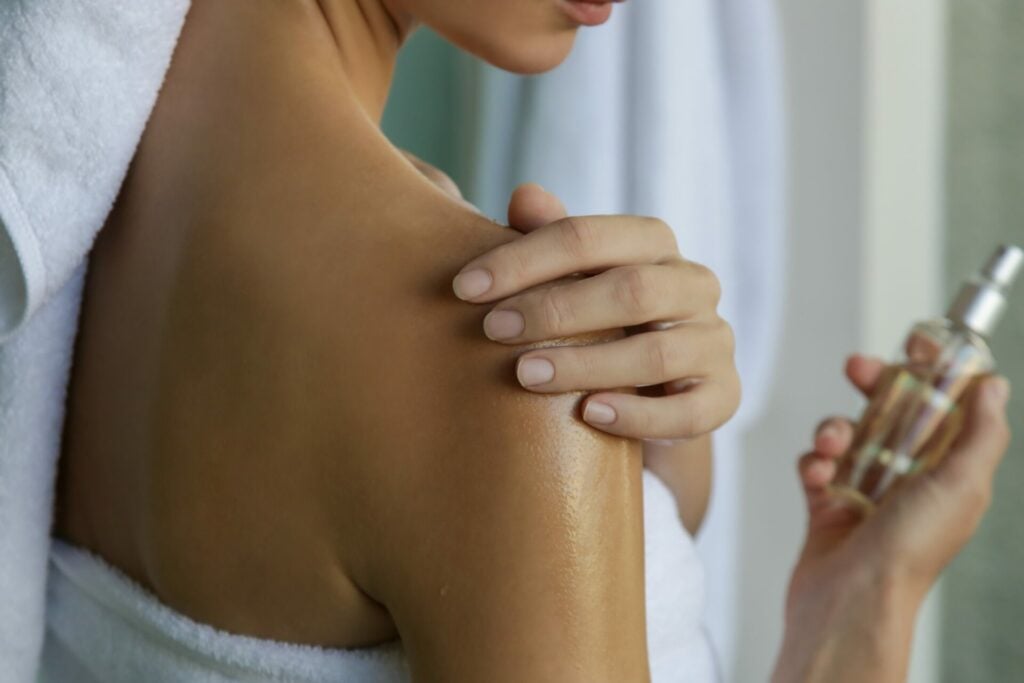
Applying a moisturising product to your skin delivers water to its upper layers. But to give your skin every advantage and keep it looking its best, it’s worth completing your routine with an occlusive product, which will help seal water into the skin and stop it from evaporating. You can either choose a hybrid, emollient treatment that both moisturises and protects, or apply a richer product such as a plant oil (jojoba, macadamia, sweet almond) or a plant butter (shea, cocoa). And if you prefer a non-greasy finish, there are dry plant oils, which do a very good job of locking moisture into the deeper layers of the epidermis.
Tip 3: The importance of diet
Beautiful skin is also about your overall lifestyle, and what’s on your plate is part of that! Dietary guidelines recommend cutting down on highly processed foods and on added sugar and salt. They also recommend a varied diet that gives your body the vitamins, minerals and healthy fats it needs. So make room at the table for:
- Fruits and vegetables, at every meal. Choose seasonal, colourful varieties (green vegetables, red berries, citrus fruits, peppers, carrots, apricots, melon, squash, tomatoes…), raw or cooked, for variety in flavours and textures.
- Seafood: fish (including oily fish such as sardines or mackerel), shellfish and crustaceans, twice a week, as dietary guidelines advise.
- Nuts: don’t hesitate to snack on a small handful of almonds, hazelnuts, walnuts or pistachios a day, plain and unsalted.
- Wholegrains, pulses and dairy products, to round off a balanced plate, along with a variety of plant oils (rapeseed, walnut, olive) for dressings.
Tip 4: Watch out for the sun!

The skin’s number one enemy remains the sun. For a long time, it was thought that UV rays only reached the epidermis – but that’s far from the truth. They penetrate deep into the dermis, degrading the skin’s structure – from a simple sunburn, a superficial injury, all the way to serious damage, including cancerous lesions. It is therefore essential to protect your skin thoroughly whenever you are exposed to the sun. Here’s how:
- Avoid sun exposure during the hottest hours of the day (11am–4pm).
- Always apply a high SPF protection (+50), reapplying several times throughout the day.
- Wear light-coloured clothing and a hat whenever possible.
- Seek shade under a parasol.
- After sun exposure, moisturise your skin thoroughly.
It’s also worth knowing that sun exposure is responsible for premature skin ageing. It increases the concentration of free radicals in the body, which cannot neutralise them all. This oxidative stress has lasting consequences for the skin. It loses radiance and firmness, wrinkles more easily and tends to sag more quickly (ptosis). And this applies just as much to the face as to the body.
Tip 5: Keep drinking!
Hydration also depends on what you drink. Drinking little and often throughout the day is one of the basics of good everyday habits. The usual guidance is 1.5 to 2 litres of water every day for an adult, adjusted to the heat, your physical activity and your thirst. Some of this comes from food, but it’s important to top it up by drinking. Water should always be your go-to drink, and you can also mix things up with:
- tea,
- herbal infusions,
- freshly made fruit or vegetable juices, in moderation,
- soup,
- broths in winter.
Be wary of sugary drinks (fizzy drinks, squash, flavoured drinks) – they have a high sugar content, which guidelines recommend cutting down on, as well as being no substitute for water.
Tip 6: What about exfoliation?
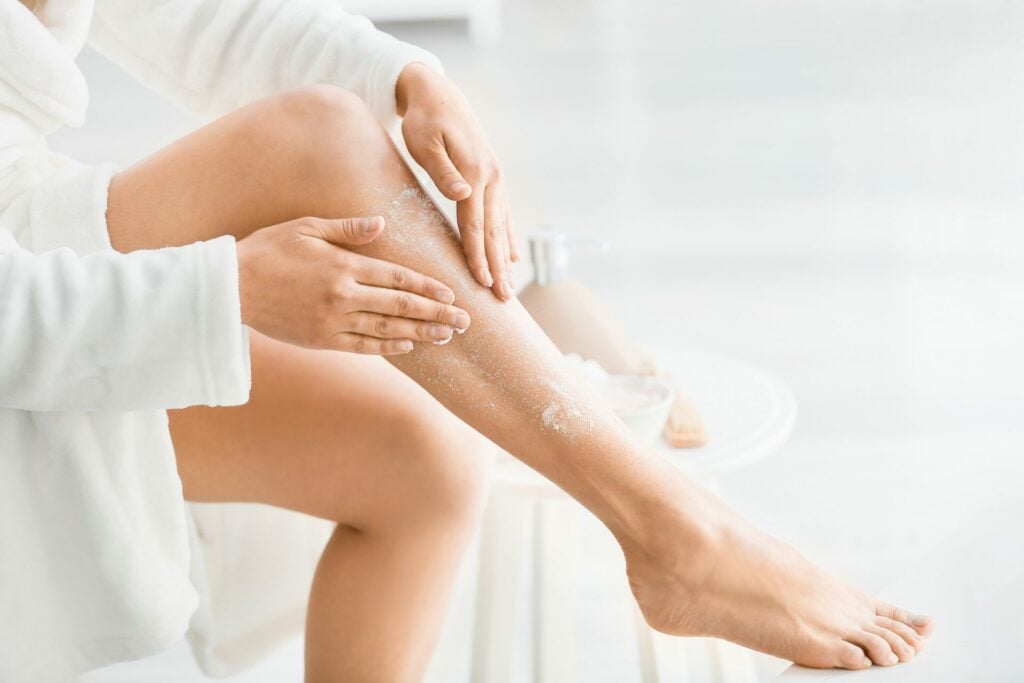
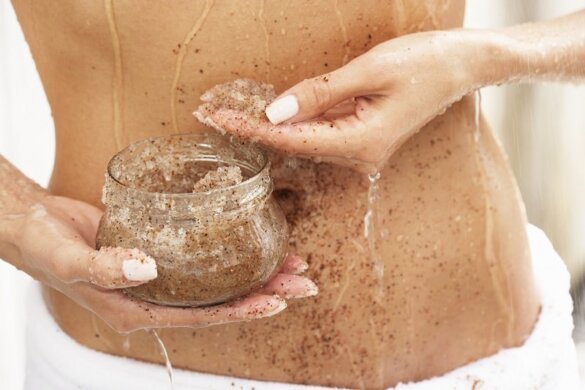
Why exfoliate your body skin? At the level of the epidermis (the skin’s outermost layer), there is a fine protective layer, the stratum corneum, made of keratin-rich cells. The stratum corneum is constantly renewing itself: the oldest cells eventually flake away, but this renewal can lead to a build-up of dead cells on the skin’s surface, especially on dry areas (elbows, knees, heels). Over time, if they are not removed, the skin feels rougher and looks duller, and skincare products are absorbed less easily. That’s where exfoliation comes in: it removes these dead cells before you apply your moisturiser.
There are several options to choose from:
- dry brushing with a body brush,
- an exfoliating mitt,
- a grainy body scrub.
But be careful – exfoliation should be done once or twice a week, no more! Any more than that and you risk the opposite effect, irritating the epidermis.

The scrub that leaves skin smooth and skin texture refined*
*User test on 21 volunteers over 4 weeks, based on participants' feedback.
- Olive & apricot kernels: these natural grains gently sweep away dead skin cells
- Caffeine & monoi scent, so your shower instantly smells like a holiday
- In the shower, two to three times a week, massaging your thighs, bottom and stomach
Tip 7: Watch the water temperature…
Are you a fan of hot baths? Completely understandable: enjoyed in moderation, they’re a real moment of relaxation. That said, excessive heat isn’t always kind to the skin. If you tend to overdo it, with water that is too hot, too often and for too long, you risk disrupting your skin’s hydrolipidic film, the fine layer of sweat and sebum that protects it. The skin then becomes drier, feels tight and may itch, especially in winter. For comfortable, soft skin, it’s better to limit hot baths, keep them shorter and apply a moisturiser as soon as you get out of the water.
Try limiting yourself to one bath a week, and treat yourself to a sauna or steam room from time to time. The rest of the time, opt for showers at a moderate temperature, and try to finish with a cold water rinse, starting at the ankles and working upwards. A simple, pleasant habit for looking after your skin every day!
Tip 8: The importance of massage

Beautiful skin also comes from massage. Some of us find that our legs swell or feel heavy at the end of the day: if so, and especially if you have varicose veins, speak to your GP. Day to day, a gentle massage is a lovely moment of self-care. It can be done by hand or with a massage tool. The key points:
- Choose the right technique, combining effleurage, kneading, circular movements and smoothing strokes.
- Always massage upwards: from ankle to groin, from wrist to shoulder, from lower abdomen to chest.
For massage, try a natural plant oil: the texture makes every movement effortless, and the oil leaves the skin soft and supple. You can also use your usual moisturising cream or lotion.
Related articles
- Stretch marks: causes, treatments and solutions
- How to prevent sagging skin?
- How to properly hydrate your body?
Useful categories: Stretch Marks.