During the festive season, a rumour keeps gaining traction online: champagne is supposedly much more than just a festive drink. It’s even said to have a connection with every woman’s sworn enemy – cellulite. But what should we make of the idea that a few glasses a day could make any difference to orange-peel skin? Fact or fiction, we investigated…
The starting premise
Champagne sometimes comes up in conversations about cellulite because of its polyphenol content (a family of naturally occurring plant-based molecules). Champagne is said to contain 440 different polyphenols, including resveratrol. That said, no drink makes cellulite disappear, and champagne is no substitute for skincare gestures such as massage. If you’re curious about body massage techniques, they belong to a body-care routine, not something you’ll find in a glass.
To support this rumour, many cite a study(1) conducted by Jeremy Spencer, head of the Department of Nutritional Sciences at the University of Reading, dating back to 2009. Published in the British Journal of Nutrition, this study looked at the daily consumption of one to two glasses of champagne and the cardiovascular system. Some people draw rather hasty conclusions from it about the legs – and even about cellulite, which the study never demonstrated.
The benefits of resveratrol
So, could the resveratrol found in champagne genuinely help reduce orange-peel skin?
First, it’s worth noting that resveratrol is found in grapes (and therefore in wine and champagne), but also in cocoa, peanuts, cranberries, rhubarb and pomegranate. It’s also worth mentioning that when it comes to wine, reds are far richer in resveratrol than whites, which undergo little maceration. Champagne is therefore not the most polyphenol-rich drink out there…
Now let’s look at what research says about this well-known polyphenol:
- In laboratory studies, resveratrol showed antioxidant activity(2)
- It has also been studied in the laboratory for its effect on platelet activation(3). None of this means that a drink containing resveratrol has any effect on cellulite.
However, these observations come from laboratory experiments on animals. In humans, the picture is far less favourable: a bleeding risk has been observed(4), with no assurance of any lipid-lowering properties(5).
So, attributing any power over your legs or orange-peel skin to champagne is, at best, a very bold shortcut!
Champagne is, first and foremost, an alcoholic drink

Does it still need to be said? Champagne contains alcohol, which should be enjoyed in moderation. And even though champagne is a moderately alcoholic drink (10–12%, less than red wine but more than beer), the fact remains that a single glass of champagne contains around 90 kcal. These are so-called “empty” calories, mostly alcohol and fast sugar, with no other nutritional value. Hardly the best ally of a balanced diet – something worth bearing in mind if you’re paying attention to cellulite.
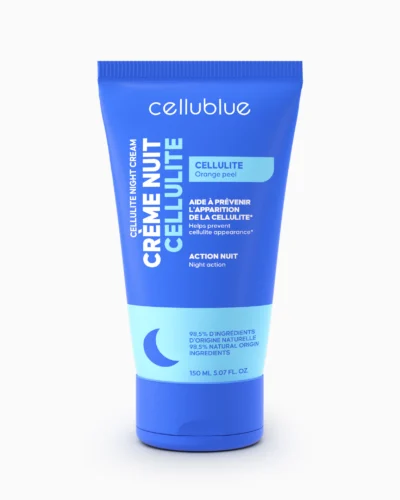
The cream that smooths the appearance of orange peel skin* and tones the skin
*Consumer test on 22 volunteers over 2 weeks, participants' self-assessment.
- Smooths the appearance of orange peel skin on the thighs, buttocks and stomach
- Caffeine & Green Coffee, the two benchmark active ingredients in body care
- Melting texture: absorbs in seconds and leaves the skin feeling comfortable
On top of that, alcohol — whether in champagne or any other drink — is no substitute for a glass of water. Its dehydrating effect is often mentioned, linked to ethanol and to a hormone, vasopressin, which plays a role in kidney function. And the water contained in an alcoholic drink isn’t enough to cover your daily needs. Something to keep in mind, especially as cellulite is often accompanied by water retention – a well-known phenomenon.
What about champagne’s benefits for the skin?
Champagne is often said to be good for the skin, thanks to its antioxidant polyphenols, including resveratrol. But as we’ve seen, the findings on resveratrol come from laboratory experiments on animals. What’s more, champagne isn’t the richest source of polyphenols: grapes, cocoa and pomegranate contain them too.
Above all, champagne is still an alcoholic drink, and alcohol is dehydrating. To look after your skin, focus instead on staying well hydrated, eating a balanced diet and sticking to a regular skincare routine. Save the glass of champagne for occasions worth celebrating!
So, what should we make of champagne’s anti-cellulite claims?
You’ve probably guessed it: there’s no point kidding yourself – a glass of champagne a day won’t change a thing about your orange-peel skin. If it were that simple, we’d all have dream-worthy bottoms and thighs that are firm and free of the slightest dimple.
There is no ready-made solution when it comes to cellulite. You’re better off focusing on good everyday habits:
- A varied, balanced diet that prioritises natural foods and is low in salt, sugar and processed foods.
- Regular physical activity, combining daily walking with cardio sessions (running, swimming, cycling, rollerblading… you know the drill!).
- Generous hydration, with plenty of water, tea and herbal infusions. You might also like to discover our Cellulite Drainer.
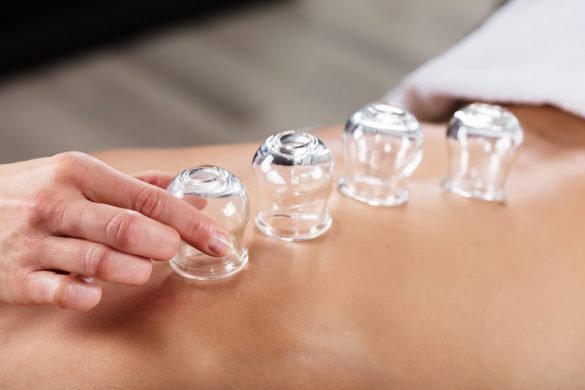
- Daily massages as part of your skincare routine. For this, you can reach for our little Anti-Cellulite Cupping Cup and a good massage oil, such as our Stimulating, Regenerating or Toning oils.
So yes, go ahead and enjoy that glass of champagne. After all, Christmas and New Year’s Eve (or any other special occasion) are worth celebrating! Just be mindful of alcohol consumption — and above all, don’t believe everything you read online!
Happy holidays!
References
(1) 2009, Spencer et al., Moderate Champagne consumption promotes an acute improvement in acute endothelial-independent vascular function in healthy human volunteers
(2) 2001, Stojanovic, Sprintz, Brede, Efficiency and Mechanism of the Antioxidant Action of trans-Resveratrol and Its Analogues in the Radical Liposome Oxidation
(3) 2008, Yang et al., Resveratrol attenuates thromboxane A2 receptor agonist-induced platelet activation by reducing phospholipase C activity
(4) 2010, Cottart et al., Resveratrol bioavailability and toxicity in humans
(5) 2013, Sahebkar, Effects of resveratrol supplementation on plasma lipids: a systematic review and meta-analysis of randomized controlled trials
Related articles
- Does gluten make cellulite worse?
- Juice cleanse: what it is, side effects and how to start
- Top 10 homemade drinks: from Sassy Water to kombucha


The scrub that leaves skin smooth and skin texture refined*
*User test on 21 volunteers over 4 weeks, based on participants' feedback.
- Olive & apricot kernels: these natural grains gently sweep away dead skin cells
- Caffeine & monoi scent, so your shower instantly smells like a holiday
- In the shower, two to three times a week, massaging your thighs, bottom and stomach

The cupping tool that replicates pinching and rolling, 3 minutes per zone
- The professionals' technique, at home: you lift, glide, and release, and the tool grips the skin fold like a manual pinching and rolling
- Soft silicone that fits thighs, buttocks, stomach, and arms
- 3 minutes per zone, every day, always with a massage oil so the tool glides