When it comes to cellulite, you may feel you’ve tried everything, yet it keeps coming back. So could maderotherapy be worth a closer look? This toning massage method, which is not as new as it sounds, relies on wooden tools. Here’s a quick overview of exactly what maderotherapy is and how it’s used on cellulite. You’ll also find out which tools it involves, and whether it’s best to try it yourself or book a salon treatment.
What is maderotherapy?
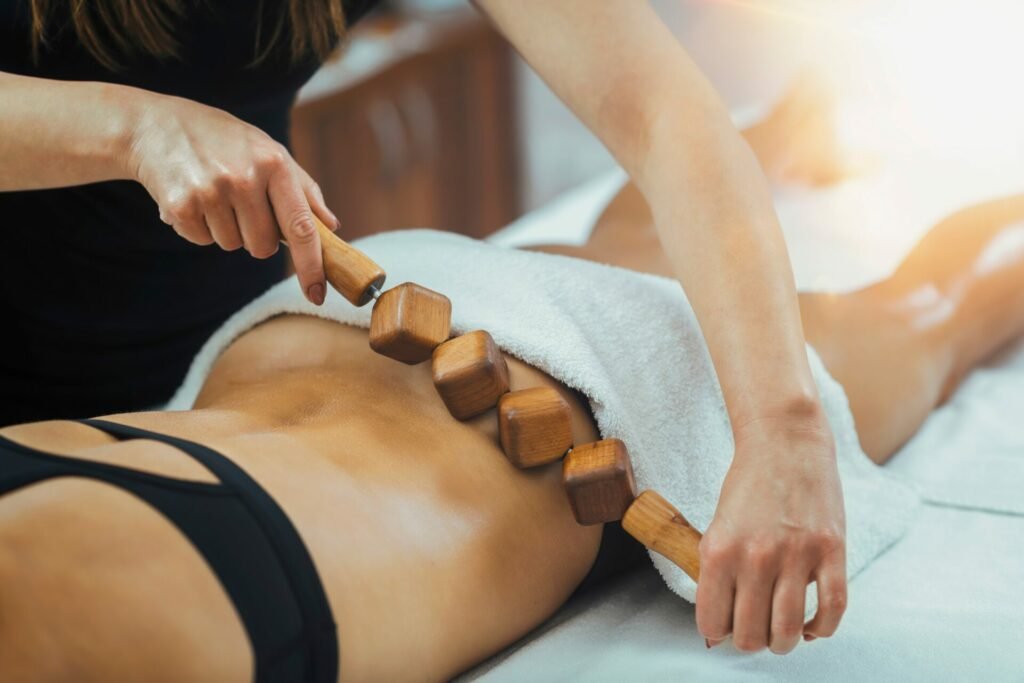
Maderotherapy, or wood therapy, is a massage technique that involves massaging the body using wooden tools. These instruments come in various sizes and shapes, each designed to suit different areas of the body. Their shape also varies depending on what they’re used for. There are several types: cube rollers, cups, ridged rollers… Originally, they were fairly rudimentary and not very easy to handle. Over time, however, their design has been carefully refined, and maderotherapy is now described as painless.
Maderotherapy can be applied to almost the entire body: the legs, abdomen, waist, the hips, back, arms, and even the face. It is based on the principle of friction massage. It can also be performed using plant-based oils, balms, serums, or even essential oil blends, depending on the individual’s needs. It is suitable for most people, though it is contraindicated for those with high blood pressure, capillary or venous fragility (inflammation, history of thrombosis), cardiac or renal conditions, or skin disorders.
But in practice, what is maderotherapy used for, and why is it so often linked with cellulite?
What is maderotherapy used for?
Maderotherapy is offered both in beauty settings and beyond them.
1- Uses beyond beauty
Some practitioners also use it outside the beauty field, for example to:
- Massages focusing on muscle tension
- Comfort massages when you feel the sensation of heavy legs
- Relaxation and recovery sessions
2- Beauty use: maderotherapy and cellulite
In salons, maderotherapy is primarily used in treatments that target the appearance of cellulite. Wood massage is used there for:
- Massaging the skin with firm, friction-based movements
- Working on dimpled areas of the silhouette: thighs, buttocks and hips
- Complementing a routine for cellulite that is often associated with water retention or that you think is thought to be linked to a circulation problem
- Offering a massage moment for those who enjoy hands-on treatments
Maderotherapy is therefore offered for all types of cellulite. Adipose cellulite is one of them. Aqueous cellulite is often associated with water retention, and maderotherapy is also used on it. Finally, it is also used on fibrous cellulite. Every skin is different, and the effect of the massage varies from one person to another.
It’s worth noting that facial maderotherapy also exists. It is offered as a treatment focusing on the look of skin firmness. It can also be used on the double chin area, which is a common concern for many people.
Which wooden tools are used in maderotherapy?
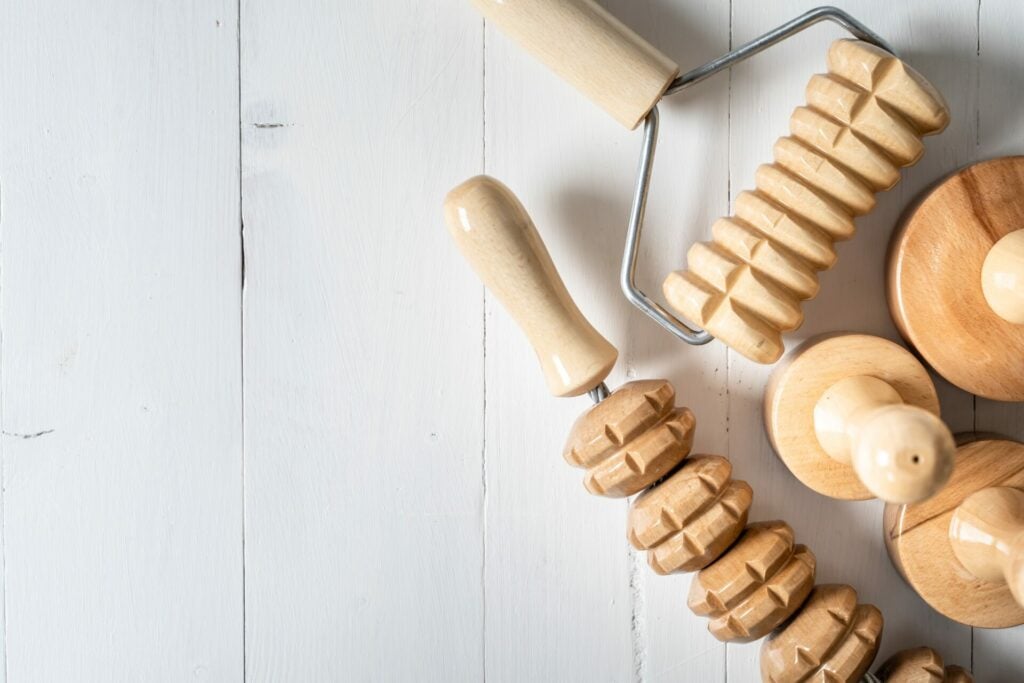
Each tool is designed for a specific area of the body and a particular purpose:
The ridged roller is used to massage the surface of the skin.
The cube roller is used on areas where subcutaneous fat tends to build up. It is particularly used on the hips, buttocks, thighs and waist. This includes the saddlebag area, on the upper thighs and hips.
The sculpting board is also used to massage larger areas, such as the thighs or the stomach.
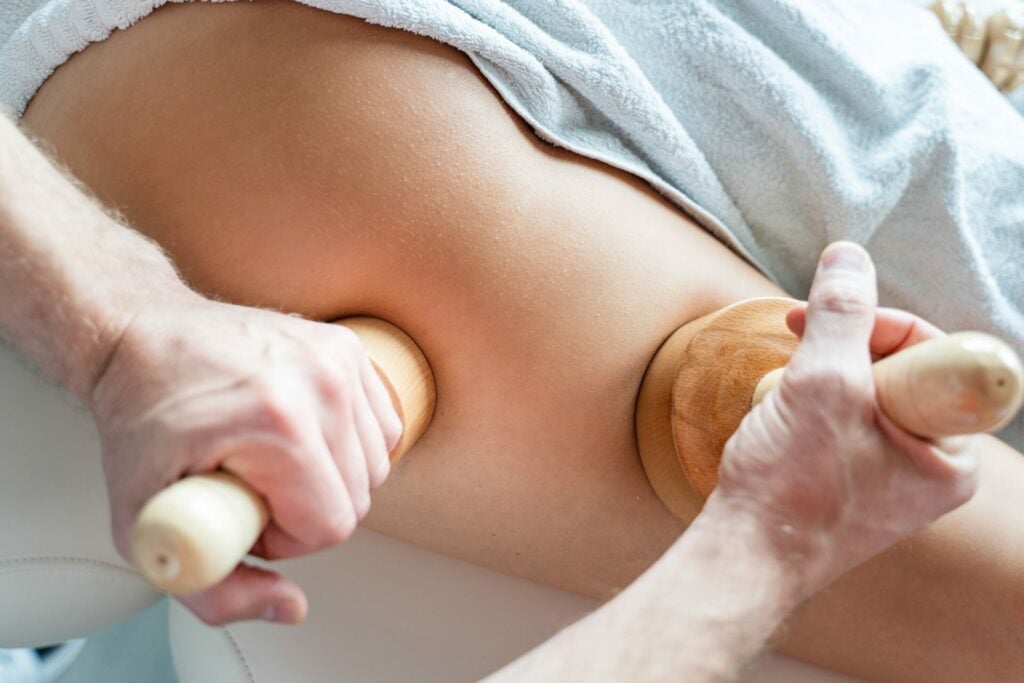
The cups, which are reminiscent of our suction cup or those used in cupping (except that they are made of wood), are more specifically designed for localised massages. The wheel cup is often used on areas with more visible dimpling, particularly the arms and buttocks. The simple cup can be used on any part of the body. The spiked cup is often used on smaller, localised areas.
Can maderotherapy be practised at home, and are there alternatives?
It is possible to try maderotherapy at home, provided you invest in quality wooden tools and a good massage oil — and above all, that you follow tutorials before getting started. There are books dedicated to maderotherapy: reading up before you begin is not only possible, it’s highly recommended!
Maderotherapy treatments are also available at many beauty salons. Staff are generally trained in both the friction massage technique and the various tools. The expert hands of a massage professional are always a good option to consider. Maderotherapy is usually carried out over several sessions. For another hands-on approach, see also our article on another manual massage technique.
Finally, if you’re looking for a similar treatment, there’s always the Cellublue option: our Anti-Cellulite Cupping Cup and our Orange Peel Massager, combined with our massage oil, are designed for massaging dimpled areas. The suction cup replicates the pinch-and-roll technique, a classic method for anti-cellulite massage. As for the orange-peel massager, it offers a gentle massage. Use them as an alternative or complement to maderotherapy, as part of your anti-cellulite routine.
Frequently asked questions
What is maderotherapy?
It’s a friction massage technique, also known as wood therapy. It uses wooden tools in a variety of shapes and sizes: cube rollers, ridged rollers, sculpting boards and cups. It can be used on almost the entire body, and even on the face.
Can you do maderotherapy yourself?
Yes. Beginners can practise at home, as long as they have the right kit (wooden tools and a massage oil) and take the time to learn the movements first. If you’d rather leave it to a professional, many beauty salons offer it.
Does maderotherapy hurt?
It shouldn’t. Unlike the rougher tools of the early days, today’s instruments are designed for a massage that is described as painless. If you feel any pain during or after a session, speak to your GP or another doctor.
Who shouldn’t have maderotherapy?
There are several contraindications: high blood pressure, capillary or venous fragility, heart or kidney conditions, and skin disorders. If you’re unsure whether it’s suitable for you, check with your GP before starting.
Related articles
Useful categories: Anti-Cellulite Care, Anti-Cellulite Solutions.