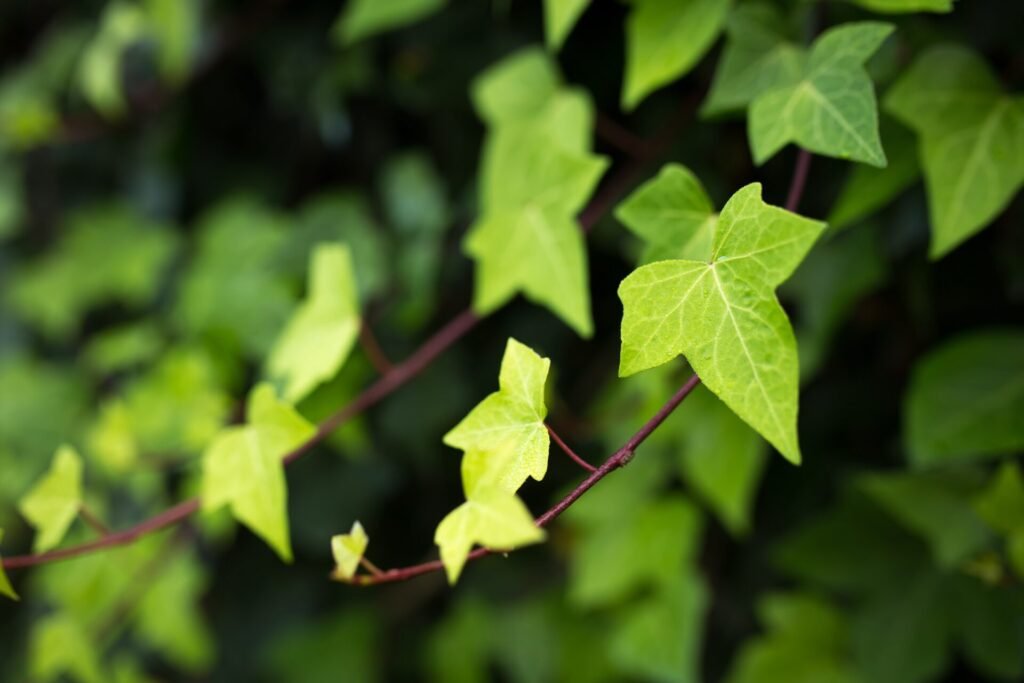
Ivy is a familiar plant in our part of the world. Climbing up tree trunks and the walls of houses, it is seen by some as decorative and by others as invasive. But ivy is far less known for its uses. Here’s a closer look at this climbing plant, its traditional uses, the precautions to bear in mind and the place it has in anti-cellulite skincare.
What do we know about ivy?
Common ivy (Hedera helix) was already used in Antiquity, with its leaves reputed to soothe headaches. Its use continued throughout history: its berries were employed as a purgative, a macerate of its leaves in vinegar was applied to corns, while its sap was collected to relieve sore throats. The use of common ivy is now better understood: we know, for example, that the berries must be used with caution, as they are highly toxic when consumed in large quantities.
And what is said about the plant today?
- Ivy has been the subject of laboratory studies: certain extracts from its leaves, flowers and fruits have been studied for their activity against bacteria such as Staphylococcus aureus (1).
- Its leaves contain chemical compounds, saponins, which have been studied for their antioxidant properties (2).
- Other studies have looked at inflammation (3).
- It is best known as a complementary treatment for certain respiratory conditions (4): in this case, it is a doctor or pharmacist who should advise.
Ivy: precautions to be aware of
Common ivy is not a harmless plant: its berries are toxic and must not be eaten.
Before using it in any way, whether as a herbal tea or in a homemade preparation, ask a doctor or pharmacist for advice, especially if you are pregnant, breastfeeding or taking any medication.
Ivy and cellulite: what’s the link?
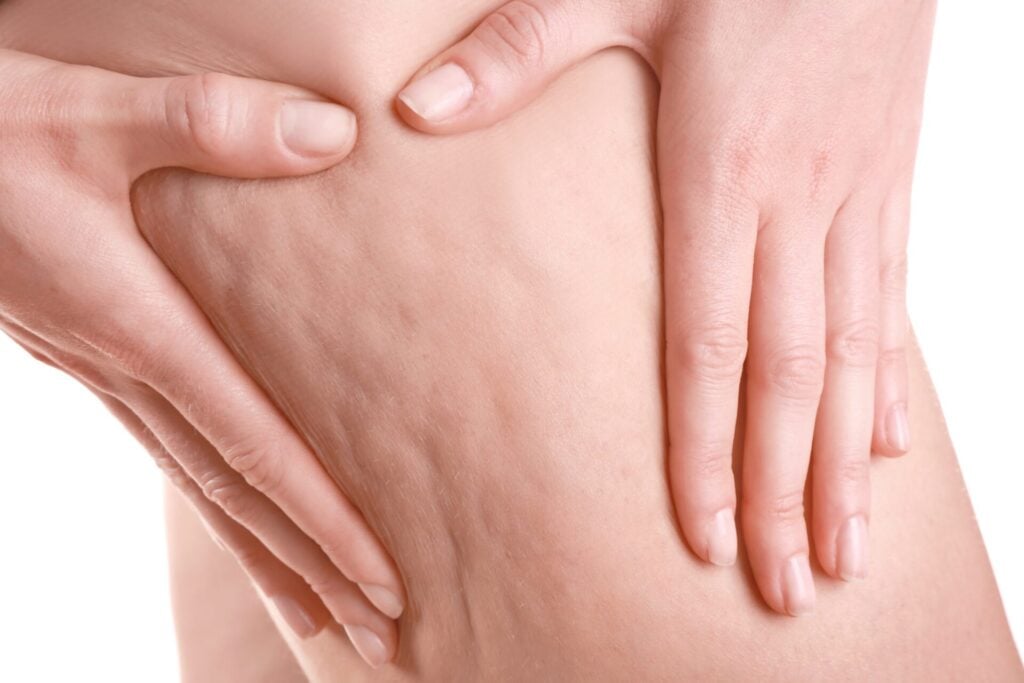
Common ivy is also used in cosmetics, particularly in anti-cellulite skincare.
Its leaves contain flavonoids (rutoside, rutinoside) and saponins (such as hederin), compounds that researchers have looked into (5) with regard to:
- blood vessel permeability;
- inflammation and swelling;
- tissue drainage.
Cellulite, which affects nearly 90% of women, is partly linked to a dysfunction of the venous and lymphatic circulation. This leads to a build-up of water in the tissues and congestion, which gives the skin its characteristic “orange peel” appearance.
In cosmetics, common ivy is mainly found in massage products, a ritual that helps tackle the appearance of cellulite. These products are often chosen to care for:
- the look of the skin, especially on the legs;
- water-based cellulite, which is often associated with water retention;
- deep-seated cellulite.
How to use ivy
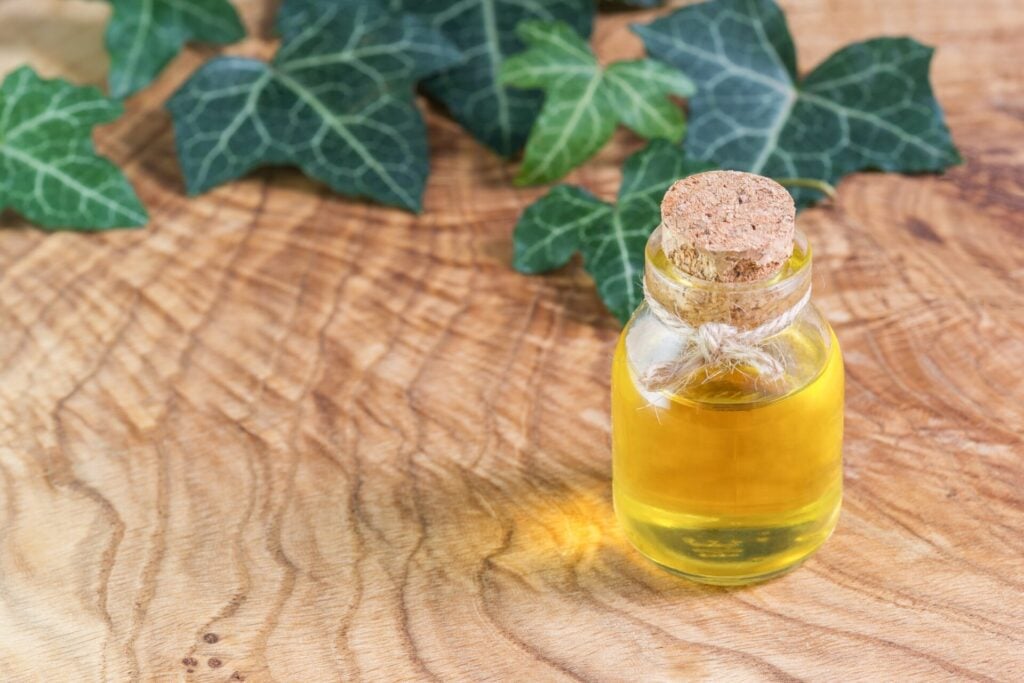
There are mainly two ways to use common ivy yourself. Neither replaces the advice of a healthcare professional if you have heavy legs or ongoing discomfort.
1- Using ivy as a herbal tea
The first approach is the oral route, by preparing herbal teas. Ivy leaves can be combined with other plants, such as mouse-ear hawkweed, Java tea, red vine, horse chestnut or meadowsweet. Please note: ask a doctor or pharmacist for advice before drinking it.
2- Topical use
The second approach is the topical route. Ivy has been used in poultices and macerates for centuries. These traditional preparations are still made today, with the precautions mentioned above.
- To make an ivy macerate: simply leave a few chopped or crushed ivy leaves to steep in a little natural plant oil for around ten days, then strain the macerate and massage it in daily on cellulite-prone areas (thighs, buttocks, legs).
- To make an ivy body mask: you can also prepare a poultice by boiling 100 g of ivy leaves in 500 ml of water, then mixing in a little green clay powder. Apply the mixture to the areas concerned, leave on for around twenty minutes, then rinse off with clean water.
3- The cosmetic solution
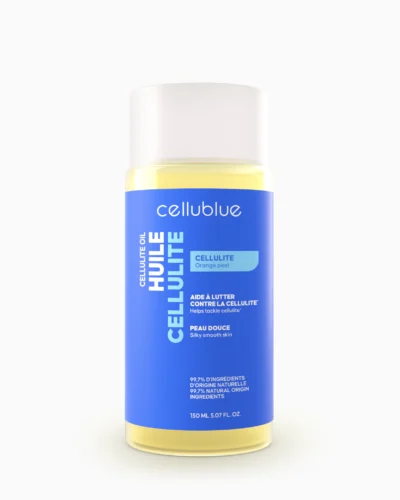
Finally, if you’d rather not make your own homemade cosmetics, you’ll be pleased to know that you can find anti-cellulite skincare formulated with ivy. That’s the case with our Anti-Cellulite Massage Oil, a staple of our cellulite range.
The oil that visibly smooths the look of your skin
- Complete formula: 4 powerful actives for a targeted massage of cellulite-prone areas
- Smoother-looking skin: actives designed to complement the palper-rouler technique
- Sensorial massage : rich texture and Monoï scent for a gentle, feel-good ritual
It can be used alone or with a massage accessory (Cupping Cup, Electric Cupping Cup, Body Gua Sha, Orange Peel Massager), every day. Its formula is unique and 99% natural:
- a blend of sunflower oil and sweet almond oil, whose textures are perfectly suited to anti-cellulite massage;
- extracts of grapefruit;
- common ivy, a plant traditionally found in anti-cellulite skincare.
Just a few minutes of massage is all it takes to turn it into a daily ritual. The key: massage every single day! And what a moment of pure pleasure, just for yourself…
(1) 2017, Pop et al., Investigation of antioxidant and antimicrobial potential of some extracts from Hedera helix L.
(2) 2004, Gülçin et al., Antioxidant activity of saponins isolated from ivy: alpha-hederin, hederasaponin-C, hederacolchiside-E and hederacolchiside-F
(3) 2005, Gepdiremen et al., Acute anti-inflammatory activity of four saponins isolated from ivy: alpha-hederin, hederasaponin-C, hederacolchiside-E and hederacolchiside-F in carrageenan-induced rat paw edema
(4) 2003, Hofmann et al., Efficacy of dry extract of ivy leaves in children with bronchial asthma–a review of randomized controlled trials
(5) 2011, Hexsel, Soirefmann, Cosmeceuticals for Cellulite
Frequently asked questions
Can you drink ivy tea every day?
It’s best to ask a doctor or pharmacist before using ivy as a herbal tea on a regular basis, especially if you are pregnant, breastfeeding or taking any medication.
Is ivy poisonous?
Yes, its berries are toxic and must not be eaten. If they are swallowed by accident, contact a doctor or a poison control centre promptly.
Related articles
- Black Soap for Stretch Marks: Does It Work?
- Artichoke: Composition, Fibre and Infusion Recipes
- Grape Pomace & Cellulite: What You Need to Know
Useful categories: Anti-Cellulite Plants, Anti-Cellulite Solutions.