Aloe vera (or aloe) has always been regarded as a plant with a strong reputation: it is credited with countless benefits, and its uses are broad, from gels to a wide range of skincare products. And what about cellulite? “Aloe vera and cellulite“: that’s exactly what we’ll be exploring in this article. We’ll look at what this plant is, where its gel fits into an orange peel skin routine, how to use it and which precautions to take.
What is aloe vera and what are its properties?
Belonging to the Aloaceae family, aloe resembles a cactus (but isn’t one!). With such a strong reputation, it has earned several nicknames across cultures: “harmonious remedy” for the Chinese, “elixir of longevity” for the Greeks, and “silent healer” for the Indians.
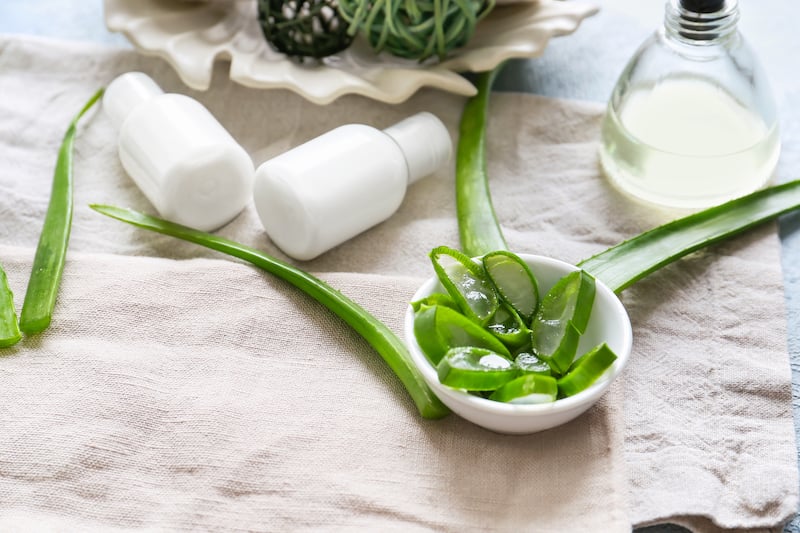
This speaks volumes about aloe’s reputation. From its leaves (thick, serrated and narrow), two substances are extracted: latex (a very powerful laxative) and gel (or pulp). The gel is a clear mucilage containing over 200 components, including 75 nutrients.
Aloe also has a long history of traditional uses outside cosmetics, which are the subject of research (1). These are medical matters that go beyond the scope of this article, and only a doctor or other medical professional can advise you.
Taken internally, aloe latex is known for its powerful laxative effect, so caution is called for. The gel contains many components, including antioxidants, and is also used in capsules and drinks. Before taking any, ask your GP or pharmacist for advice.
Applied externally, aloe vera gel is valued above all for its moisturising feel. It features in a variety of skincare products, including those used on areas showing the appearance of orange peel skin. For any skin concern, ask a doctor or dermatologist for advice.
Aloe vera and cellulite: what can you expect?
Why pair aloe vera and cellulite? Orange peel skin is not only a question of weight: it is also linked to the structure of connective tissue and to hormones, particularly oestrogen. It is a phenomenon affecting around 9 in 10 women. No plant makes it disappear. Valued for its moisturising feel, aloe vera gel simply has its place in the products applied to these areas, for skin that feels more comfortable and softer to the touch.
What’s more, this product is best combined with exercise and a rich, balanced diet as part of an overall lifestyle. Aloe gel, packed with nutrients and vitamins, simply complements your skincare routine.
How to use aloe vera?
The aloe leaf contains both latex and gel, which are extracted for various nutritional and dermatological uses. In cosmetics and dermatology, it is the gel that is most widely used. It comes in several forms: capsules, drinks, creams, lotions, gel and more.
Aloe vera-based creams are formulated from the gel and are widely used in skincare, including on areas prone to cellulite. Massage is the preferred application method: apply thin layers of the cream and gently massage the areas concerned (typically the stomach, thighs and buttocks).
As one might expect, aloe vera will not make cellulite disappear (no product does), and it takes time and patience. But with a healthy lifestyle (regular exercise, a rich and balanced diet, and consistent use of an aloe vera gel massaged into the skin), it is possible to care for skin you’d like to feel softer and more comfortable.
Aloe vera: what precautions should you take?
That said, aloe is not a plant to be taken lightly. The latex found in its leaves is a very powerful laxative. Before taking aloe vera in any form (capsules, drinks or otherwise), ask your GP or pharmacist for advice, especially if you are on medication, pregnant or have a medical condition.
For use on the skin, a little common sense goes a long way: patch test the gel or cream on a small area of skin first to check how your skin reacts. If you notice any reaction, stop using it and ask a doctor or pharmacist for advice.
Sources and references
1) https://www.ncbi.nlm.nih.gov/pubmed/23894900
Frequently asked questions
What are the benefits of aloe vera for the skin?
In skincare, aloe vera gel, a clear mucilage taken from the leaves, is valued above all for its moisturising feel. You’ll find it in creams, lotions and gels for the face and body. For any medical use, ask a doctor or pharmacist for advice.
What is aloe vera good for?
Aloe is credited with many virtues, hence nicknames such as the “harmonious remedy” and the “elixir of longevity”. For any medical question, only a doctor or pharmacist can advise you based on your situation. This article focuses mainly on its place in skincare, particularly on areas affected by orange peel skin.
How do you use aloe vera on areas with cellulite?
It’s best to choose it in cream or gel form. Apply it in thin layers and gently massage the areas concerned, usually the stomach, thighs and buttocks. This is part of a regular routine, alongside exercise and a balanced diet. See the section “How to use aloe vera?”.
How do you use aloe vera leaves?
The leaf contains two substances: latex and gel. The gel, a clear mucilage, is the part used in skincare, whereas the latex is a very powerful laxative. Before using it in any way, take the time to read the section “Aloe vera: what precautions should you take?”.
Related articles
- Aloe Vera and stretch marks: what you need to know
- Grape Pomace & Cellulite: What You Need to Know
- Can lemon help reduce the appearance of stretch marks?
Useful categories: Plants.
To go further, explore the Cellublue shop: our anti-cellulite products.