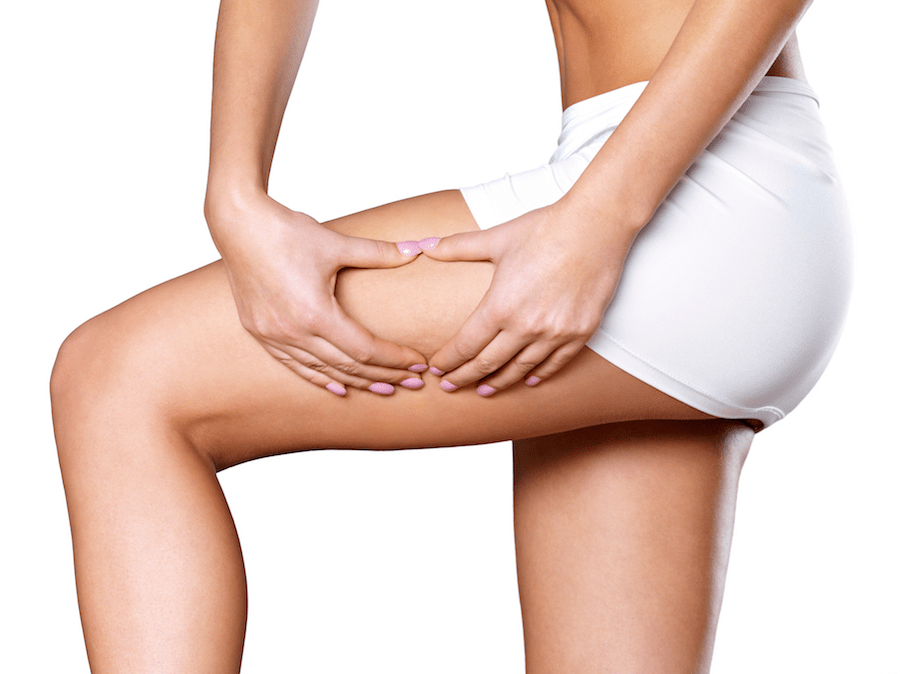
We talk about cellulite and everyday solutions to get rid of it right here on the blog. But do you really know what cellulite is? Types of cellulite, progression, diet and dimples… Let’s break it all down so you can better know your enemy!

 Did you know? There are different types of cellulite, generally grouped into three categories that can sometimes overlap. If you haven’t yet identified your cellulite type, now is the time to find out!
 Almost all women (92%) are affected by cellulite, while virtually no men are… Unfair, isn’t it? Cellulite can have various causes: a diet too high in fat, sugar or salt, lack of physical activity, a tendency towards water retention… That said, female hormones and genetics also appear to play a key role: puberty, pregnancy and oestrogen-based treatments can all contribute to cellulite. Smoking, and anything that promotes the build-up of toxins in general, is also a factor in the development of dimples.
 In addition to the different types of cellulite, there are different stages depending on how far the orange-peel skin has progressed. Cellulite — whether fibrous, aqueous or adipose — doesn’t appear overnight: it is more of a gradual process that evolves through several key stages.
Cellulite is generally classified according to a few established frameworks: either the “Nurnberger & Muller” scale, developed by the first two scientists to propose a cellulite classification system (in 1978), or for example that of dermatologist Doris Hexsel who, in 2009, introduced a new way of classifying cellulite (the “Cellulite Severity Scale”, also known as “CSS”).
There are many misconceptions surrounding cellulite. One of the most widespread claims is that if you have cellulite, it’s primarily because you’re overweight and should go on a diet to lose weight.
As we’ve seen above, cellulite is mainly caused by a structural change in the tissues — an imbalance that affects our fat reserves and the elimination of toxins.
While it does involve fatty deposits, the appearance of cellulite has nothing to do with weight gain. Almost all women have cellulite, even the slimmest ones! A diet may reduce superficial fat — the kind found in small rolls — but it won’t be effective against the fat stored in our adipocytes that is responsible for dimpling.
Whatever your cellulite type and stage, the most effective solution for getting rid of it remains the pinch-and-roll massage technique. When performed correctly, these massages work to break down fatty deposits deep within the tissue, releasing fat and toxins, restoring healthy blood and lymphatic circulation, and draining the adipocytes to smooth away orange-peel skin. This technique can be quite tricky to perform by hand — but that’s where the Ventouse Cellublue comes in! Thanks to their suction effect, they perfectly replicate the pinch-and-roll technique and help you say goodbye to orange-peel skin in just a few weeks.
In addition to the different types of cellulite, there are different stages depending on how far the orange-peel skin has progressed. Cellulite — whether fibrous, aqueous or adipose — doesn’t appear overnight: it is more of a gradual process that evolves through several key stages.
Cellulite is generally classified according to a few established frameworks: either the “Nurnberger & Muller” scale, developed by the first two scientists to propose a cellulite classification system (in 1978), or for example that of dermatologist Doris Hexsel who, in 2009, introduced a new way of classifying cellulite (the “Cellulite Severity Scale”, also known as “CSS”).
There are many misconceptions surrounding cellulite. One of the most widespread claims is that if you have cellulite, it’s primarily because you’re overweight and should go on a diet to lose weight.
As we’ve seen above, cellulite is mainly caused by a structural change in the tissues — an imbalance that affects our fat reserves and the elimination of toxins.
While it does involve fatty deposits, the appearance of cellulite has nothing to do with weight gain. Almost all women have cellulite, even the slimmest ones! A diet may reduce superficial fat — the kind found in small rolls — but it won’t be effective against the fat stored in our adipocytes that is responsible for dimpling.
Whatever your cellulite type and stage, the most effective solution for getting rid of it remains the pinch-and-roll massage technique. When performed correctly, these massages work to break down fatty deposits deep within the tissue, releasing fat and toxins, restoring healthy blood and lymphatic circulation, and draining the adipocytes to smooth away orange-peel skin. This technique can be quite tricky to perform by hand — but that’s where the Ventouse Cellublue comes in! Thanks to their suction effect, they perfectly replicate the pinch-and-roll technique and help you say goodbye to orange-peel skin in just a few weeks.
Sommaire
What is cellulite?
Cellulite stems from a change in the structure of the tissues beneath the skin, at the level of the fat reserves. Instead of smooth skin, you end up with unsightly “bumps” that can spread across a large part of the body — typically the legs and buttocks, but also the arms and stomach. When you have cellulite, fat cells have stored too much fat and too many toxins, causing them to enlarge and clump together. This process triggers the appearance of dimples and gives skin that bumpy texture we all want to get rid of. Cellulite is a common and harmless phenomenon, found predominantly in women. Dimples result from an excessive build-up of fat cells — also known as adipocytes — housed within the hypodermis (the outermost layer of the skin), in small compartments (1). When these adipocytes increase in number and volume, the compartments swell and take on a rounded shape, giving the skin’s surface that characteristic bumpy appearance.
How does cellulite form?
When the storage of adipocytes beneath the skin (known as lipogenesis) and the body’s consumption of fat are in balance, fat cells remain a normal size. However, when fat intake is too high, these cells become hypertrophied, compressing the blood and lymphatic vessels and forming dimples.The different types of cellulite
 Did you know? There are different types of cellulite, generally grouped into three categories that can sometimes overlap. If you haven’t yet identified your cellulite type, now is the time to find out!
Aqueous cellulite
Many women suffer from it: aqueous cellulite is linked to poor venous circulation and is generally accompanied by water retention and swelling. The skin’s texture resembles orange peel even without being pinched, the tissues tend to be puffy, and the skin lacks suppleness. This type of cellulite is the least visible of the three. Even slim women can be affected.Learn more about aqueous cellulite
Adipose cellulite
Adipose cellulite is generally the easiest to treat, as it is typically caused by a poor diet and a sedentary lifestyle. Adipose cellulite is only visible when you pinch the skin or in certain positions, and it is not painful.Learn more about adipose cellulite
Fibrous cellulite
Fibrous cellulite is unfortunately the type that requires the most effort if you want to regain smooth, dimple-free skin. This cellulite is rather hard to the touch, and can even be painful in certain areas. It is clearly visible to the naked eye and has a quite pronounced bumpy appearance. These are deep-set dimples that have been embedded in the tissues for a long time. Getting rid of them isn’t impossible — but it does take commitment! If you’re still unsure about your cellulite type, you can also take our online test in just a few minutes!Learn more about fibrous cellulite
Which areas are affected by cellulite?
The main areas affected by this phenomenon are: the thighs, the buttocks, the hips, the stomach, the upper arms, the knees, the legsThe main causes of cellulite
A combination of several factors can explain the causes of cellulite. The primary one is hormonal fluctuations that women experience at various stages of life (puberty, the contraceptive pill, pregnancy, menopause, etc.). It is worsened by disruptions to blood and lymphatic circulation, lifestyle, age, stress and genetics. Posing no risk to health, it is considered a normal physiological phenomenon. It can, however, cause discomfort, localised pain and is often the source of significant self-consciousness (2).Learn more about the causes of cellulite
Who is at risk of cellulite, and how can you prevent it?
 Almost all women (92%) are affected by cellulite, while virtually no men are… Unfair, isn’t it? Cellulite can have various causes: a diet too high in fat, sugar or salt, lack of physical activity, a tendency towards water retention… That said, female hormones and genetics also appear to play a key role: puberty, pregnancy and oestrogen-based treatments can all contribute to cellulite. Smoking, and anything that promotes the build-up of toxins in general, is also a factor in the development of dimples.
To prevent or reduce cellulite, here are a few basic tips to follow:
- Avoid heat (sauna, hammam, very hot baths…) and take cool showers every day.
- Don’t overdo the heels — flat shoes make your muscles work harder and help eliminate toxins more easily.
- Keep moving throughout the day and avoid sitting for more than two hours without stretching your legs.
- Avoid tight clothing that restricts circulation and encourages water retention.
- Adjust your diet: building a few good eating habits is essential to avoid making cellulite worse. You can eat everything, but prioritise vegetables, proteins and wholegrains. Minimise refined sugar, excess salt and saturated fats as much as possible.
- Take up targeted physical activity: certain exercises known to smooth out cellulite can be effective when followed as part of a daily routine.
- Take care of yourself: this of course includes massage sessions with your Ventouse Cellublue, but also regular skin exfoliation and the use of targeted treatments…
The different stages of cellulite
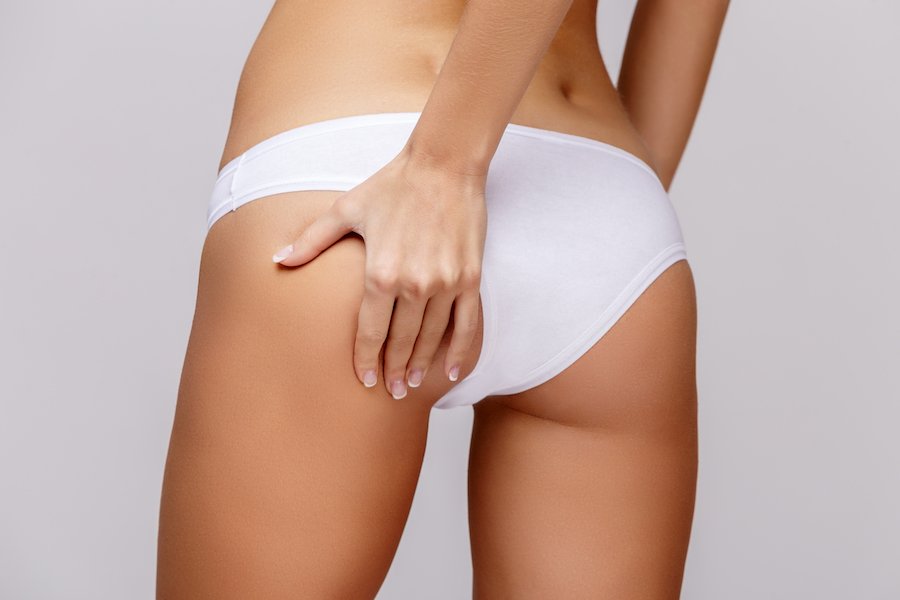 In addition to the different types of cellulite, there are different stages depending on how far the orange-peel skin has progressed. Cellulite — whether fibrous, aqueous or adipose — doesn’t appear overnight: it is more of a gradual process that evolves through several key stages.
Cellulite is generally classified according to a few established frameworks: either the “Nurnberger & Muller” scale, developed by the first two scientists to propose a cellulite classification system (in 1978), or for example that of dermatologist Doris Hexsel who, in 2009, introduced a new way of classifying cellulite (the “Cellulite Severity Scale”, also known as “CSS”).
In addition to the different types of cellulite, there are different stages depending on how far the orange-peel skin has progressed. Cellulite — whether fibrous, aqueous or adipose — doesn’t appear overnight: it is more of a gradual process that evolves through several key stages.
Cellulite is generally classified according to a few established frameworks: either the “Nurnberger & Muller” scale, developed by the first two scientists to propose a cellulite classification system (in 1978), or for example that of dermatologist Doris Hexsel who, in 2009, introduced a new way of classifying cellulite (the “Cellulite Severity Scale”, also known as “CSS”).
The Nurnberger-Muller Classification
The Nurnberger-Muller classification is the most widely used because it is based simply on the visual appearance of cellulite. It has 4 stages (from 0 to 3), each representing an increase of approximately +25% in cellulite severity.Stage / Level 0 cellulite
No dimples or visible surface irregularities when standing, lying down, or when the skin is pinched.Stage / Level 1 cellulite
No dimples or visible surface irregularities when standing or lying down. However, when you pinch the skin, dimples (fatty deposits within the tissues) appear.Stage / Level 2 cellulite
Dimpling appears spontaneously when standing, but not always when lying down. The orange-peel appearance of the skin is clearly visible to the naked eye, with no need for manipulation.Stage / Level 3 cellulite
Dimpling is present spontaneously whether you are standing or lying down. Cellulite is clearly visible to the naked eye with no manipulation required. The skin has an “orange-peel” appearance with particularly raised areas.The Doris Hexsel Classification
Entirely different in approach, this classification assigns a score to your cellulite: a highly detailed image (using magnetic resonance) is taken of the affected area. The doctor then answers 5 fairly technical questions (the last of the 5 being somewhat particular, as it draws on the Nurnberger-Muller classification — meaning the Doris Hexsel classification is partly dependent on it). At the end of this process, which only a doctor can carry out (since a magnetic imaging scan is required and the test cannot be performed alone), a score between 0 and 15 is assigned. From 1 to 5 points: mild cellulite; from 6 to 10 points: moderate cellulite; from 11 to 15 points: severe cellulite. Here again, when someone refers to “severe cellulite”, it is important to clarify which scale is being used.The typical clinical progression of cellulite
Progression and classification are often confused. There are dozens of ways to describe how cellulite evolves, whereas there are only 2 well-documented methods for classifying it. Below, we outline the typical progression of cellulite — referring to “stages” rather than “levels”.Stage / Step 1 of cellulite
The skin shows no visible signs yet, but changes are already taking place beneath the surface. This first stage is therefore not yet identifiable to the naked eye. In more detail: there is an increase in the volume of fat tissue cells in the affected area, caused by a build-up of fat at that location. There is no circulatory disruption (at the blood level) or tissue damage — only a slight dilation of the small veins within the fatty tissue. No pain is felt. Using a thermal image of this area of skin, a so-called “mottled” pattern can be seen, reflecting the rise in temperature caused by the developing oedema (which compresses the vessels and therefore raises the temperature).Stage / Step 2 of cellulite
Orange-peel skin has not yet appeared, but on closer inspection, the skin looks paler in certain areas and is less elastic (a sign of poor circulation — a phenomenon closely linked to cellulite). The fat cells are slightly fattier, and those deeper down are beginning to undergo the same process. Blood and lymph (the watery fluid that bathes the cells) become congested. A more significant “swelling” of the fat cells occurs, and toxic waste that should be eliminated begins to accumulate. The normal hormonal activity of women increases bodily fluid, causing additional swelling. Contraceptive use and pregnancies, due to hormonal activity, cause tissue swelling and worsen the changes. In the skin, irregularities can already be detected by touch, but there is still no pain. In thermography, the “mottled” pattern is much more visible and pronounced.Stage / Step 3 of cellulite
There is a disorganisation of the tissues and the emergence of dimples which, despite their depth, are perceived as surface irregularities even without palpation. The dimples become even more apparent when the skin is pinched, and you can feel a rougher, less smooth texture to the touch. Fibrosis begins to set in — meaning the hardening of the tissue (where the fibres are located) — and circulation becomes even more disrupted. Micro-varicose veins may develop. The skin takes on the appearance of “orange peel”. A sensation of heaviness and fatigue in the legs then occurs (it is worth noting that cellulite is linked to local circulatory functional issues at the level of the skin and fatty tissues, and that at this stage, circulation within the fatty tissue is already compromised).Stage / Step 4 of cellulite
The final stage of cellulite progression — where deeply embedded cellulite remains constantly visible. It can be clearly felt to the touch and may even become painful! The disordered swelling of fat cells is more pronounced, the tissue becomes increasingly hardened (fibrosis) and blood circulation is severely disrupted. At this stage, cellulite is firm and the skin appears “shiny”, with a quilted texture. The legs become heavy, swollen and painful, and a persistent sense of fatigue is common — even without physical exertion.Does weight have an influence on cellulite?
 There are many misconceptions surrounding cellulite. One of the most widespread claims is that if you have cellulite, it’s primarily because you’re overweight and should go on a diet to lose weight.
As we’ve seen above, cellulite is mainly caused by a structural change in the tissues — an imbalance that affects our fat reserves and the elimination of toxins.
While it does involve fatty deposits, the appearance of cellulite has nothing to do with weight gain. Almost all women have cellulite, even the slimmest ones! A diet may reduce superficial fat — the kind found in small rolls — but it won’t be effective against the fat stored in our adipocytes that is responsible for dimpling.
Whatever your cellulite type and stage, the most effective solution for getting rid of it remains the pinch-and-roll massage technique. When performed correctly, these massages work to break down fatty deposits deep within the tissue, releasing fat and toxins, restoring healthy blood and lymphatic circulation, and draining the adipocytes to smooth away orange-peel skin. This technique can be quite tricky to perform by hand — but that’s where the Ventouse Cellublue comes in! Thanks to their suction effect, they perfectly replicate the pinch-and-roll technique and help you say goodbye to orange-peel skin in just a few weeks.
There are many misconceptions surrounding cellulite. One of the most widespread claims is that if you have cellulite, it’s primarily because you’re overweight and should go on a diet to lose weight.
As we’ve seen above, cellulite is mainly caused by a structural change in the tissues — an imbalance that affects our fat reserves and the elimination of toxins.
While it does involve fatty deposits, the appearance of cellulite has nothing to do with weight gain. Almost all women have cellulite, even the slimmest ones! A diet may reduce superficial fat — the kind found in small rolls — but it won’t be effective against the fat stored in our adipocytes that is responsible for dimpling.
Whatever your cellulite type and stage, the most effective solution for getting rid of it remains the pinch-and-roll massage technique. When performed correctly, these massages work to break down fatty deposits deep within the tissue, releasing fat and toxins, restoring healthy blood and lymphatic circulation, and draining the adipocytes to smooth away orange-peel skin. This technique can be quite tricky to perform by hand — but that’s where the Ventouse Cellublue comes in! Thanks to their suction effect, they perfectly replicate the pinch-and-roll technique and help you say goodbye to orange-peel skin in just a few weeks.
Learn more about ALL anti-cellulite solutions