For many, feelings of heaviness are part of the daily routine. Every evening, it’s the same story: swollen ankles, heavy legs and a persistent sense of discomfort, especially after long hours standing or sitting. This often goes hand in hand with water-retention cellulite, which gives the skin a dimpled, uneven appearance. Many people then turn to lymphatic drainage, a gentle massage technique. But what exactly is it? And can you get close to it yourself, at home?
What is lymphatic drainage?
1- A quick anatomy refresher
Lymph is a colourless fluid that circulates throughout the body via a network of vessels running parallel to the blood circulatory system. It collects some of the fluid found between cells, along with cellular debris, and carries certain waste products to the lymph nodes, which play a part in clearing them. This process is one of the body’s natural elimination mechanisms. Lymph also carries white blood cells, so it plays a part in the body’s defences.
The main difference between the blood circulatory system and the lymphatic system is that blood is driven by a pump, the heart, while lymph has none. It moves mainly thanks to muscle contractions and the pulsing of nearby arteries. In less active people, this movement is stimulated less, and, because of gravity, the fluid tends to pool in the lower body. The link between circulation and cellulite also raises plenty of questions. This is the context in which lymphatic drainage is often mentioned.
2- How lymphatic drainage works
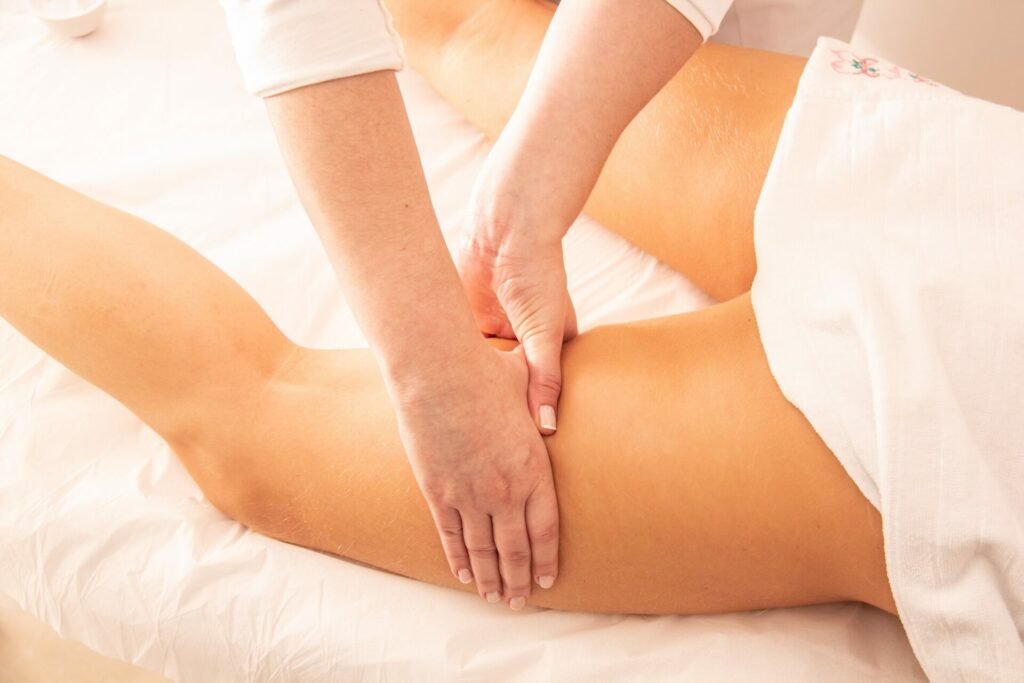
It is a gentle massage technique made up of slow, light, precise movements, used in certain medical or aesthetic contexts. It is often offered for heavy legs, water retention or water-retention cellulite and, in a medical setting, for certain types of oedema. Lymphatic drainage is based on two principles:
- Gentle pressure is applied to the lymph node areas at the very start of the session.
- This is followed by slow, precise movements (pumping, smoothing), always in the same direction: towards the lymph nodes and the heart.
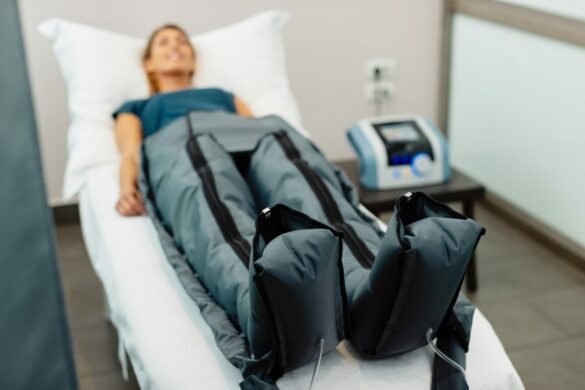
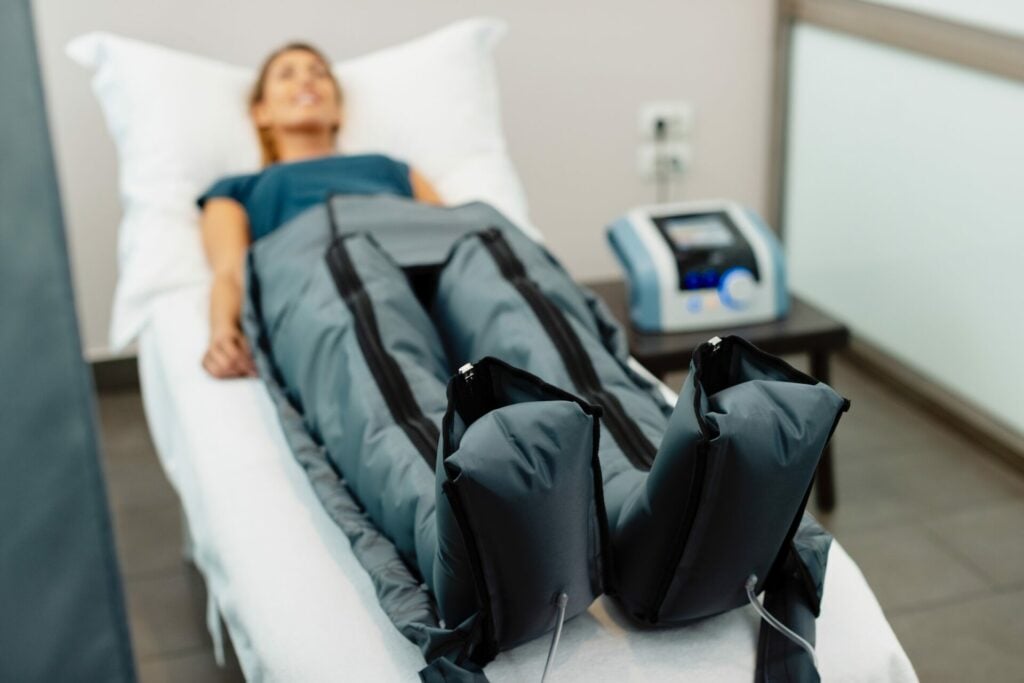
Lymphatic drainage can be performed by hand or with a device (pressotherapy). Pressotherapy is generally seen as a complement to manual drainage: the precise movements of the hands cannot be replaced by a machine.
When is lymphatic drainage used?
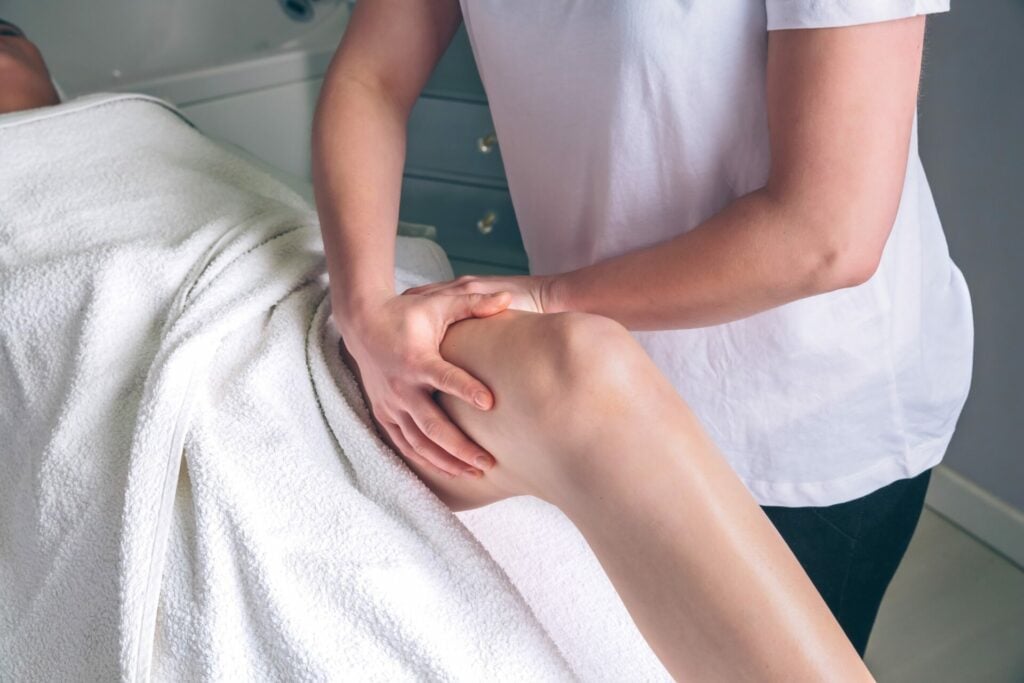
It is used in two quite distinct contexts: medical and aesthetic.
In a medical context, lymphatic drainage is prescribed by a doctor and carried out by a healthcare professional, often a physiotherapist, for certain conditions: it is up to your doctor to decide whether it is right for you.
It is also offered for heavy legs or water retention. If your discomfort is mainly in your stomach area, our article on bloating looks at its causes.
In an aesthetic context, at a beauty salon or spa, lymphatic drainage is mainly appreciated for:
- Facial treatments: done gently, it becomes part of a beauty ritual.
- Cellulite: it is part of care for skin prone to cellulite (the medical term is superficial lipodystrophy), particularly water-retention cellulite, which is linked to fluid retention.
Lymphatic drainage is not suitable for everyone: ask your doctor for advice before booking a session.
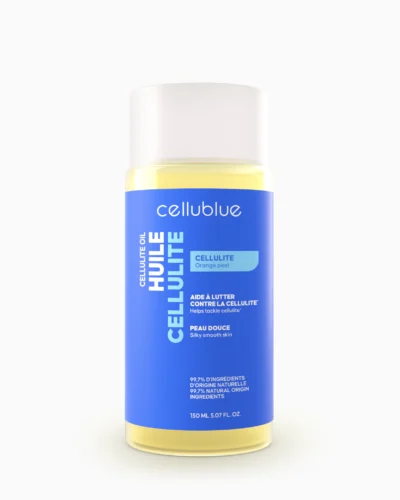 GREAT VALUE
The oil that visibly smooths the look of your skin
- Complete formula: 4 powerful actives for a targeted massage of cellulite-prone areas
- Smoother-looking skin: actives designed to complement the palper-rouler technique
- Sensorial massage : rich texture and Monoï scent for a gentle, feel-good ritual
Where can you get lymphatic drainage?
There are essentially two scenarios:
- In a medical context, lymphatic drainage is prescribed by a doctor and carried out by a healthcare professional, typically at a physiotherapy practice. When prescribed, sessions may be partially reimbursed by the French national health insurance.
- In an aesthetic context, it is performed at a beauty salon or spa and is not covered by health insurance. Check the practitioner’s training beforehand: it is a technique that has to be learnt.
A single session is rarely enough: a series is usually booked, for example between 5 and 10 sessions, as a course. The frequency is agreed with the practitioner.
Can you perform lymphatic drainage at home?
Manual lymphatic drainage is a highly specific technique that requires professional training. There are also several recognised methods, such as the Dr Vodder method — developed by the inventor of drainage itself — which uses circular and pumping movements, and the Dr Leduc method, which incorporates drawing and reabsorption manoeuvres.
So it is not possible to perform a true lymphatic drainage on yourself, properly and by the book, alone at home. That said, some self-massage techniques are inspired by it and, done gently, can have a place in a care routine for skin prone to water-retention cellulite.
1- The cupping massage
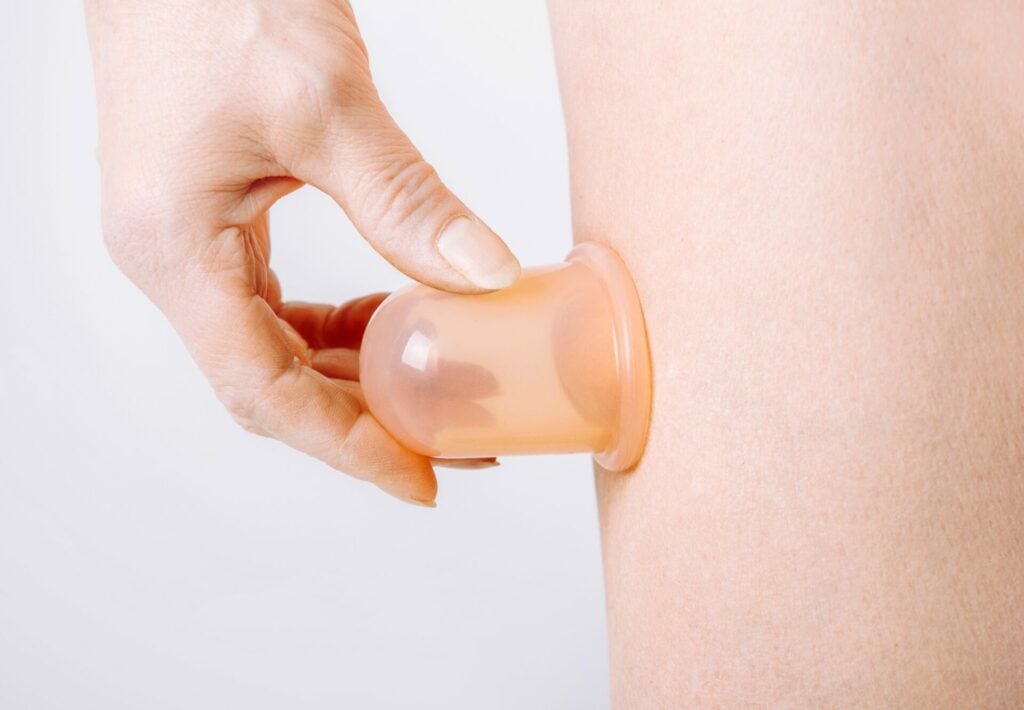
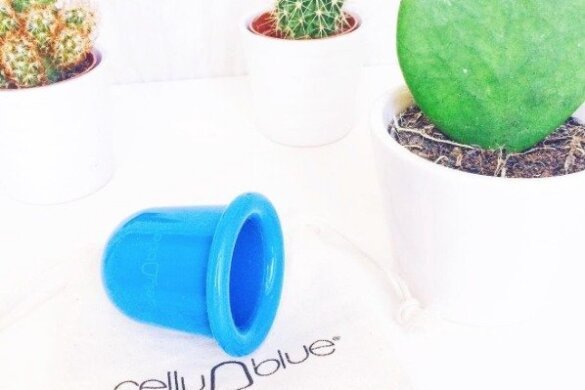
One example is the anti-cellulite cupping device (such as our manual and electric cups), which mimics the movement of another anti-cellulite massage technique, the pinch-and-roll. If you’re prone to water-retention cellulite, you can add it to your routine and regularly massage your skin with the cup, after applying a massage oil (such as ours!). For massage movements and areas, follow the instructions supplied with your cup.
2- Dry brushing
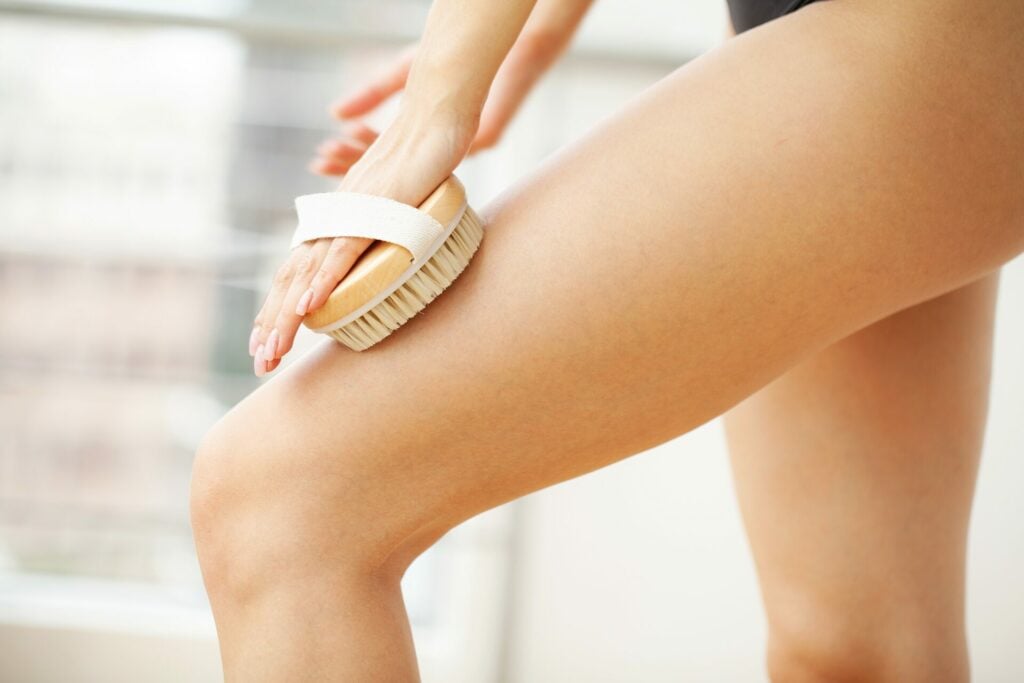
Dry brushing is another self-massage method that is easy to adopt at home. It involves brushing dry skin with a hand brush (such as our Dry Massage Brush), using circular and smoothing movements, following the instructions supplied with the brush. It exfoliates the skin and, done regularly, can have a place in a care routine for skin prone to cellulite.
3- The Gua Sha

The Gua Sha technique is an ancient wellness practice rooted in Traditional Chinese Medicine, which involves massaging the skin using a specific tool. Today, this tool is known as the Gua Sha, and it can be used for at-home body self-massage. A few precautions to keep in mind, however:
- Choose a Gua Sha designed for body massage. Our body Gua Sha is a good example: its ergonomic shape makes it easy to handle. Its various edges (rounded, curved and flat, with fine ridges) are shaped to follow the body’s natural contours.
- Always massage skin that has first been coated with massage oil.
- Before any massage movements, refer to the usage guide included with your Gua Sha and follow the recommended movements and areas.
- Follow a massage protocol: Gua Sha self-massage is done in a specific order and direction. We always include massage instructions with our accessories, and our Gua Sha is no exception!
- Finish the session following the instructions in the usage guide.
As you can see, a true manual lymphatic drainage can’t be performed on yourself at home. That said, if you’re prone to cellulite or heavy legs, there’s nothing to stop you adopting self-massage techniques for a moment of wellbeing. If you’re experiencing significant discomfort or marked, persistent swelling (lymphoedema), see your doctor, who can refer you to a specialist (vascular medicine, angiology) or a physiotherapist.
Frequently asked questions
Can you do lymphatic drainage on yourself?
Not a true manual lymphatic drainage, which requires training. However, self-massage with a cup, dry brushing or Gua Sha are inspired by it and can be done gently at home, following the direction given for each method.
Who performs lymphatic drainage?
In a medical setting, a trained professional, often a physiotherapist, on a doctor’s prescription. In an aesthetic setting, a practitioner at a beauty salon: check their training.
Is lymphatic drainage suitable for everyone?
Not necessarily: ask your doctor for advice before booking a session.
Related articles
Useful categories: Anti-Cellulite Massages, Anti-Cellulite Solutions.