
Bloating, unwanted gurgling, heaviness in the stomach and digestive discomfort… If these symptoms are part of your daily life, it may be worth taking a closer look at your diet and eating habits. When it comes to drinks, a few come up time and again whenever digestion is mentioned: sparkling water, herbal teas, green tea, kombucha and coffee. Here are 10 drinks that are often mentioned, with what is said about them and what is actually known, so you can choose according to your tastes and habits.
Drinks and digestion: what you need to know
No drink can replace a varied diet or a meal eaten calmly. That heavy feeling often comes from a large or rich meal, eating too quickly, or stress. The drinks featured here are mostly a matter of habit and taste. They are often credited with digestive benefits, but most of these effects have not been established.
A few simple pointers: drink regularly throughout the day and choose drinks that are low in sugar. If the discomfort persists, keeps coming back or comes with pain, ask your GP or a pharmacist for advice.
What should I drink after a meal to help digestion?
No drink makes you digest faster. If you are looking for a drink to have after a large meal, the ones most often mentioned are sparkling water (drink no. 1), herbal teas made with plants such as peppermint, fennel or verbena (drink no. 2), ginger and lemon infusion (drink no. 6), green tea (drink no. 7) and coffee (drink no. 10). Choose above all according to your tastes and how well you tolerate it: a hot, unsweetened drink sipped slowly is often more pleasant than an ice-cold or very sugary one.
For easier digestion, the most useful pointers are mainly about the meal itself: eat calmly, take time to chew and avoid too much fatty food. If the discomfort keeps coming back, ask your GP for advice.
Drink no. 1: sparkling water
It is often said that when digestion feels sluggish, nothing beats a glass of sparkling water. That is mostly down to reputation. Some people enjoy the bubbles at the end of a meal, while others find they feel more bloated. Sparkling waters are also often highly mineralised. Some are rich in bicarbonate, such as Saint-Yorre or Quézac, while others are rich in magnesium, such as Rozana or Badoit. Whichever waters you choose, check the label: waters high in sodium are not recommended for people with high blood pressure.
Drink no. 2: herbal teas

Traditional remedies have their followers. Certain herbal teas are traditionally drunk after a meal, and it all comes down to your choice of plants. Among the most popular are peppermint, fennel, anise, liquorice, verbena and artichoke, each with its own distinctive flavour. A hot, unsweetened drink sipped slowly at the end of a meal is above all a pleasant moment. If in doubt, or if you are taking any medication, ask your pharmacist for advice.
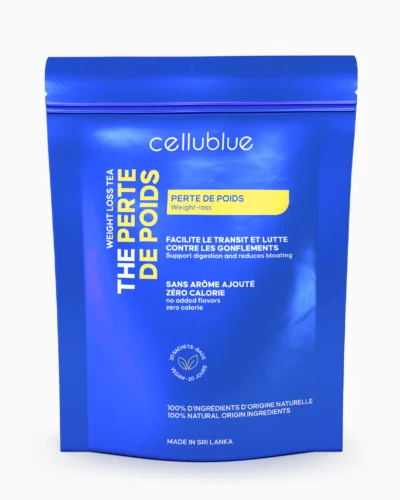
Drink no. 3: our tea
Third in this selection is our iconic tea. It is a blend of dried plants and citrus peels. Here are some of them, with their traditional uses:
- Lemon, prized for its sharpness and fresh note.
- Hibiscus, traditionally used in Africa to prepare bissap. It gives the blend a vivid red colour and a tangy taste.
- Peppermint, whose cool freshness makes it a staple of after-meal infusions (see also our article What is bloating?).
- Grapefruit, which adds bitterness and freshness to the blend.
- Green anise, with its soft, slightly sweet aroma, long used in after-meal infusions.
- Orange, which rounds off the flavour.
Your evening cuppa, ten dried botanicals
- Peppermint contributes to digestive function, and green anise helps support digestion
- Couch grass brings its gentle sweetness, hibiscus its tangy note and meadowsweet its floral touch
- Linden, for its part, adds a soft, floral note and aids digestion
Drink no. 4: vegetable juices
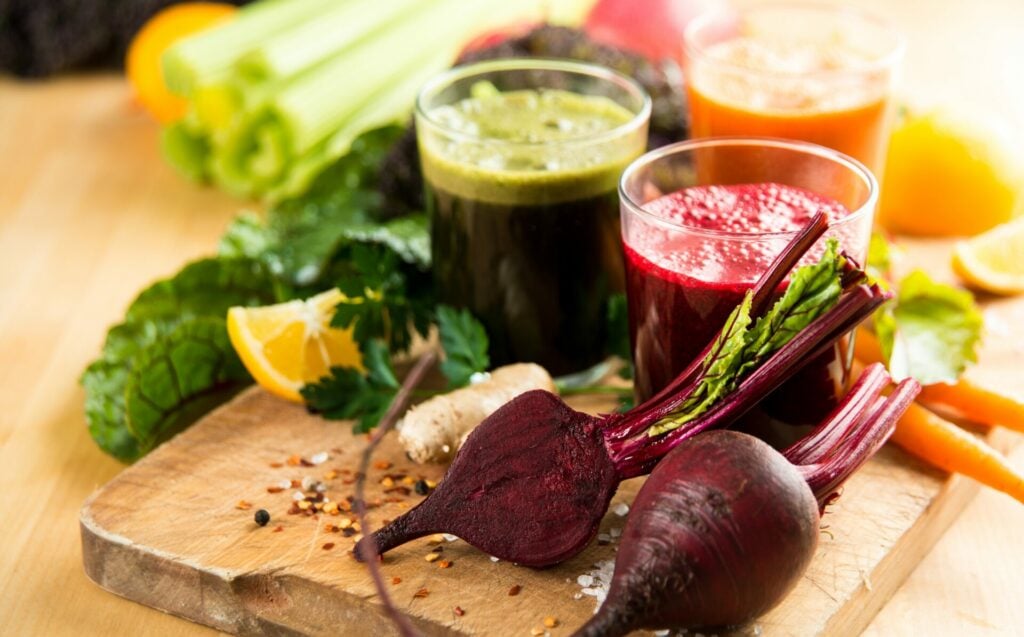
As well as being very on-trend, vegetable juices are an enjoyable way to fit more vegetables into your day. Here again, it all comes down to how they are prepared and which vegetables you choose. A few key points:
- It is better to make your own vegetable juices than to buy shop-bought versions, as pasteurisation reduces their content of certain vitamins.
- It is better to use a blender than a juice extractor. A blender keeps the fibre in the vegetables, and dietary guidelines recommend eating fibre every day.
- The choice of vegetables matters greatly, starting with flavour. Carrots bring sweetness and carotenoids, spinach adds a green note, celery a crisp freshness and artichoke a hint of bitterness.
Drink no. 5: our drink concentrate
Sometimes digestion feels slower after a meal that is rich in fat, which takes longer to digest. Our product is a drink to dilute that contains caffeine from cola, matcha and guarana. It is no substitute for a lighter meal, and no effect on fat digestion has been demonstrated. It is taken diluted in water, following the directions on the product page (see also our article on this type of drink). As with any drink containing caffeine, ask your GP or pharmacist for advice if you are sensitive to caffeine, pregnant or breastfeeding.

Concentrated green tea, guarana and cola, one dose a day with a meal
- Green tea features in the formula
- Guarana helps reduce tiredness, while cola helps you feel more energetic
- With matcha, the whole green tea leaf
Drink no. 6: ginger and lemon infusion
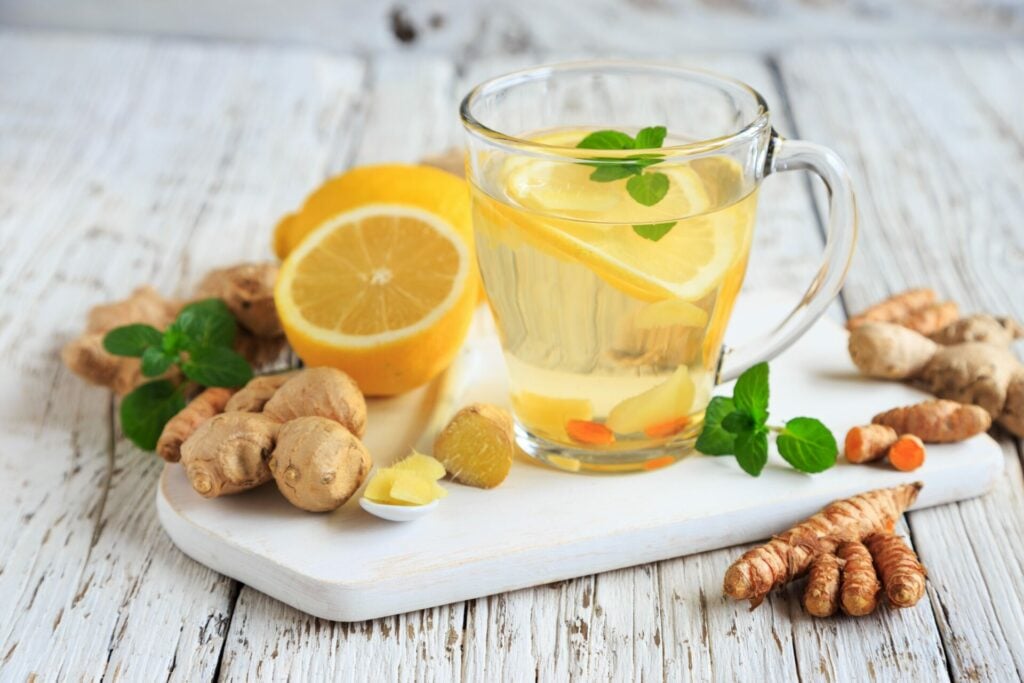
Another drink often enjoyed after a large meal is an infusion made with lemon and ginger. Lemon brings its sharpness and ginger its spicy kick. Ginger root has been used for centuries in many traditions. If you are pregnant, talk to your GP or midwife before drinking it regularly. An infusion of ginger root, lemon zest and lemon juice in hot water makes a fragrant, sugar-free drink to enjoy at the end of a meal.
Drink no. 7: green tea
Green tea is a true classic at the end of a meal. Green tea contains catechins and tannins, which give it its slightly bitter taste. A cup of green tea, plain or with a hint of mint, is above all a ritual to savour. It also contains caffeine, so if you are sensitive to it, avoid drinking it in the evening.
Drink no. 8: kombucha
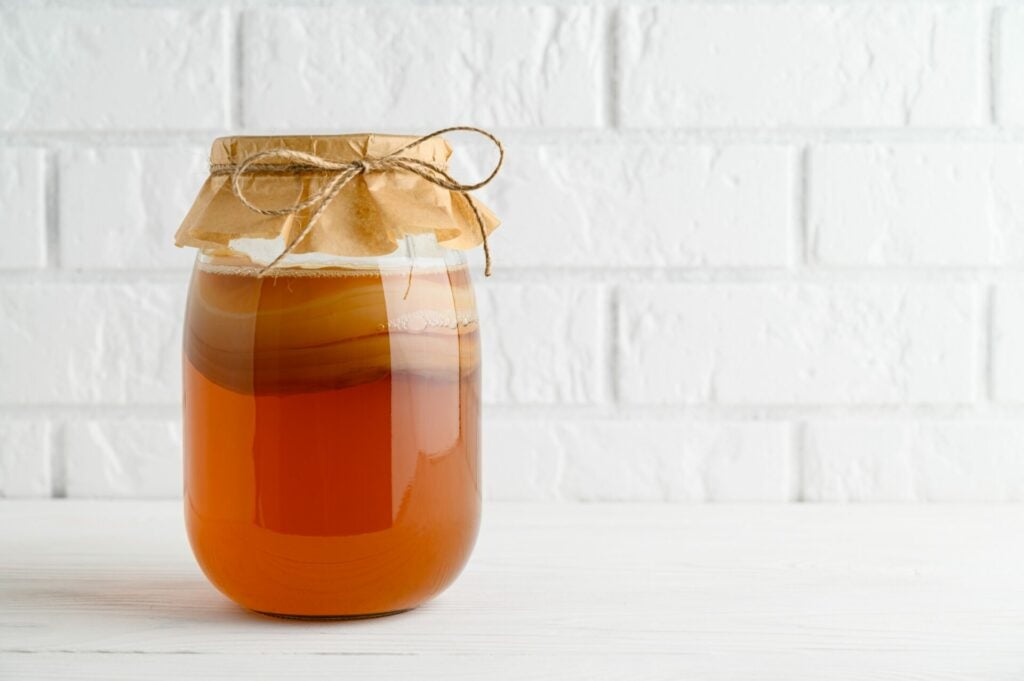
Kombucha is an ‘exotic’ drink that is growing increasingly popular. Love it or hate it, it has certainly earned its place on supermarket shelves. It is a fermented drink: a culture of bacteria and yeasts, often called the ‘mother’, is left to ferment for several weeks in lightly sweetened tea. After fermentation, the tea turns into a subtly fizzy, tangy drink that contains live micro-organisms from fermentation. It is often mentioned in connection with probiotics, but no effect on digestion or gut flora has been demonstrated. Kombucha also contains a little sugar and sometimes traces of alcohol from fermentation, so if you are pregnant, ask your GP for advice.
Drink no. 9: our herbal tea
As you will have gathered, herbal infusions are part of many after-meal rituals. Our herbal tea is one of them. Among other ingredients, it contains couch grass, a plant traditionally used in herbal teas. It also contains meadowsweet, which has been used in herbal medicine for centuries. A cup after a meal is above all a warm, sugar-free moment to pause. Meadowsweet contains salicylates, so if you are allergic to aspirin or taking any medication, ask your pharmacist for advice.

Drink no. 10: coffee
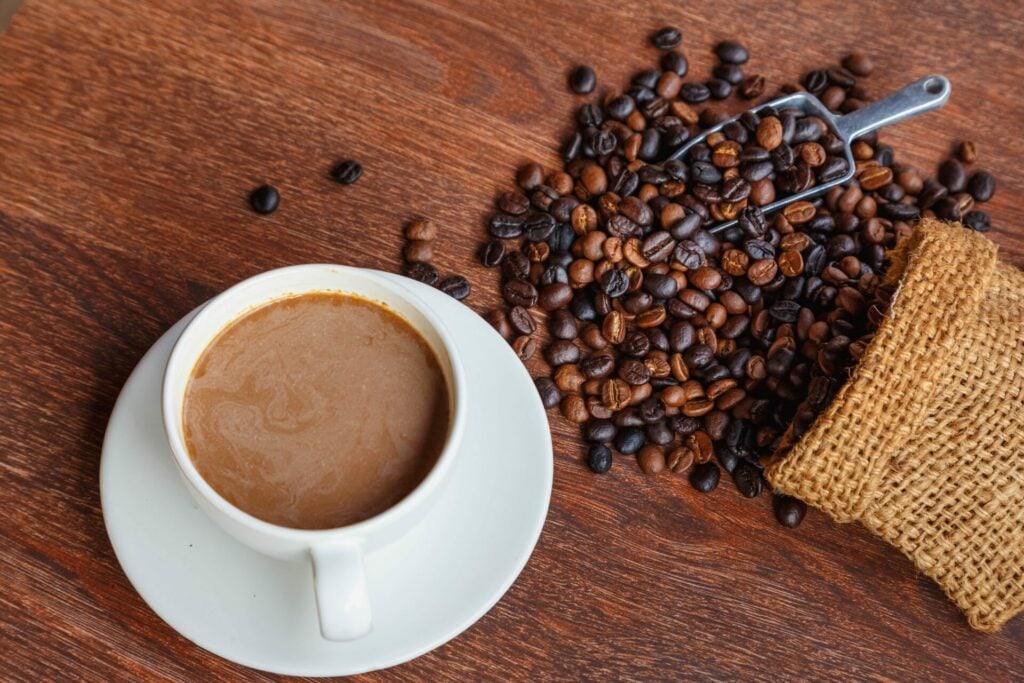
Did you really think we were going to forget it? How could we not mention coffee, the ultimate end-of-meal drink! Beyond the pleasure it brings, many people feel that a small espresso helps them digest. Here is what to keep in mind:
- Coffee is above all a ritual and a pleasure at the end of a meal.
- Coffee, and especially the caffeine it contains, is a stimulant, so it is best kept in moderation, especially in the evening.
- Reactions vary a great deal from one person to another. If you have digestive problems, ask your GP for advice.
If an after-dinner espresso is such an ingrained ritual, it is because many of us feel it rounds off a meal perfectly, even if that is mostly down to habit and enjoyment!
Frequently asked questions
What should I drink when I have a stomach ache?
No drink will treat a stomach ache. A warm, unsweetened drink sipped slowly is often more comfortable than an ice-cold or fizzy one. A stomach ache can have many causes: an overly large meal, stress, an infection or a food intolerance. If the pain is severe, lasts several days or comes with fever, vomiting or blood in your stools, see a doctor promptly.
What is the best water for digestion?
There is no ‘best’ water for digestion. What matters most is drinking regularly throughout the day, and tap water is fine in most cases. If you prefer mineral waters, see our section on sparkling water above.
Can you drink cola to help digestion?
Cola is a sugary, fizzy, acidic drink that contains caffeine. Its reputation as a remedy for an upset stomach comes from family tradition, and both the sugar and the bubbles can bother a sensitive stomach. For gastroenteritis, the recommended option is an oral rehydration solution from the pharmacy: ask your pharmacist for advice.
Related articles
- Top 10 homemade drinks: from Sassy Water to kombucha
- Drinks to try daily: from Sassy Water to green tea
- 8 foods that cause bloating
- Three easy tips for a lighter galette des rois!
Useful categories: Slimming Nutrition, Weight Management.