You hit the gym regularly but cannot decide which equipment to use. Rowing machine, treadmill, elliptical or spin bike — it is hard to choose. If you are prone to cellulite, the exercise bike is an activity worth considering. It can fit into a regular exercise routine when you want to take care of the appearance of your skin. Here is how it works, how to use it and which complementary options you might explore.
Why does the exercise bike have a place in an anti-cellulite routine?
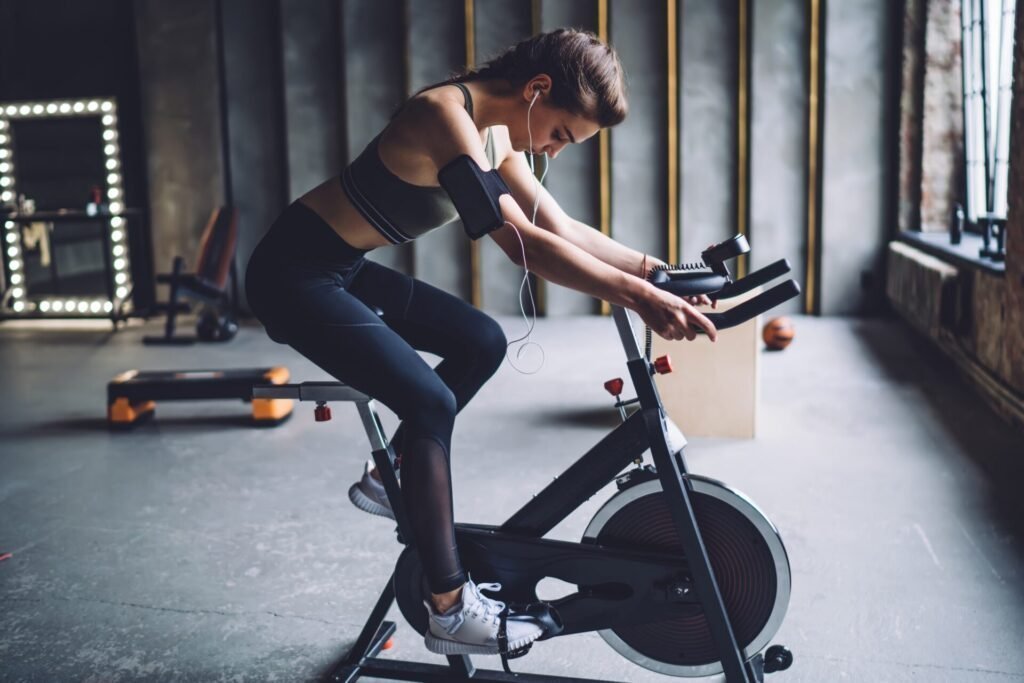
The exercise bike (along with its counterpart, the classic bicycle) is a versatile sport that has its place in an active lifestyle when you are concerned about the appearance of cellulite.
1- The exercise bike: an endurance sport
First things first: the exercise bike is an endurance sport that is practised in long, regular sessions. During prolonged effort, the body needs energy and draws on its reserves, first using the immediate resources provided by food, then its fat stores. Cellulite is partly linked to adipocytes, the fat cells which, when loaded with fat, can affect the dermis and give it the dimpled appearance known as orange peel skin. This is particularly associated with adipose cellulite. Regular endurance exercise can therefore form part of a lifestyle that takes this concern into account, without promising results in any particular area.
2- Repeated leg movement
Another point to consider: the exercise bike involves repeated leg movement. The pedalling motion stimulates the plantar arch and works the calves and quadriceps. Regular movement can also be part of a routine when you experience heavy legs or are bothered by water retention, often associated with water-based cellulite. To find out more, read: is cellulite linked to a circulation problem?
3- Gentle muscle engagement
And there’s more! The exercise bike (and exercise in general) gently engages the muscles and fits well into an overall body-care routine, alongside diet, hydration and skincare. For more tips, read our advice on how to tone your body and look after your skin quality.
What does this have to do with cellulite, you ask? Think of fibrous cellulite — firmer to the touch and sometimes tender, and linked to stiffening of the skin’s fibres. For this type of cellulite, the exercise bike can be combined with the skincare and massage techniques presented below.
How do you get started with the exercise bike?
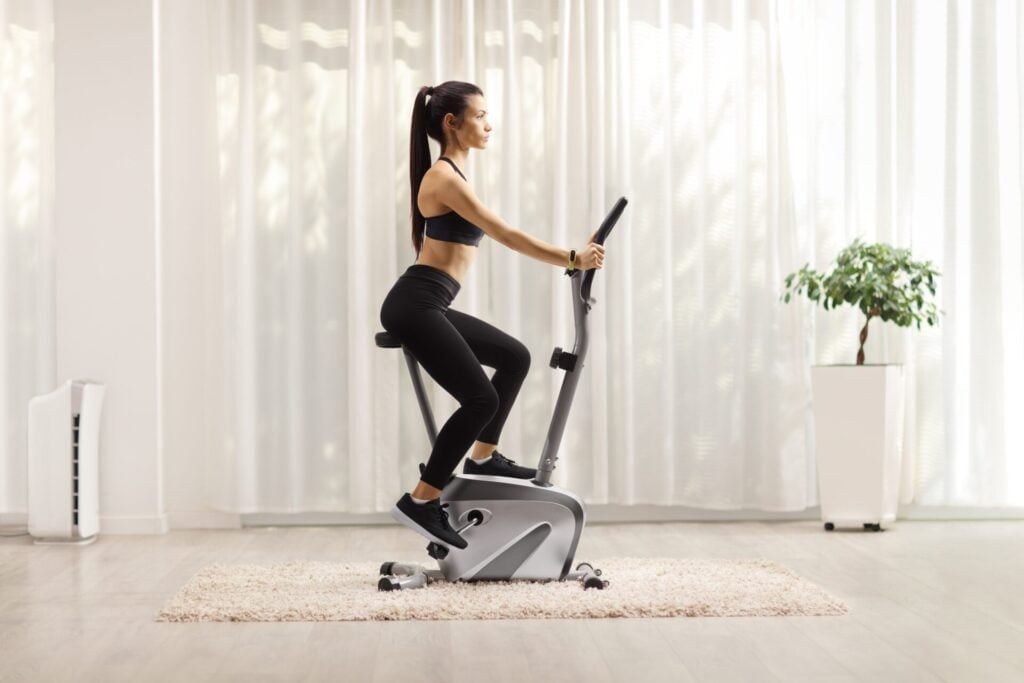
Ready to give it a go? To get started with the exercise bike, here are a few tips to follow:
- focus on long, regular sessions: to begin with, aim for at least 2 sessions per week of 45 minutes each, then gradually increase the frequency and duration of your sessions;
- unlike outdoor cycling, the exercise bike is a static activity. That is why it is important to gradually increase the pedal resistance to simulate inclines. No pain, no gain;
- to vary your training, you can alternate steady-state sessions with interval training (HIIT), which is more intense. Simply alternate one minute of intense pedalling with one minute of recovery, repeated 8 to 15 times in a row;
- it is important to stay well hydrated before, during and after exercise.
What else can you do alongside the exercise bike?
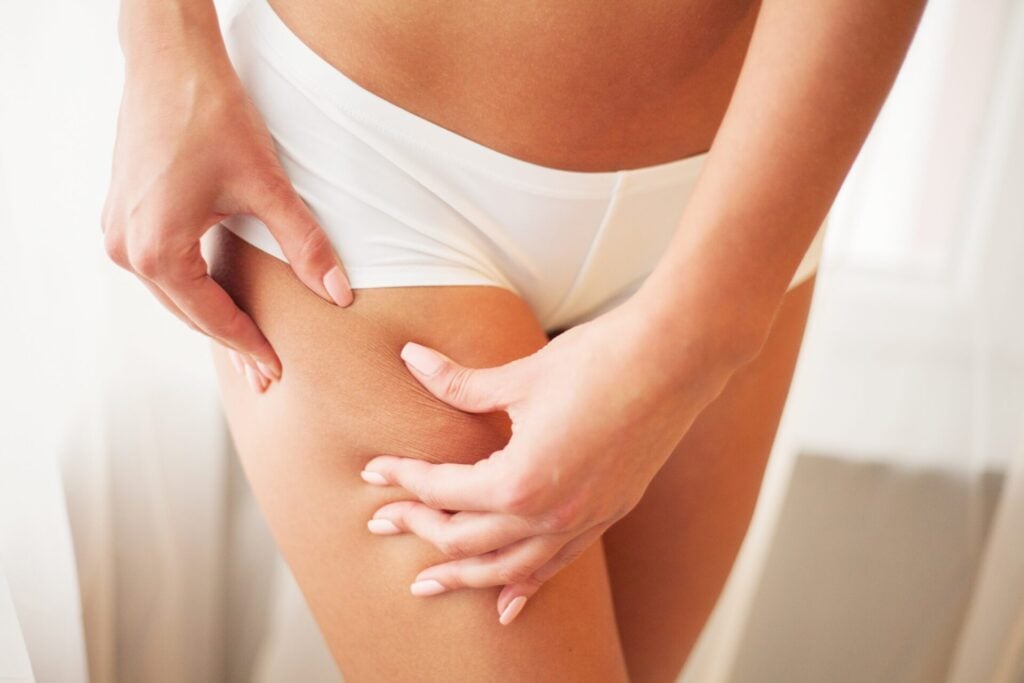
You now know almost everything about the exercise bike. But physical exercise is not the only way to take care of the appearance of your skin. To complement your exercise-bike routine, here are two more options to explore.
1- Revisit your diet
A diet that is too rich, unbalanced or lacking in variety does not help you take care of your body. It is better to limit sugar, snacking, saturated fats, salt, alcohol and processed foods, and to favour:
- complex carbohydrates, such as wholegrains and pseudo-cereals, which provide the body with energy;
- lean proteins (white meat, eggs and fish) and plant-based proteins (legumes and soya), which can be part of a balanced diet;
- fruit and vegetables, which are rich in fibre;
- quality fats (oils, oily fish, nuts and seeds, and avocado), which have their place in a balanced diet;
- low-fat dairy products, a source of protein and calcium;
- water-based hydration, around 1.5 to 2 litres per day, spread throughout the day.
2- Try anti-cellulite massage
Give your body a helping hand with a daily anti-cellulite massage as a simple self-care step to add to your routine. The pinch-and-roll technique is a massage method that fits well into this routine. And with our Cupping Cup and Massage Oil, it is simple to do. No need to visit a salon — everything can be done from your own bathroom: simply apply a little of our Anti-Cellulite Oil (enriched with grapefruit and ivy) to the area you want to massage, then use the Cupping Cup according to the instructions. Three minutes a day is all it takes to add this step to your routine.
Frequently asked questions
How long should you use an exercise bike for cellulite?
Start with at least 2 sessions per week of 45 minutes each, then gradually increase the frequency and duration.
Does an exercise bike work the thighs?
Pedalling engages the quadriceps and calves with every pedal stroke, in an endurance workout that involves the legs repeatedly and for a sustained period. It is an overall lower-body effort rather than an exercise targeting one specific area.
What are the benefits of using an exercise bike?
The exercise bike is an endurance sport that uses the body’s energy reserves during prolonged effort. It repeatedly engages the calves and quadriceps, while the pedalling movement involves the plantar arch.
Related articles
Useful categories: Anti-Cellulite Exercises, Anti-Cellulite Solutions.