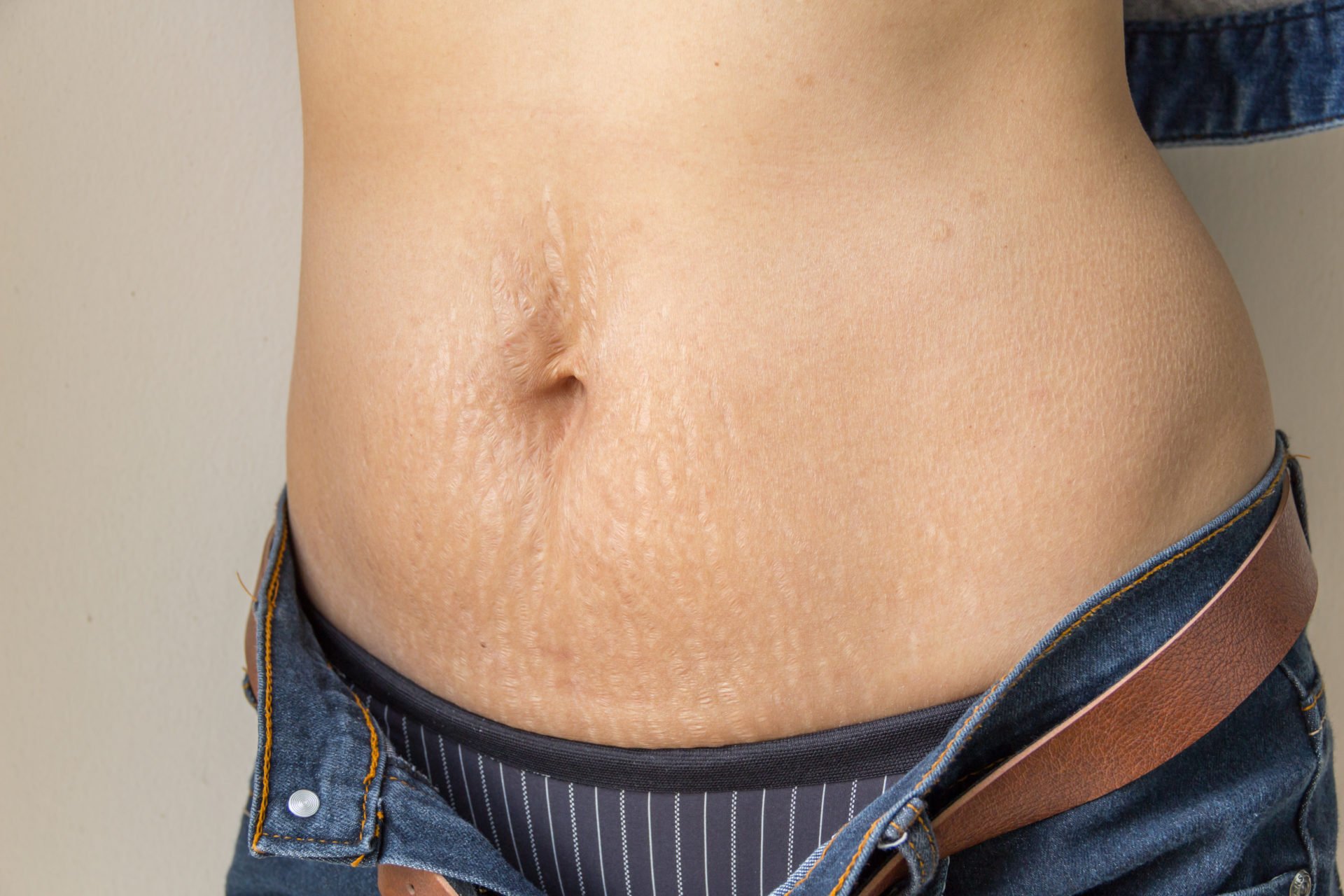
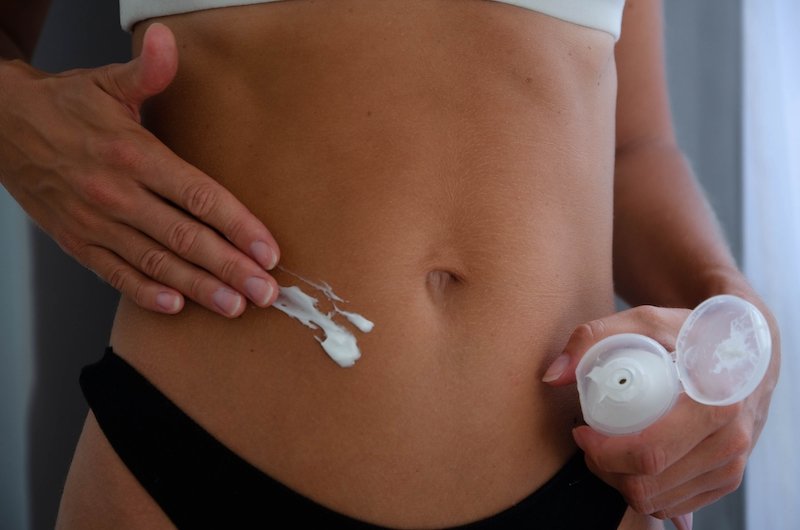
To prevent or minimise stretch marks on the stomach, it really comes down to taking care of your skin — from the inside out. It may sound simple, but a series of small, consistent habits can make all the difference…
1- Hydration
The human body is made up of 60–70% water. So there’s one golden rule: keep it hydrated. Hydration works on two levels:
- From within: drink 1.5 to 2 litres of water every day, as your skin — the last organ to receive nutrients — needs to stay well hydrated to maintain its suppleness. Fresh juices, broths and soups, tea and herbal infusions are also welcome. Be mindful of alcohol, which dehydrates the body and can worsen skin dryness, making stretch marks more visible.
- From the outside: build a skincare routine into your daily life. Use hydrating products (to prevent stretch marks) and nourishing ones (to help them heal). You have plenty of options to choose from! Creams, plant-based butters (such as shea), natural vegetable oils (olive, sesame, macadamia), hydrating gels (think Aloe Vera!) — the choice is yours!
2- Nutrition
Certain minerals & vitamins found in food are particularly beneficial for the skin, as they support the production of collagen and elastin. A deficiency in these two proteins can contribute to the development of stretch marks on the stomach. Take a closer look at what’s on your plate and make sure to include:
- Vitamin A: calf, poultry or cod liver, dairy products
- Vitamin B5: brewer’s yeast, wheat germ, cheese, offal
- Vitamin C: fresh fruits and vegetables such as kiwi, bell pepper, citrus fruits, fresh herbs
- Vitamin E: oils (olive, sunflower), avocado, shellfish and oily fish, nuts (almonds, hazelnuts, walnuts), dried fruits (prunes, apricots)
- Copper: cocoa, offal, seafood
- Silicon: whole grains, dehydrated soups, freeze-dried coffee
- Zinc: oysters, cocoa, rye bread, cheese
Add to this foods rich in beta-carotene (squash, spinach, sweet potato, carrot) and plenty of vegetables (for their high water content!). This will help keep your skin healthy and well-nourished, supporting your efforts to prevent or treat stretch marks on the stomach.
3- Physical activity
Exercise has proven benefits for the body — skin included! Beyond helping to maintain a healthy weight (and as we’ve seen, weight fluctuations can cause stretch marks on the stomach!), physical activity:
- promotes microcirculation, ensuring tissues are well oxygenated and nourished
- strengthens the production of elastic fibres in the dermis
- helps lower blood cortisol levels, a key factor in the development of stretch marks
Opt for low-impact activities rather than high-intensity sports, which can be hard on circulation. Swimming, walking, dancing, and yoga will tone your abdominal muscles, firm the skin on your stomach, and reduce your chances of developing stretch marks. Before each session, take time to stretch — it helps maintain the suppleness of both your skin and muscles.
Cellublue products to prevent or treat abdominal stretch marks
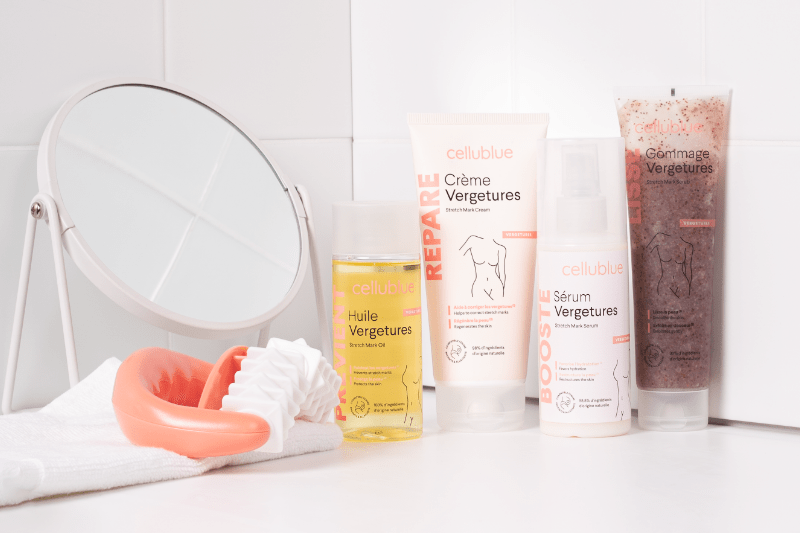
To complement these skin-loving habits, nothing beats a solid anti-stretch mark routine. That’s where the Cellublue Stretch Mark Pack comes in! It helps prevent stretch marks from forming on your stomach, or treat existing ones — whether they’re recent or long-standing. How does the routine work? It’s simple:
- Exfoliate your stomach in the shower, 2 to 3 times a week, with the Stretch Mark Scrub. Its fine exfoliating particles (apricot kernel and bamboo) and natural active ingredients (mango butter and wheat germ) refine skin texture while deeply nourishing the dermis. Your stomach skin, silky-smooth, is now perfectly primed to absorb the best treatments!
- Moisturise the skin on your stomach every day to maintain its elasticity. The Stretch Mark Cream repairs damaged skin and gently fades existing stretch marks, whether inflammatory or mature. Our customers speak for themselves: 98% of women who have tried our cream would highly recommend it!
- Nourish the skin on your stomach with the Stretch Mark Treatment Oil. This elixir, made up of 6 precious, skin-loving oils (including avocado and jojoba), does it all: nourishing, soothing, and repairing. Our oil effectively prevents stretch marks from forming on the stomach, while also treating existing ones. It supports healing and deep regeneration of the dermis.
A bonus feature of our routine: it is 100% compatible with pregnancy and breastfeeding. So if you’re expecting and worried about — or already dealing with — stretch marks on your stomach, there’s no need to worry! The product formulas are safe for both you and your baby.
