You probably know by now that natural plant oils are a staple of many stretch mark skincare routines. Emollient and nourishing, they help keep skin supple in the face of those little streaks that cause us so much bother. But does castor oil also deserve a place in your stretch mark routine? In this article, we look at what it contains, how it is used on the skin, the precautions to bear in mind (particularly during pregnancy) and how to work it into your routine.
What is castor oil?
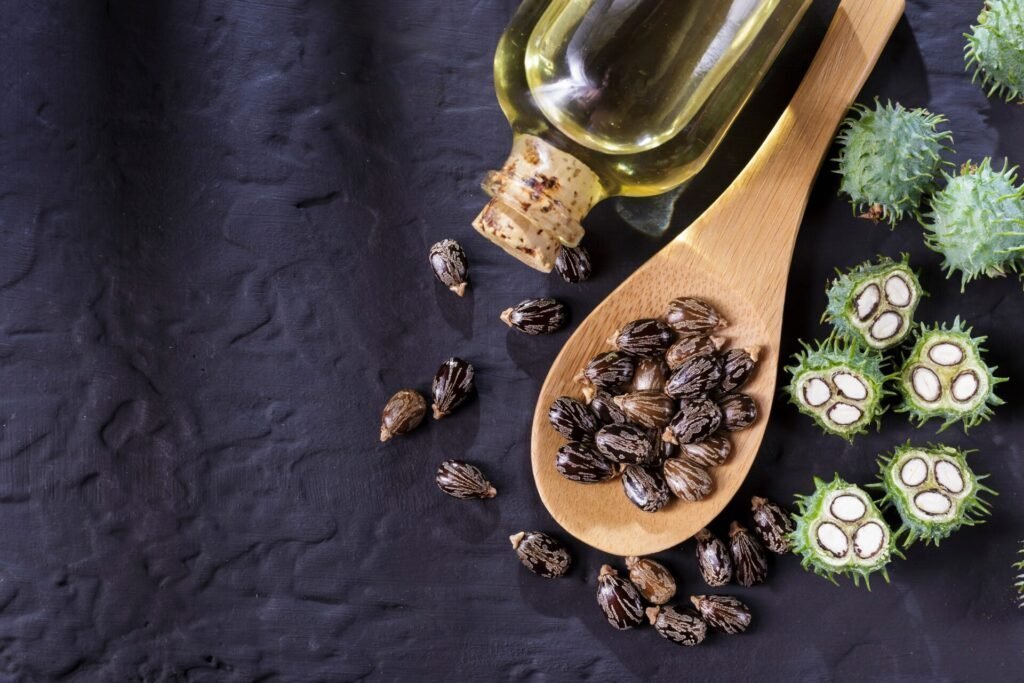
It is a plant oil made by cold-pressing the seeds of the castor plant, a shrub native to tropical regions. The main thing to know about castor oil is that it is not suitable for consumption. It contains ricin, a substance that is highly irritating, and even toxic if swallowed. When applied to the skin, however, it has earned its place in beauty routines.
What are the benefits of castor oil?
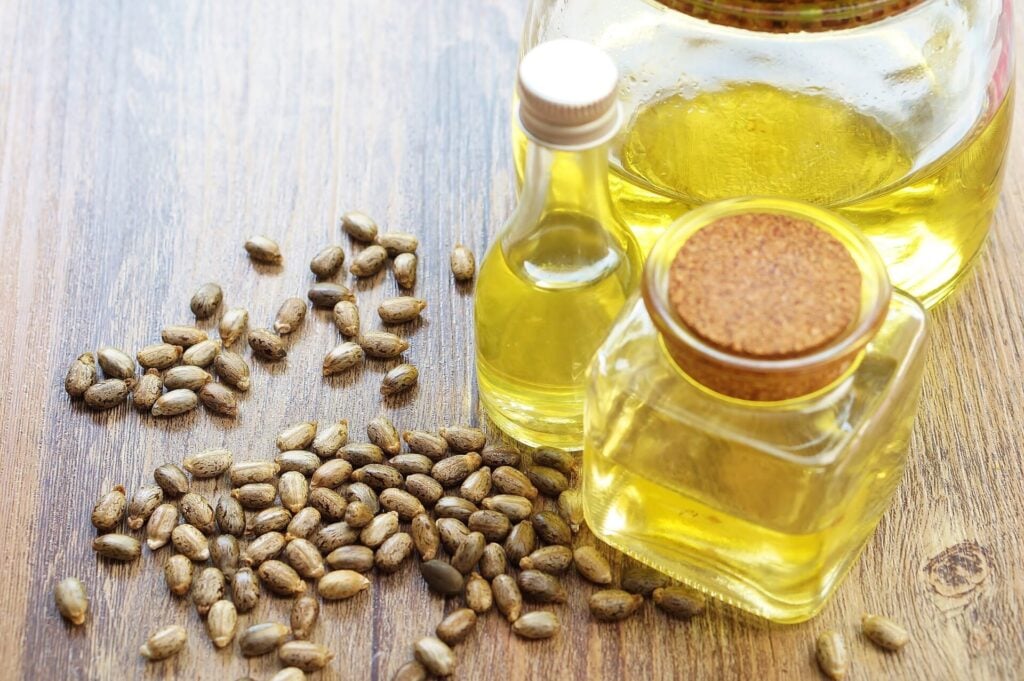
Castor oil can be used for many purposes, and its composition makes it a true beauty classic. It is traditionally used:
- to care for hair, lashes and nails, and to nourish hair fibres;
- as a massage oil, for all types of relaxing moments;
- to care for skin concerns (such as acne), with the approval of a dermatologist;
- to massage areas affected by water retention and, by extension, aqueous cellulite, alongside a balanced lifestyle.
But one of its most notable benefits is that it is well suited to caring for delicate skin. It works on several levels:
- rich in lipids, it helps limit moisture loss, keeping the skin well hydrated;
- soothing, it calms the skin following discomfort, whether from a sunburn, itching or a feeling of tightness;
- thanks to its high content of fatty acids (oleic, linoleic, palmitic, stearic, ricinoleic) and vitamin E, it deeply nourishes the skin and keeps it supple.
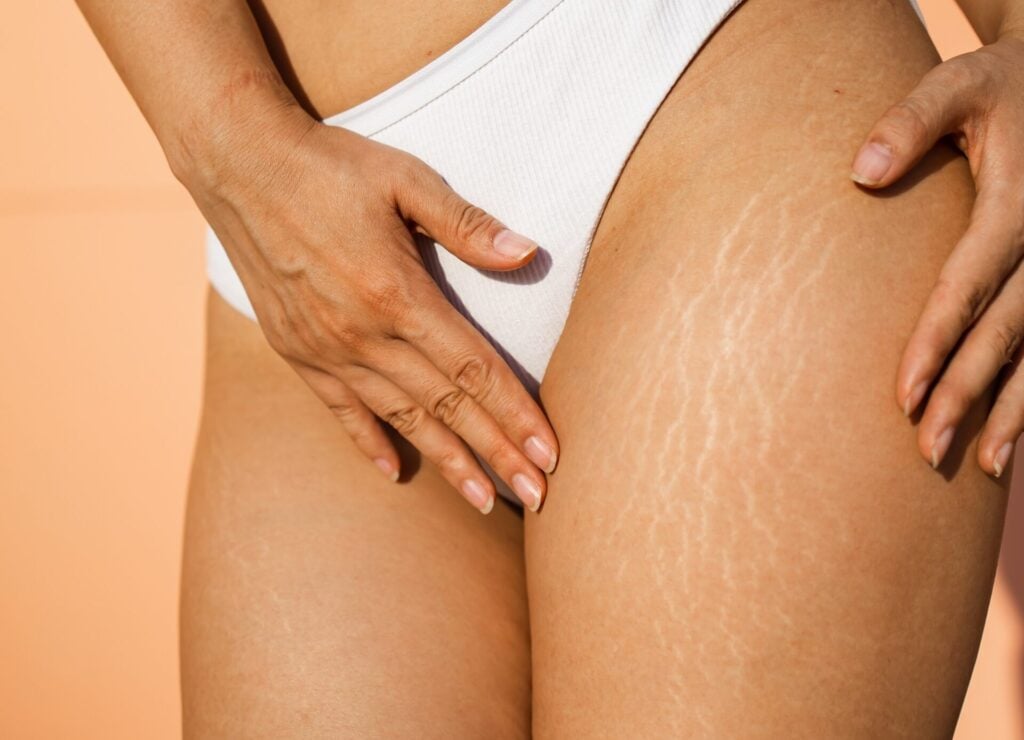
In light of these properties, it is fair to say that castor oil can have a place in a stretch mark skincare routine. Stretch marks are caused by micro-tears in the skin’s elastic fibres. Castor oil works in several ways to help care for the skin:
- it lends itself to massage, allowing you to give the skin the care it needs to stay supple; find out more in our tips on caring for your legs;
- it nourishes the skin with essential fatty acids;
- it supports the quality of the hydrolipidic film, preventing moisture loss and maintaining skin hydration.
Can you use castor oil during pregnancy?
Pregnancy is a time when stretch marks often appear, so the question of castor oil comes up a lot. If you have any questions about using it while pregnant or breastfeeding, ask your GP, midwife or another healthcare professional for advice.
If you are looking for an oil to use during this time, it is better to opt for plant oils known to be suitable during pregnancy, such as those found in our Stretch Mark Prevention Oil.
How to use castor oil on stretch marks?
There are several ways to use castor oil as part of your stretch mark skincare. However, it is worth knowing that it is very thick and viscous, which can make it tricky to work with.
If you wish to use it undiluted, it is best applied as a compress. Simply soak a piece of cotton or fabric in castor oil, apply it to the area of concern (thighs, buttocks, stomach, hips…) and leave it on overnight so the active ingredients can fully absorb.
If you plan to massage your stretch marks with castor oil, it is best to blend it with another plant oil with a lighter, dry and fast-absorbing texture. Good options include macadamia oil, sesame oil or perilla oil.
Finally, to complete your castor oil-based anti-stretch mark routine, you can also use our Stretch Mark Prevention Oil.
The massage oil that helps prevent stretch marks from appearing*, during pregnancy and beyond
*User test on 21 volunteers over 3 weeks, based on participants' feedback.
- Why does it work?
Several advantages:
- alternating natural plant oils allows you to benefit from their different compositions;
- our oil is in fact a blend of 5 different plant oils – sesame, avocado, sunflower, sweet almond and jojoba;
- it suits all skin types, can be used on all types of stretch marks (white, red, purple, growth-related or pregnancy-related) and absorbs very easily;
- it is formulated to be suitable during pregnancy and breastfeeding, which is not the case for castor oil (the ricin it contains means it is not recommended during pregnancy).
Frequently asked questions
Can castor oil be used on stretch marks?
Castor oil is a nourishing, emollient plant oil that supports the quality of the skin’s hydrolipidic film. It can be included in a stretch mark skincare routine, alongside other plant oils. If your stretch marks concern you, ask a healthcare professional for advice.
Can castor oil be used on the face or hair?
Castor oil is traditionally used to care for hair, lashes and nails. However, its very thick, sticky texture makes it harder to use on its own, so you can blend it with a lighter oil. If you have sensitive skin, ask a dermatologist for advice before using it on your face.
Can you use castor oil during pregnancy?
Castor oil contains ricin, a substance that is irritating and even toxic if swallowed. This is why it is not recommended during pregnancy, and why it is best to seek medical advice before using it while pregnant or breastfeeding.
Related articles
- Jojoba oil: a treasure against stretch marks
- Black seed oil and stretch marks: what you need to know
Useful categories: Stretch Mark Care, Stretch Mark Solutions.