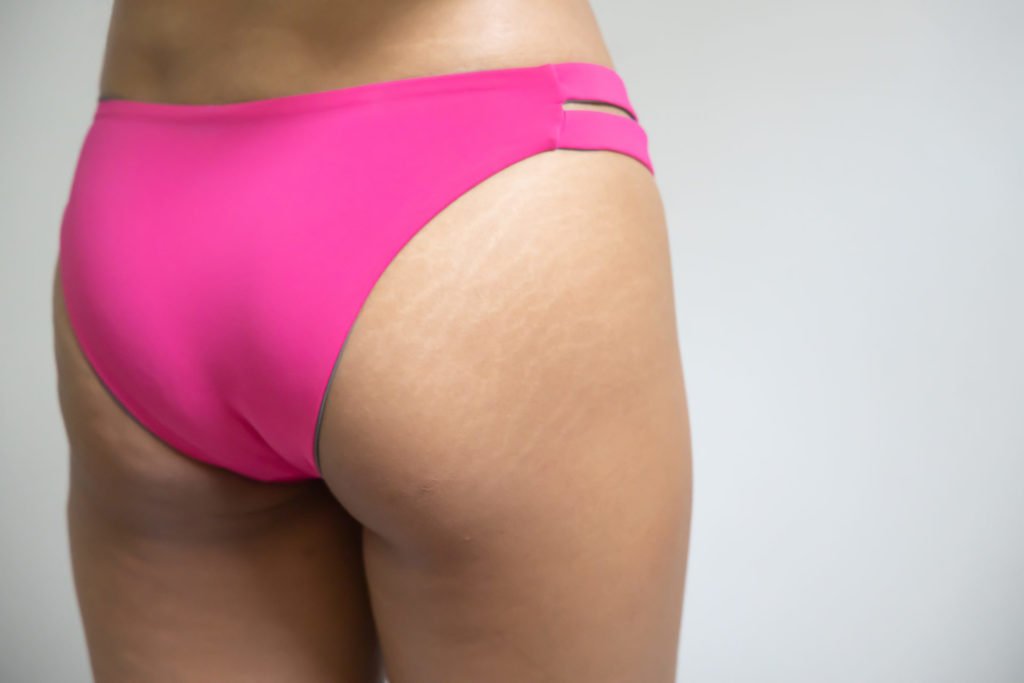
You hoped to avoid them, yet here they are: stretch marks. They now streak across your buttocks and weigh heavily on your confidence. A common concern for many women, stretch marks are an unsightly yet painless skin phenomenon. To learn everything about these little lines – their causes, how to prevent them, and how to reduce their appearance – read on…
What are stretch marks?
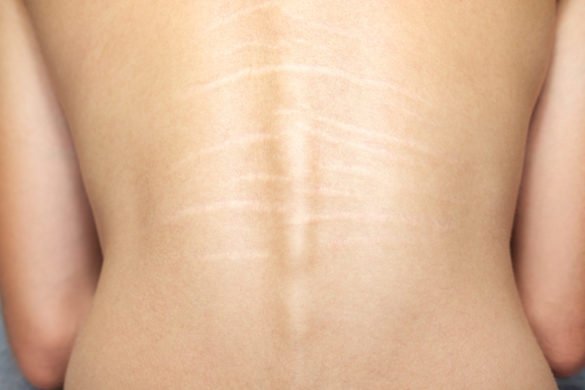
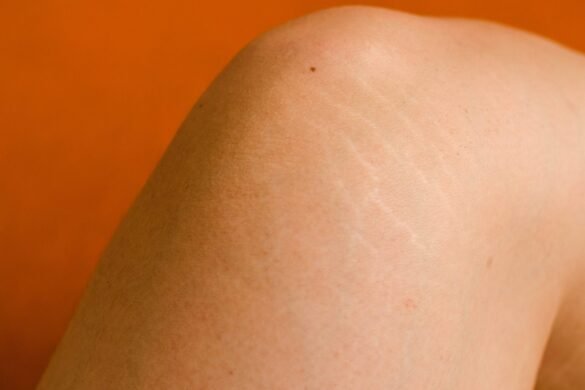
Stretch marks are skin lesions that appear as tiny coloured or white streaks. They result from micro-tears in the elastic fibres of the dermis. The skin, a resilient and supple organ, owes its properties to the fibres that make it up:
- Collagen fibres, responsible for its strength, as the skin is constantly exposed to external aggressors
- Elastin fibres, responsible for its suppleness and elasticity
Under certain circumstances, these fibres can tear. The culprit: an overly sudden and intense stretching of the dermis. Under pressure, the fibres give way. The result of this rupture shows on the skin’s surface: these are stretch marks. In their inflammatory stage, they take on shades of red, pink or purple. These are known as fresh stretch marks. In their scarring stage, they turn white and become more indented. These are mature (or old) stretch marks.
Why do I have stretch marks on my buttocks?
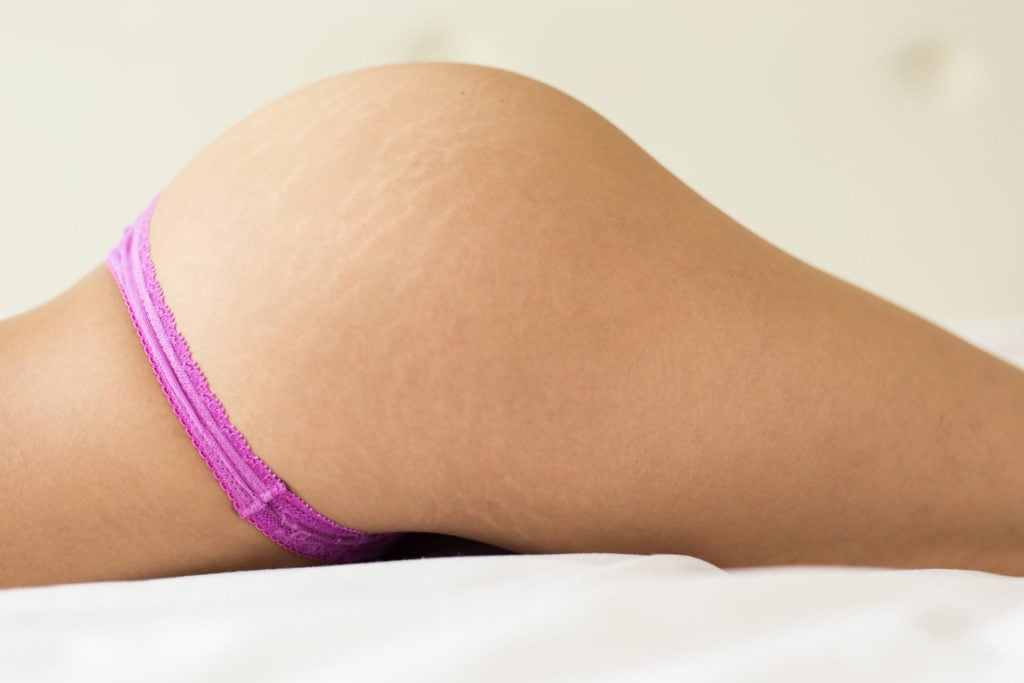
Several factors can trigger the appearance of stretch marks on the buttocks.
1- Puberty
Growth stretch marks are caused by the mismatch between a teenager’s bone growth (as they get taller) and the resulting stretching of the skin. Sometimes growth spurts are so rapid that the skin simply cannot “keep up”. Its elastic fibres break and stretch marks appear. Growth stretch marks affect both girls and boys and can appear on various parts of the body, including the buttocks. In girls, puberty and the onset of periods bring about changes in body shape that can lead to stretch marks on the chest, hips, buttocks and thighs.
2- Pregnancy
Pregnancy is often associated with the appearance of stretch marks. The female body undergoes significant transformation over a relatively short period of time, accompanied by a host of sudden changes: weight gain, hormonal shifts, alterations in skin quality, and a transformed body shape. Stretch marks can therefore appear on a pregnant woman’s body: on her stomach of course, but also on her chest (as the breasts increase in volume in preparation for breastfeeding), her hips and her buttocks.
3- Weight fluctuations
Weight gain and loss can have damaging effects on the dermis, especially when they occur rapidly. The repeated stretching and contracting of the skin gradually degrades it from within. The elastic fibres give way and stretch marks eventually appear where the weight changes have been most significant. In women, weight fluctuations tend to affect the chest, stomach, hips, thighs… and buttocks. That’s all it takes to end up with stretch marks in these specific areas.
4- Muscle hypertrophy
Muscle gain has the same impact on the skin as fat gain: an increase in volume raises the risk of stretch marks appearing. Rapid muscle hypertrophy caused by intense physical activity can therefore lead to stretch marks on the glutes. This is the case with certain sports, including weightlifting and bodybuilding.
5- Stress
Stress is sometimes mentioned among the situations associated with stretch marks. Prolonged periods of stress can affect your overall well-being, and your skin is no exception. If you are going through a particularly stressful time, don’t hesitate to talk to your doctor.
6- Cushing’s syndrome
Certain hormonal conditions, such as Cushing’s syndrome, can affect the skin and may be accompanied by stretch marks, including on the buttocks. Only a doctor can make a diagnosis: if you notice unusual stretch marks or any other changes, see a healthcare professional.
7- Medical treatments
Some long-term treatments may also be associated with changes in the skin, including stretch marks, which can appear on the buttocks (since we never get to choose where they show up!). Never stop or change a treatment without medical advice: if you have any questions, talk to your doctor.
How to prevent stretch marks on the buttocks?
Preventing stretch marks on the buttocks comes down to three key approaches:
1- Diet

Alongside your skincare routine, you can also pay attention to a varied, balanced diet. Try to include foods rich in:
- Vitamin C: citrus fruits, peppers, parsley, blackcurrants, kiwi
- Vitamin A: offal, dairy products
- Vitamin B5: wheat germ, brewer’s yeast, offal, cheese
- Vitamin E: avocado, nuts, shellfish, dried fruits
- Zinc: nuts, oysters, whole grains, meat
- Copper: cocoa, cooked shellfish, offal, dried fruits
- Silicon: dehydrated and freeze-dried foods
2- Exercise
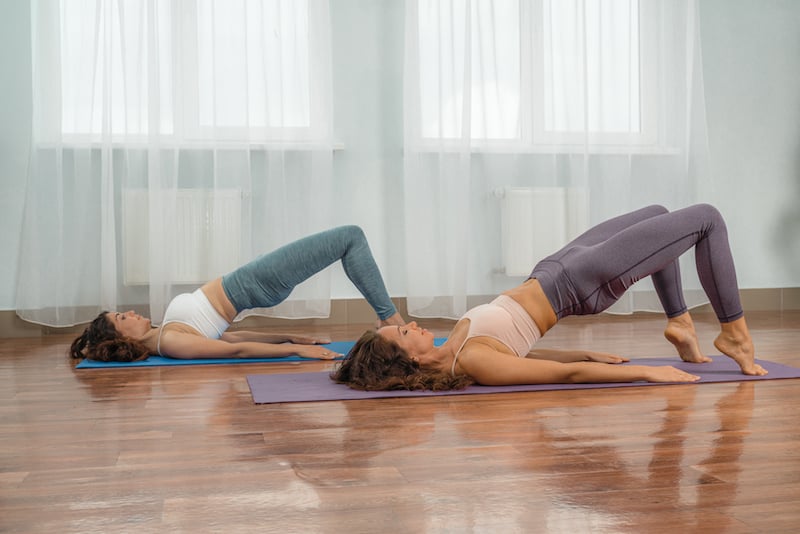
Excessive physical activity can be a cause of stretch marks on the buttocks, as mentioned above. However, when practised in moderation, exercise has its place in a wellness routine. Regular, moderate activity goes hand in hand with a balanced lifestyle: as we have seen, rapid weight changes and stress are among the situations associated with stretch marks. Opt for gentle activities. Swimming, aqua aerobics, dance or Pilates will work your glutes without putting them under strain. You’ll progress at your own pace, slowly but surely, and you’ll be taking gentle care of your glutes!
3- Hydration

Hydration matters a great deal for the comfort and suppleness of the skin. When dehydrated, the body functions less efficiently and the skin is the organ that is “served last” when it comes to water. To care for the skin on your buttocks, remember to:
- Drink: Hydration starts from within. Aim to drink 1.5 to 2 litres of water per day. If plain water is a challenge, herbal teas, regular tea, fruit and/or vegetable juices, and broths are all good alternatives. The key is not to deprive your body and skin, or you risk dehydrating and weakening them.
- Moisturise your skin: give your skin the moisture it needs to stay supple and comfortable, without dryness. Several options are available to you:
- Natural plant oils such as jojoba, olive, sweet almond or wheat germ are particularly nourishing.
- Plant butters, such as shea, kombo or cocoa, are also excellent balms for nourishing and protecting the skin.
- Certain essential oils are sometimes used in skincare. However, they must be used with great care, as essential oils are not without side effects. They are also not recommended for pregnant or breastfeeding women. If in doubt, ask a healthcare professional for advice.
- Nourishing creams, especially those formulated with natural active ingredients, can also have a place in your skincare routine. If they are enriched with vitamins A, C or E, even better!
- Our Stretch Mark Care Oil, a blend of 6 quality plant oils, nourishes the skin. It is applied as a daily massage as part of your buttock skincare routine.
Anti-stretch mark products to reduce stretch marks on the buttocks
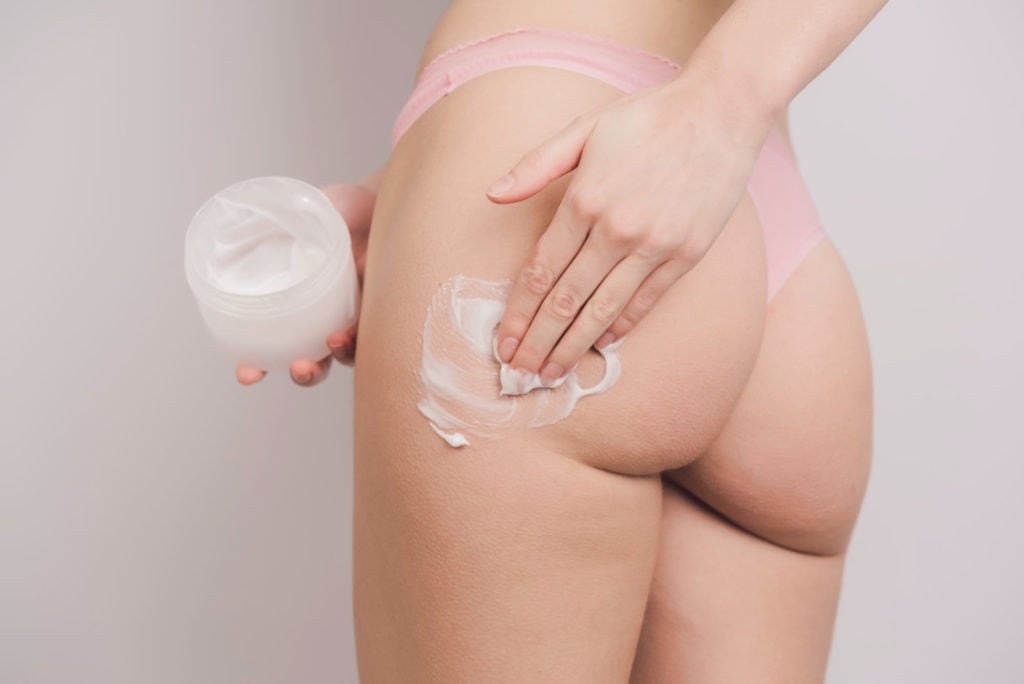
Despite your best efforts with nutrition, exercise and hydration, stretch marks have appeared on your buttocks. The sight of these streaks can feel disheartening. Don’t worry – we have solutions to care for your skin. If the stretch marks on your buttocks are still coloured, now is the time to give them the care they need. They are still in the inflammatory stage, which means they have not yet reached their scarring stage. If they have turned white, consistent care can help soften the indented appearance of these marks. Here are our solutions.
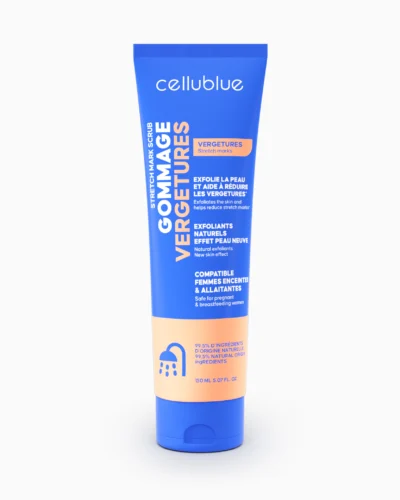
Anti-Stretch Mark Scrub
Exfoliating is a useful step in a stretch mark routine. It helps smooth the skin’s surface and soften the look of the marks. The natural exfoliating grains in our scrub gently smooth the skin and help diminish the appearance of stretch marks.
The gentle scrub that helps prevent the appearance of stretch marks* and preps your skin for care
*Usage test on 21 volunteers over 3 weeks, participants' opinions.
- Instructions for use
- Friendly advice
Anti-Stretch Mark Oil
Nourishing your skin with a suitable oil is a useful step when the skin is being stretched. The Cellublue Stretch Mark Oil is massaged into the buttocks daily for nourished skin that feels suppler, whether stretch marks are recent or old.

The massage oil that helps prevent stretch marks from appearing*, during pregnancy and beyond
*User test on 21 volunteers over 3 weeks, based on participants' feedback.
- Why does it work?
Anti-Stretch Mark Cream
Stretch mark streaks are linked to skin stretching – to soften their appearance, the skin needs to be made suppler and nourished. Using an anti-stretch mark cream with targeted actives can help make them less visible. That’s why at Cellublue, we developed an Anti-Stretch Mark Cream that cares for the skin both on the surface and in depth. Its rich formula nourishes the tissue with each use. Stretch marks on the buttocks may look less visible, suppler and less indented.
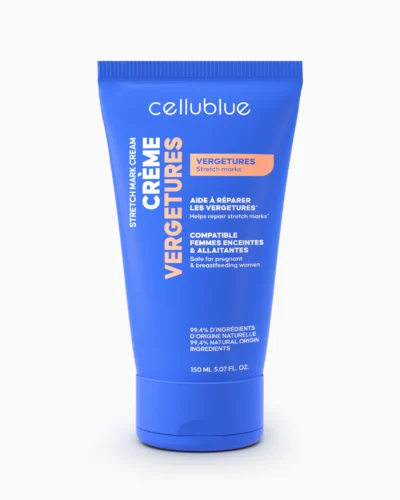
The cream that helps prevent the appearance of stretch marks* and improve how they look
*Consumer test on 22 volunteers over 3 weeks, based on participants' feedback.
- Helps prevent the appearance of stretch marks on the stomach, hips, thighs and bust. Apply morning and night
- Three plant oils: macadamia softens, sunflower soothes and coconut holds in hydration
- Velvety texture: it absorbs easily and calms feelings of tightness
Anti-Stretch Mark Serum
Applying a serum before a cream complements and enriches your routine. The Cellublue stretch mark serum has been carefully developed with a concentrated active formula that is quickly absorbed by the skin to penetrate the layers of the epidermis.
Related articles
- Purple stretch marks: causes and solutions
- Stretch marks in men: how to reduce their appearance?
- Stretch marks on shoulders: causes & solutions
- Grand Challenge 2015 – Day 24
Useful categories: Stretch Marks on Buttocks, Stretch Marks by Area.