Coconut oil: the new answer to stretch marks? Let’s find out! This delicately scented oil has become the star of both beauty and nutrition. It has found its way onto every kitchen table… and into every bathroom cabinet! But what can virgin coconut oil really do for your stretch marks? Here’s what you need to know: which coconut oil to choose, what it contains, how to use it neat or in a homemade scrub, oil or gel, and which products pair well with it.
What is coconut oil?
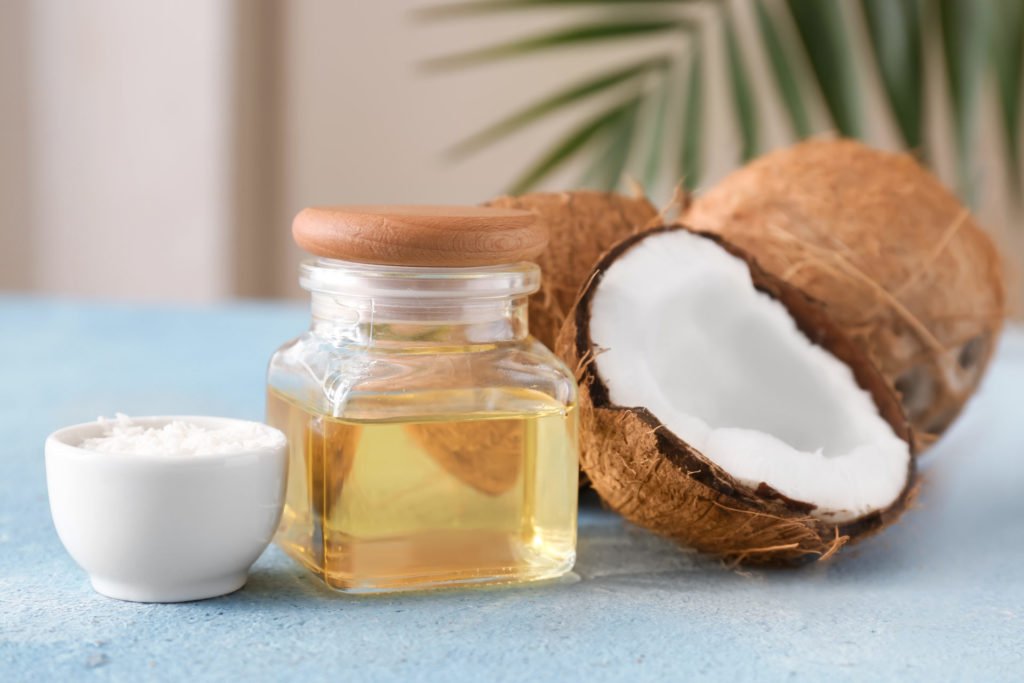
No need to introduce the coconut itself — that fruit whose flesh and water are beloved for their sweet flavour and exotic scent. However, it’s worth clarifying what coconut oil actually is, because there are two types:
- Virgin coconut oil, obtained by cold-pressing fresh coconut flesh.
- Copra oil, a refined oil produced by hot-pressing dried coconut flesh. It is therefore a treated, refined and deodorised oil. It is used in the production of monoï — a macerate of tiaré flowers in copra oil.
The first type is particularly interesting for skincare, thanks to its composition. However, this composition can vary depending on production conditions. So before using it, and to take the best possible care of your stretch marks, it’s best to choose an extra virgin oil, first cold-pressed, and ideally organic and eco-responsible.
Finally, one last thing to know: coconut oil can appear in two forms:
- When cold, it solidifies and takes on the consistency of a plant-based butter. If you prefer solid textures, you can store your coconut oil in the fridge.
- When kept at a temperature above 25°C, coconut oil is perfectly liquid.
Don’t worry if your coconut oil changes texture — it doesn’t mean it has gone off. You can use it on your stretch marks without any concern.
What can coconut oil do for stretch marks?

Virgin coconut oil is credited with many benefits, largely due to its richness in fatty acids:
Oleic acid
An omega-9 found in many nourishing skincare products, valued for keeping skin supple and comfortable. Coconut oil can also be used as part of a daily skincare routine. This acid is therefore often found in stretch mark care routines, whether they are red or purple.
Linoleic acid
An omega-6 that is essential to the human body, which cannot produce it on its own. Linoleic acid can support the care of many skin concerns, including stretch marks, particularly when skin is very dry or the complexion looks dull. It is also found in many products for dry skin.
Palmitic acid
A saturated fatty acid: not ideal when consumed (we all know the bad reputation of palm oil…), but of real interest for the skin. Palmitic acid is an important component of the skin’s acid mantle. It contributes to the skin barrier and has emollient properties (it softens the skin).
Lauric acid
This acid is responsible for the “hardening” of coconut oil. It is often used as an additive in cosmetics to give them a firmer consistency. Lauric acid is highly compatible with the skin, as human sebum naturally contains it. It helps maintain the skin’s natural hydrolipidic film and helps limit skin dryness, which can make stretch marks appear more visible.
Myristic acid
Another saturated fatty acid, which contributes to the skin’s protective function against external aggressors. The myristic acid found in coconut oil also makes it highly absorbable — improving penetration into the skin; ideal for daily application on stretch marks!
Coconut oil also contains vitamin E (an antioxidant) and provitamins A (beta-carotene), B3 and B5. Finally, virgin coconut oil contains phytosterols, highly valued ingredients found in many cosmetic formulations. Why? Because they nourish the skin and help it stay supple. You’ll find them in skincare designed for delicate skin (dryness, itching… and stretch marks).
As you can see, virgin coconut oil is a true beauty elixir for the skin, thanks to its rich and complex composition.
Can coconut oil get rid of stretch marks, even white ones?
Let’s be clear: no oil, not even coconut oil, makes a stretch mark disappear. Coconut oil is first and foremost a nourishing, pleasant-to-apply skincare product that brings softness and comfort to dry skin.
Whether your stretch marks are recent (red or purple) or older, like white stretch marks, coconut oil can find its place in your skincare routine, as long as your expectations stay realistic. You can use it neat, or combine it with gentle exfoliation, such as the homemade scrub or the brush described below.
How to use virgin coconut oil?
1- Pure application
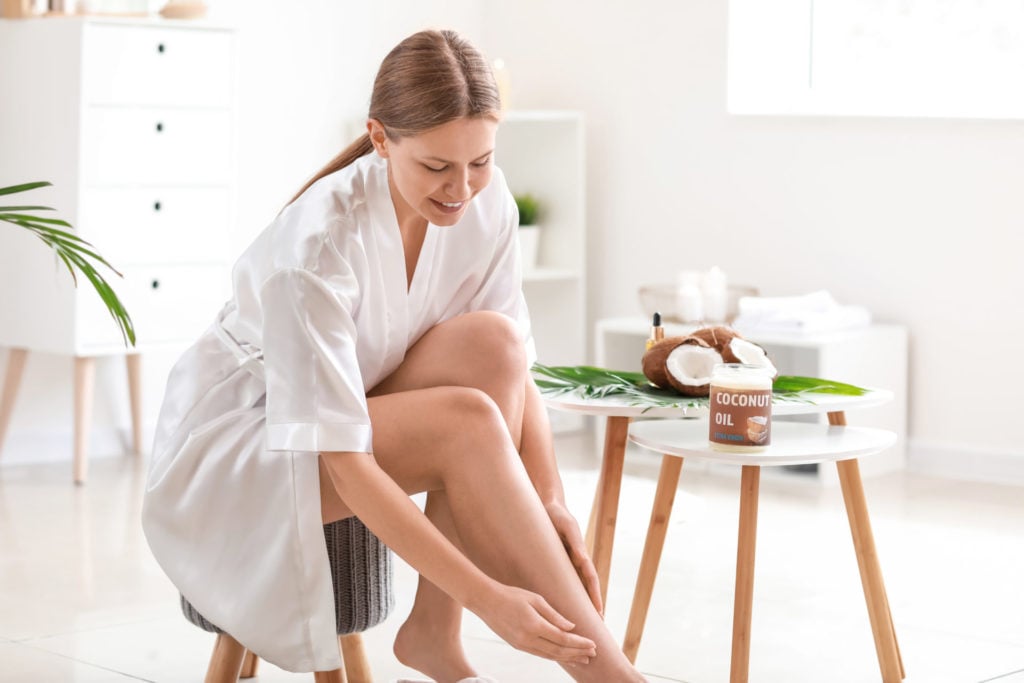
You can use coconut oil pure: simply take a small amount in your hand, warm it in your palm, then apply it directly to your stretch marks. It will melt quickly with the warmth of your skin and be absorbed rapidly.
2- Anti-stretch mark scrub
You can also make a stretch mark scrub using coconut oil. You will need:
- ½ cup of coconut oil
- ¼ cup of fine salt
- 6 drops of lemon essential oil (preferably furocoumarin-free, to avoid the photosensitising effect of this EO)
Mix these three ingredients together: your scrub is ready! Massage it directly onto your stretch marks using your homemade exfoliant, on dry or slightly damp skin.
3- Anti-stretch mark oil
It is also possible to prepare a treatment oil for stretch marks using natural ingredients. You will need:
- 1 teaspoon of coconut oil
- 1 teaspoon of shea butter
- 15ml of wheat germ oil
- 15ml of macadamia oil
- A natural fragrance of your choice: tiaré, vanilla, frangipani (optional)
The recipe is very simple to make:
- Melt your coconut oil and shea butter together in a bain-marie.
- Once melted, remove from the heat and add the remaining ingredients one by one.
- Mix everything together and transfer into a clean container of approximately 30ml.
- Remember to patch test your blend on a small area of skin before applying it more generously to your stretch marks. Allow 48 hours to assess skin tolerance.
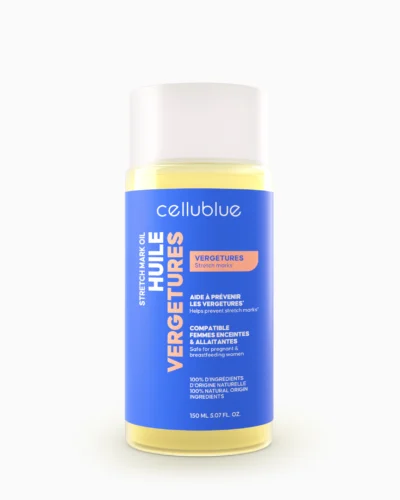
If you’d rather skip the DIY, at Cellublue we have developed a natural oil containing a blend of plant oils, each with different and complementary properties, designed to care for skin marked by stretch marks.
The massage oil that helps prevent stretch marks from appearing*, during pregnancy and beyond
*User test on 21 volunteers over 3 weeks, based on participants' feedback.
- Why does it work?
4- Anti-stretch mark gel
Finally, coconut oil can be used to make an anti-stretch mark gel. Nothing could be simpler: just mix 100g of solidified virgin coconut oil with 100g of pure Aloe Vera gel. Stir for 5 minutes until you get a smooth, creamy blend. If you’d like to add fragrance to your gel, add 10 drops of spike lavender or rosemary verbenone essential oil. If you are pregnant or breastfeeding, ask a healthcare professional for advice before using essential oils. Transfer your blend into a container and store in a cool, dry place.
What are the complementary solutions to coconut oil for treating stretch marks?
Looking to pair coconut oil with other products for your stretch marks, whether old or recent? Or to give yourself every chance of caring for areas affected by stretch marks? Our Stretch Mark Pack is the perfect complement to your coconut routine! These three products will help you build a complete, gentle and skin-friendly routine.
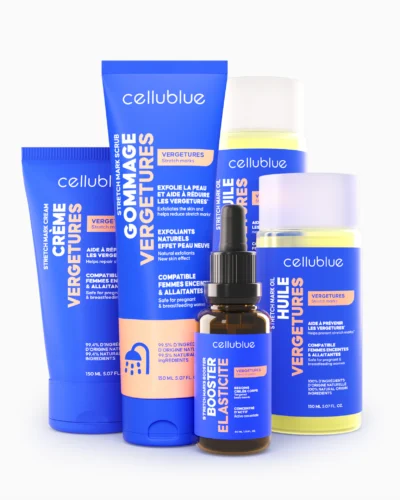
The complete stretch marks routine, from shower to massage, during and after pregnancy
- Instructions for use
- Friendly advice
- The New Skin Brush exfoliates the skin without being harsh. It removes dead skin cells and leaves the skin feeling smoother to the touch, whether your stretch marks are caused by adolescence, pregnancy or weight fluctuations.
- The Stretch Mark Prevention Oil, a natural elixir of plant oils (including jojoba and avocado), is applied daily to areas affected by stretch marks.
- The Stretch Mark Cream complements coconut oil in your routine. Its velvety texture, quickly absorbed, leaves skin feeling soft and delicately scented.
Related articles
- Cocoa Butter for Stretch Marks: Does It Work?
- Plant oils and stretch marks: 10 oils to know
- Microdermabrasion for Stretch Marks: Does It Work?
Useful categories: Stretch Mark Care, Stretch Mark Solutions.