If you feel self-conscious about your stretch marks and hesitate to wear a swimsuit or a skirt, it may help to know that dermatology offers a way to make them less noticeable: laser treatment. Here’s how it works on the skin, which types of laser are used depending on what your stretch marks look like, what the sessions involve and how much you should budget.
Laser treatment for stretch marks: how does it work?
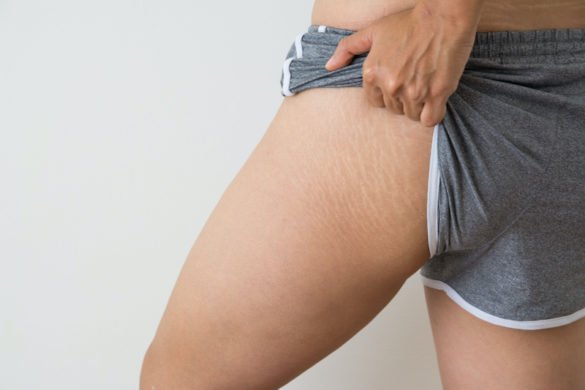
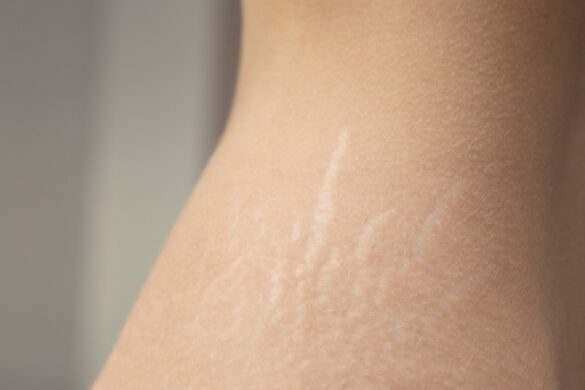
Stretch marks appear as streaks that affect certain areas of the body. The hips, buttocks and breasts are particularly prone to these dermal lines.
Stretch marks result from the tearing of the dermis, the skin layer located between the epidermis and the hypodermis. The dermis contains collagen, a molecule that gives skin its elasticity and resistance to tearing. The changes a woman’s body can go through over the course of her life make her vulnerable to these cosmetic concerns in two ways:
- Pregnancy or weight gain cause the skin to stretch. Despite the resistance provided by collagen, the dermis can tear, and as the skin relaxes, these scars — initially purplish — gradually fade to a whitish tone.
- A hormonal imbalance can lead to increased cortisol levels. Excess cortisol reduces collagen production, making the skin particularly vulnerable to tearing. Stress, for example, is a known trigger for cortisol production.
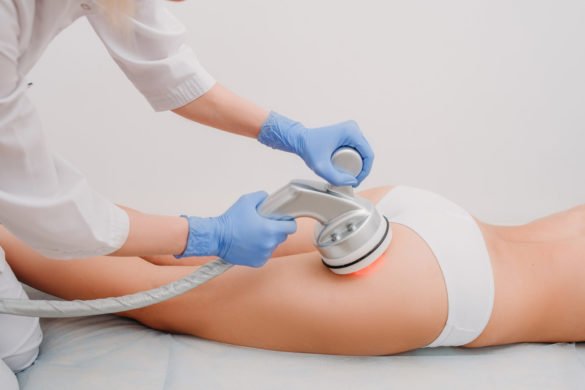
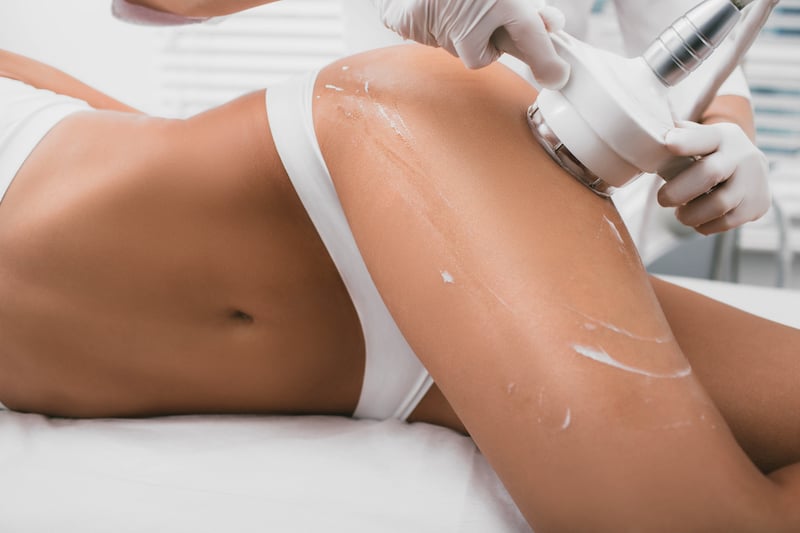
Laser therapy is one of the options available for fading these marks. Studies (1) have looked into this type of method, which involves heating the skin with a beam of light to stimulate collagen production. By targeting the affected area, the dermatologist can reach the dermis and act on cellular activity.
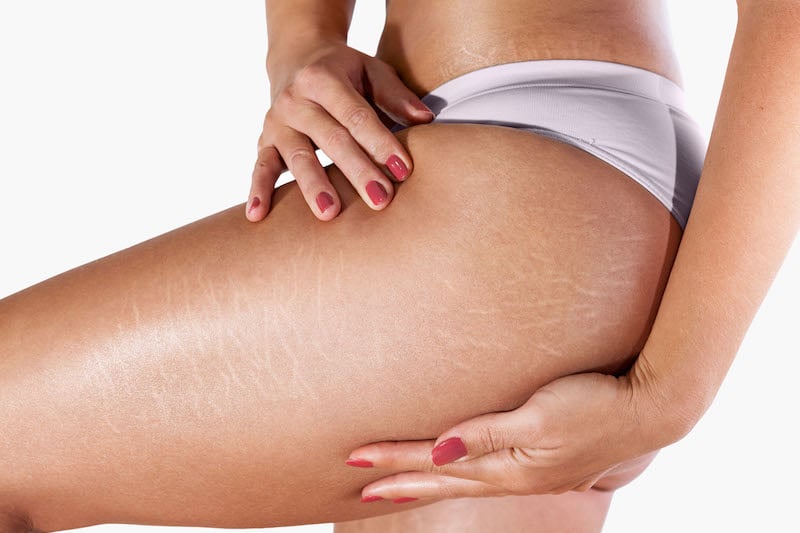
Depending on the nature, shape and extent of the skin condition, various approaches may be recommended. This decision rests with the healthcare professional, who will determine the most appropriate method — whether to break down tissue, restore pigmentation to the affected area, or firm the skin. The wavelength of the beam determines its effects.
The different types of lasers for stretch marks
Non-ablative fractional lasers
The Icon laser is a widely used option. It is a gentle method that does not cause lesions on the skin — meaning the light beam does not create holes or scabs within the skin tissue.
It triggers an inflammatory response in the dermis, which boosts collagen production. This helps firm the skin and improve pigmentation in the affected area. This technique is well suited to minor white-toned lesions, as it does not deeply alter the dermis.
Ablative fractional lasers
This method is more intensive than the previous one, as it involves destroying microscopic areas within the dermis while leaving healthy cells nearby intact. The cellular regeneration of these healthy zones fills in the dermal damage caused by the treatment, progressively reducing the appearance of stretch marks.
However, side effects are more noticeable than with a non-ablative beam: redness, swelling or even scabbing may occur. This method is generally better suited to older, whitish marks.
Vascular lasers
These are used on recent lesions that still have a purplish hue. The light beam heats the areas where the blood vessels are discoloured. These vessels coagulate, which may gradually soften the colour of the stretch marks over successive sessions.
Can laser treatment completely remove stretch marks?
The aim of laser treatment is to fade stretch marks rather than erase them entirely, and what you can expect depends on what your marks look like. Your dermatologist will choose the type of laser according to the nature, shape and extent of your stretch marks, so don’t hesitate to ask them what you can realistically expect in your situation.
How long does laser treatment take — and what does it cost?
Fading stretch marks with laser treatment takes time and comes at a cost. Treatment involves several sessions, spaced several weeks apart to give the skin time to rest after each exposure to the light beam.
Note that the cost of these stretch mark solutions depends on the nature and size of the area to be treated. For recent, small lesions, a session may cost less than €100, with a total investment of a few hundred euros. For extensive or long-standing stretch marks, however, the total cost can reach several thousand euros.
To care for skin with stretch marks, there are fortunately many other solutions available. One option is simply wearing a garment designed for this purpose: the Cellublue Shorty Expert Vergeture.
Designed for the inner thighs, sides and buttocks, the Shorty contains natural active ingredients and is worn without squeezing or compressing these areas.
Sources and references
(1) Yona Harmelin. Evaluation of fractional bipolar radiofrequency and infrared-potentiated bipolar radiofrequency, as monotherapy or in combination, in the treatment of stretch marks: a controlled, randomised, comparative, bicentric study with assessment using 3D photography. Human medicine and pathology. 2014. ffdumas-01213430f https://dumas.ccsd.cnrs.fr/dumas-01213430/document
Related articles
- Snail slime: a natural treatment for stretch marks
- Cocoa Butter for Stretch Marks: Does It Work?
- Coconut oil and stretch marks: composition and use
Useful categories: Stretch Mark Solutions, Stretch Marks.