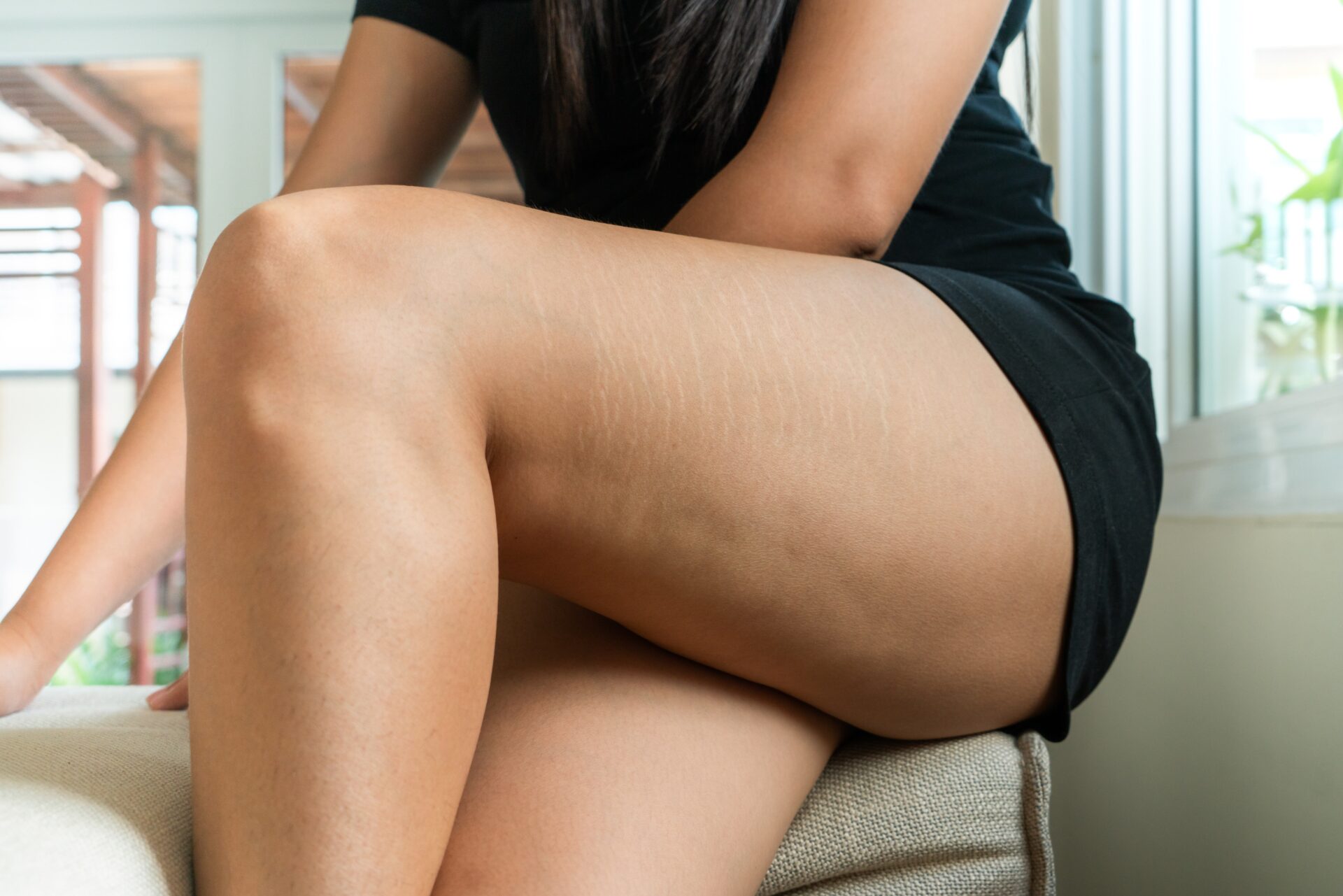
Two concerns that weigh on many women’s minds: stretch marks and cellulite. Most of us will experience one or the other at some point. But what exactly is the difference between the two?
Sommaire
What stretch marks and cellulite have in common
1- A source of self-consciousness
Stretch marks and cellulite are both benign conditions, yet they can cause real insecurities that get in the way of everyday life. Many women stop wearing certain outfits for fear of revealing bumpy skin (the classic orange-peel texture of cellulite) or skin marked with white, red or purple stretch marks. Worse still, some women avoid activities altogether — the beach, the gym — out of fear of being judged for a few stripes or dimples. Feeling uncomfortable in your own skin: the phrase has never felt more literal…
2- Conditions that affect women more than men
Men are not immune to cellulite or stretch marks. That said, they are far less prone to them than women. But why such an imbalance?
- When it comes to cellulite: male and female physiology simply differ. Women’s body fat accounts for around 25% of total body mass, compared to just 15% in men. Men are naturally more muscular and less prone to fat storage — for a very straightforward reason: their bodies are not designed to support pregnancy or breastfeeding.
- When it comes to stretch marks: the gap is less stark. Around 40% of men are affected, compared to as many as 80% of women. Yet here again, some of the key triggers are distinctly female: pregnancy being the most obvious, along with the body changes brought on by hormonal fluctuations — which are far less pronounced in men.
3- A visible impact on the skin’s appearance
Both stretch marks and cellulite leave a visible mark on the skin. Both stem from a disruption within the dermis — with one key distinction: stretch marks result from a breakdown of the skin’s elastic fibres, while the orange-peel texture of cellulite is caused by changes in connective tissue due to enlarged fat cells. The visual result differs, but the outcome is the same: the skin’s surface is no longer smooth.
The differences between stretch marks and cellulite
As similar as they may seem, stretch marks and cellulite are two very distinct conditions.
1- Stretch marks
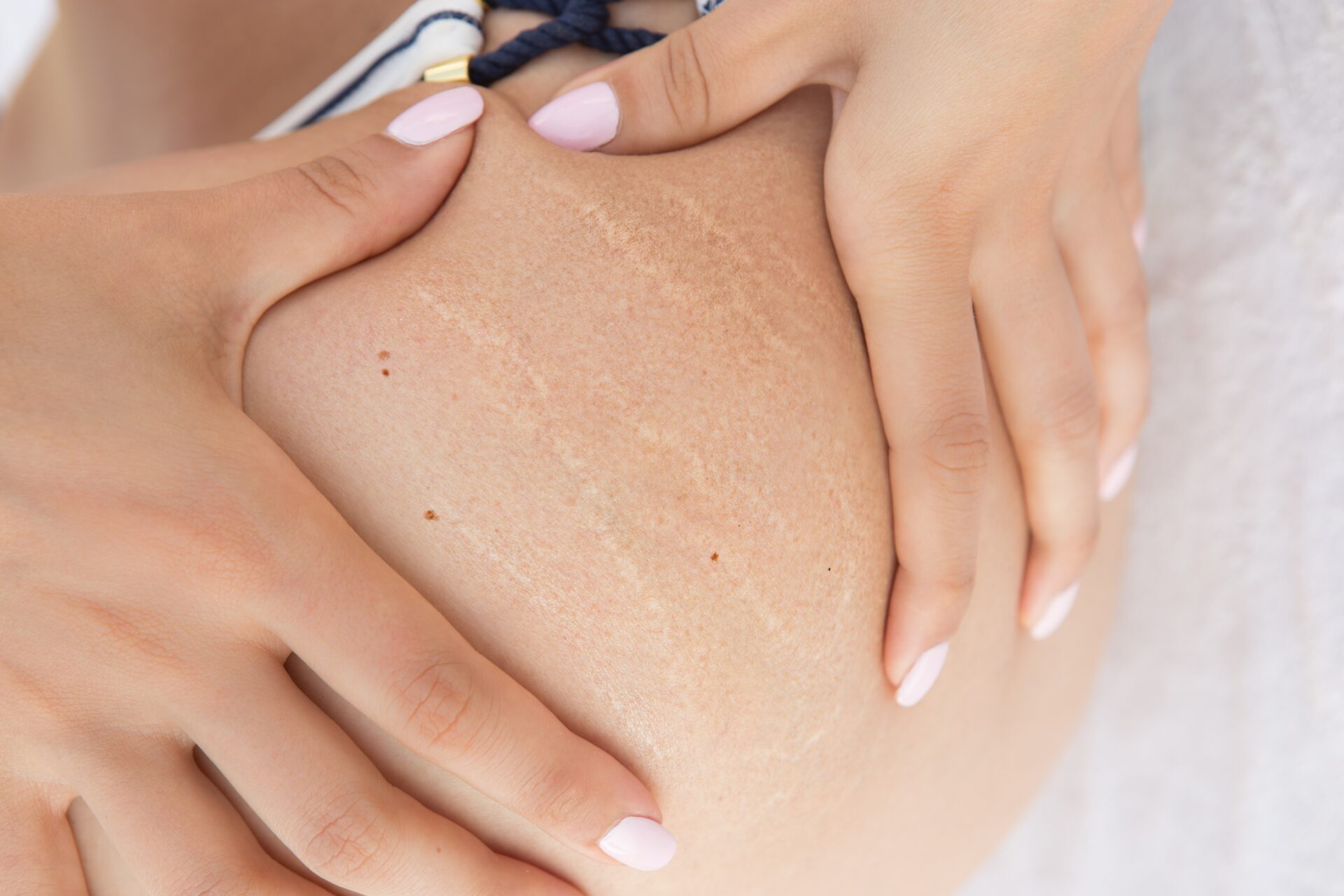
Stretch marks are skin lesions caused by the rupture of the dermis’s elastic network (collagen and elastin fibres), following excessive and sudden stretching of the skin. They appear as fine streaks on the skin’s surface. They can be white or coloured (red, pink or purple) and slightly indented. Common causes include growth spurts during adolescence, weight fluctuations, pregnancy, muscle hypertrophy, or elevated blood cortisol levels. Stretch marks are hard to predict, and very few women manage to avoid them entirely. The body changes so dramatically and so frequently throughout a woman’s life that escaping these marks is, frankly, the exception rather than the rule.
2- Cellulite
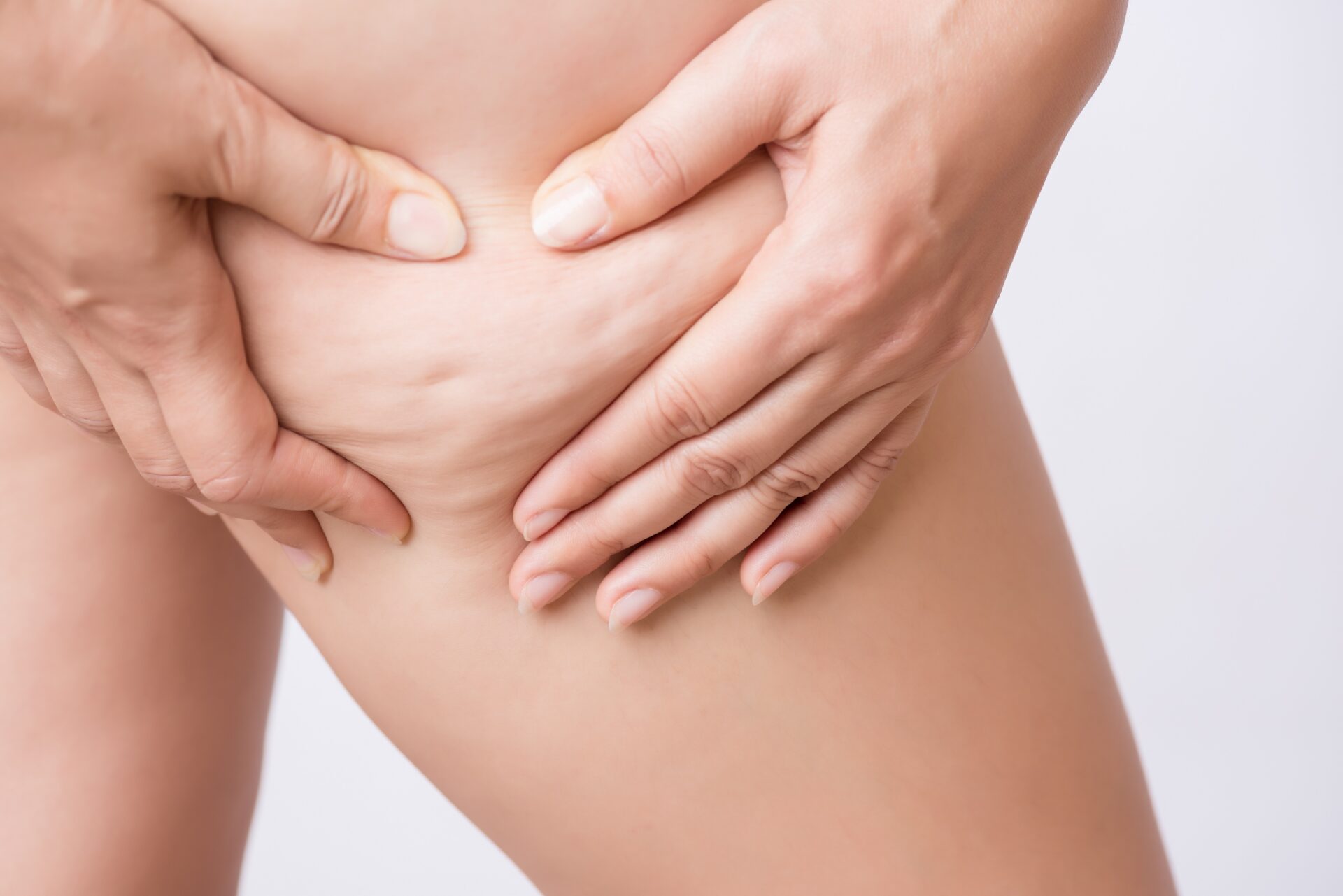
Cellulite is not a skin lesion in itself — it’s the visible consequence of what’s happening beneath the surface. It manifests as a bumpy, uneven skin texture, with more or less pronounced dimples, much like the skin of a citrus fruit. Cellulite results from:
- An enlargement of fat cells (adipocytes), the subcutaneous fat cells beneath the skin. The female body naturally tends to store fat reserves in anticipation of a possible pregnancy. As these fat cells expand, they disrupt the structure of the dermis — giving rise to that uneven, dimpled texture (particularly with adipose cellulite).
- Water retention (the primary driver of aqueous cellulite), where water naturally present in the body becomes trapped in the tissues, taking waste and toxins along with it. This can sometimes lead to oedema — swelling in the lower body: thighs, knees, legs, ankles.
- In the case of fibrous cellulite, a third factor comes into play: fibrosis, a breakdown of connective tissue or localised inflammation that prevents tissue regeneration. This type of cellulite is deeply embedded, often tender to the touch, and particularly stubborn to address.
Cellulite is therefore multifactorial and can be worsened by an unhealthy lifestyle, lack of exercise, a poor diet (too much salt and/or fat, overeating), genetics, and hormonal fluctuations.
3- Different solutions for different concerns
The approaches to tackling stretch marks and cellulite differ considerably, since the underlying causes of each are not always the same.
Our solutions for stretch marks
To prevent or reduce stretch marks, the key is to nourish the skin as deeply as possible, to minimise the risk of subcutaneous tearing. This means a diet rich in skin-protective vitamins and minerals, gentle exercise to maintain the dermis’s elasticity, and above all, maximum hydration. If you’re looking for an effective stretch mark routine, take a look at our Stretch Mark Pack — a trio of products that work wonders on all types of stretch marks.

Our solutions for cellulite
To tackle cellulite, it’s important to put in place a set of healthy lifestyle habits. This means endurance-based physical activity (to encourage fat burning) and a balanced, varied diet (goodbye saturated fats, processed foods, sugary treats and excess salt). It’s also worth speaking with your doctor to find out whether your cellulite may be linked to an unsuitable hormonal treatment or hormonal fluctuations that could be addressed medically. And don’t overlook massage — a powerful ally for stimulating the elimination of excess fat and fluid responsible for that unwanted orange-peel texture. Our Express Anti-Cellulite Pack is the perfect place to start.
