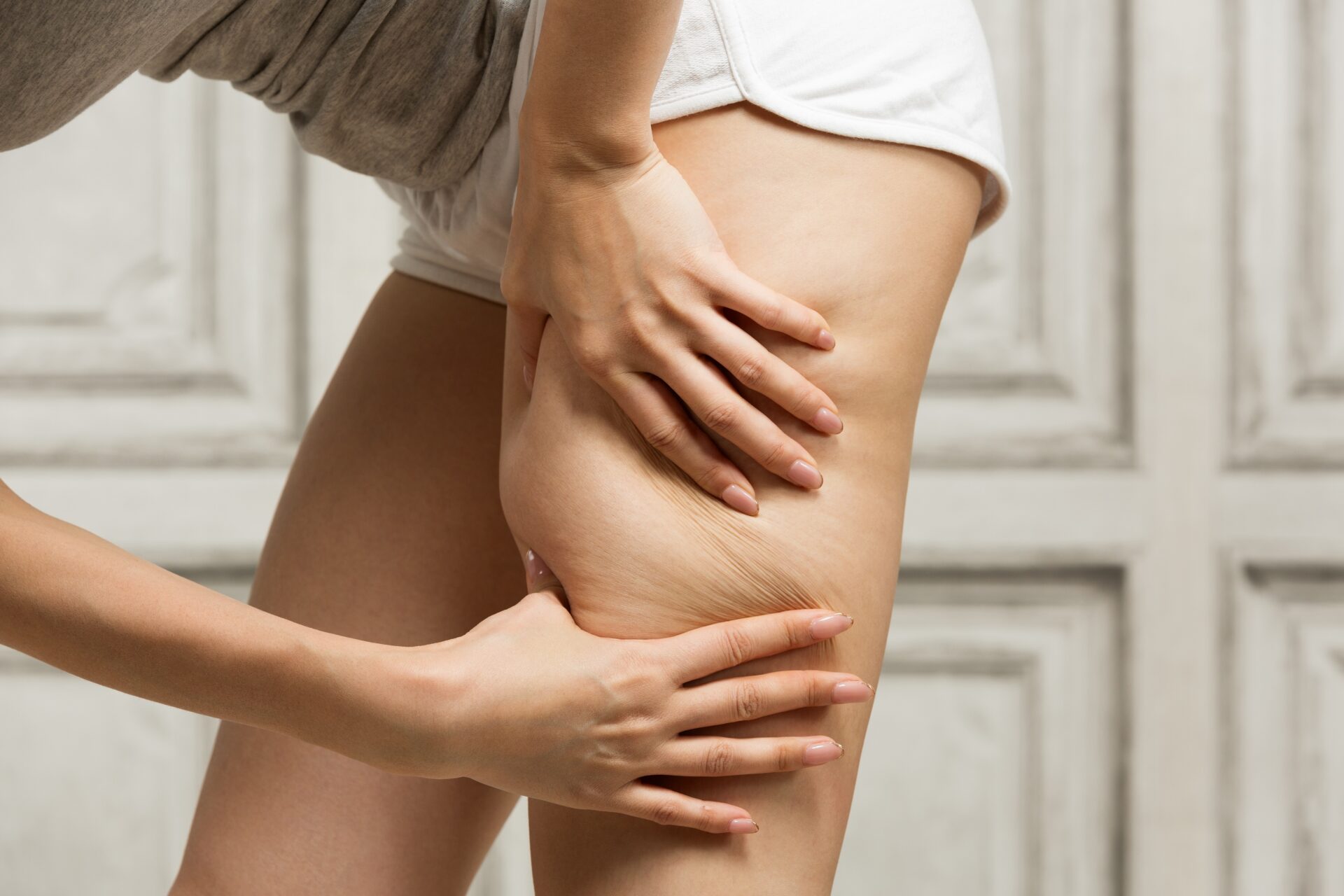
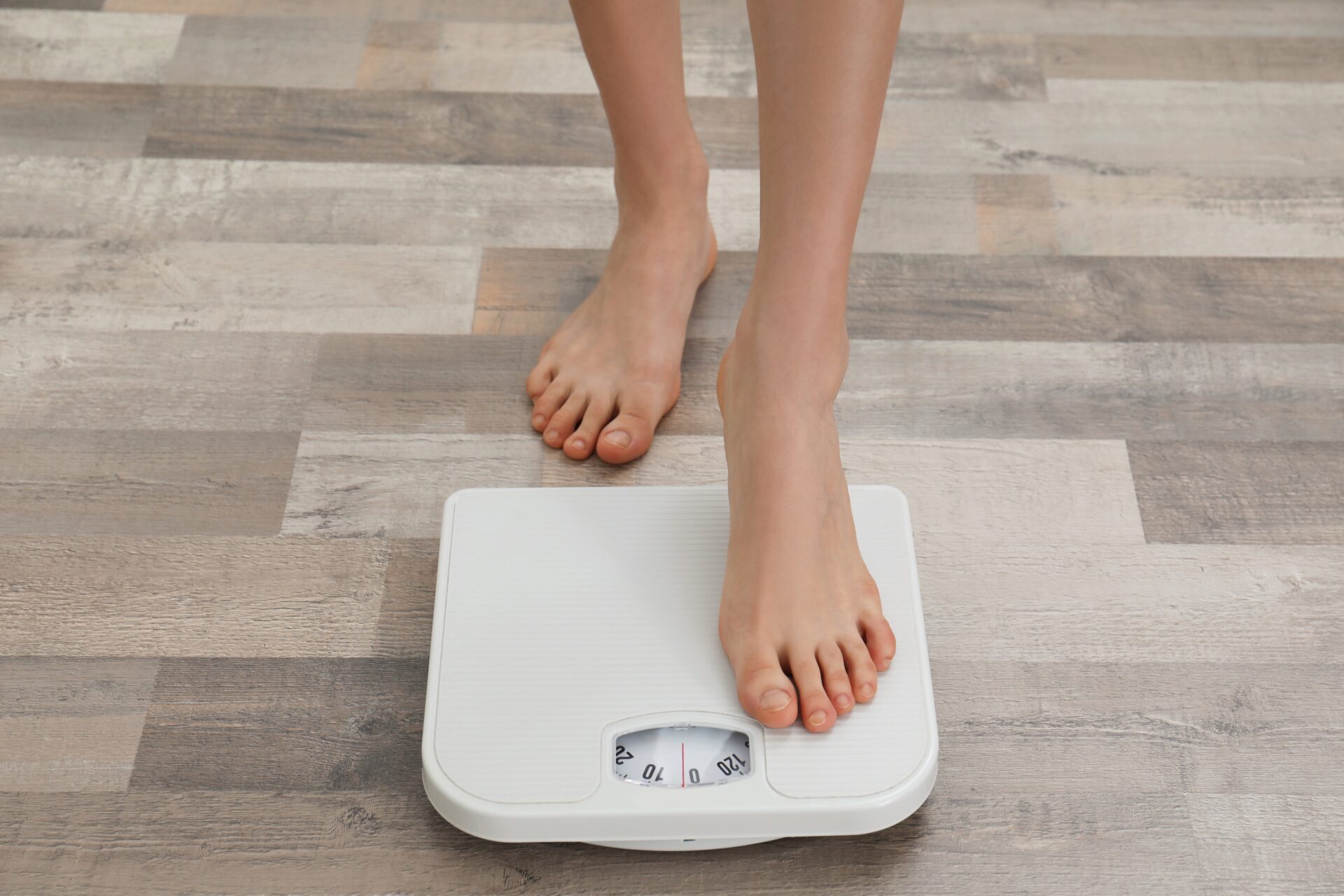
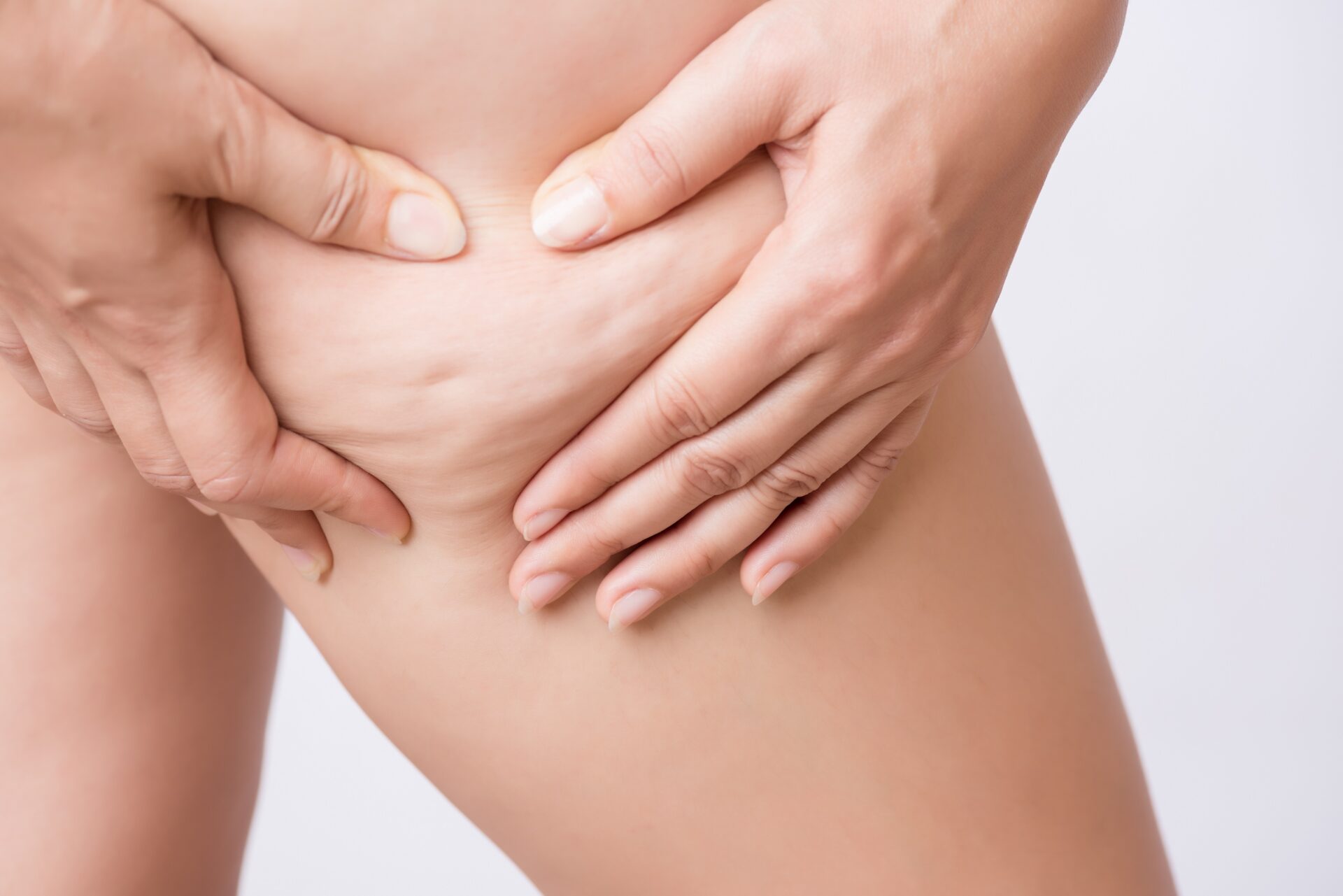
There are many myths surrounding cellulite. And some women are convinced that by losing weight, they will get rid of it. But are weight and orange-peel skin really interdependent? Is it possible to make cellulite disappear by slimming down?
What is the difference between fat, fat deposits and cellulite?
Fat, or adipose tissue, affects the entire body. Everyone has it in greater or lesser amounts, whether they are overweight or not. It is soft, painless and serves three functions: thermoregulation, shock absorption (protecting organs and bones) and energy storage. When weight is gained, fat can settle on either the upper body (so-called android body shape) or the lower body (so-called gynoid body shape). It is located in the hypodermis, the deepest layer of the skin.
Fat deposits, which sometimes (but not always) develop into rolls, are localized fat deposits in certain areas of the body, typically the love handles, saddlebags or the lower abdomen. These advanced fat deposits are often associated with a lack of physical activity and/or poor eating habits.
Cellulite is a more complex phenomenon that mainly affects women — and the vast majority of them. It results from hypertrophy of fat cells (adipocytes) combined with a buildup of water and toxins in the tissues. Sometimes it is worsened by fibrosis, which is a stiffening of the dermis’s support fibers. It is therefore multifaceted. It is also multifactorial : hormonal activity, heredity, stress, a sedentary lifestyle, an unbalanced diet, circulation issues or smoking can all contribute to its appearance.
Is cellulite linked to weight?
There is no clear-cut answer to that question. Here is why.
Cellulite affects at least 90% of women, whether they are curvy or slim, athletic or not. Body shape therefore has little impact on whether it appears, since it is mainly linked to how (hormonal fluctuations, from adolescence to menopause) and to the physiology (number and location of adipocytes, tissue structure) of the female body work.
What’s more, there is not just one, but several types of cellulite.
- Water-retention cellulite is nicknamed “slim women’s cellulite”. Indeed, it is mainly caused by water retention, itself triggered by poor venous and lymphatic circulation. So it has absolutely nothing to do with weight.
- On the other hand, fatty cellulite, which can affect slim women too, is nevertheless more common in fuller-figured women. Why? Because it is often made worse by an overly rich diet and/or too little physical activity.
- Lastly, embedded cellulite, known as fibrous cellulite, results from a hardening of the collagen fibers surrounding adipocytes. But it also implies an overall unhealthy lifestyle, marked by a lack of exercise and long-term dietary excess.
So, as you can see: weight and cellulite are not necessarily interdependent. You can be slim and still have orange-peel skin, just as you can gain a little weight without necessarily developing more cellulite than you already have.
Can weight loss make cellulite disappear?
Let’s tell it like it is right away: no, because when it comes to cellulite, nothing is simple.
Weight loss leads to fat reduction: the body will draw on its fat reserves, wherever they are on the body. Slimming down does not necessarily make stubborn, localized fat deposits disappear, either. Many women complain that they lose volume in their breasts but still keep their little tummy bulge, despite the pounds lost.
When it comes to cellulite, weight loss alone cannot make it disappear. Without a balanced, healthy diet, regular physical activity and mechanical action through massage (lymphatic drainage for water-retention cellulite, palper-rouler for fatty cellulite), getting rid of it is impossible! What’s more, all of these measures need to be maintained over the long term, otherwise cellulite will inevitably come back. That is simply how women’s bodies are “programmed”…
So rather than focusing on an “ideal weight” to reach and hoping cellulite will vanish once you get there, it is better to readjust your overall lifestyle:
- eat a bit of everything, especially the most natural foods possible, and cook your meals yourself;
- avoid sugar, salt and saturated fats, which “feed” cellulite;
- exercise every week — water sports, for example, are very effective against dimpling;
- walk every day to boost your venous and lymphatic circulation;
- quit smoking;
- massage daily to encourage the release of fat from adipocytes and the drainage of water and toxins — for example with our Ventouse and our Huile de Massage Anti-cellulite.
