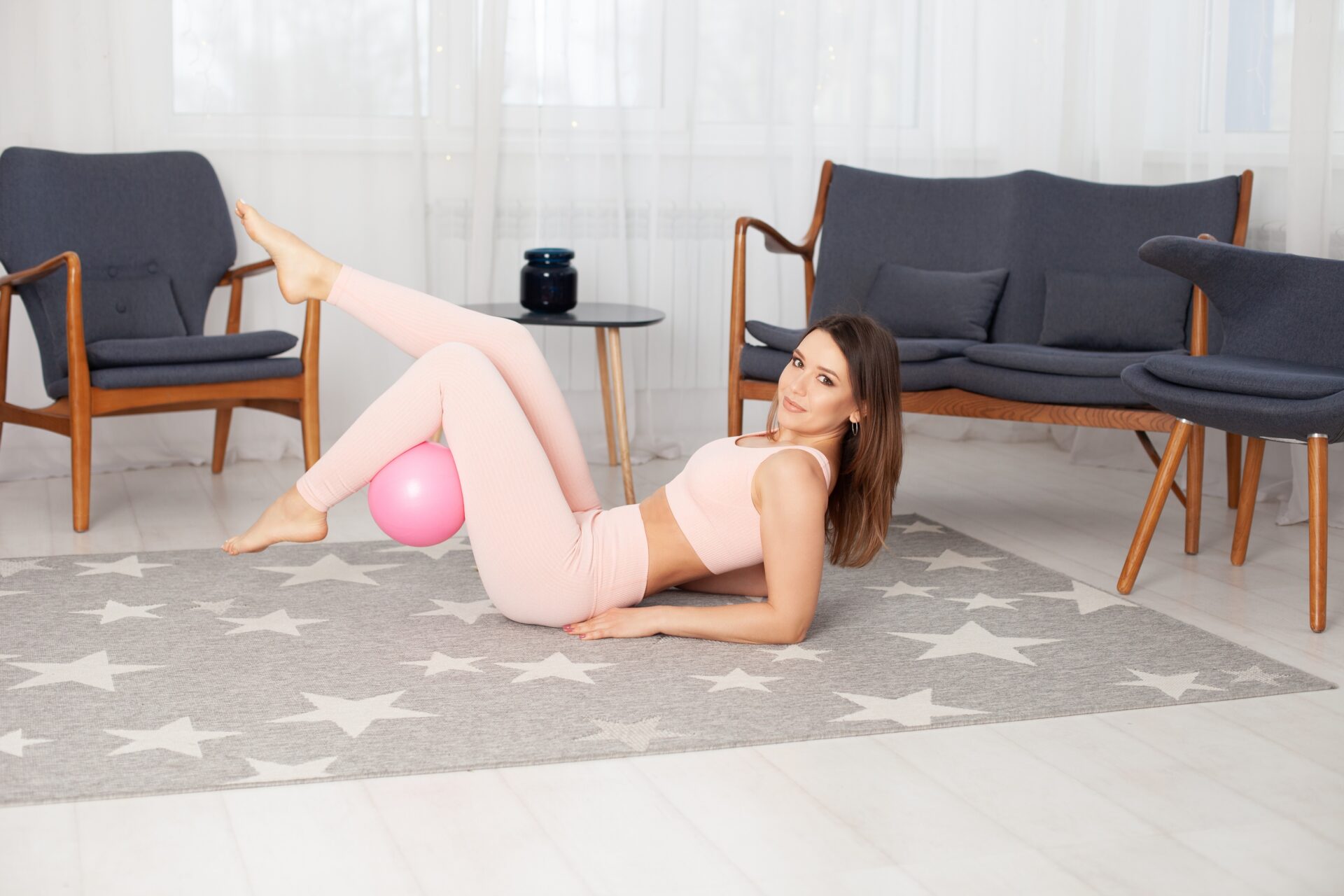
If you’re new to Pilates but ready to give it a go, we’re here to guide you! Read on to learn more about the method and discover a few Pilates exercises you can do with a small ball.
What is Pilates?
The Pilates method is a discipline created in the 20th century by Joseph Pilates. It draws from various practices, including fitness, dance, gymnastics and yoga. Pilates aims to improve overall well-being by engaging postural muscles, building flexibility and balance, and loosening the joints. The benefits are wide-ranging — from improved flexibility and stress relief to better microcirculation. Not to mention the long-term effects on your figure!
Exercise no1: the rocking boat
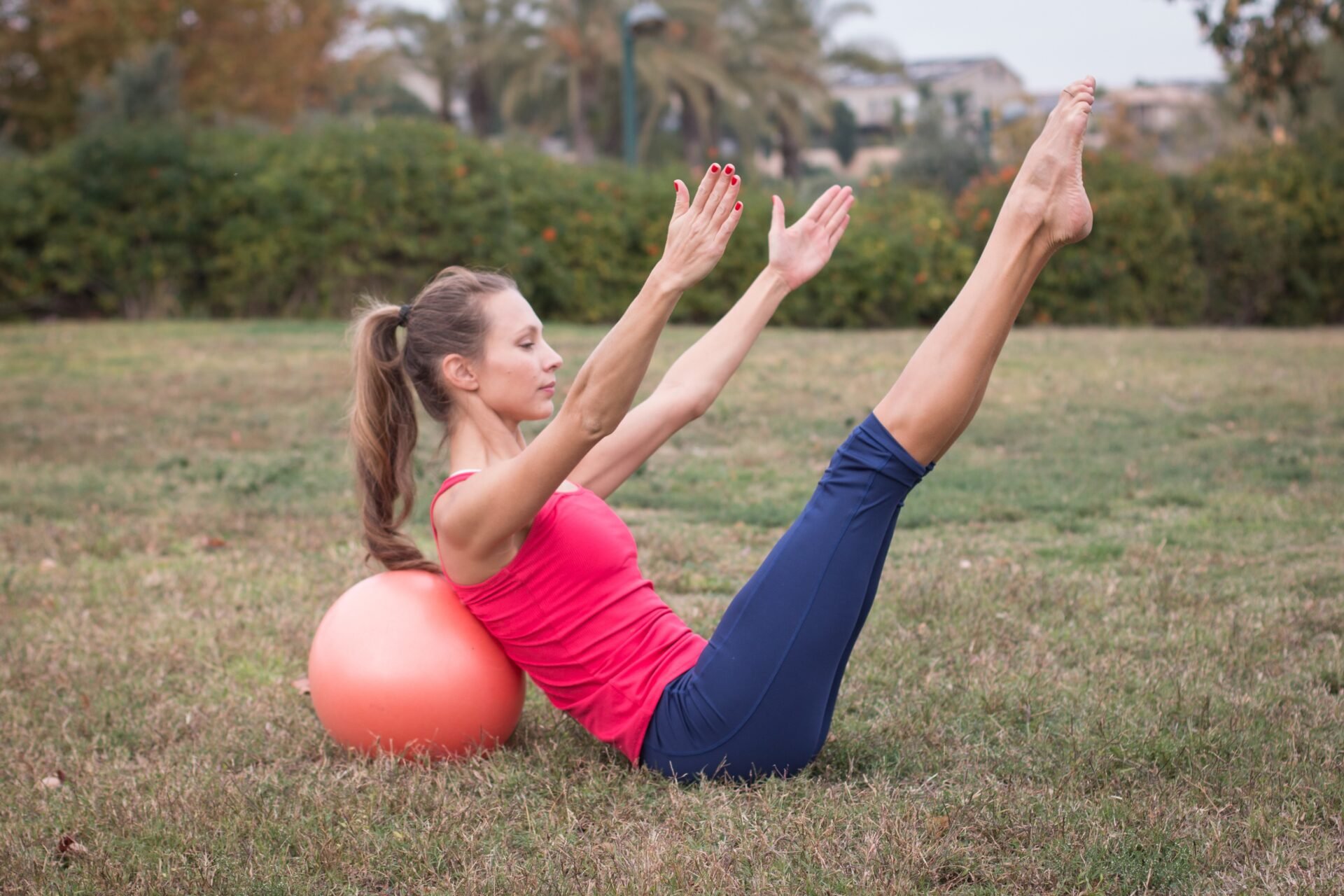
This Pilates exercise is reminiscent of the boat pose, a classic yoga posture. It strengthens balance, flexibility and the deep core muscles.
- Sit down and lean back against your ball. To do this, place it against your back — either in the small of your lower back (for the more experienced!) or against your upper back (for beginners). Find your balance on your sit bones.
- Bend your knees, feet slightly lifted off the floor, hands behind your knees.
- On the inhale, extend your legs and arms upward, without “rolling” backwards. The goal is to stay as upright as possible. Ideally, your hands should reach your feet.
- Hold the position for 5 breaths, then slowly lower back down.
2 sets of 5 will help you build overall stability and tone your waist and core.
Exercise no2: the plough
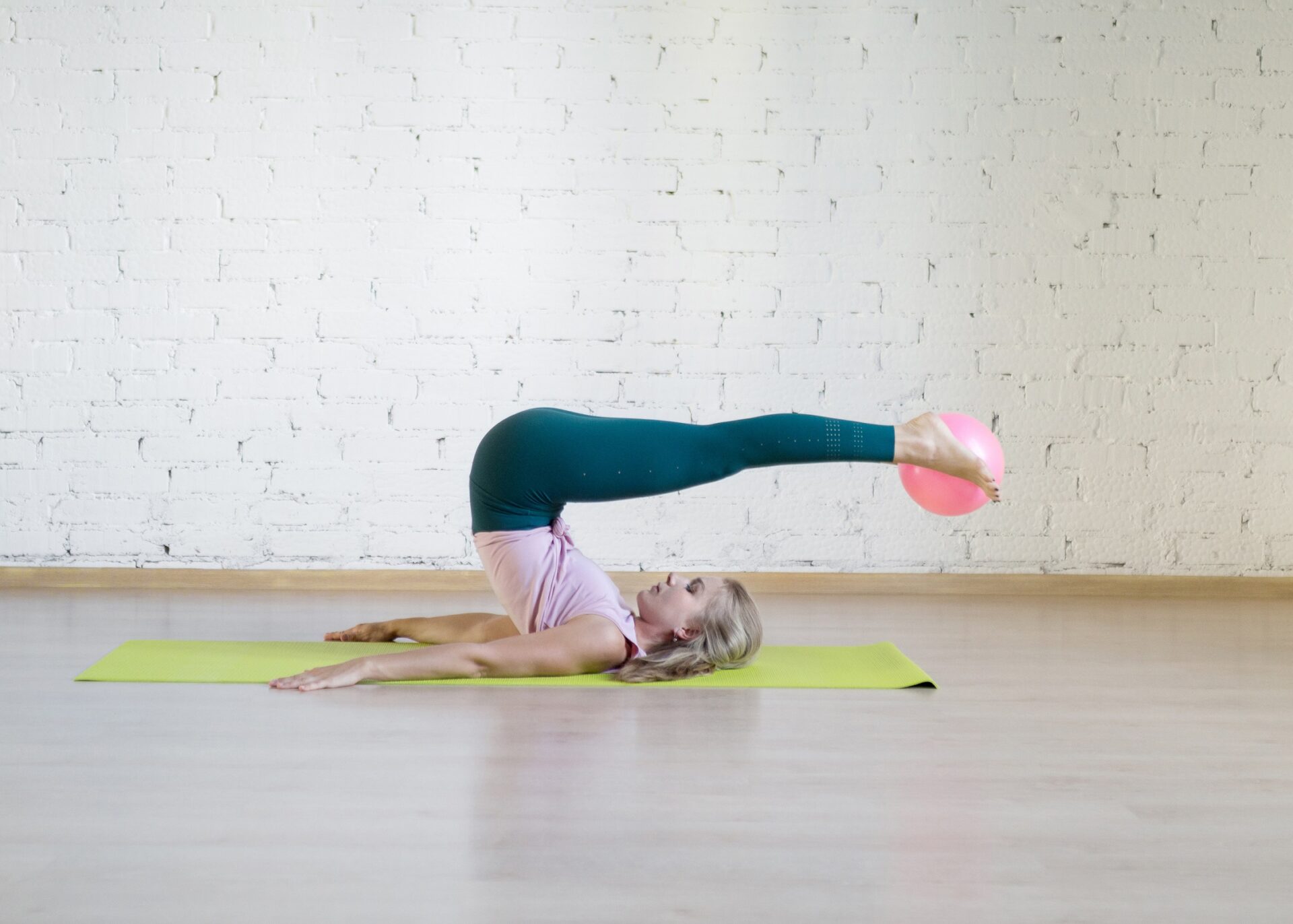
A classic core-strengthening and back-stretching exercise, well loved by Pilates and yoga enthusiasts alike.
- Lie on your back, arms alongside your body, palms flat on the floor.
- Place the ball between your feet (or between your legs, if that feels more comfortable).
- On the inhale, raise your legs vertically. Keep the ball in place, with your shoulders, arms and neck firmly grounded.
- On the exhale, lift your hips and lower back off the floor, as if moving into a shoulder stand.
- On the second inhale, send your legs back behind you until they are parallel to the floor. Your arms on the ground help you maintain balance, while the ball stays in place.
- Hold for 30 seconds.
- Then slowly lower your legs back down — keeping them straight — by rolling through the spine one vertebra at a time and engaging your core. Take it slowly and avoid dropping your legs all at once, as this could cause injury. The ball should remain in place throughout, helping you control the descent smoothly.
You can perform this Pilates posture 3 to 5 times as part of your fitness routine. The plough releases tension in the back, and is also excellent for toning the core and supporting digestion.
Exercise no3: the scissors
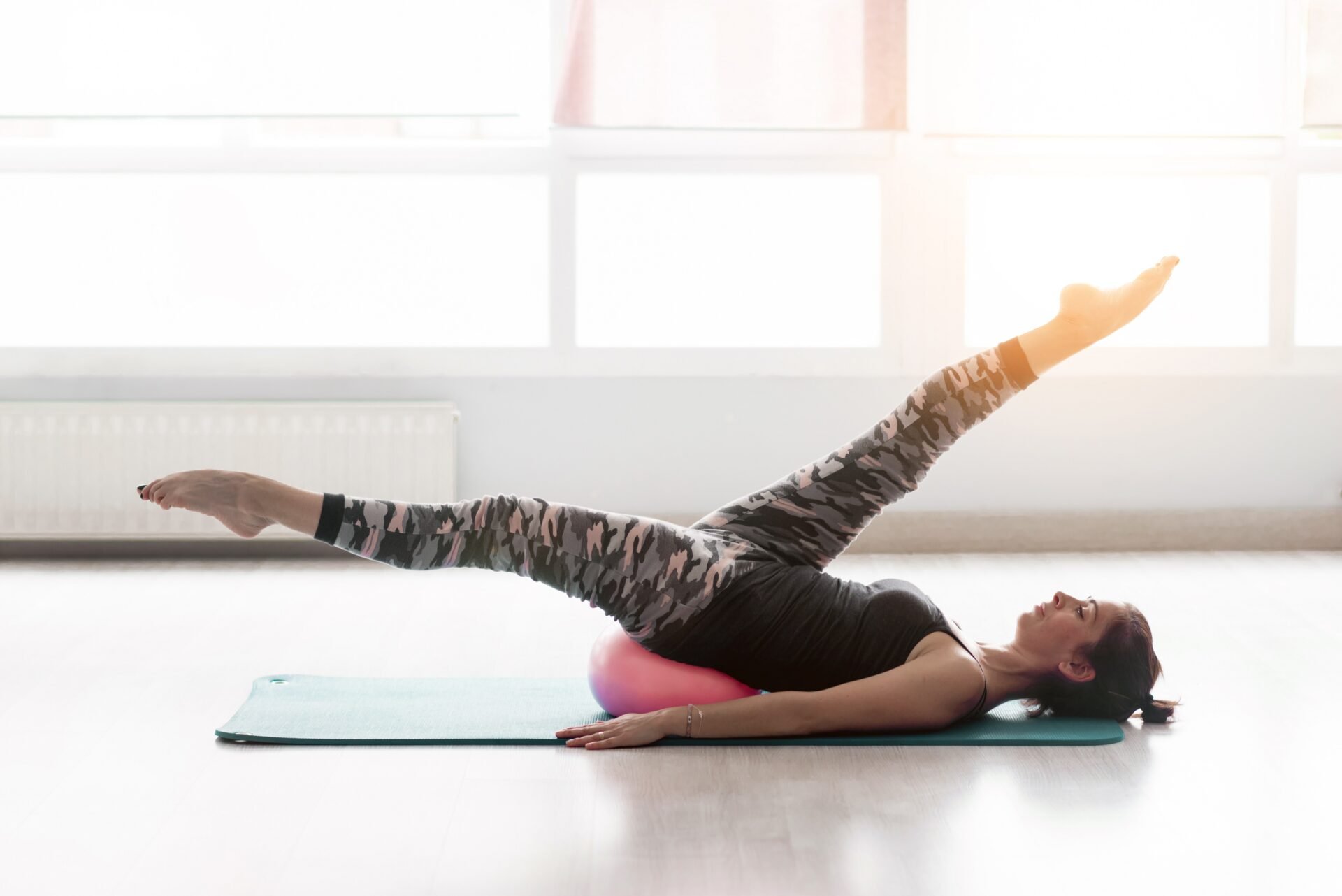
This exercise targets the deep muscles: hamstrings, quadriceps, abs, psoas and hip muscles.
- Lie on the floor, legs straight, arms alongside your body.
- Place your small ball under your glutes and lower back.
- On the inhale, raise your legs straight up toward the ceiling. Keep them extended while the ball is firmly positioned under your lower back.
- On the exhale, lower one leg forward without touching the floor, and extend the other back. Your feet point in opposite directions.
- Alternate the position of your legs about ten times in a scissor motion, keeping your balance on the ball throughout.
- On the final inhale, bring both legs back up to vertical, and on the exhale, slowly lower them back to the floor — without dropping them and by engaging your abdominals.
Complete 2 to 3 sets of 10 scissors during your Pilates session.
Exercise no4: the bridge
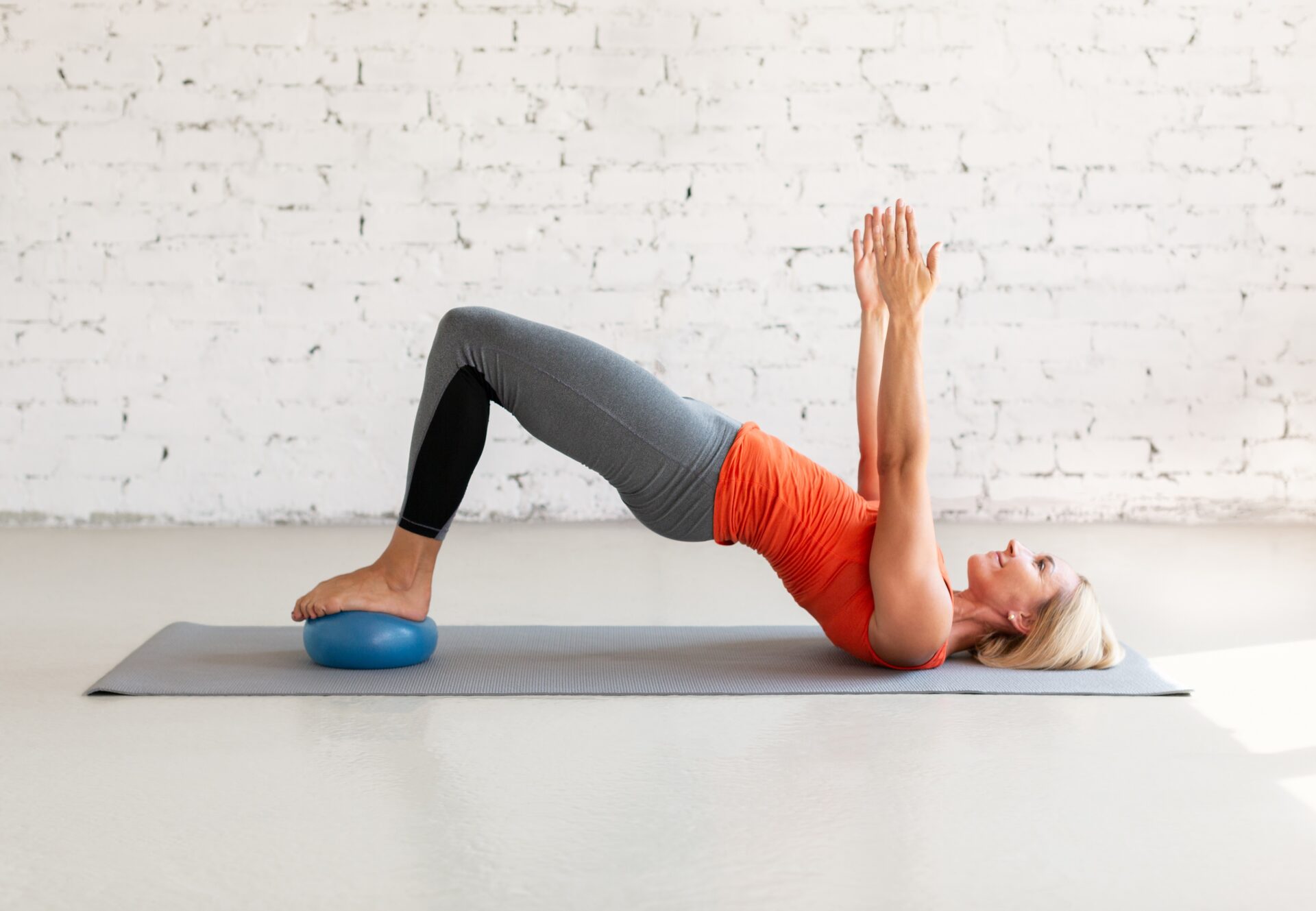
A staple of any fitness and Pilates routine, this move tones the abs, thighs and glutes.
- Lie on the floor, knees bent, with the ball placed under your feet. Keep your arms, shoulders and neck firmly grounded.
- Engage your glutes and abdominals.
- On the inhale, lift your hips, belly and glutes toward the ceiling, extending your arms out in front of you to accompany the movement.
- Hold the position for 5 to 10 seconds. The ball helps keep your body aligned while challenging your balance.
- On the final exhale, slowly lower back down: back, lower back, pelvis, glutes.
- Repeat the movement 20 times.
Include 2 to 3 sets of this Pilates posture in your core routine.
Exercise no5: the spine stretch
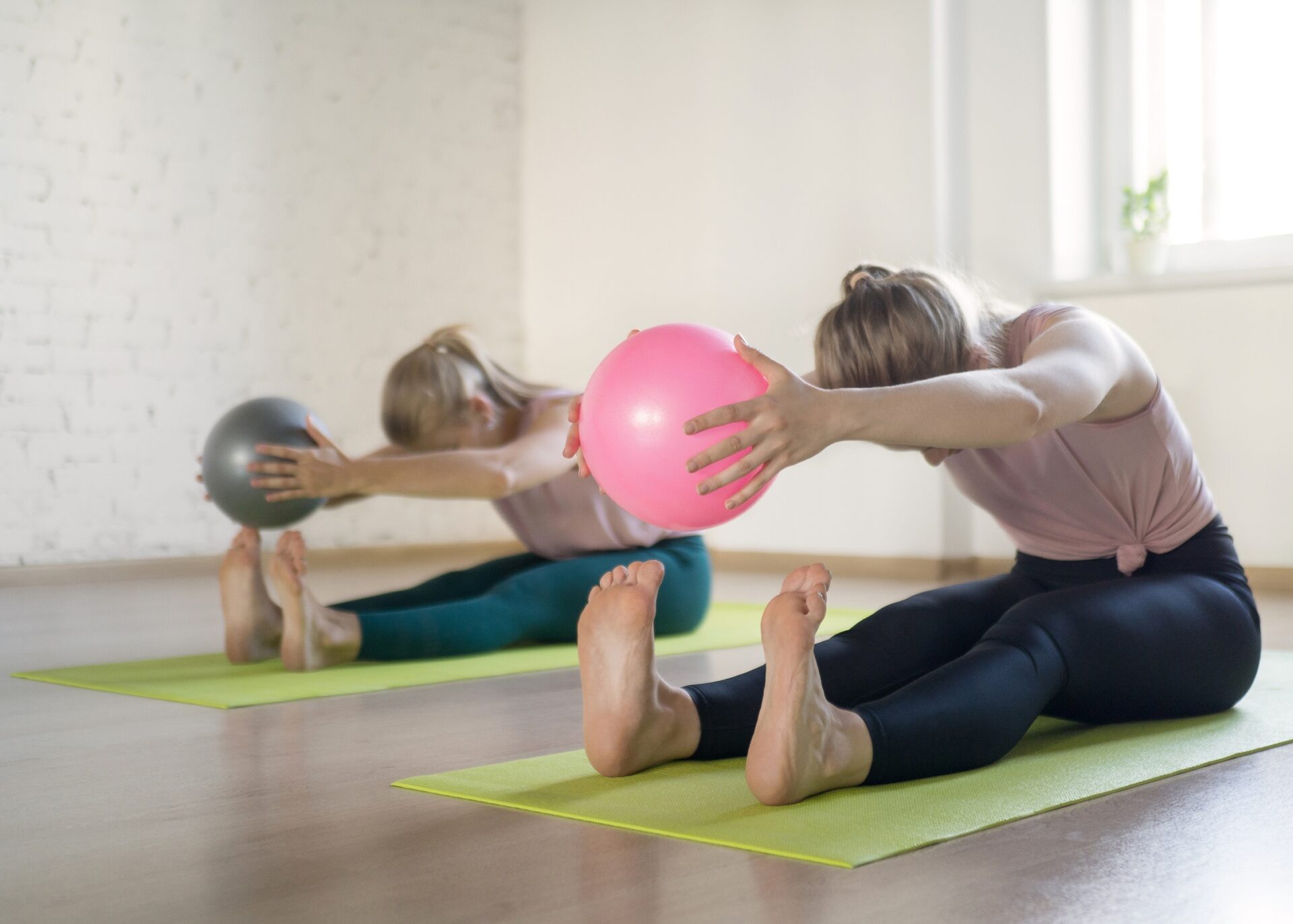
A deeply relaxing exercise that releases back tension while building flexibility.
- Sit with your legs extended in front of you, back straight as if against a wall, balanced on your sit bones.
- Hold your ball in both hands and extend it out in front of you.
- On the inhale, round your back and reach the ball (and therefore your arms!) as far forward as possible. Your upper back curves forward while your abs are drawn back.
- Hold the position for 5 breaths, then on the final exhale, gently unroll your back to return to the starting position.
- Repeat 5 times.
2 to 3 sets of this ball Pilates exercise will be tremendously beneficial for your back as well as your hips.
Exercise no6: the candle
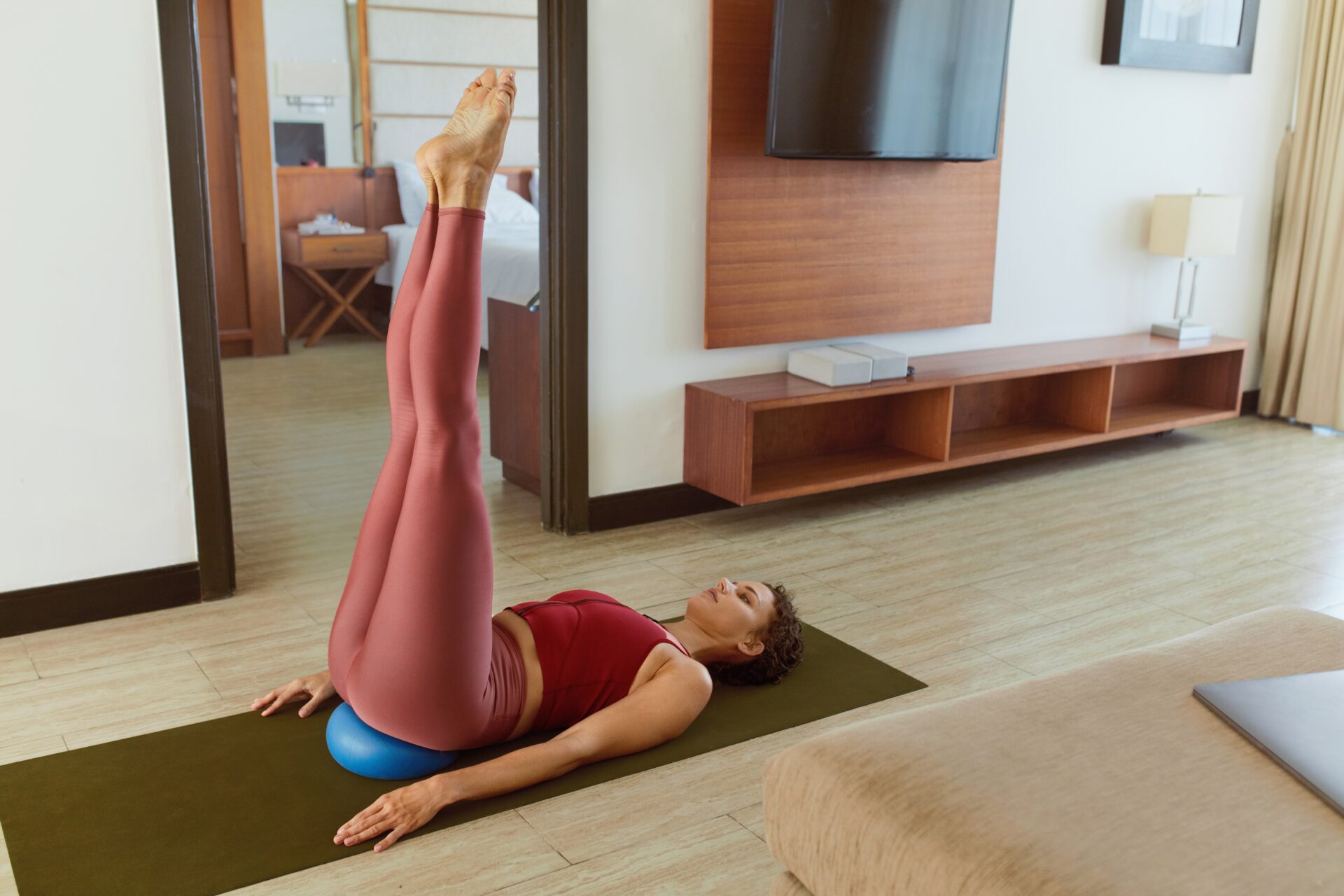
This highly toning Pilates exercise strengthens the thighs and abs while working on balance.
- Lie down with your legs and arms extended, ball placed under your pelvis.
- Slightly lift your feet off the floor, drawing your abdominals in.
- On the inhale, raise your legs perpendicular to the floor, toes pointed toward the ceiling.
- Hold the position for 5 breaths.
- On the final exhale, slowly lower your legs without letting your feet touch the floor. Your thighs and core are fully engaged.
- Raise your legs back up 4 times.
Include 2 to 3 sets of 5 candles in your Pilates routine.