Around 70% of pregnant women worry they won’t get their pre-pregnancy body back. Yet just as many do manage to return to their ideal weight within a year — and, more importantly, learn to embrace their feminine curves. That said, it’s completely understandable to feel concerned, especially when it comes to getting a flat stomach back. Because yes, pregnancy and the postpartum period often go hand in hand with a soft, flabby and bloated belly. Here are some key explanations and practical tips to help you regain a flatter stomach after pregnancy.
Pregnancy weight gain
The weight gain during pregnancy is primarily due to the growth of the foetus, but also to the weight of the placenta (around 0.5 kg), the umbilical cord, the membranes and the amniotic fluid (around 1 kg). Add to this the increase in breast volume (0.5 kg) and the uterus (1 kg), blood volume (1–1.5 kg), water retention (2 kg) and fat reserves (2–3 kg) needed for breast milk production. It is therefore perfectly normal to gain weight during pregnancy, and this weight tends to concentrate particularly around the stomach. It goes without saying that this area of the expectant mother’s body changes significantly in appearance.
Why does the stomach remain soft and bloated after giving birth?
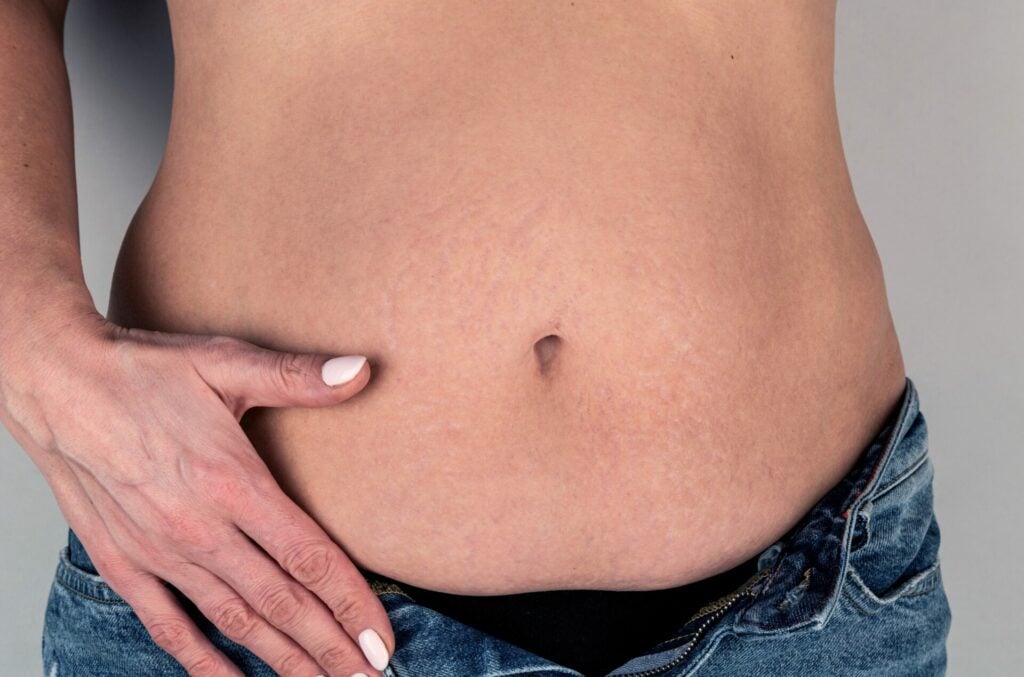
Many expectant mothers imagine they’ll have a perfectly flat stomach the moment they give birth. But they’re often disappointed to find that isn’t the case once the birth is over. The expectation of a flat, firm stomach identical to the one they had before pregnancy is, of course, unrealistic.
Yes, it’s a fact — pregnancy leaves its mark, and the stomach doesn’t return to its original shape straight after delivery. In most cases, it remains flabby and bloated. This physical change is entirely normal:
- The uterus, which expanded along with the growing foetus, has been stretched and displaced. It will take several weeks to return to its original size.
- In around one third of cases, pregnant women experience diastasis recti. The stretching of the abdominal wall during pregnancy is a normal phenomenon. But in some women, the wall cannot accommodate the expansion of the uterus. This results in an excessive separation of the rectus abdominis muscles, which pull apart: this is diastasis. It causes a more protruding, less firm belly, and skin that tends to sag.
- The hormonal changes characteristic of pregnancy cause a relaxation of both striated muscles (abdominal) and smooth muscles (uterine, visceral), to allow the foetus to grow properly. However, this has physical consequences, starting with a loosening of the abdominal core muscles. As a result, after giving birth, the stomach retains a relaxed appearance.
- The loose skin on the postpartum belly has a simple explanation. The dermis is partly made up of elastic fibres, which give the skin its suppleness and resilience. These fibres are strong and, in principle, able to spring back. But pregnancy places a constant and growing tension on the skin of the stomach for 9 months. As a result, the elastic network may give way (the phenomenon of pregnancy stretch marks) or become overstretched: not breaking, but losing some of its elasticity and ability to spring back. The skin therefore becomes soft and loose, and tends to sag.
- The volume of the stomach is also due to the increase in fat reserves during pregnancy. And much to our regret, no: giving birth doesn’t make these reserves under the skin vanish overnight!
How long does it take for your stomach to go down after giving birth?
There’s no set timeframe: every body recovers at its own pace. The uterus needs several weeks to return to its original size, so some of the swelling goes down gradually in the weeks after the birth. For the abdominal muscles, the suppleness of the skin and the fat reserves, you’ll need more time and patience: it often takes about as long as the 9 months of pregnancy itself. If your stomach seems unusually swollen or painful, speak to your GP or midwife.
What about C-sections?
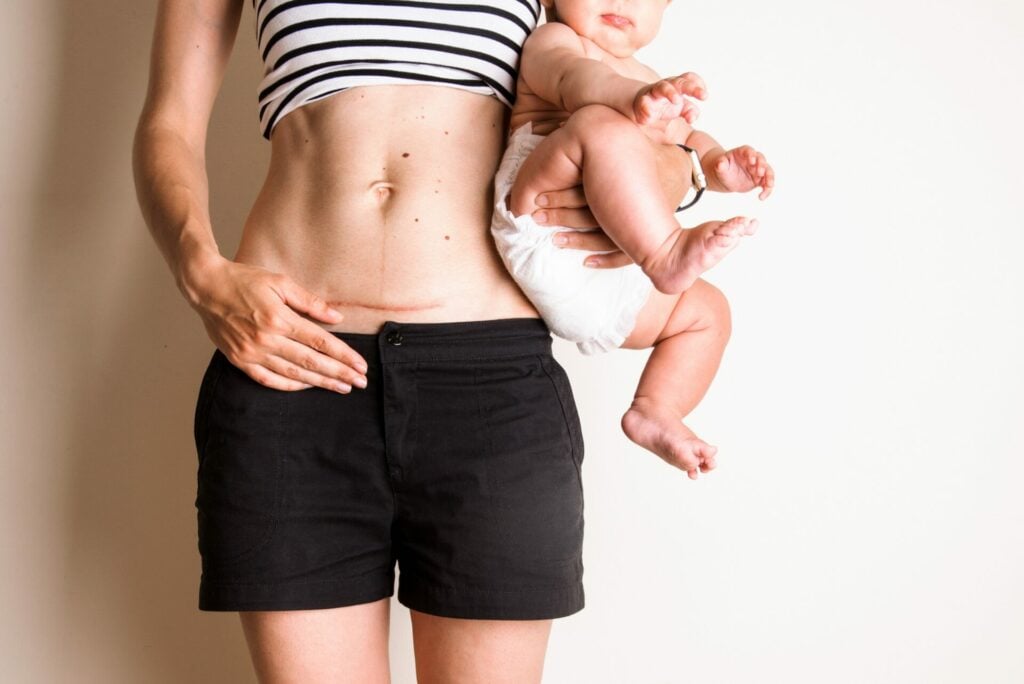
The bloated belly after pregnancy is even more noticeable in women who have had a C-section. Most are left with a small pouch just above their scar. A C-section, which involves an incision through the abdominal wall and uterus, has multiple effects on:
- Abdominal tone — the pushing involved in a vaginal birth and contractions engage the abdominal and uterine muscles. A C-section does not…
- Organ positioning — organs take longer to return to their proper place. This results in digestive and transit issues that contribute to a bloated appearance.
- Pelvic floor and abdominal rehabilitation, as well as the return to physical activity to rebuild muscle, which happen much later.
In addition, the anaesthesia associated with a C-section can cause bloating, intestinal discomfort and constipation. If you’re naturally sensitive in that area, the dream of a flat stomach can quickly feel out of reach…
What are the best ways to get a flat stomach after pregnancy?
1 – A few preliminary recommendations
It’s completely understandable to feel unsettled seeing your belly still swollen after giving birth. But this is a normal and entirely harmless phenomenon. So, first piece of advice (and probably the most important one): give yourself time. There’s no point putting pressure on yourself — you’ve just been through 9 months of pregnancy and the ordeal of childbirth. It will likely take just as long to get a flat stomach back. Focus first on your own wellbeing and that of your baby — the rest will come naturally. And don’t even think about throwing yourself into intense physical activity just days after giving birth: your body has been through enormous changes and needs rest. Take it easy, at your own pace!
2 – The question of breastfeeding
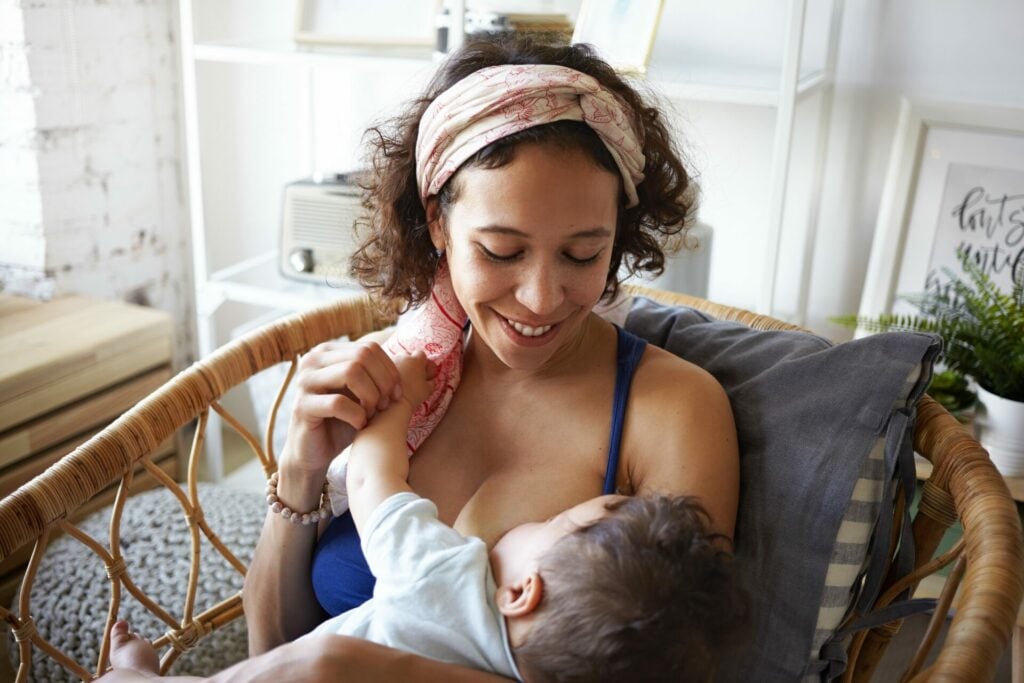
It’s a fact: breastfeeding requires energy, and a breastfeeding mother uses more calories (around 500 kcal on average) than a mother who doesn’t breastfeed. That said, this won’t necessarily show on the scales, especially if the diet is rich. Moreover, breastfeeding doesn’t affect the muscle tone of your abdominal core or the quality of your skin. Every woman experiences this period differently, so it’s best not to count on breastfeeding to get your pre-pregnancy figure back, and to stick to a few simple everyday habits without putting pressure on yourself.
3 – The support belt: a debated accessory
This is an accessory that divides opinion. The support belt (or belly band) is a kind of elasticated fabric wrap that holds in and supports the soft postpartum belly. It can be very useful if you have back pain following pregnancy. Because muscle tone is low, the belt helps keep the lower back in place and reduces the risk of hyperlordosis. It can be a real lifesaver on tiring days, for example when you’re on your feet for long periods.
However, the medical community is not entirely in favour of its systematic use. Some doctors argue that there is no need to wear a support belt to regain muscle tone and, ultimately, a flat stomach. Simply going about daily life as a new mother would naturally help muscles and abdominal organs return to their proper place. The belt could weaken muscles and tissues already strained by pregnancy and childbirth. Furthermore, according to some studies, wearing a support belt may increase the risk of uterine prolapse and urinary incontinence, as it exerts intra-abdominal pressure pushing muscles and organs downwards.
4 – Which sports can you return to after pregnancy?
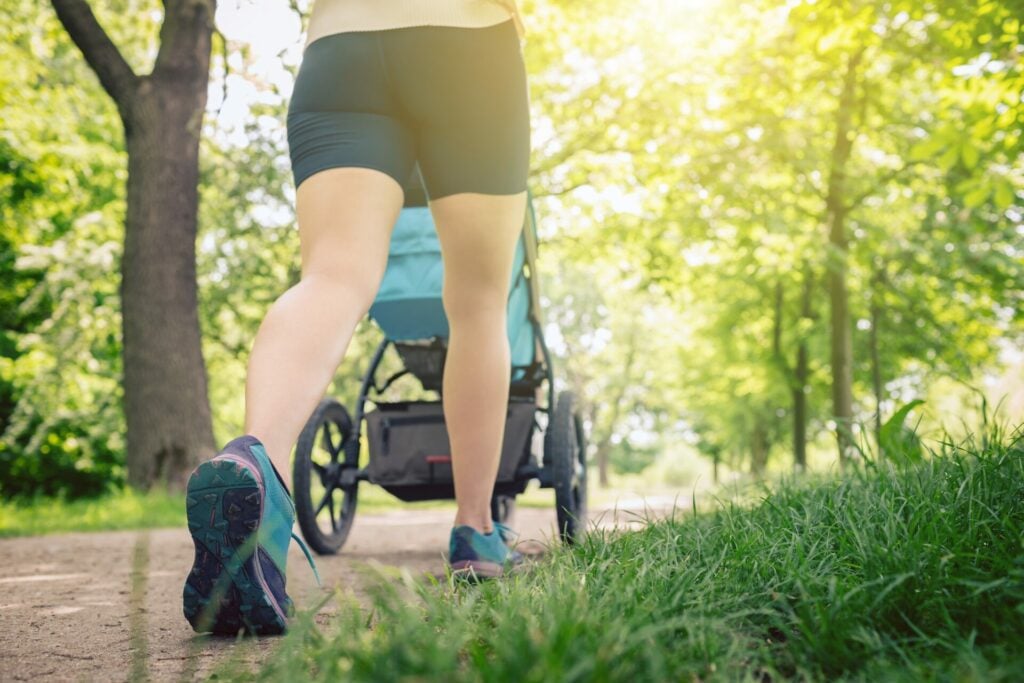
Getting back into exercise after pregnancy helps you regain some tone and feel good in your body. That said, after giving birth, a new mum needs time to rebuild her strength and stamina, so ease back in gradually. It is also not advisable to take up any sport without first completing pelvic floor rehabilitation, even after a C-section. If you have any pain (back, pelvis, hips), ask your GP or a healthcare professional for advice.
Pelvic floor rehabilitation helps to tone the muscles of the pelvic floor, of which the perineum is a part. Its role is to close the lower part of the pelvis and keep the organs in place. It also supports the abdominal cavity. Pelvic floor (and possibly abdominal) rehabilitation is therefore a step you shouldn’t skip before working your stomach muscles again. These sessions can begin between 6 and 8 weeks after delivery, following a visit to the gynaecologist. The only physical activity recommended before this rehabilitation is gentle walking (strolls with baby in the pram).
After that, you can gradually ease back into sport. Gentle activities are recommended:
- Yoga, Pilates and hypopressive gymnastics (which gently engages the abdominal muscles).
- Water sports, such as swimming or aqua aerobics.
- Cycling, which gently works the abdominal muscles, and brisk walking, the most complete sport of all.
5 – No dieting in the postpartum period
Although many new mums are tempted to cut back drastically on their meals, going on a diet after pregnancy is strongly discouraged. Life as a new mother is extremely demanding and tiring. Deprive yourself of a balanced diet, and exhaustion will quickly take over. After pregnancy, it is essential to pay attention to your nutrition to avoid deficiencies and keep your energy up. A few pointers for eating well after pregnancy:
- Eat plenty of seasonal fruit and vegetables.
- Continue with dairy products, opting for low-fat varieties.
- Eat lean proteins as part of a balanced diet.
- Include complex carbohydrates.
- Stay well hydrated, primarily with water. This is even more important if you’re breastfeeding (2 to 3 litres per day).
- Avoid empty calories and ultra-processed foods, such as sweets, snacks, ready meals and salty foods…
How to firm up the skin on your stomach after pregnancy?
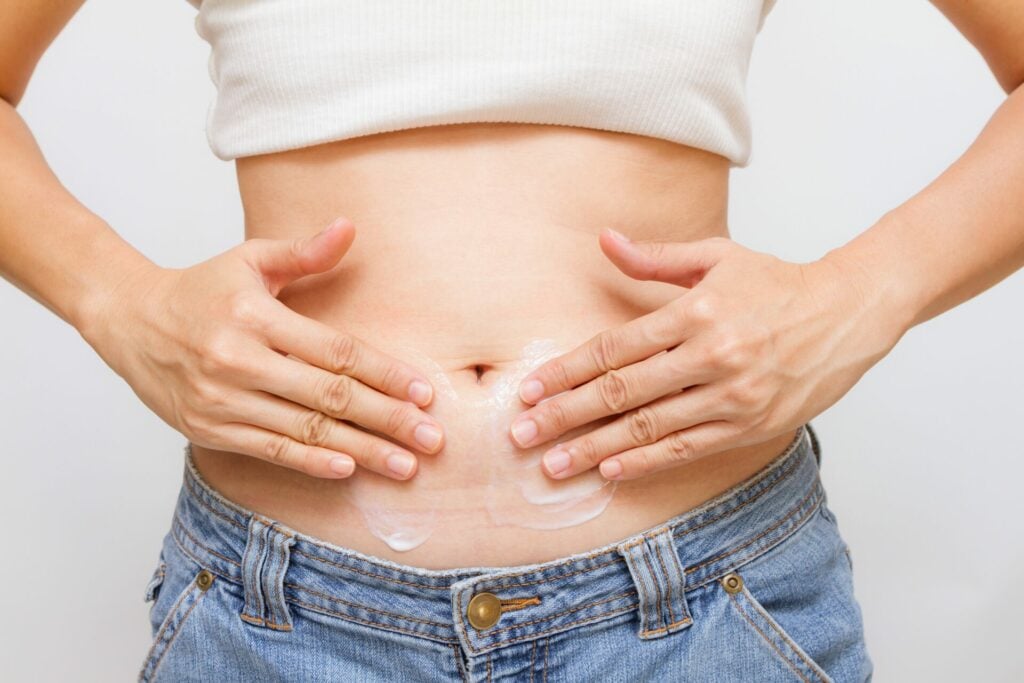
The skin on the stomach is put under a lot of strain during pregnancy. As a result, it can leave the belly looking soft and flabby in the postpartum period. You may also notice cellulite on the stomach after pregnancy. But don’t panic, ladies: we’ve thought of you!
The Cellublue Post-Pregnancy Routine
If you’d like to look after the skin on your stomach after pregnancy, we’ve brought several products together in a dedicated pack.
- Wireless Intelligent Slimming Device: a vibrating massage device to use on the stomach area as part of your skincare routine.
- Cryo Belly Slimming Gel: a gel with a cooling effect to care for the skin on your stomach.
- Herbal capsules: to add to your routine, alongside a balanced diet.
- Belly Slimming Night Cream: a night cream that hydrates the skin on your stomach.
If you’d also like to care for stretch marks on your stomach, we recommend applying our Stretch Mark Repair Cream too, which nourishes and hydrates the skin.
The cream that helps prevent the appearance of stretch marks* and improve how they look
*Consumer test on 22 volunteers over 3 weeks, based on participants' feedback.
- Helps prevent the appearance of stretch marks on the stomach, hips, thighs and bust. Apply morning and night
- Three plant oils: macadamia softens, sunflower soothes and coconut holds in hydration
- Velvety texture: it absorbs easily and calms feelings of tightness
In the case of a C-section, during the first few days (15–20 days), the scar is highly inflamed. It should be closely monitored by a midwife, who will assess how well it is healing. Once the scar is fully closed, you can massage it daily to look after it, having first asked your midwife for advice. You can then apply our anti-stretch mark cream in the morning, and our anti-stretch mark plant oil in the evening.
Frequently asked questions
How can I get a flat stomach after giving birth?
First of all, give yourself time. Then go through pelvic floor rehabilitation, and possibly abdominal rehabilitation, once your gynaecologist has given you the go-ahead. Gradually ease back into gentle activities such as yoga, Pilates, swimming or hypopressive gymnastics. Eat a balanced diet, without dieting. Skincare for your stomach can round off this routine.
Why does my stomach stay swollen after giving birth?
Several factors combine. The uterus, stretched during pregnancy, takes several weeks to return to its size. The abdominal muscles have loosened, sometimes with diastasis recti. The skin has lost some of its ability to spring back. And the fat reserves built up during pregnancy don’t disappear with the birth.
How can I ease back in gently after a C-section?
After a C-section, rehabilitation and a return to physical activity come later. Have your scar monitored by a midwife and start with gentle walking. Then follow the same principles: rehabilitation, gentle exercise and a balanced diet. Ask your GP or a healthcare professional for advice before returning to sport.
Related articles
- Hypopressive gym: the method for a flat stomach
- Lemon and Cumin: What We Really Know
- Pilates: 6 exercises to get a flat stomach
- Healthy Habits and Your Anti-Cellulite Routine
- Cellulite: a look at 10 natural ingredients and methods
- CelluBlue Body Challenge – Day 20
Useful categories: Pregnancy Stretch Marks, Stretch Marks.