Citrus fruits and spices have a good reputation. They’re credited with all sorts of virtues, sometimes well beyond what studies actually show. Cumin and lemon are among the most frequently cited, and they regularly crop up in lists of so-called flat-stomach foods. But is there any truth in these claims? Could a lemon and cumin combination really be the answer to getting back in shape and, while you’re at it, a flatter tummy? Here’s what research has looked at for each of them, followed by a few ideas for pairing them in your everyday meals.
Lemon: what we know
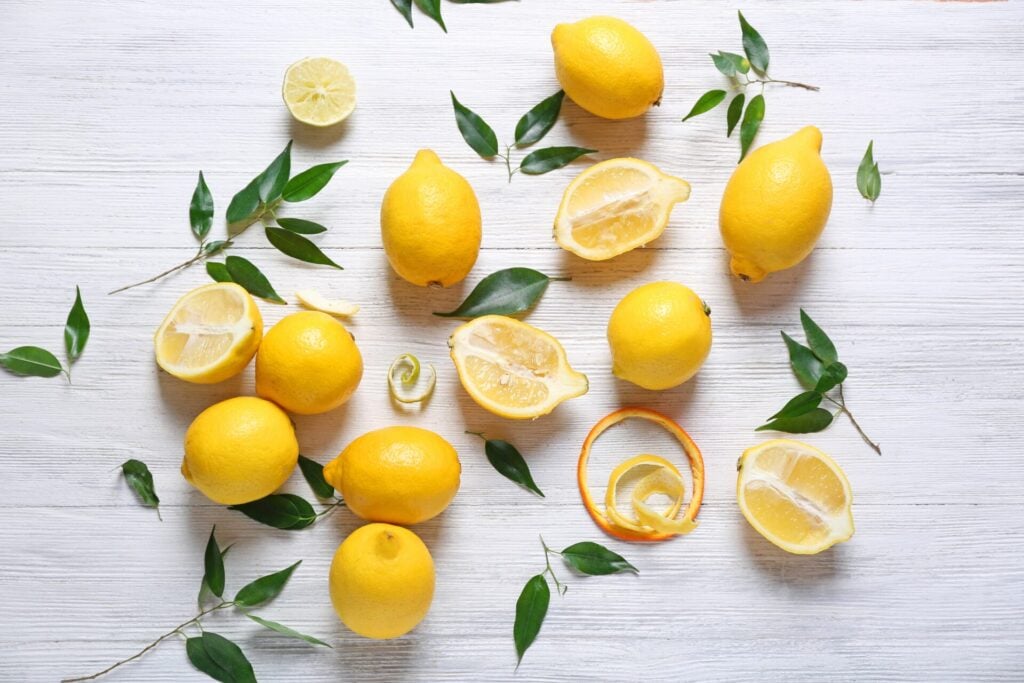
Lemon, that delightfully tangy little citrus fruit, is credited with numerous virtues. Most of them are not backed by evidence. So how do we separate fact from fiction? Can lemon genuinely help reduce belly fat? Here’s what the studies say:
- studies in animals have explored the effects of lemon polyphenols on weight and on fat storage (1). However, what is observed in animals does not apply to humans;
- other studies have looked at lemon, digestion and the liver (2);
- others still at its compounds and the absorption of dietary sugars (3).
To make the most of lemon, the simplest thing is to consume it regularly, particularly at mealtimes, for its tangy flavour. However, no single food can, on its own, give you a flat stomach.
Cumin: what we know
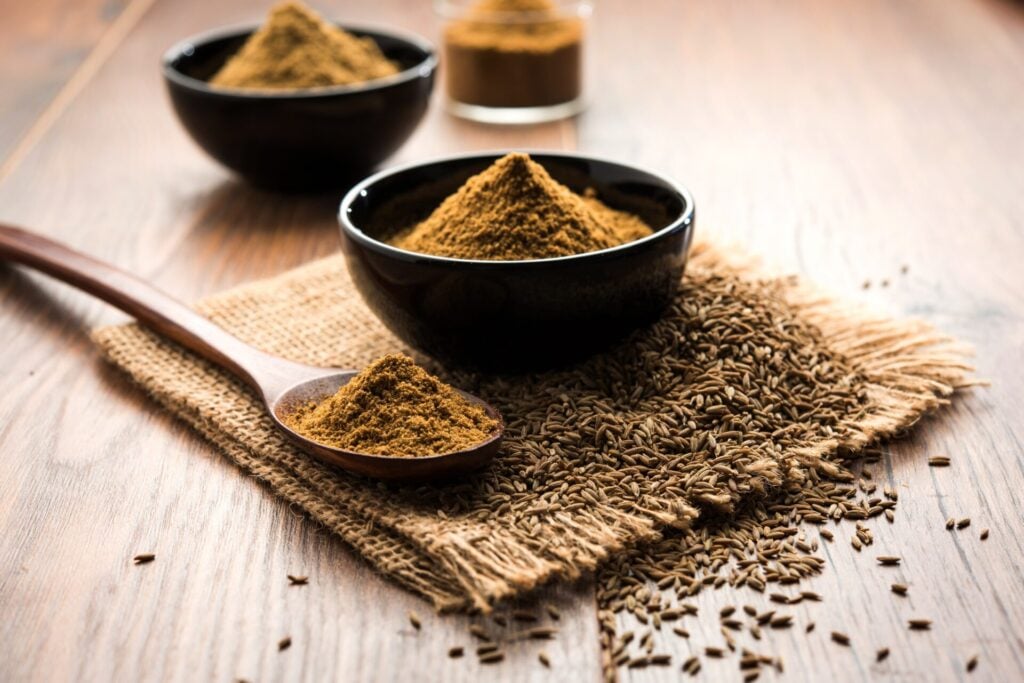
Now let’s turn to cumin. First, it’s worth drawing a distinction between:
- cumin (Cuminum cyminum), also known as false anise, which produces the small brown seeds and ground cumin powder used to flavour many Middle Eastern and Asian dishes;
- black cumin (Nigella sativa), also called nigella, which consists of small black seeds with a bold, peppery and pungent flavour.
When it comes to “true” cumin, it is mainly known as a spice. A few studies have looked at its antioxidant compounds (4), but they do not make it possible to attribute any established effect on digestion or on your figure to it.
When it comes to black cumin, it has also been the subject of research (5), which has yet to be confirmed in humans.
It therefore appears that, much like lemon, both cumin and black cumin could be enjoyed as spices to incorporate into your routine, for their flavour, as part of a varied and balanced diet.
Are cumin seeds enough for a flat stomach?
The studies mentioned above open up avenues of research, but they don’t make cumin seeds a solution in themselves for getting a flat stomach. No single food, eaten in isolation, can do that.
It’s better to think of cumin, whether as seeds or ground, as one ingredient among many in a varied and balanced diet, combined with regular physical activity. Whether in an infusion, in your cooking or in lemon-flavoured water, it mainly brings flavour and enjoyment to your meals. For personalised advice, speak to a healthcare professional.
How to use lemon and cumin in your everyday meals

The most straightforward approach is perhaps the most natural one: simply include both ingredients in your everyday diet by seasoning your dishes with lemon and cumin. That way, alongside enjoying their wonderful flavours, you’ll add some variety to your menus.
That said, there are other ways to use them, particularly to prepare drinks:
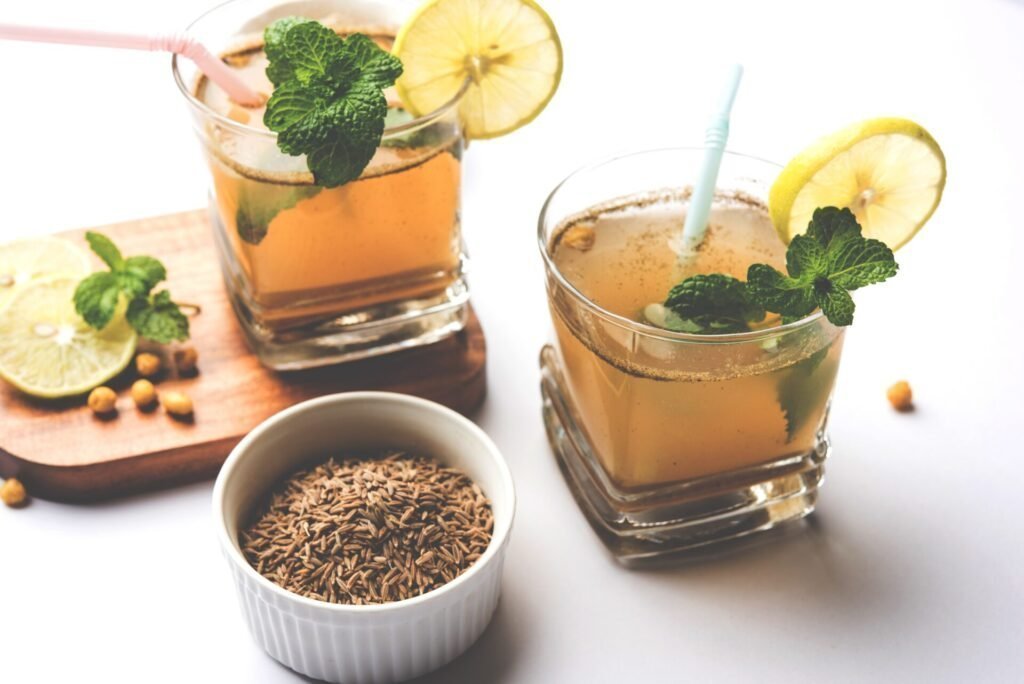
- as a herbal tea – simply steep 1 tsp of cumin seeds in a cup of boiling water, add the juice of one lemon, and drink at the end of a meal;
- as a smoothie – you could, for example, blend orange, lemon, carrot, ginger and cumin into a delicious smoothie (more spice ideas here);
- as flavoured water – in a litre of water, steep 1 tsp of cumin seeds, a few slices of lemon and lime, some rounds of cucumber and a few mint leaves, then sip throughout the day.
References
(1) 2008, Fukuchi et al., Lemon Polyphenols Suppress Diet-induced Obesity by Up-Regulation of mRNA Levels of the Enzymes Involved in beta-Oxidation in Mouse White Adipose Tissue
(2) 2003, Minato et al., Lemon flavonoid, eriocitrin, suppresses exercise-induced oxidative damage in rat liver
(3) 2021, Singh et al., Features, Pharmacological Chemistry, Molecular Mechanism and Health Benefits of Lemon
(4) 2018, Srinivasan, Cumin (Cuminum cyminum) and black cumin (Nigella sativa) seeds: traditional uses, chemical constituents, and nutraceutical effects | Food Quality and Safety
(5) 2021, Hannan et al., Nutrients | Free Full-Text | Black Cumin (Nigella sativa L.): A Comprehensive Review on Phytochemistry, Health Benefits, Molecular Pharmacology, and Safety
Frequently asked questions
How can I use cumin every day?
The easiest way is to season your dishes with it, either as seeds or ground. You can also steep 1 tsp of cumin seeds in a cup of boiling water, add the juice of one lemon and drink it at the end of a meal. It also works well in a smoothie or in flavoured water.
What do we really know about cumin?
Cumin is mainly appreciated for its flavour. To date, no effect on digestion or on your figure has been established. It’s worth distinguishing between cumin, whose brown seeds and ground powder flavour many Middle Eastern and Asian dishes, and black cumin, or nigella, which has small black seeds with a bold, peppery flavour.
How can I use lemon in cooking?
Lemon is very versatile: use it to season your dishes, in a herbal tea with cumin seeds, in a smoothie with orange, carrot, ginger and cumin, or in flavoured water with lime, cucumber slices and a few mint leaves.
Can lemon help you get a flatter stomach quickly?
No single food works on its own, and lemon is no exception. It simply has its place in your meals, as part of a varied and balanced diet.
Related articles
Useful categories: Slimming Nutrition, Weight Management.
To go further, explore the Cellublue shop: our body care products.


 -61%
-61%Seven supplements and a smart scale: the whole programme in one pack
- In the morning, the Weight Loss Capsules and the Apple Cider Vinegar Gummies: chromium contributes to the maintenance of normal blood glucose levels
- With meals, the Fat Burning Drainer and one Weight Loss Tablet: green tea and ash round off the formula
- In the afternoon and evening, the Fat Burning Tea, the Fat Burning Capsules and the theine-free Detox Infusion: plants that contribute to digestive functions