The craze for dietary supplements is gaining ground! Latest trend on the horizon: probiotics. These bacteria are often associated with digestion and the immune system, and some would even credit regular probiotic courses with a ‘flat belly’ effect. What should we make of this? We’ve investigated for you! Here’s what probiotics are, where to find them in your diet, what we know (and what we still don’t know) about their effect on the belly, how to take them and which habits to adopt alongside them.
What are probiotics?
1- Definition
Probiotics are actually micro-organisms (bacteria and yeasts), naturally present in certain foods, or added to certain products. They are the subject of a great deal of research, particularly into digestion, the immune system and vaginal flora. Once absorbed, some of them resist gastric juices and join, at least for a while, the intestinal microbiota, itself composed of thousands of micro-organisms.
Probiotics are categorized by families, the most well-known being:
- Lactobacilli, bacteria of lactic origin (L. bulgaricus, L. acidophilus, L. casei, L. gasseri) or plant-based (L. plantarum, L. cucumeris).
- Bifidobacteria (such as B. bifidus, B. breve or B. longum), bacteria found in dairy products (cheese, yogurt)
- Streptococci (such as S. thermophilus) food bacteria found in yogurt, but also in the human oral cavity.
- Saccharomyces (such as S. boulardii), which are yeasts, often isolated from fruits (lychee, mangosteen).
2- Food sources of probiotics
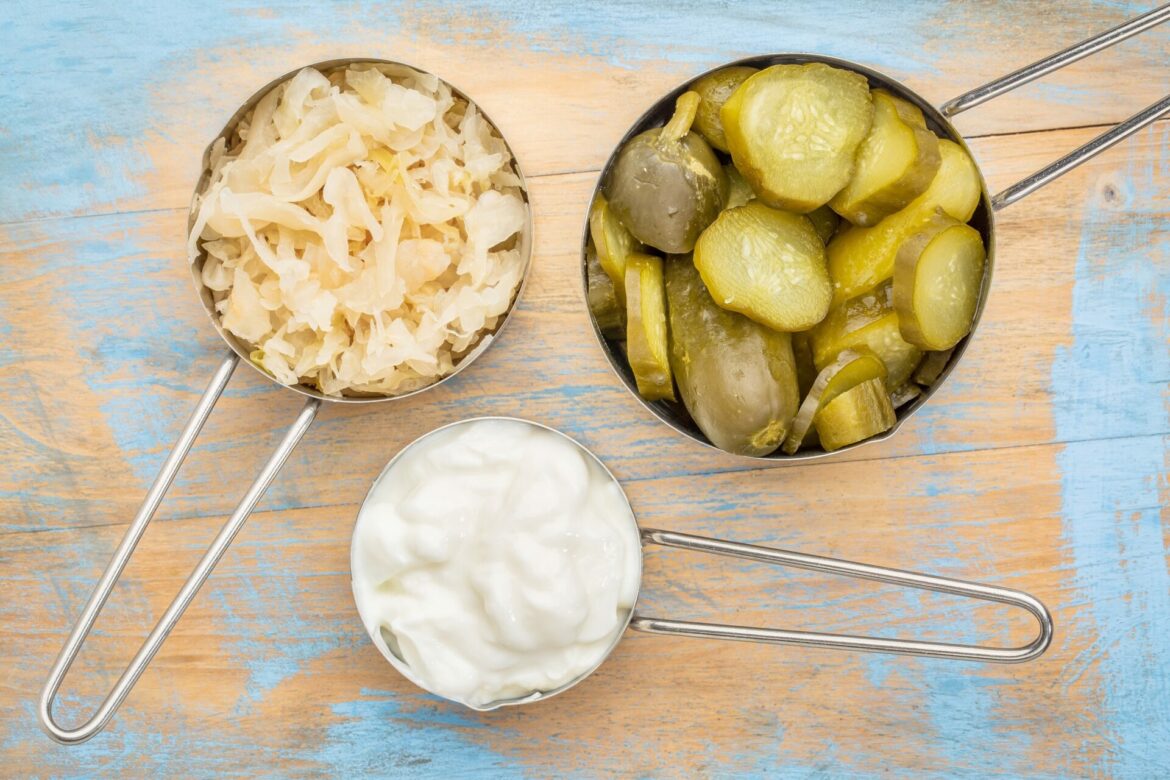
The most well-known food source of probiotics is of course yogurt. This is actually the food that sparked interest in probiotics: in the early 20th century, researchers looked into the yogurt that certain populations of Bulgaria consumed in their daily diet. Other dairy products are also well-stocked with probiotics, such as kefir, certain cheeses or buttermilk.
But plant-based sources of probiotics also exist:
- Pickled vegetables, such as pickles, gherkins, green olives…
- Sauerkraut
- Certain Asian dishes such as kimchi, zha cai, pào cài…
- All preparations made from fermented soy, such as tamari, tempeh, miso, natto…
- Brewer’s yeast
- Kombucha
- Sourdough bread
Do probiotics help you achieve a flat belly?

Probiotics are often associated with gut health, so many people wonder whether they could help them get a flat stomach.
Various studies have been conducted on the effect of probiotics in specific medical situations, for example:
- intestinal infections or inflammation and their duration (acute infectious diarrhoea, childhood diarrhoea, gastroenteritis, traveller’s diarrhoea);
- chronic inflammatory intestinal diseases such as Crohn’s disease, or functional bowel disorders;
- certain cases of obesity, type 2 diabetes and high cholesterol;
- constipation;
- food intolerance or sensitivity.
The findings vary depending on the strain and the person, and these cases require medical supervision. In very specific cases, an episodic or chronic condition can give the belly a bloated appearance and be accompanied by bowel problems, digestive difficulties, bloating and/or pain: it is then up to a doctor to look for the cause and judge whether taking probiotics could be of use. In a healthy individual, however, it is not established today that probiotic courses have a ‘flat belly’ effect.
Furthermore, the actual effectiveness of probiotics is still subject to debate within the scientific community. Indeed, researchers highlight certain conditions:
- Probiotics must be alive when ingested.
- They must resist gastric and bile acidity to reach the colon.
- They would need to be consumed in a regular course, and in sufficient quantities.
Furthermore, new studies would raise other limitations:
- The natural microbiota might not “accept” newly ingested bacteria, so probiotics would not be naturally integrated into the existing intestinal flora, but simply eliminated naturally…
- In case of dysbiosis (microbial imbalance in the intestine), taking probiotics would not help restore balance any more than a regular diet, as long as the latter is balanced and varied.
It would seem therefore that probiotics are not the universal (or miracle!) remedy for achieving a flat belly, and may only be of interest to certain people, subject to certain conditions and with a particular microbiota…
How to take probiotics?

If, despite everything, you wish to start a probiotic course, ask your GP or pharmacist for advice first. You can opt for two forms:
- A diet rich in probiotic foods, such as those listed above. It’s also a good idea to eat prebiotics alongside them. Prebiotics are substances (mainly certain types of fibre) that feed certain gut bacteria. You’ll find them in fruit, vegetables, honey, wholegrains and pulses.
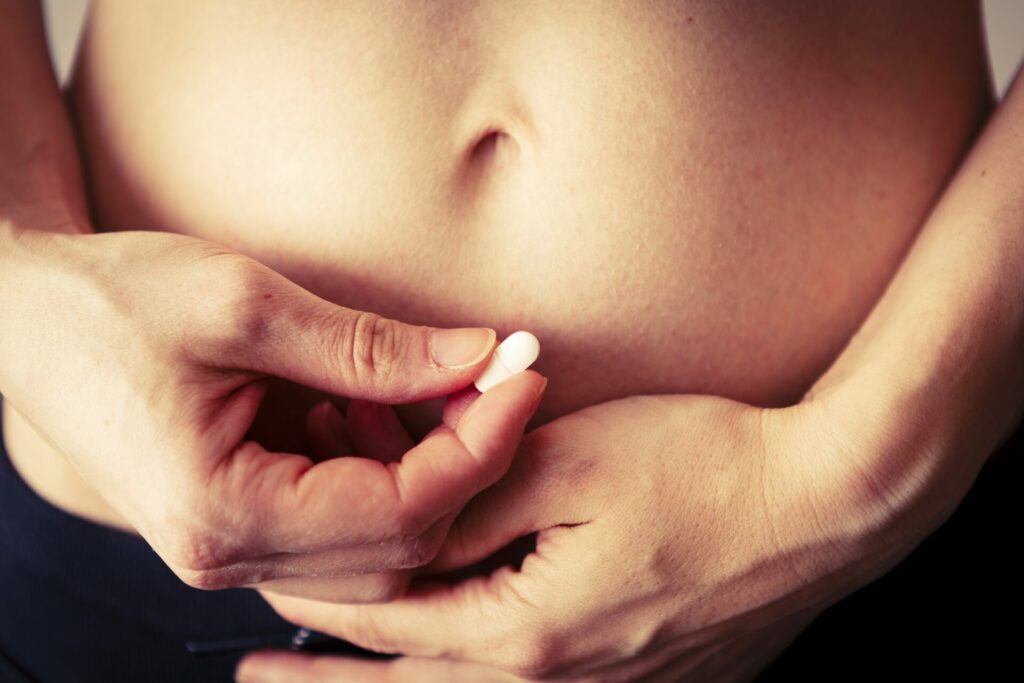
- Supplements: capsules, tablets or powders to dissolve in water. Bear in mind that stomach acid destroys a large proportion of the probiotics you swallow. So it seems sensible to choose enteric-coated tablets, which only dissolve once they reach the intestine. There is no set dose, though: it all depends on the type of probiotic and on each person’s metabolism.
What to combine with a probiotic course?
With or without probiotics, a few simple lifestyle and dietary rules remain the basics:
- A balanced diet of natural, unprocessed foods, ideally rich in fibre. Avoid foods that tend to leave you feeling bloated.
- Few excesses, whether in your diet (sugar, salt and saturated fat) or in your lifestyle (lack of sleep, smoking, alcohol).
- Drinking enough, mainly water.
- Regular physical activity. This means moving every day (walking, fun activities) and doing moderate-intensity exercise (swimming, running, cycling) two to three times a week.
- Keeping stress in check and getting good-quality sleep.
- If you like, a skincare routine for the tummy area, such as our Extra Flat Belly Program. It includes our two tummy-focused products. The Cryo Slimming Gel has a cooling effect. Our Night Slimming Care contains natural active ingredients and is used while you sleep. The programme also comes with a guide full of wellbeing tips, recipes and exercise routines.
Related articles
- The Cellublue Belly Care Routine, Morning to Night
- Top 10 homemade drinks: from Sassy Water to kombucha
- Drinks to try daily: from Sassy Water to green tea
Useful categories: Slimming Nutrition, Weight Management.