
We all know what cellulite is (unfortunately!), but did you know there are actually several types? There are three: adipose cellulite, aqueous cellulite and fibrous cellulite. Depending on which type you have, the recommended approach may differ. In this article, discover the different types of cellulite, how to identify each one, and learn the right techniques and tailored solutions for each!
Adipose cellulite
Adipose cellulite is mainly caused by a poor diet, lack of physical activity and excess weight — and therefore excess fat. With adipose cellulite, the skin feels soft to the touch and is not painful when pinched.
Causes and characteristics :
It is primarily caused by an unbalanced diet, high in fat and sugar, combined with a lack of physical activity. When you consume more fat than your body needs, fat cells grow and multiply. As a result, the body’s fat-breakdown mechanisms can no longer function properly. Fat accumulates in the adipose tissue, toxin circulation becomes impaired, and toxins end up trapped inside the cells. The skin then takes on a bumpy appearance.
Body area :
It is mainly found on the stomach, the hips, the buttocks and the saddlebags.
Solutions to eliminate adipose cellulite:
- First, rebalance your diet: cut out ready meals and opt for fresh produce wherever possible. Certain foods also help burn fat, particularly those rich in vitamin C.
- Next, focus on endurance exercise several times a week — such as brisk walking, boxing or interval training. Endurance sports are particularly effective at burning fat.
- Finally, to tackle adipose cellulite, also rely on anti-cellulite massages. They stimulate lipolysis and help release stored fat cells.
Learn more about adipose cellulite
Aqueous cellulite
Aqueous cellulite is often the type of cellulite found on slimmer women.
Causes and characteristics :
This type of cellulite is mainly caused by a lack of physical activity and poor venous and lymphatic circulation, leading to water retention. Water retention causes tissue swelling and compresses the blood and lymphatic vessels. As a result, the body becomes even less able to eliminate fluids, which continue to build up beneath the skin. This tissue swelling gives the skin that bumpy texture we all know as orange-peel skin. Another distinctive feature of aqueous cellulite is that it is tender to the touch.
Body area :
Aqueous cellulite is often accompanied by a feeling of heavy legs and mainly affects: the arms, the thighs, the calves and the ankles.
Solutions to eliminate aqueous cellulite:
- First and foremost, the key to reducing this type of cellulite lies in improving circulation to reduce water retention.
- When it comes to diet, salt is your enemy! Drink plenty of water before you feel thirsty, and focus on foods with draining properties: broccoli, lemon, berries… Also favour foods rich in vitamin B6 and those high in potassium, such as sun-dried tomatoes and dried apricots, for example.
- For exercise, prioritise activities that stimulate blood circulation in the legs. Water-based sports are highly recommended. Try swimming, aqua aerobics or aqua cycling — the choice is yours!
- Finally, for massages, focus on draining massages that improve venous and lymphatic circulation. Try anti-cellulite cupping massage. The cups follow the natural flow of the lymph and help stimulate its circulation, allowing your body to eliminate waste more effectively. As a result, cellulite gradually diminishes.
Learn more about aqueous cellulite
Fibrous cellulite
Fibrous cellulite is the most stubborn type of cellulite, as it is deeply embedded in the tissues and has been there for a long time.
Causes and characteristics :
It is caused by collagen fibres that have developed around long-established fat cells. This type of cellulite is also linked to a sedentary lifestyle and genetics. It can also be triggered by a diet high in sugar and a lack of physical activity. It is the hardest type of cellulite to eliminate, but with motivation it can be overcome! Fibrous cellulite is caused by the hardening of collagen — a fibrous protein that affects skin elasticity. If your skin feels sensitive and painful when pinched, you likely have this type of cellulite.
Body area :
The areas most affected by fibrous cellulite are the thighs and the knees.
Solutions to eliminate fibrous cellulite:
- The first rule concerns diet: it is essential to cut out refined white sugar (such as pastries, industrial cakes, etc.). Also focus on vegetables (courgettes, lentils…), proteins, wholegrains and make sure you stay well hydrated!
- Second reflex: get moving! Endurance activities (especially walking or cycling) are highly recommended. Work on your cardio to burn fat and on strength training to firm and tone the skin.
- Finally, to truly tackle it, you should also rely on intensive palpate-and-roll massage since the cellulite is deeply embedded and hard to dislodge. The massage breaks down the fat cells responsible for cellulite, which are then naturally eliminated through the body’s blood and lymphatic circulation.
Learn more about fibrous cellulite
Summary table of the different types of cellulite
Here is a quick overview of everything you need to know about the different types of cellulite.
| Photos | |
| Cellulite Adipeuse | 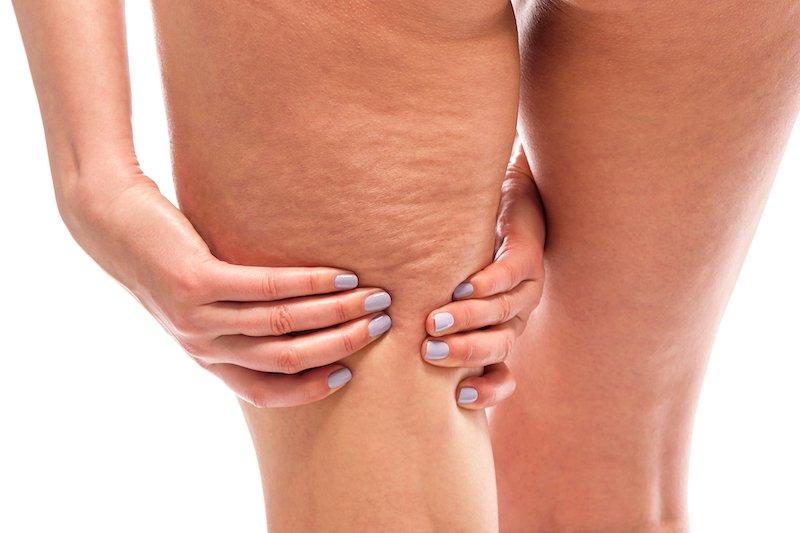 |
| Cellulite Aqueuse | 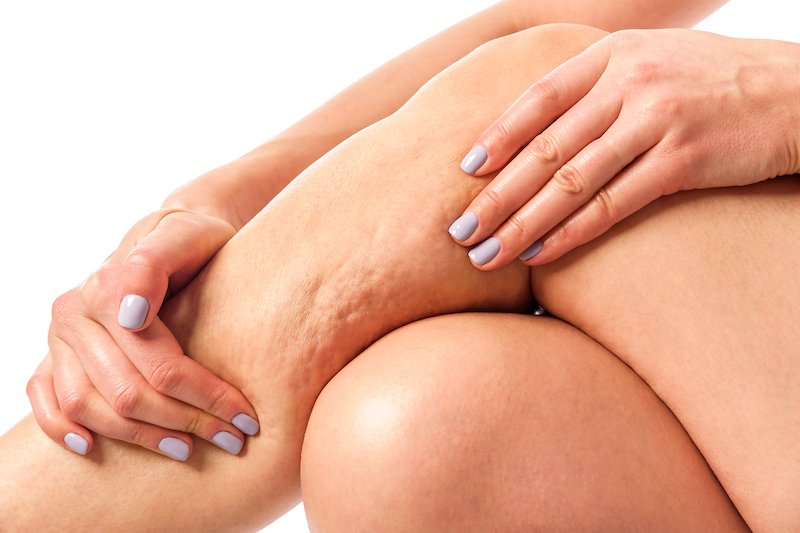 |
| Cellulite Fibreuse | 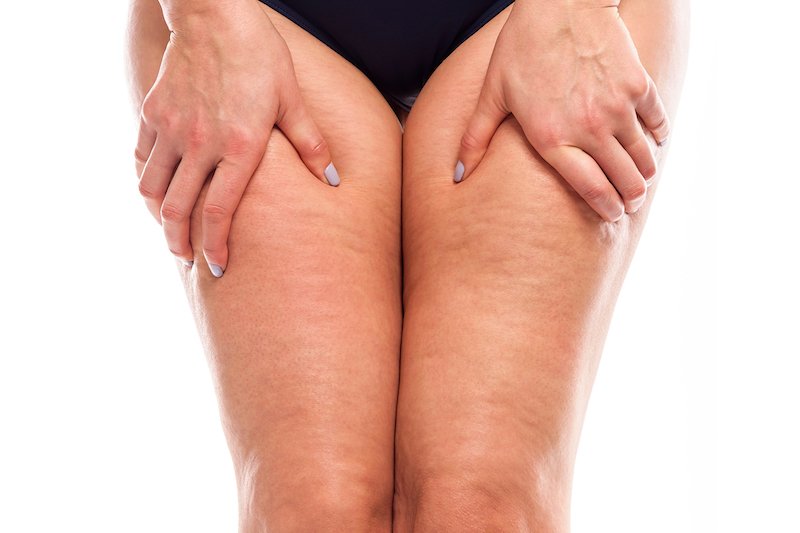 |
| Causes | |
| Cellulite Adipeuse | Mauvaise alimentation Manque d’activité physique Excès de poids |
| Cellulite Aqueuse | Rétention d’eau Mauvaise circulation veineuse et lymphatique Manque d’activité physique |
| Cellulite Fibreuse | Fibres de collagène qui entourent les cellules graisseuses Sédentarité – hérédité Alimentation riche en sucre |
| Caractéristiques | |
| Cellulite Adipeuse | Peau molle et souple au toucher Non douloureuse |
| Cellulite Aqueuse | Sensations de jambes lourdes Gonflements Douloureuse au toucher |
| Cellulite Fibreuse | Incrustée Douloureuse au toucher et rigide |
| Zones du corps | |
| Cellulite Adipeuse | Ventre Hanches Fesses Culotte de cheval Cuisses |
| Cellulite Aqueuse | Cuisses Bras Mollets Chevilles |
| Cellulite Fibreuse | Cuisses Genoux |
| Solutions Alimentation | |
| Cellulite Adipeuse | Alimentation pauvre en graisses Beaucoup de fruits et légumes |
| Cellulite Aqueuse | Aliments riches en potassium (tomates séchées, abricots secs, pistaches…)Vitamines B6Boire beaucoup d’eau |
| Cellulite Fibreuse | Alimentation riche en : Légumes (courgettes, lentilles…) Protéines Féculents complets Boire de l’eau |
| Solutions Sport | |
| Cellulite Adipeuse | Sports d’endurance : fractionné, marche rapide, boxe… |
| Cellulite Aqueuse | Sports stimulant la circulation sanguine au niveau des jambes : natation, aquabiking… |
| Cellulite Fibreuse | Alterner cardio et renforcement musculaire |
| Solutions massages | |
| Cellulite Adipeuse | Massage anti-cellulite |
| Cellulite Aqueuse | Massage drainant et anti-cellulite |
| Cellulite Fibreuse | Massage palper-rouler intensif |
To perform an effective anti-cellulite massage, discover the Cellublue method with the cupping cup. It will be your go-to tool for targeting cellulite on the thighs, stomach, buttocks, saddlebags, arms and more. Find the cup in our Pack 100% Anti-Cellulite, which includes the complete method for eliminating all types of cellulite!
