You’ve probably spotted one of these curious machines at your favourite gym. The vibration plate, also known as a vibration machine or power plate, has become increasingly popular with fitness enthusiasts and with people looking to tone up. But what can you actually expect from one when it comes to cellulite? We cover how it works, the different types of plate, the settings, what the studies say, the precautions to take and what to pair it with. Let’s take a closer look at this… vibrating device!
What is a vibration plate?
A vibration plate, also known as a power plate, is a fitness device mainly used to tone and strengthen the body. In recent years, it has also attracted people who want to look after their figure. That said, watch out for the common mistakes people make when watching their weight. As a result, you’ll now find these machines in many fitness centres, physiotherapy practices and wellness spaces.
The vibration plate was originally developed by the Russians in the 1970s to help cosmonauts regain muscle mass after extended stays in space. By the late 1990s, however, the technology was repurposed by a sports trainer who recognised its potential. He turned it into a muscle stimulation tool and began commercialising the vibration plate on a large scale.
Today, there are two types of vibration plates:
- The classic vibration plate, featuring a platform that moves up and down along a vertical axis (vertical vibrations).
- The oscillating plate, whose platform pivots around a central axis — one side rises while the other falls, and vice versa. This oscillation engages your sense of balance.
The first type is the most widely used and most common.
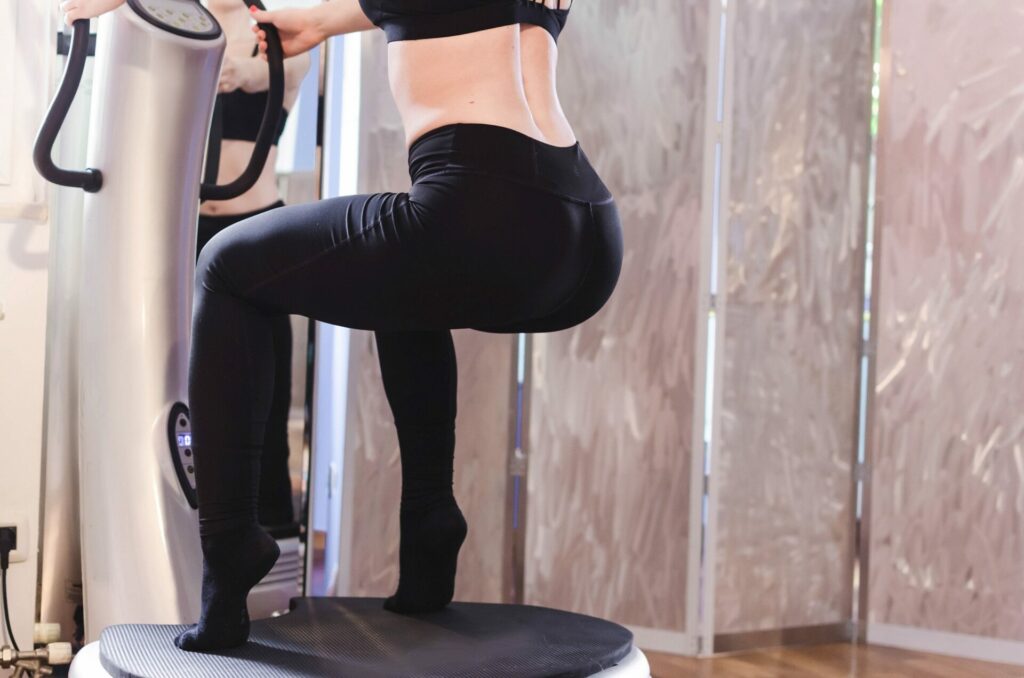
A vibration plate typically consists of a motorised platform attached to a column. At the top of the column, you’ll find handlebars to hold onto during exercises, along with a console for adjusting the frequency and intensity of the vibrations.
How does a vibration plate work?
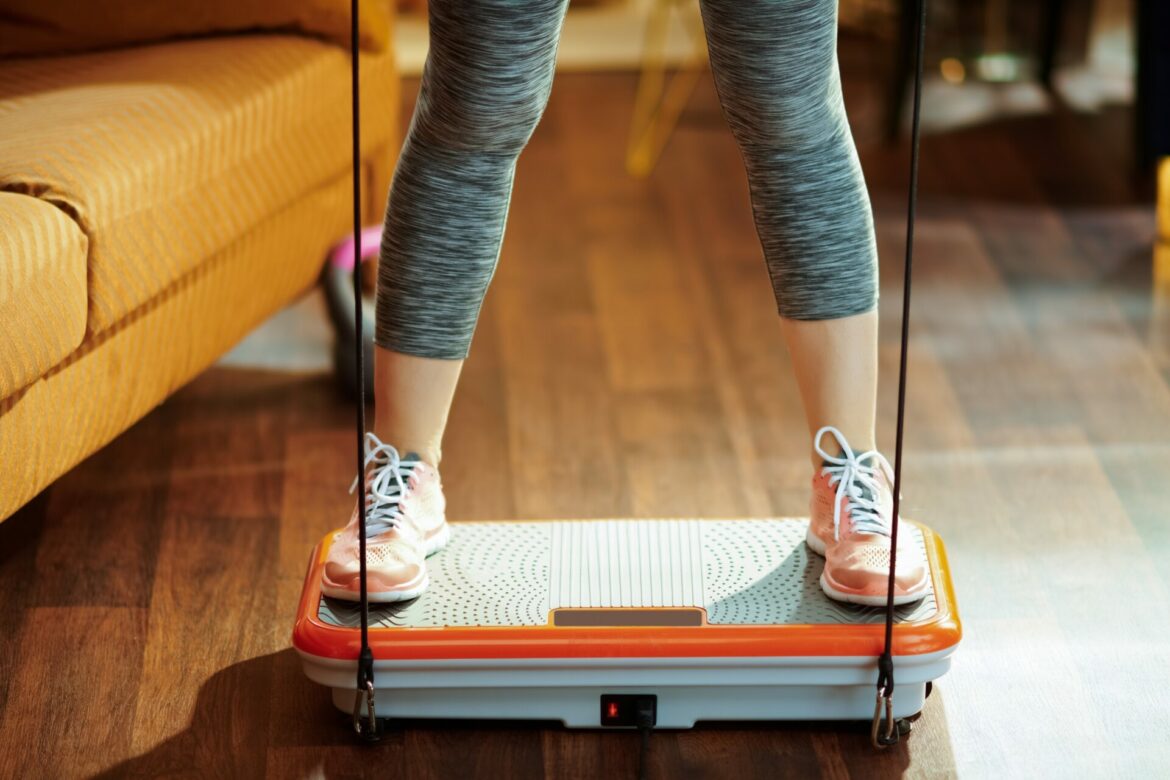
The principle is straightforward: vibrations of varying intensity destabilise the body, forcing the muscles to engage in order to maintain balance. The intensity of the vibrations depends on two factors:
- Frequency: the number of vibrations per second. For example, a frequency of 50 Hz (hertz) means the plate vibrates 50 times per second.
- Amplitude: the distance between the platform’s starting position and its maximum displacement during vibration or oscillation. An oscillating plate, by its very design, offers a greater amplitude than a standard vibration plate.
Intensity settings vary depending on your goals and desired effects:
- Low frequency (10 to 30 Hz): relaxation, muscle rehabilitation.
- High frequency (30 to 60 Hz): muscle strengthening, building mass.
- A greater amplitude allows the vibrations to act more intensely and more broadly throughout the body.
As for the type of vibrations:
- Classic (vertical) vibrations work all the muscle groups and are used in functional rehabilitation.
- Oscillating vibrations only work the lower body (legs, thighs, glutes).
Can a vibration plate be used to target cellulite?
1- What the studies say
Vibration plate manufacturers have commissioned numerous studies to demonstrate the device’s effectiveness in terms of body composition (fat mass and lean mass), blood circulation, and muscle conditioning and recovery. However, there is currently no research specifically examining the benefits of this device on cellulite.
That said, a vibration plate is first and foremost a piece of training equipment:
- A massage-like sensation: the vibrations are often compared to a massage. The oscillating plate, for its part, mimics a walking motion (see also our article on cellulite and heavy legs).
- Muscle work: the vibrations, combined with specific postures as part of resistance training, work the muscles.
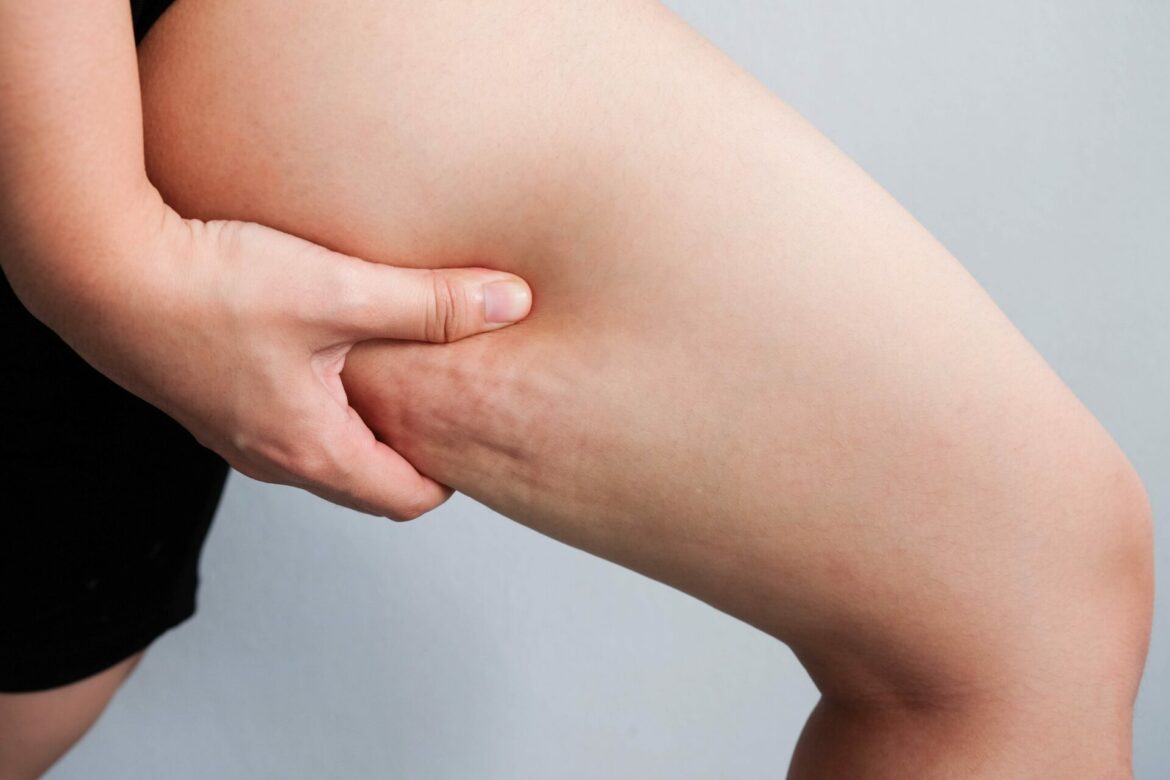
As we know, cellulite results from a combination of factors, including hormones, lifestyle and genetics. As there are no studies on cellulite, it is not possible to promise that regular vibration plate sessions will have any effect on orange-peel skin. They remain an add-on to regular physical activity. To find out more about how fat is stored, see our article on lipolysis.
2- Vibration plates and cellulite: how to use one properly
Using a vibration plate (which is, at its core, a medical device) works best when supervised by a physiotherapist. The machine settings and the postures adopted on the platform play a significant role in how well it works. Using a vibration plate without professional guidance may not be very useful and could even cause discomfort to the skeletal structure. It’s also worth noting that vibration plate use is not recommended for pregnant women, or those with high blood pressure, migraines, epilepsy, an IUD, a pacemaker…
Furthermore, a vibration plate session cannot replace a 30-minute run. Physical exertion during exercise has an overall and natural effect on the body. Alongside it, it would be worth combining vibration plate sessions with cardio activities such as running, brisk walking, swimming or cycling.
Finally, using a vibration plate is part of an overall lifestyle, which includes a healthy, balanced diet. It can also be combined with a dedicated anti-cellulite skincare routine, including massages and targeted treatments!
Vibration plates and cellulite: what about before-and-after photos?
You’ve probably come across “before and after” photos online that are said to show a vibration plate’s effect on cellulite. Remember that there are no studies on the benefits of this machine for cellulite. These pictures also tell you nothing about each person’s routine: how often they trained, whether they were supervised by a physiotherapist, what other exercise they did, their diet and their skincare.
Rather than comparing your figure with other people’s, go at your own pace, be patient and consistent, and listen to your body.
Electrostimulation: a gentler alternative to the vibration plate
Other technologies exist to help you care for your skin when it comes to cellulite, electrostimulation being one of them. This technique can:
- Work on muscle tone. Electrical impulses make the muscles contract, without you having to contract them yourself.
- Complement physical activity. Electrostimulation is not a substitute for exercise, but it can be added to it.
You can therefore consider an anti-cellulite routine that combines a few vibration plate sessions with at-home electrostimulation treatments. This is now possible thanks to our Electric Cellulite Cupping Device, which brings together two technologies:
- The LIPO function, which mechanically replicates the palpate-roll massage. The cup gently suctions the skin, while the rollers massage it.
- The EMS function, which electrically stimulates the muscles. The device features small electrodes, and no, it doesn’t hurt!
How it feels during use varies from one person to another, so start gently.
Professional anti-cellulite technology at home
- Designed to smooth the look of dimpling & tone the skin in depth
- Visibly smooths the appearance of orange-peel skin
Frequently asked questions
What exercises should I do on a vibration plate?
The postures you adopt on the plate and the machine settings make a big difference. The safest option is to ask a physiotherapist to show you suitable exercises. You can also do some cardio, such as running, brisk walking, swimming or cycling (see the section “Vibration plates and cellulite: how to use one properly”).
How do you use a vibration plate?
You set the frequency and intensity of the vibrations on the console, and you hold the handlebars during the exercises. The settings vary depending on your goals (see the section “How does a vibration plate work?”). Ideally, ask a physiotherapist to help you choose the settings and postures.
Is a vibration plate suitable for everyone?
Not necessarily. Vibration plates are not recommended in several situations, for example during pregnancy. If you have any doubts, are taking medication or have a medical condition, ask your GP or another medical professional for advice before stepping on the plate.
Related articles
- Exercise Bike & Cellulite: Does It Really Work?
- Waterbike and Cellulite: What Can You Expect?
- Planking and Cellulite: Does It Work?
Useful categories: Anti-Cellulite Solutions.