Among the surprising cellulite-related trends found online, there is one that would have our grandmothers shaking their heads: compression stockings. These compressive garments, typically reserved for cases of severe venous insufficiency, are now being mentioned in connection with dimpled skin. But do compression stockings really have a place when it comes to cellulite?
What are compression stockings?
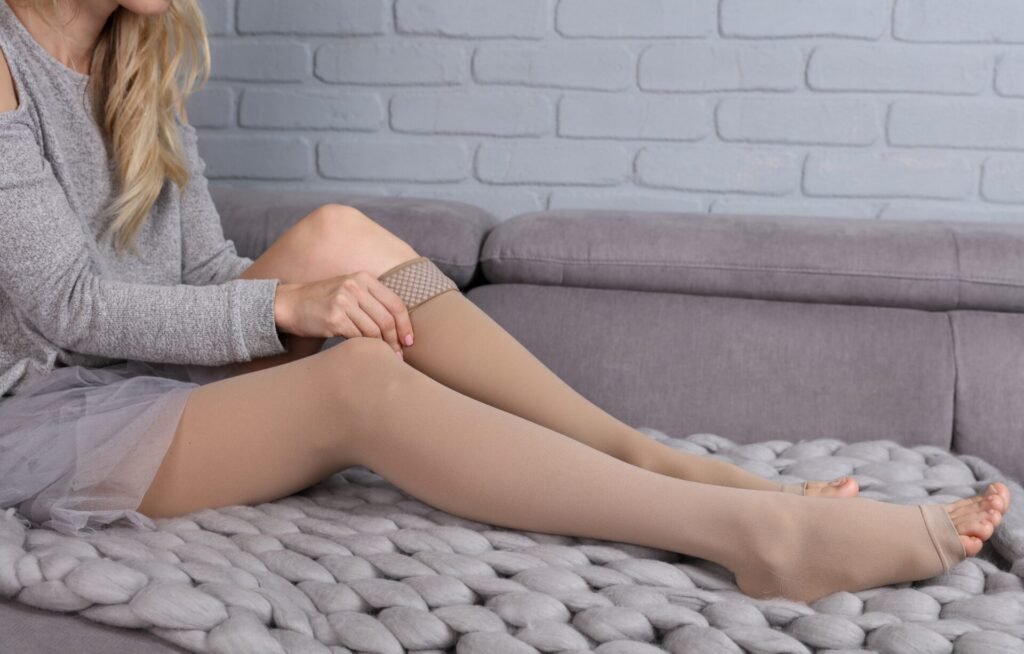
These are stockings made from a highly elastic material, which apply firm pressure to the legs. This intense compression is generally used, on professional advice, for venous return disorders, i.e. when blood struggles to flow back to the heart.
1- When are compression stockings recommended?
Compression garments are medical devices, generally prescribed for certain forms of venous insufficiency.
They may also be prescribed for pregnant women.
Compression stockings may also be considered in cases of chronic lymphatic insufficiency, for example in cases of lymphoedema. In every case, their use should be decided with a doctor.
2- What types of compression garments are available?
We often refer to stockings, but compression garments come in various formats: socks, stockings or tights, covering all or part of the legs. Compression bandages also exist, but these are reserved for the most severe cases and are generally applied by a healthcare professional. There are also sleeves (for the arms) and gloves (for the hands).
Finally, the level of compression varies depending on the severity of venous insufficiency. Compression garments are therefore categorised into 4 different classes.
Do compression stockings have an effect on cellulite?
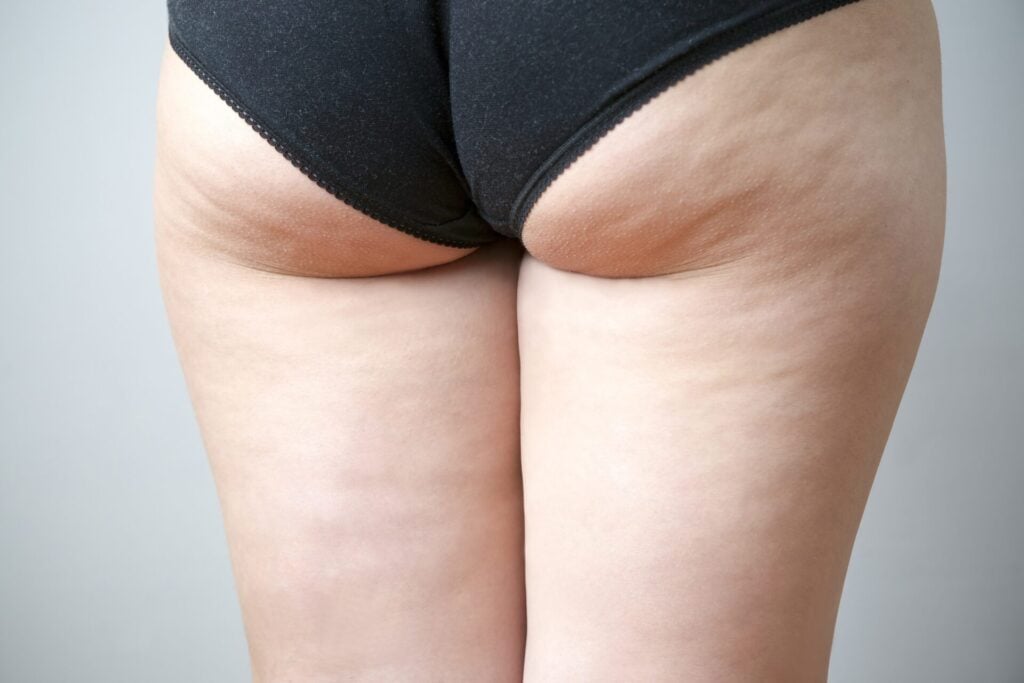
1- Compression stockings: useful for all types of cellulite?
First of all, it depends on which type of cellulite we are talking about. There are 3 types:
- adipose cellulite, which is mainly linked to the fat cells (adipocytes);
- fibrous cellulite, painful and deeply embedded, caused in part by a hardening of the elastic network beneath the skin;
- aqueous cellulite, caused by water retention.
In the first two cases, wearing compression stockings appears to offer little benefit. These types of cellulite are not caused by circulatory weakness, but rather by lifestyle factors: a diet too rich in calories combined with a sedentary routine. Stress, genetics and hormonal fluctuations can also contribute to the development of this type of cellulite.
2- The effects of compression stockings on aqueous cellulite
In the case of aqueous cellulite, the answer is somewhat different. Sometimes referred to as infiltrated cellulite or hydrolipodystrophy, it is caused by water infiltration into the tissues. The fluid becomes trapped, compressed by the adipocytes, and cannot be naturally eliminated. This leads to swelling and oedema, particularly in the lower limbs (gravity being a key factor).
Aqueous cellulite is often associated with venous insufficiency, lymphatic insufficiency, or a combination of both. Only a doctor can assess these issues.
- venous insufficiency, which may come with a feeling of heavy legs;
- lymphatic insufficiency, which concerns the lymph circulation.
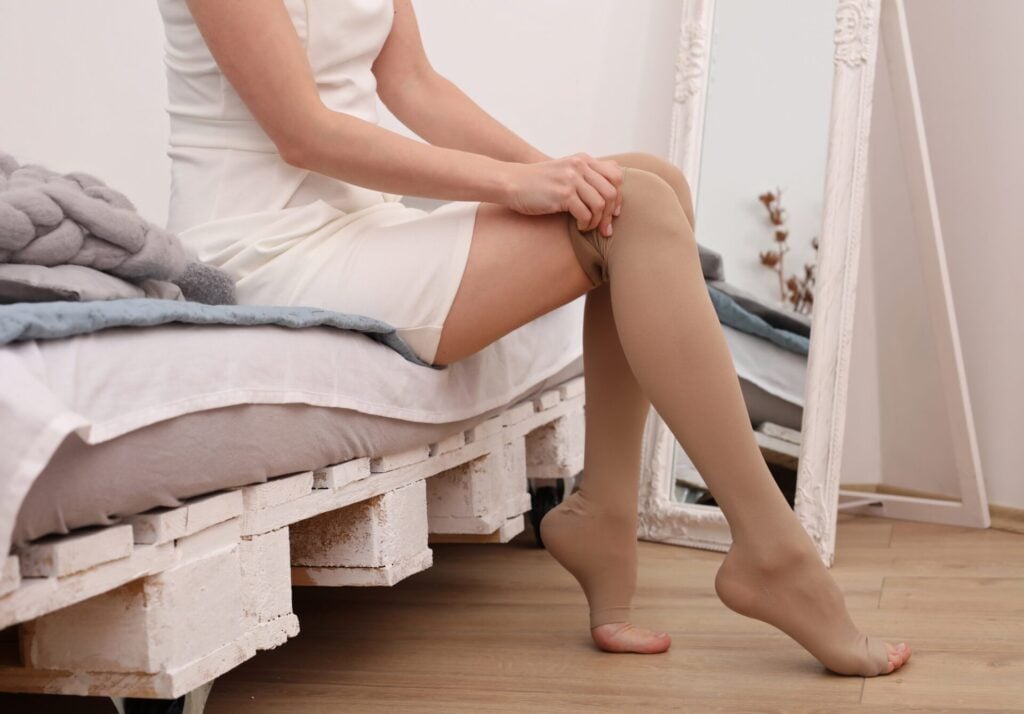
Compression stockings are designed for certain veno-lymphatic disorders: they apply compression to the legs. There is nothing magical about them, and their use is a matter for medical advice, particularly in the case of circulation disorders. When it comes to cellulite, however, their relevance remains limited, and at most concerns confirmed cases of aqueous cellulite.
Finally, it is worth noting that in cases of mixed cellulite (a combination of adipose and aqueous cellulite), their relevance will be limited. Compression stockings do not address the adipose component of mixed cellulite, which is not linked to water retention. Alongside a balanced diet and regular physical activity, you can include a skin-rolling massage in your routine (for example, with our Cupping Cup and our Massage Oil).
Before reaching for a pair of compression stockings, take the time to identify your cellulite type — your doctor can help — and always seek professional advice (such as from a pharmacist) before choosing a compression garment.
Frequently asked questions
What is cellulite?
Cellulite is usually divided into three types: adipose (linked to fat cells), fibrous (linked to a stiffening of the elastic network beneath the skin) and aqueous (linked to water retention).
How can I tell which type of cellulite I have?
There are three types of cellulite: adipose, fibrous and aqueous. They can also occur together, which is known as mixed cellulite. The simplest way to find out which type applies to you is to ask your GP.
Why do people wear compression stockings?
Compression stockings are generally reserved for specific medical situations, as described above. They are not a beauty product: if you are wondering whether they are right for you, ask your GP or another medical professional.
Compression stockings, tights or socks: which should I choose?
The different formats and pressure classes are outlined in the section “What types of compression garments are available?” above. Choosing the right one is not something to do on your own: ask a medical professional, such as your GP or pharmacist, for advice.
Related articles
Useful categories: Water Retention, Anti-Cellulite Solutions.