
Water retention often goes hand in hand with cellulite that forms on the thighs, calves and buttocks. It can even worsen the appearance of dimples! Yet simple, natural everyday habits are within everyone’s reach. Here are 10 natural ideas for water retention: homeopathy, aromatherapy, herbal medicine, the right foods, sport, clothing, lifestyle habits, water and massage, plus when to see your doctor!
1. Homeopathy

Some people turn to homeopathy for water retention. Before you start, ask your doctor or pharmacist for advice. Here are the remedies most often mentioned; only a healthcare professional can tell you whether they are right for you and at what dosage:
- Natrum sulfuricum 5CH, often mentioned for water retention throughout the body.
- Thuya occidentalis 5CH, mentioned for a feeling of swelling around the hips and thighs.
- Bovista 5CH, mentioned for the upper body, such as the arms.
- Solidago 6DH, sometimes suggested by pharmacists as a complement (see also our dedicated article).
2. Aromatherapy
Aromatherapy is another popular option. You can dilute 30 drops of juniper and cypress essential oils in 50 ml of sweet almond oil. This natural blend is a lovely addition to your massages. Massage yourself with this blend every day for around ten days, for example after your shower or bath.
3. Herbal medicine
Plants also have their place in this routine! You can drink herbal teas made with meadowsweet, artichoke, horse chestnut or birch leaves several times a day. Some people also turn to Ribes nigrum or orthosiphon mother tincture, diluted in a glass of water. Ask your pharmacist for advice before starting any course.
4. The right foods

To limit water retention, the best approach is to choose fresh produce and low-sodium foods. Steamed asparagus deserves a place on your menu. Don’t overlook artichoke either: you can also enjoy it as an herbal tea using dried leaves, two cups before each meal for a week.
Don’t forget protein, which has its place in a balanced diet. Opt for white meat and fish, as well as lentils and whole grains. You can consume up to 55 g of protein per day.
Drink plenty of water, including green tea, lemon water and natural fruit juices — and steer clear of fizzy drinks.
5. The best sports if you’re prone to water retention
Certain activities such as aqua cycling, swimming and cycling are recommended if you’re prone to water retention. Since water retention most often affects the legs, it’s best to favour sports that work the lower body. Water-based activities are particularly popular, as the water massages the skin while you exercise. Practise these activities regularly.
6. Your choice of clothing
It may sound surprising, but hear us out… If you tend to wear tight-fitting clothes, they may be compressing your waist, thighs and legs a little too much and making your legs feel more swollen. We know you love your slim-fit trousers, but if you tend to suffer from heavy legs, it might be time to put them away and opt for a “mom” or “boyfriend” cut, roomier and less restrictive on the thighs and calves. The same goes for high heels: gorgeous as they are, they’re not the kindest footwear for your legs. Choose comfortable shoes that don’t restrict your stride. These small changes can make a big difference to how your legs feel.
7. Lifestyle habits
If you’re prone to water retention and cellulite, it’s important to adopt good overall lifestyle habits.
- Prioritise quality sleep, which is essential to your overall wellbeing. If you’re prone to water retention, you can also try slightly elevating the foot of your bed: many people find their legs feel lighter when they wake up.
- Add more movement to your day! Staying active is one of the good habits to adopt if you’re prone to water retention. Every little bit counts: take the stairs instead of the lift, go for a short walk after lunch, pace while you’re on the phone, play actively with your kids, or do the housework with music on!
- Avoid all kinds of excess: keep alcohol and tobacco to a minimum. Junk food is a source of salt which, when consumed in excess, will worsen water retention. And sedentary behaviour, because we are naturally “designed” to walk, not to sit all day.
8. Water, every day

- From the inside: water retention is not caused by drinking too much water. Quite the opposite! It goes hand in hand with dehydration: if you don’t drink enough, your body will start storing reserves, trapping water in the tissues. So drink up! Favour waters rich in potassium and low in sodium.
- From the outside: make the most of water massages (or hydromassage)! Every day, take an invigorating shower, not too hot (heat tends to make legs feel heavier). Run a cold jet of water over your legs, starting at the ankles and slowly working your way up to the hips. Use upward movements with the jet: a lovely, refreshing feeling for tired legs!
9. Medical consultation
If you suffer from severe water retention, wake up with a puffy face and notice visible swelling, it may be worth speaking to your doctor. There could be an underlying condition causing significant water retention. It may be a benign — but genuinely uncomfortable — issue linked to a pronounced premenstrual syndrome (PMS). Thank you, hormones! But it could also point to a cardiac condition. In that case, a consultation is definitely worthwhile. Either way, your doctor can advise you on natural approaches to managing water retention.
10. Massage
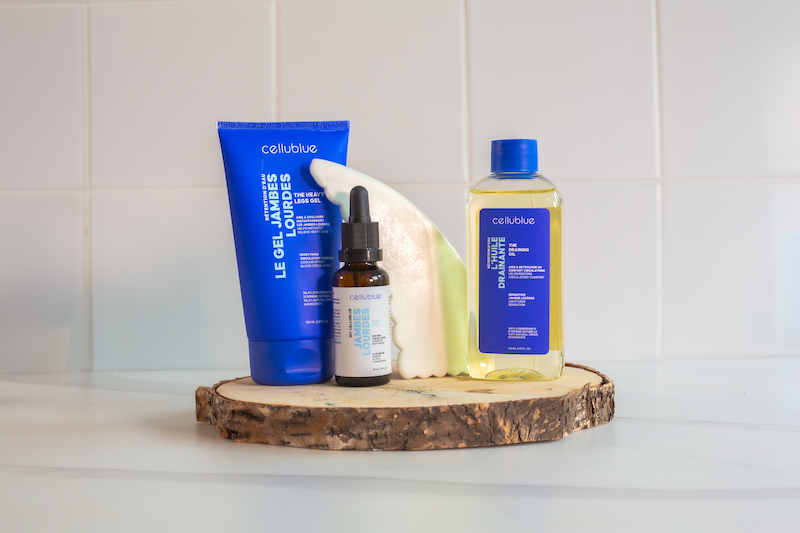
Heard of massages? They’re a popular way to care for legs prone to water retention, and they bring a pleasant feeling of lightness. And here at Cellublue, we have exactly what you need.
Our Anti-Water Retention Pack supports your routine for caring for legs that feel heavy. It includes:
- A Gua Sha in jade stone: this traditional Chinese massage tool is ideal for massaging the skin and the cellulite-prone areas of your body.
- A Draining Massage Oil containing 2 essential oils. It complements the Gua Sha and helps it glide during the massage.
- A Heavy Legs Gel with a cooling effect for tired legs. It combines natural ingredients chosen to care for legs prone to water retention.
- A Heavy Legs Booster to use with the gel to prolong the cooling sensation.
With this pack, massage is no longer a chore: it becomes a genuinely enjoyable ritual.
So, ladies, are you ready to pamper your legs every day?
Frequently asked questions
How can I deal with water retention day to day?
Several simple habits can be combined. Eat fresh, low-salt foods and drink enough water. Keep moving every day, and wear clothes and shoes that don’t squeeze your legs. Take showers that aren’t too hot and massage your legs regularly. Sections 4 to 8 and section 10 go into more detail on each of these tips.
How can I reduce water retention quickly?
No solution works overnight, so consistency matters more than speed. To start, cut down on salt, drink enough water and move whenever you can. You can also run cold water over your legs, from the ankles up to the hips. If the swelling is significant or comes on suddenly, see a doctor.
Should I drink less water to limit water retention?
No, quite the opposite. As explained in section 8, water retention isn’t caused by drinking too much water. If you don’t drink enough, your body tends to store reserves. Choose waters rich in potassium and low in sodium, and steer clear of fizzy drinks.
When should I see a doctor about water retention?
See your doctor if your water retention is severe, if you wake up with a puffy face or if you notice visible swelling. Only a doctor can identify the cause. You can also ask them about the natural approaches covered in this article, such as homeopathy or herbal remedies.
Related articles
- Water retention: natural approaches to explore
- Water cellulite: signs, causes and everyday tips
- 10 tips to fight water retention
Useful categories: Anti-Cellulite Tips.