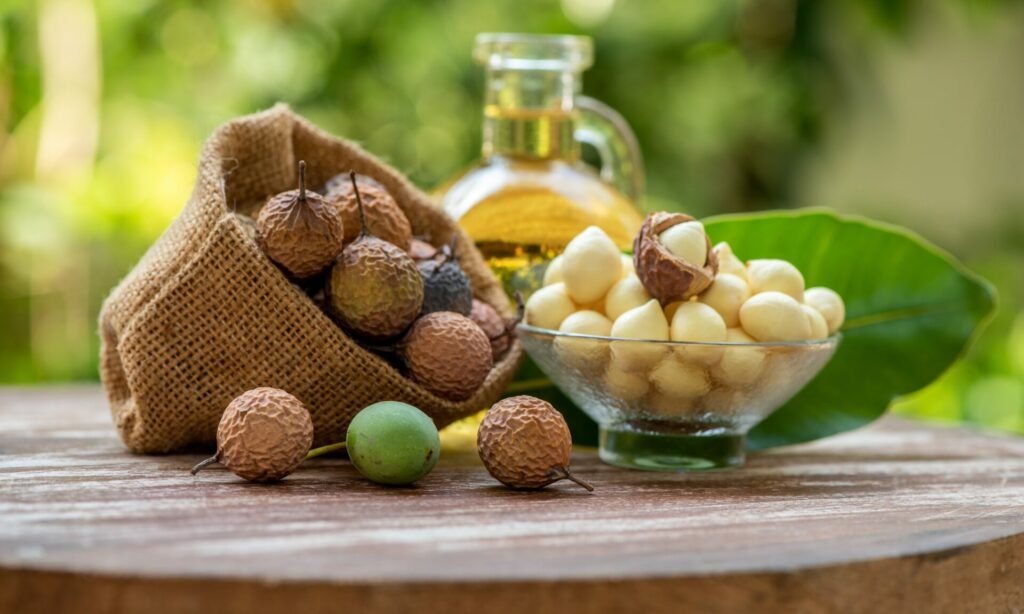
We now know it well: every natural plant oil has its own specificities, properties and benefits. And there is one that is particularly interesting in an anti-cellulite routine: calophyllum oil. Origin, appearance, composition, properties, precautions for use and homemade recipe ideas: here is what you need to know about this remarkable oil, as much for its texture as for its scent.
What is calophyllum oil?
1- Origin
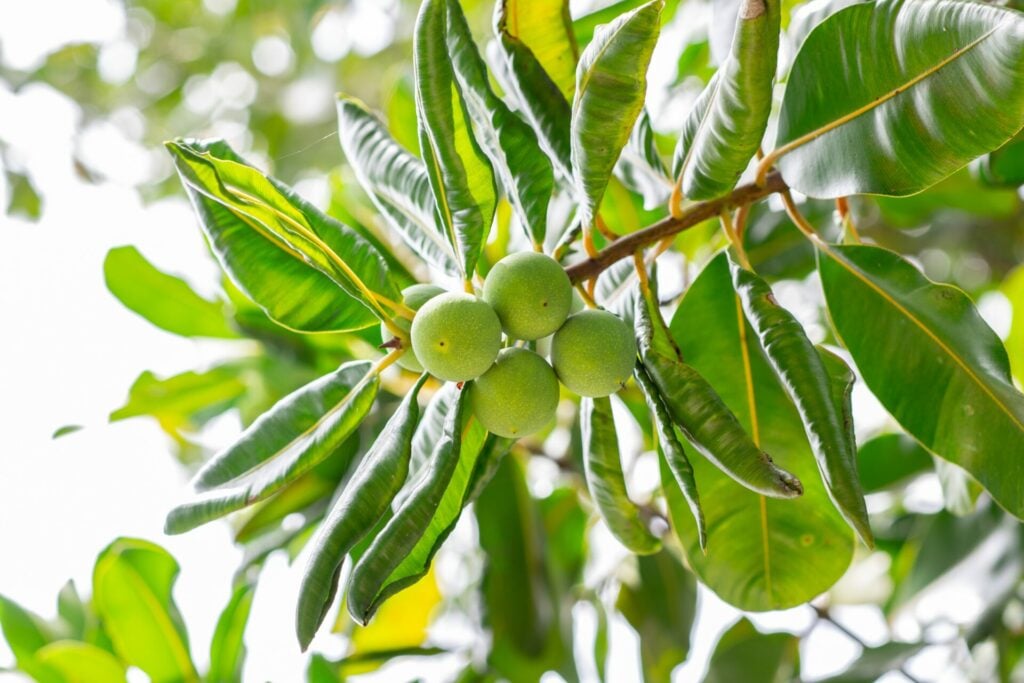
There are several species of calophyllum. But when we talk about a plant oil, we are actually referring to Calophyllum Inophyllum, also known as Takamaka, Tamanu (in Polynesia) or Foraha (in Mauritius). It is a tropical tree that grows mainly along warm ocean shores, as it thrives in salty, sandy soils. Its propagation is particularly fascinating: its fruits fall into the sea and float until they find a suitable spot to germinate and give rise to new trees.
2- Production and general appearance
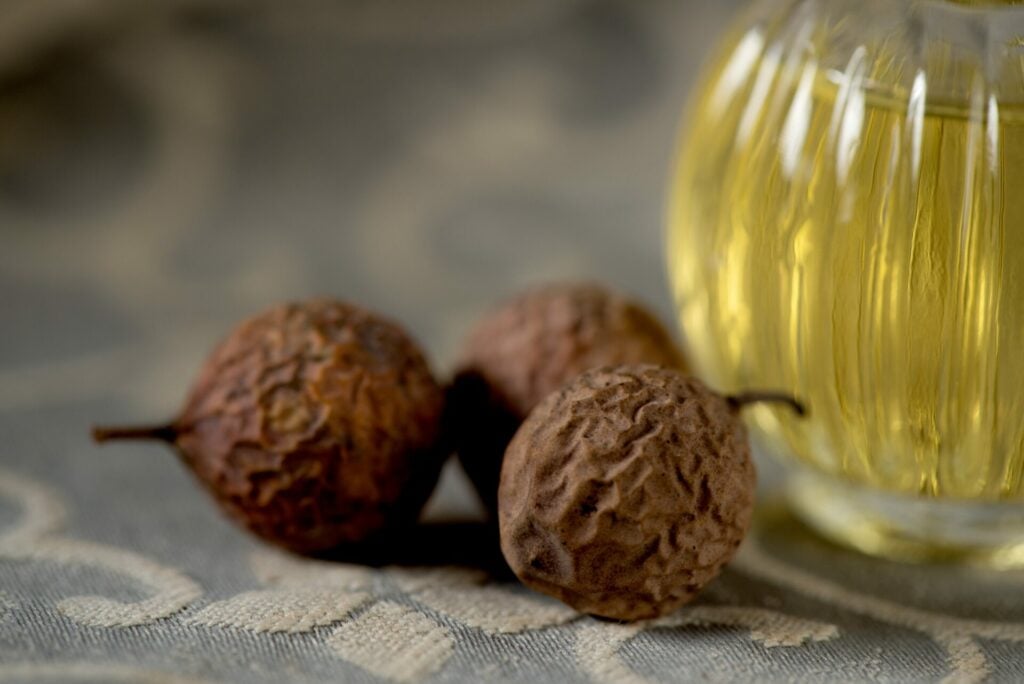
Speaking of fruits, calophyllum plant oil is extracted from them. It is obtained by cold-pressing the dried kernels found inside the nuts, followed by filtering to achieve a pure solution free of pulp residue. The main characteristics of virgin calophyllum inophyllum oil are as follows:
- When not decolourised by chemical processes (which is preferable!), it displays a dark green to greyish-green colour. This hue may seem surprising, but it is perfectly normal and is mainly due to the presence of natural resin residues.
- It is quite thick, with a greasy feel and slow absorption. For this reason, it is recommended to blend it with another oil if you wish to use it for massage purposes.
- Calophyllum oil tends to solidify below 20o. However, this does not affect its qualities in any way. One could even say that calophyllum oil is remarkably stable.
- Its scent is quite distinctive — green and subtly spiced (reminiscent of curry for some), with notes of nuts and even coffee.
- It is not really intended for oral consumption. It is primarily used topically on the skin.
3- Chemical composition
The composition of calophyllum plant oil is truly unique. It is a blend of fatty acids and specific active compounds. It contains:
- Around 30% linoleic acid, or omega-6. This essential fatty acid supports healthy skin, as it is a component of ceramides. It also helps prevent water loss while offering softening and nourishing properties.
- Around 35 to 40% oleic acid, or omega-9. A fatty acid that strengthens the skin’s hydrolipidic film (sebum contains it too!) and helps maintain suppleness and hydration.
- Around 13 to 15% palmitic acid, a saturated fatty acid particularly beneficial for blemish-prone skin, thanks to its antimicrobial properties.
- Around 15 to 17% stearic acid, which helps reinforce the skin’s barrier function.
- Unique unsaponifiables, such as inophyllin A (a recognised antibacterial), calaustraline and inophyllolide (wound-healing agents), vitamins A and E and polyphenols (antioxidant action), and sterols (supporting cellular structure and function).
Calophyllum inophyllum oil is therefore an oil rich in numerous benefits.
What are the properties and benefits of calophyllum inophyllum oil?
Here we go! The unique composition of calophyllum plant oil gives it very specific properties:
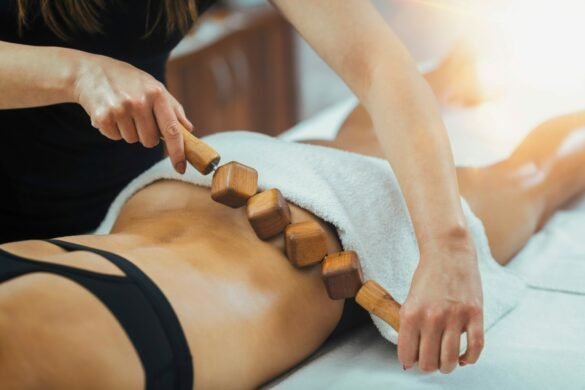
- It is popular for massage: it is widely used by athletes for this very reason, in topical application to massage muscle and joint areas. If you are in pain, ask a doctor or another medical professional for advice.
- It is rich in unsaponifiables: it is used in skincare for blemish-prone skin, despite its very greasy texture. For any skin problem (acne, rosacea, fungal infection, etc.), it is best to see a doctor.
- It is traditionally used to care for damaged skin. For a wound or burn, see a medical professional.
- It is antioxidant-rich: it is particularly well suited to mature skin. It contains a combination of vitamins A and E, phytosterols and polyphenols.
- It is softening and smoothing: calophyllum oil is also an excellent everyday skin care ingredient, helping to prevent dryness and loss of elasticity, and caring for skin prone to stretch marks.
- It lends itself to leg massage: applied through massage or compresses, it makes for a pleasant care ritual for comfortable legs.
Is calophyllum plant oil beneficial for cellulite?
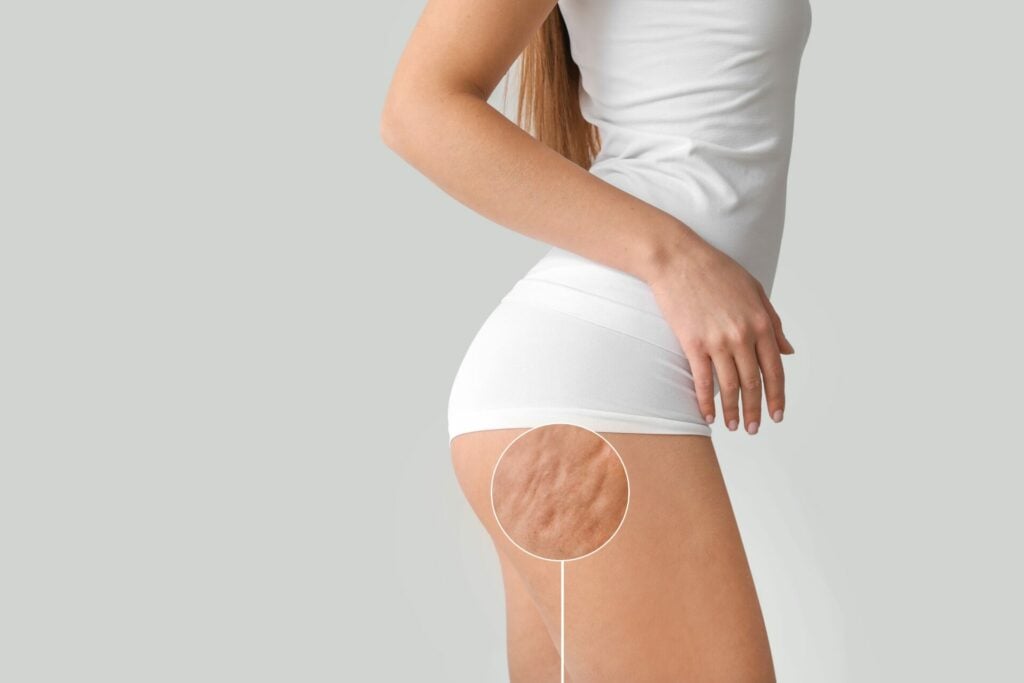
One of the other virtues of calophyllum inophyllum oil is that it has its place in a routine targeting the appearance of cellulite. Indeed, cellulite is linked to a combination of three factors:
- Adipocyte hypertrophy, which distorts the tissue structure and gives cellulite its characteristic bumpy appearance, commonly known as orange peel skin.
- Sluggish veno-lymphatic circulation, which generally leads to oedema, water retention, feelings of heavy legs and a build-up of toxins in the connective tissue.
- Disorganisation of the subcutaneous elastic network, in the specific case of fibrous cellulite.
Among the key contributing factors of cellulite is poor venous tone. Applied through massage, calophyllum oil fits into a routine targeting the appearance of cellulite, including for women dealing with aqueous cellulite.
How to use calophyllum oil in an anti-cellulite routine?
1- Blended with other oils

As mentioned earlier, calophyllum plant oil is thick, greasy and slow to absorb — much like castor oil, with which it shares many similarities. It can therefore be interesting to combine it with another natural plant oil that is lighter and drier and absorbs more easily, to create a homemade anti-cellulite oil. Good options include jojoba oil, macadamia oil or sesame oil. The recommended ratio is 10 to 20% calophyllum oil, with the remainder being a dry oil.
2- With Aloe Vera gel
If you prefer lighter textures — which may be the case if you suffer from heavy legs — you can perfectly blend calophyllum oil with Aloe Vera gel to create a body gel. Simply mix 10 ml of calophyllum oil, 10 ml of a lighter dry oil of your choice, and 3 ml of Aloe Vera gel. Whisk the mixture together, then transfer it into a pump bottle. Apply to all areas affected by cellulite, particularly the legs, knees, thighs and buttocks.
3- With a plant butter
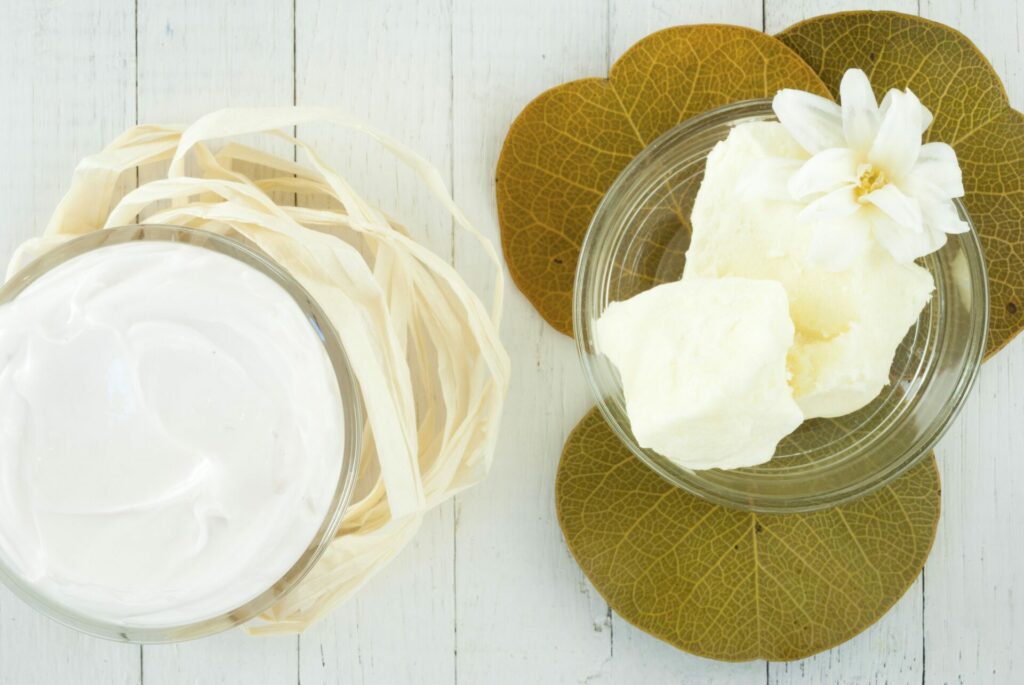
If you prefer balm-like textures, calophyllum oil is perfect for making body butters, as it solidifies easily (below 20–25°C). It therefore makes an excellent ingredient for a homemade anti-cellulite balm. Simply melt 10 g of calophyllum oil and 30 g of shea butter in a bain-marie. Once the mixture is liquid, add 15 g of a neutral dry plant oil and a few drops of grapefruit essential oil (for its exquisite scent!). Once the mixture is smooth and homogeneous, pour it into an airtight jar and leave it to set.
4- Combined with essential oils
Of course, you can enrich your homemade calophyllum oil-based treatments with essential oils. Calophyllum oil makes an excellent carrier for essential oils. Which essential oils should you use to create a good anti-cellulite treatment?
- Italian helichrysum (or immortelle), often found in leg care.
- Grapefruit and Himalayan cedar, which are often used in anti-cellulite massage.
- Rock samphire, highly valued in skin care.
- Juniper and cypress, which pair well with calophyllum inophyllum oil in an anti-cellulite massage.
5- As a compress
The traditional compress method can also be considered. Simply soak a cloth in calophyllum oil and apply it to the dimpled area. The compress can be left on for several hours, giving this thick, slow-absorbing oil time to soak into the skin properly.
Is calophyllum oil safe to use?
Calophyllum oil is primarily used topically on the skin. As it is thick and greasy, it is best diluted in a lighter, drier oil, following the ratio given above. Its green, spicy scent may also take you by surprise the first few times you use it.
If in doubt, especially if you have reactive skin, ask a doctor or another medical professional for advice.
What else can complement calophyllum oil in a complete anti-cellulite routine?
You can absolutely combine different products to care for your cellulite-prone skin. For example:
- Use our Anti-Cellulite Scrub two to three times a week to prepare your skin. Exfoliation removes dead skin cells, making the skin far more receptive to other treatments. Our scrub is also enriched with caffeine, a natural active widely used in anti-cellulite products.
- Our Cupping Cup will be the perfect companion to your homemade calophyllum oil-based anti-cellulite treatment. It allows you to perform, with a simplified technique, the pinch-and-roll massage, the go-to anti-cellulite massage method.
These are just some of the products that you can use alongside calophyllum oil to care for your skin.
The scrub that leaves skin smooth and skin texture refined*
*User test on 21 volunteers over 4 weeks, based on participants' feedback.
- Olive & apricot kernels: these natural grains gently sweep away dead skin cells
- Caffeine & monoi scent, so your shower instantly smells like a holiday
- In the shower, two to three times a week, massaging your thighs, bottom and stomach
Related articles
- Hemp oil: composition and uses in cooking and beauty
- 10 Vegetable Oils Against Cellulite and How to Use Them
- 3 fresh anti-cellulite treatments perfect for spring
- Cellulite: Our Best Tips for Your Daily Routine
- Caffeine and Cellulite: What You Need to Know
Useful categories: Anti-Cellulite Care, Anti-Cellulite Solutions.