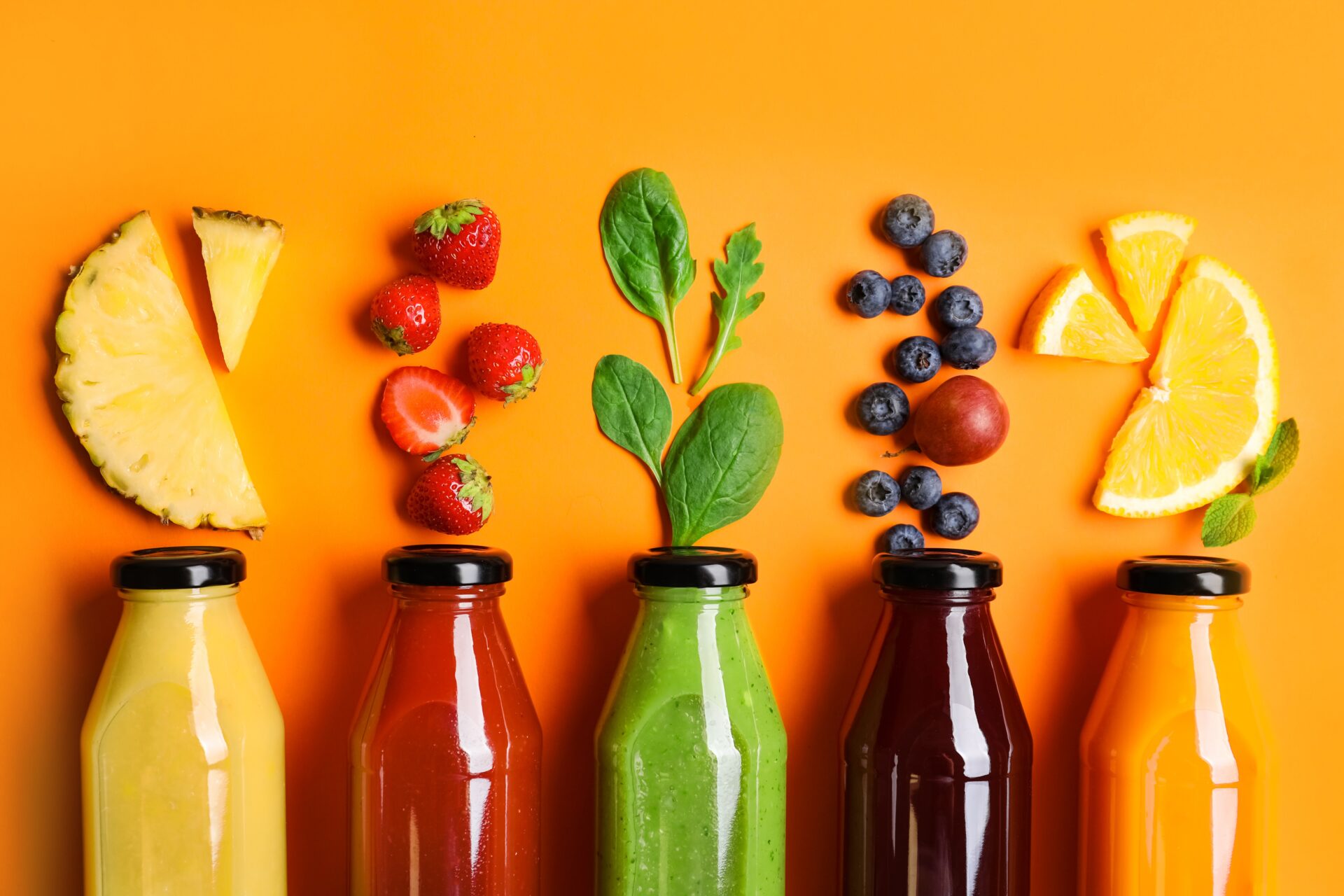
Among the latest healthy trends, juice cleanses have been making a lot of noise. Straight from California, this popular cleanse promises to deeply purify the body by giving the digestive organs a well-deserved rest. But what should we really think of juice cleanses — and can they actually boost weight loss?
What is a juice cleanse?
It’s essentially a diet, but a very short-term one. For a few days (one day minimum, ideally 3, seven at most), the idea is to eat no solid food, and instead nourish yourself exclusively with liquids: fruit and vegetable juices, smoothies, tea without sugar or milk, vegetable broth, and water. As a general rule, drinking four to six juices a day is recommended, with the cleanse repeated at each change of season.
A juice cleanse is rooted in a detox philosophy: the high level of hydration combined with the vitamins and antioxidants found in plants is said to flush the body of waste and toxins. The goal is also to give the digestive system a break, since it only has liquids to process.
What are the benefits of juice cleanses?

It all depends on who you ask!
Ask the scientists, and they’re unequivocal: the body doesn’t need to be detoxified. Unwanted substances in the body — whether organic waste (cellular debris, interstitial fluid, free radicals) or external toxins (medication residues, pollution, consumption of harmful substances) — are naturally eliminated by the body’s emunctory organs. The lungs, liver, kidneys, intestines, and skin all handle this cleansing work on their own, without any outside help.
But according to juice cleanse enthusiasts, the reality is quite different: our diet, sometimes too heavy or too rich, wears out our digestive system, which is constantly running at full capacity. The result? Fatigue, bloating, digestive issues, extra pounds, and dull skin. A juice cleanse promises to address all of these concerns in record time. The claimed benefits are numerous:
- renewed energy;
- glowing skin;
- cleansed organs (and therefore better digestion);
- weight loss and a feeling of lightness;
- boosted immune system;
- improved mood, reduced stress;
- restored acid-base balance (thanks to alkaline juices);
- a flatter stomach.
And what about the side effects?
Apparently, they’re not a given. Some people have no trouble completing their cleanse, while others report mildly unpleasant side effects — including headaches, fatigue, nausea, diarrhoea, and breakouts. On top of that, there are more psychological challenges: the frustration of not “really” eating, cravings, emotional hunger, difficulty drinking in large quantities, and the impact on social life (though it’s short-lived). All things considered, nothing truly insurmountable…
Can a juice cleanse boost weight loss?

Weight loss is not the primary goal of a juice cleanse. It’s designed to detoxify and rest the body — not to shed those extra pounds. For that, a balanced diet that includes all food groups is a far better approach. In short: to lose weight, eat a bit of everything, in reasonable amounts, and listen to your hunger cues.
That said, weight loss is one of the side effects of juice cleanses. No surprise there: added fats and sugars are removed from the diet and calorie intake drops significantly, forcing the body to draw on its reserves to keep going. What’s more, juices act as “appetite suppressants“, as they contain fibre — provided you opt for juices with pulp. Finally, fruit and vegetable juices are rich in natural sugars, which the body absorbs well and the taste buds enjoy. So you’re less likely to find yourself craving sugar, and the temptation to reach for chocolate is much reduced.
How do you get started with a juice cleanse?
1- Our top tips for getting started

First tip: don’t do a juice cleanse to lose weight. It’s counterproductive, and that’s simply not what it’s for.
Second tip: don’t follow a cleanse just because “it’s trending” — do it because you genuinely want to. There’s no point putting yourself through something just because everyone else is doing it.
Third tip: choose the right moment for your first attempt. If you’re in the middle of exam season or dealing with stress at work, the timing isn’t right. A juice cleanse should be started during a calm period, when you’re feeling good.
Fourth tip: avoid intense exercise during the cleanse. High-intensity workouts require a proper calorie intake. Opt instead for gentle activities like brisk walking, a little cycling, or yoga.
Last tip: more of a word of caution. If you have a kidney condition, or if you are pregnant or breastfeeding, this is not for you.
2- Our recipe suggestions
Be wary of ready-made juice cleanses sold in shops. More often than you’d think, they’re packed with added sugars or sweeteners — a composition that completely contradicts the very essence of the concept. These juices are also pasteurised for preservation purposes, meaning they lose a significant portion of their vitamins and minerals. And they can be very expensive.
So, it’s far better to make your juices yourself. Another bonus: you can tailor them to your taste and keep things interesting every day. Short on inspiration? Here are a few ideas:
- Green juice: simply blend 2 apples, a stick of celery, half a cucumber, the juice of half a lemon, and a handful of spinach.
- Vitamin-packed juice: guaranteed to give you a radiant complexion! Simply juice 2–3 carrots, one orange, a little fresh ginger, and a small piece of turmeric root.
- Fruity indulgence juice: blend or juice a few slices of pineapple, 2 peaches, and some kiwi, add a touch of vanilla, and you’re done!
- Aperitif juice: tomato juice is making a comeback! Juice 2–3 ripe tomatoes with a stick of celery, then season with freshly chopped herbs such as basil and parsley, salt, and pepper.